
When you pick up a prescription at the pharmacy, you might not realize there are different kinds of generic drugs on the shelf - and that the one you get can make a big difference in how much you pay. Two major types of generics dominate the market: authorized generics and first-to-file generics. They look the same, work the same, but their pricing and market behavior are worlds apart. Understanding the difference isn’t just for pharmacists or insurers - it’s for anyone who’s ever worried about the cost of their medicine.
What exactly is an authorized generic?
An authorized generic is the exact same drug as the brand-name version, made by the same company, in the same factory, with the same ingredients and packaging - except it doesn’t carry the brand name. It’s sold under a different label, often at a steep discount. Think of it like a company selling the same coffee beans under its own brand and a store brand. The product doesn’t change; only the label does. These drugs enter the market under the original brand’s New Drug Application (NDA), so they don’t need to go through the full approval process that regular generics do. That means they can launch quickly, sometimes even before the first generic hits the market. And when they do, prices drop faster and harder.What makes a first-to-file generic special?
The first company to file an Abbreviated New Drug Application (ANDA) with the FDA gets a huge advantage: 180 days of exclusive rights to sell the generic version. This is called the 180-day exclusivity period, written into the Hatch-Waxman Act of 1984. The idea was simple - reward the first generic company for taking the legal and financial risk of challenging a brand-name patent. In return, they get to be the only generic on the market for half a year. During that time, they can set their own price. And because they have no competition, they often charge more than you’d expect from a generic. In fact, some first-to-file generics cost nearly as much as the brand-name drug - sometimes only 10-20% cheaper. That’s not what most people think of when they hear “generic.”Price differences: the numbers don’t lie
The Federal Trade Commission (FTC) tracked this for years, and the data is clear. When only the first-to-file generic is on the market, retail prices are about 14% lower than the brand-name drug. But when an authorized generic enters during that same 180-day window, prices drop to 18% below brand. That might not sound like much, but on a $500 monthly prescription, that’s $20 extra in savings per month - $240 a year. The real shocker? Pharmacy acquisition costs. That’s what pharmacies pay to stock the drug. Without an authorized generic, pharmacies pay about 20% less than the brand. With an authorized generic competing, they pay 27% less. That’s a 7-point jump - meaning pharmacies can pass more savings on to you, or keep more profit. Either way, you win. And it gets better. When you add more generics - say, three or four - prices plunge even further. By the time six or more generics are available, the drug costs over 95% less than the brand. But that takes time. The fastest way to get those deep discounts? An authorized generic stepping in early.
Why do brand companies launch authorized generics?
It sounds strange - why would a brand company help kill its own sales? The answer is often legal settlements. Many times, the brand company and the first-to-file generic company strike a deal: the generic gets the 180-day exclusivity, and in return, the brand launches an authorized generic right away. This cuts the first-filer’s profits by 40 to 52% during their exclusivity period, according to FTC data. On the surface, that seems bad for the generic company. But here’s the twist: the brand company avoids a long, expensive court battle. The generic company still gets a huge payout from those 180 days - even if it’s less than expected. And consumers get lower prices sooner. Some critics worry this kind of deal slows down future generic competition. But the FTC found no evidence that it reduces the number of patent challenges by generic manufacturers. In other words, companies still fight patents - they just get paid differently now.Who benefits the most?
You do. Consumers and the healthcare system save money when authorized generics enter the market during the 180-day window. The FTC confirmed this in multiple reports: lower prices during this period mean fewer out-of-pocket costs for patients and less spending for Medicare and private insurers. Pharmacies also benefit. Gross profit per prescription jumps when the first generic enters - and climbs even higher when an authorized generic joins in. That’s because pharmacies can buy the drug cheaper and still sell it at a competitive price. More margin, same customer. Even the brand companies aren’t always losers. By launching an authorized generic, they maintain some control over the market. They can steer patients toward their version instead of letting an independent generic take over. And if the brand later releases a new version - like an extended-release formula - they can protect part of their market share. One study found new branded versions can cut first-to-file generic sales by up to 29% in the first year.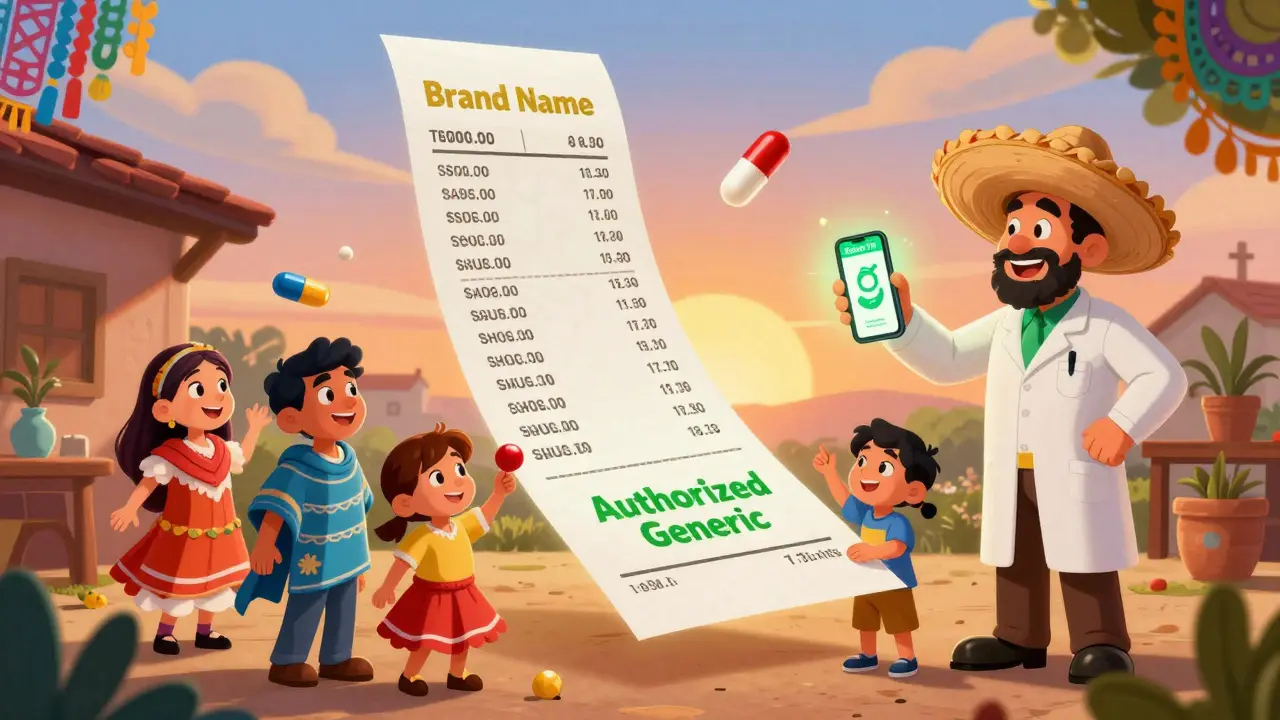
Comments (16)
Lethabo Phalafala
My dad’s on a $600/month med, and the switch to an authorized generic dropped his bill to $90. I didn’t even know this stuff existed until I saw the receipt. Pharmacies don’t tell you this. You have to ask. And if they look confused? That’s your sign to dig deeper.
Stop letting the system treat you like a passive recipient. Know your meds. Know your options. This isn’t just about money-it’s about power.
Damario Brown
bro the first-to-file guys are literally price gouging and the brand companies are like ‘lol here’s a cheaper version 😘’ what a scam. also why does the fda let this happen?? 🤡
Clay .Haeber
Oh wow, so the pharma giants just... *hand* the generics a lifeline? How noble. Next they’ll be donating kidney stones to orphans. The 180-day exclusivity isn’t a reward-it’s a cartel license, and authorized generics are just the brand’s way of pretending they care while still keeping the cash flow. 😂
Priyanka Kumari
This is such an important breakdown. I’ve seen patients cry over pill costs-not because they’re lazy, but because they’re trapped in a system designed to confuse. Thank you for making this clear. If we can get this info into community clinics and pharmacy waiting rooms, we could change lives.
Let’s make ‘authorized generic’ part of the public lexicon.
Adam Vella
One must interrogate the underlying economic architecture here. The Hatch-Waxman Act, while ostensibly pro-competition, institutionalizes rent-seeking behavior under the guise of innovation incentives. The authorized generic, far from being a benevolent market correction, is a strategic concession in a regulatory capture paradigm-where the incumbent, via legal settlement, deploys a pseudo-generic to preemptively cannibalize the challenger’s monopoly rent, thereby preserving structural market control.
The FTC’s data, while statistically valid, fails to account for the delayed entry of subsequent generics due to the chilling effect of these settlements. The true cost is not just in dollars, but in the erosion of genuine competitive dynamics. We are not witnessing market efficiency-we are witnessing orchestrated equilibrium.
Avneet Singh
Ugh. Another neoliberal pharmacoeconomics lecture. Of course the FTC ‘found’ what they did-because their funding comes from the same FDA that approves these ‘authorized’ shell games. The real issue? The entire generics framework is a performative farce. We’re just rearranging deck chairs on the Titanic while Big Pharma sips champagne in the bow.
Lance Nickie
So authorized = cheaper. First-to-file = ripoff. Got it.
Angel Tiestos lopez
bro this is wild 😳 i just checked my last script and it was an authorized generic and i thought i was lucky… turns out i was just… not scammed? 🤯 thanks for the intel, this might save me $300 this year. 🙏💊
sam abas
Wait, let me get this straight-brand companies are launching their own generics to undercut the first-filer? That’s not competition, that’s corporate espionage dressed in white lab coats. And don’t even get me started on how the 180-day exclusivity is just a loophole that lets the first company charge $400 for a $2 drug. And the FTC? They’re just watching like it’s a reality show. ‘Ooooh, look at the price drop!’ Meanwhile, Grandma’s skipping doses because her copay didn’t change.
And here’s the kicker: most people don’t even know what ‘authorized generic’ means. Pharmacists? Half of them don’t either. They just scan the barcode and ring it up. The system is designed to be opaque. That’s not an accident. That’s the business model.
And the worst part? Even when you find out, you can’t do anything. Insurance doesn’t care. Your doctor doesn’t care. The only person who cares is the one holding the receipt, wondering why they’re paying more for the same damn pill.
It’s not about ‘savings.’ It’s about exploitation with a pretty label. And until we start treating drug pricing like a public health crisis instead of a market puzzle, we’re just arguing over how many angels can dance on a pill bottle.
John Pope
Oh, so the brand company ‘helps’ the market by launching a copy of its own drug? How altruistic. 🤡 The 180-day exclusivity period is a legal cartel, and the authorized generic is the brand’s way of saying, ‘We’ll let you have a taste of the profit… but only if you don’t go too wild.’
And let’s not pretend this is about ‘saving patients.’ It’s about profit optimization with a side of PR. The FTC’s data? Cute. But they never ask: who’s paying for the legal teams that make these deals? Who’s funding the lobbying that keeps this system alive?
This isn’t innovation. It’s theater. And we’re all just extras in a drama written by Big Pharma’s lawyers.
Meanwhile, I’m still paying $200 for a pill that costs 87 cents to make. But hey-look at that authorized generic! It’s only $195. 🎭
Milla Masliy
As someone who grew up in a household where medicine meant choosing between food and refills, this post hit me hard. I didn’t know the difference between generics until I started working in a community clinic. The moment I learned about authorized generics, I started asking every patient: ‘Did you know you might be paying more than you need to?’
It’s not just about the price-it’s about dignity. No one should feel guilty for needing help. And no one should be kept in the dark just because the system is designed to confuse.
Thank you for writing this. I’m printing it out and handing it to every patient who looks stressed at the counter. We need more voices like this.
Trevor Whipple
so basically big pharma is like ‘hey we’ll make our own fake generic so the real generic can’t charge too much’ and then they’re like ‘look at us we’re so nice’ but they’re still making millions?? this is the dumbest thing i’ve ever heard. also why does the fda even exist if this is allowed??
Nelly Oruko
It is imperative to recognize that the market mechanisms described herein, while ostensibly facilitating cost reduction, simultaneously entrench systemic asymmetries in pharmaceutical access. The authorized generic, though functionally indistinguishable from its branded counterpart, operates as a regulatory artifact-a controlled variable within a larger economic apparatus designed to preserve capital accumulation under the guise of competition. The FTC’s findings, while methodologically sound, remain epistemologically constrained by their reliance on transactional data, neglecting the sociopolitical dimensions of pharmaceutical consumption. One must ask: Who bears the burden of this ‘savings’? And at what cost to the moral integrity of the healthcare covenant?
Alan Lin
Let me be clear: this isn’t just about pricing. It’s about survival. I’ve sat across from people who chose between insulin and rent. I’ve held the hands of mothers who cried because their child’s medication was $800 instead of $80. This isn’t theoretical. This is real life.
If you’re a pharmacist, speak up. If you’re a patient, ask for the authorized generic. If you’re a policymaker-stop pretending this is a market issue. It’s a human rights issue.
We have the data. We have the tools. What we’re missing is the collective will to act.
Don’t wait for the system to fix itself. Fix it for each other.
vishnu priyanka
in india we don’t even have this mess. generics are just… generics. no labels, no drama. if it works, you take it. if it’s cheap, you buy it. i’m jealous of how simple this could be if we just stopped overcomplicating it 🤷♂️
Clay .Haeber
Wow. So the ‘authorized’ generic is just the brand’s way of saying ‘I’ll let you have a sliver of the pie… if you promise not to eat it all.’ Classic corporate theater. The 180-day exclusivity? A golden parachute for the first-filer, while the rest of us get crumbs and a PowerPoint on ‘market efficiency.’
And yet somehow, the FTC still acts like this is progress. Like we should be applauding when the wolf gives us a slightly smaller sheep.
Next they’ll tell us the ‘authorized’ version is ‘premium’ because it’s made in the same factory. As if that’s a feature, not a confession.