
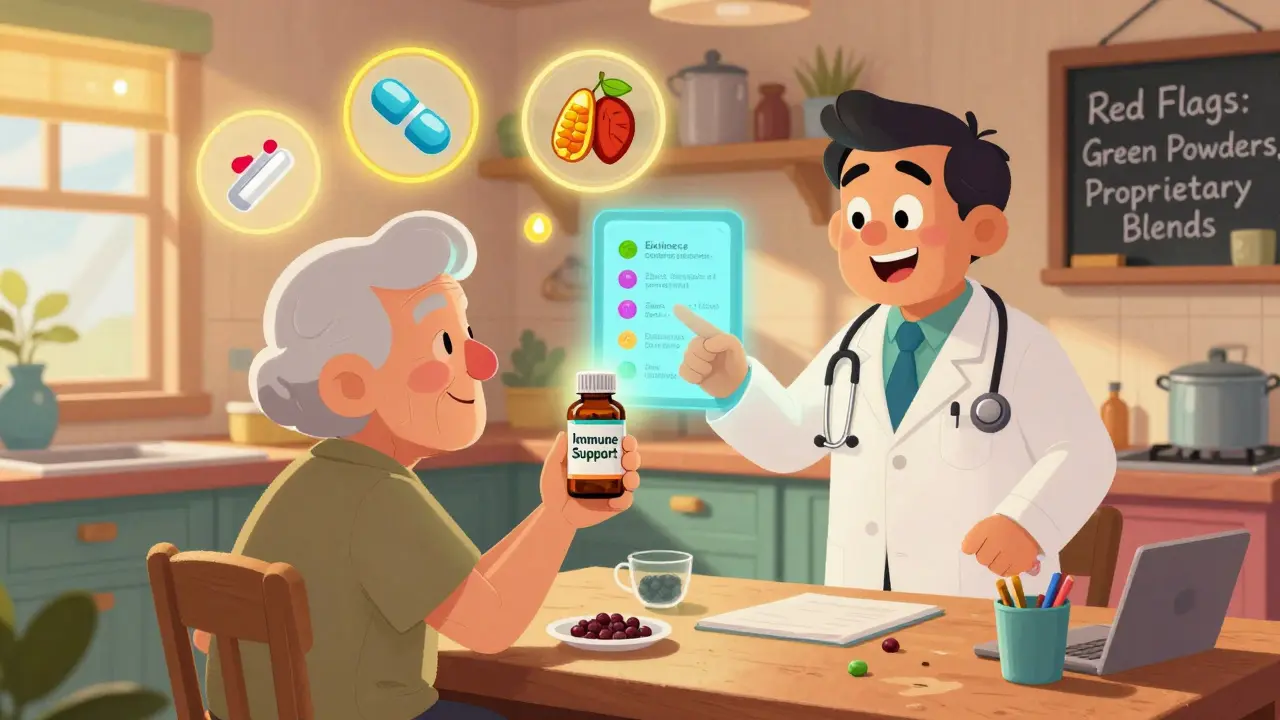
Every year, over 23,000 emergency room visits in the U.S. are linked to unexpected reactions between dietary supplements and prescription drugs. That’s not a small number-it’s preventable. The problem? Most people don’t realize their daily multivitamin, fish oil, or herbal tea could be interfering with their blood thinner, antidepressant, or chemotherapy. And even many healthcare providers miss it because supplement labels are confusing, databases are inconsistent, and patients rarely volunteer the information.
If you’re a patient taking pills and pills on top of pills, or if you’re a clinician trying to keep someone safe, knowing how to check supplement interactions isn’t optional. It’s essential. This guide walks you through exactly how to do it, using the most reliable tools available today, and what to watch out for at every step.
Why Supplement-Drug Interactions Are More Common Than You Think
It’s easy to assume supplements are harmless because they’re sold over the counter. But that’s not true. A 2023 study in JAMA Internal Medicine found that nearly half of adults over 57 take at least one prescription drug and one supplement together. That’s a recipe for trouble if you don’t check.
Take warfarin, a common blood thinner. Ginkgo biloba, a popular memory supplement, can thin the blood even more-raising the risk of dangerous bleeding. Or consider statins, used for cholesterol. St. John’s wort, often taken for mild depression, can reduce statin levels in the blood by up to 60%, making the drug useless. These aren’t rare cases. They’re common enough that hospitals now require interaction checks before starting high-risk medications.
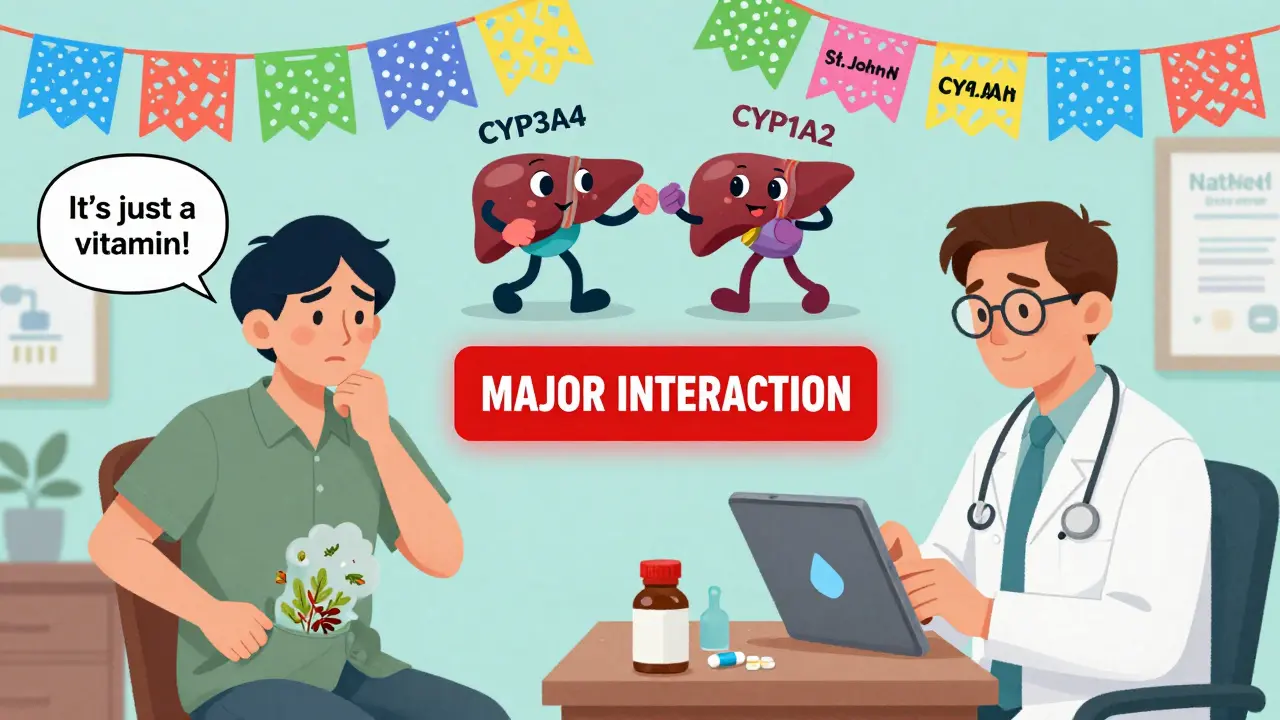
The real issue? Patients don’t tell doctors. A 2022 study in JAMA Network Open showed only 37% of patients mention supplement use during a medical visit. Why? They think it’s “just a vitamin.” Or they don’t know the name of what they’re taking-many use blends labeled as “proprietary formulas,” hiding the real ingredients.
What Makes a Good Supplement Interaction Database?
Not all drug interaction tools are created equal. Most general databases-like those built into EHR systems-are designed for drug-drug interactions. They’re good at spotting interactions between two prescription meds. But they fail when it comes to supplements.
The best tools for supplements have three things:
- Ingredient-level mapping: They don’t just look up “fish oil.” They break it down into EPA and DHA, then check each one against every drug in the system.
- Severity ratings: Not all interactions are equal. Good databases label them as Contraindicated, Major, Moderate, or Minor.
- Management advice: They don’t just say “possible interaction.” They tell you what to do-pause the supplement, switch brands, monitor labs, or adjust dosage.
The gold standard is NatMed (formerly Natural Medicines). In a 2024 validation study, clinical pharmacists agreed on its accuracy 94.3% of the time. It covers over 1,900 supplements and maps more than 51,000 commercial product formulations to their active ingredients. That’s unmatched. Other tools like DrugBank or FDB are strong for drug-drug interactions but fall short on supplements-especially newer ones like CBD or adaptogens.
Step 1: Get a Complete List of Everything the Patient Is Taking
Start with the patient. Ask directly: “What supplements, herbs, vitamins, or teas do you take daily?” Don’t say “Do you take any vitamins?” That’s too vague. Use a checklist. The 10-item Supplement History Interview is proven to catch more than 80% of cases.
Watch for these red flags:
- “I take something for my joints.” → Could be glucosamine, turmeric, or a blend with undisclosed ingredients.
- “I have a green powder in the morning.” → Likely a greens supplement with 20+ herbs and extracts.
- “I use essential oils.” → Some, like grapefruit oil, can interfere with metabolism of drugs like statins.
Also, check the bottle. Many supplements list only the brand name. Look for the “Supplement Facts” panel. Write down every ingredient-even if it’s listed as “proprietary blend.” You’ll need to look up each one separately.
Step 2: Identify the Exact Ingredients
This is where most people get stuck. A product labeled “Immune Support” might contain echinacea, zinc, elderberry, and vitamin C. But the database doesn’t know “Immune Support.” It knows the ingredients.
Use the NatMed Supplement Name Resolver (available in its web and mobile apps). Type in the brand name. If it recognizes the product, it will show you the full ingredient list. If it doesn’t, you’ll need to manually enter each ingredient.
Example: A patient says they take “Nature’s Way Milk Thistle.” NatMed finds it instantly. But if they say “Milk Thistle from GNC,” and the product isn’t in the database, you must type in “Silymarin” (the active compound) and specify the dose (e.g., 200 mg).
Pro tip: 68% of supplements contain ingredients not listed on the label, according to FDA data. If the product seems too cheap or has an odd name, cross-check it with the ConsumerLab.com database (subscription required) or the USP Verified mark.
Step 3: Enter the Supplement and Medications into the Database
Open NatMed, DrugBank, or your hospital’s integrated system. Most have a search bar. Start with the supplement.
For each supplement:
- Type the ingredient name (e.g., “St. John’s Wort”)
- Select the correct dosage and form (capsule, liquid, tincture)
- Click “Add to Interaction Check”
Then add each prescription drug. Don’t skip anything-even over-the-counter meds like ibuprofen or diphenhydramine can interact.
Once everything is entered, run the check. The system will generate a list of interactions. Pay attention to the severity level:
- Contraindicated: Do not combine. Risk of death or serious harm.
- Major: High risk. Avoid unless absolutely necessary. Monitor closely.
- Moderate: Possible risk. Adjust dose or timing.
- Minor: Low risk. Usually no action needed.
Step 4: Interpret the Results and Take Action
Don’t just read the warning. Understand the mechanism. For example:
- CYP3A4 inhibition: Grapefruit juice, curcumin, and some green tea extracts block this liver enzyme. This causes drugs like simvastatin, cyclosporine, or certain anti-anxiety meds to build up to toxic levels.
- CYP1A2 induction: St. John’s wort speeds up metabolism of antidepressants, birth control pills, and theophylline-making them less effective.
- Pharmacodynamic interaction: Ginseng and ginkgo both thin the blood. Combine them with warfarin? Bleeding risk skyrockets.
Then, decide:
- Stop the supplement? (If it’s a major or contraindicated interaction)
- Switch brands? (Try a USP-verified version with known ingredients)
- Adjust timing? (Take the supplement 2 hours before or after the drug)
- Monitor? (Check INR levels weekly if on warfarin and ginkgo)
Always document your decision. Note: “Patient taking ginkgo biloba 120 mg daily. Interaction with apixaban classified as Major. Advised discontinuation. Patient agreed. Follow-up in 1 week.”
Common Pitfalls and How to Avoid Them
Even with the best tools, mistakes happen. Here are the top three:
- Assuming “natural” means safe: Turmeric is anti-inflammatory-but it can increase bleeding risk with anticoagulants. Licorice root can raise blood pressure and interfere with diuretics.
- Ignoring brand variations: One brand of vitamin D might have 1,000 IU. Another has 5,000 IU. Dose matters.
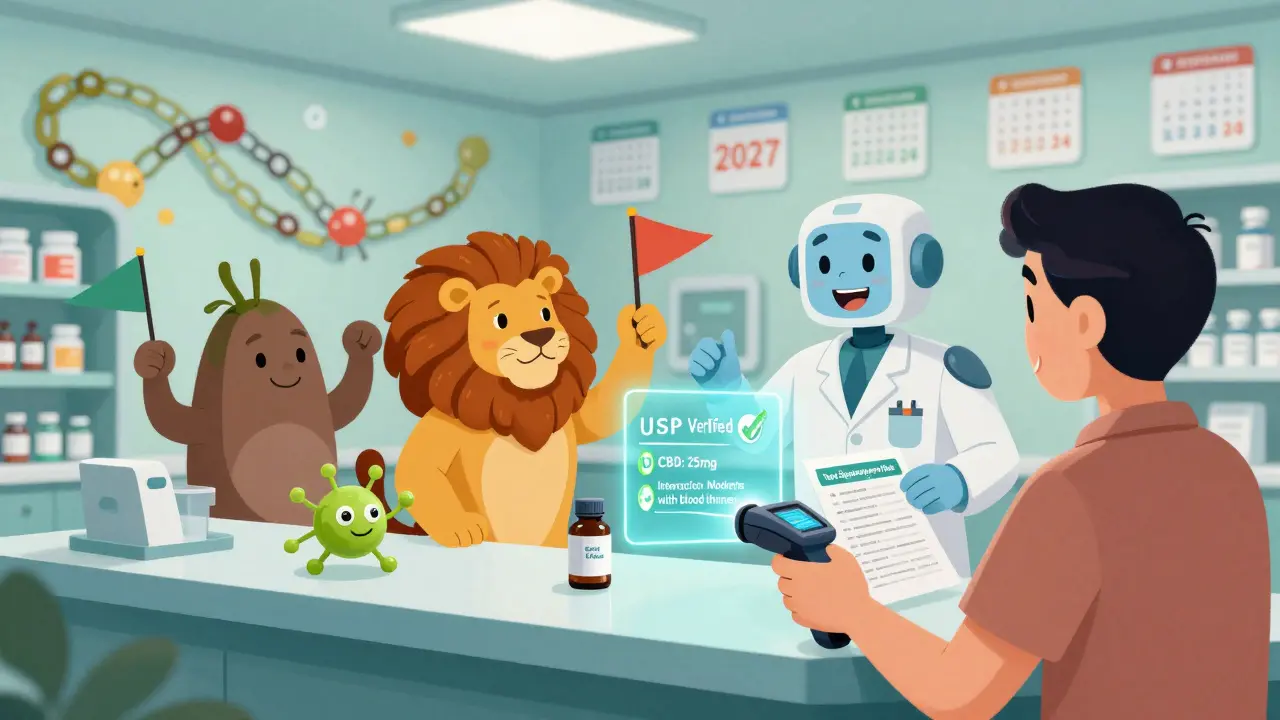
- Missing new supplements: CBD, ashwagandha, and lion’s mane mushroom are rising fast. As of Q2 2024, only 37% of commercial databases include reliable data on CBD interactions.
When in doubt, consult a pharmacist. They’re trained to navigate these tools. And if you’re a provider, use the ASHP 2024 guidelines: Always use NatMed for supplement-specific checks. For drug-drug, use your EHR system.
What’s Next? The Future of Supplement Safety
The field is changing fast. In 2024, NatMed rolled out AI that can understand patient-speak: “I take the green pill for stress” → identifies ashwagandha. FDB is integrating with Epic EHRs so alerts pop up automatically when a doctor writes a prescription.
The FDA is testing blockchain to verify supplement ingredients at the manufacturing level. By 2027, you might scan a bottle and instantly see its safety profile.
But today, the best tool is still the one you use correctly: a reliable database, a detailed patient history, and a willingness to dig deeper than the label.
Supplements aren’t the enemy. Ignorance is. With the right steps, you can prevent harm-and even improve outcomes.
Frequently Asked Questions
Can I use free online tools to check supplement interactions?
Free tools like WebMD or MedlinePlus offer basic drug interaction checks, but they rarely include supplements. Even when they do, they lack ingredient-level detail and severity ratings. For example, WebMD might say “St. John’s wort may interact with antidepressants,” but won’t tell you how strong the interaction is or what to do about it. For accurate, clinical-grade results, use NatMed, DrugBank, or your hospital’s integrated system.
What if the supplement isn’t in the database?
If the product isn’t listed, look up each individual ingredient. For example, if a patient takes “Energy Boost” with 100 mg caffeine, 200 mg L-theanine, and 50 mg rhodiola, search each one separately. Then cross-reference with their medications. Use peer-reviewed studies from PubMed or the Natural Medicines Clinical Evidence database. If you’re unsure, consult a clinical pharmacist. It’s better to be cautious than assume safety.
Do all pharmacies have access to these databases?
Most hospital and clinic pharmacies do-they use FDB, Lexicomp, or NatMed as part of their EHR. Independent pharmacies may not. If you’re a patient, ask your pharmacist: “Do you use a supplement interaction checker?” If they say no, ask them to check with NatMed or DrugBank. You can also bring a printed report from NatMed’s consumer portal (available with a personal subscription). Don’t rely on memory or guesswork.
How often should I check for interactions?
Check every time a new medication is added or removed. Also check if you start or stop a supplement-even if it’s something you’ve taken for years. Interactions can change based on dosage, age, liver function, or other drugs. For patients on chronic medications like blood thinners, anticonvulsants, or immunosuppressants, a quarterly review is recommended. Keep a written list of everything you take and update it monthly.
Are there any supplements that are always safe?
No supplement is universally safe. Even something as simple as vitamin K can interfere with warfarin. Calcium can reduce absorption of thyroid medication if taken at the same time. Fiber supplements can lower levels of certain antidepressants. The key isn’t avoiding supplements-it’s checking each one against your specific medications. There’s no such thing as a “safe” supplement without context.
Comments (15)
Rama Rish
I take turmeric for my knees and just found out it can mess with blood thinners. 😳 This post saved me. Thanks for the clear guide.
rebecca klady
I always thought 'natural' meant safe. Guess I was wrong. Thanks for the reality check.
Kevin Siewe
As a nurse, I can't tell you how many times patients have said, 'It's just a vitamin.' This guide is gold. I'm printing it for my team.
Caroline Dennis
CYP3A4 inhibition is the silent killer in polypharmacy. Most EHRs don't flag it for supplements. NatMed is the only tool that gets this right. Glad to see it highlighted.
Mihir Patel
I took 'Energy Boost' for months and didn't know it had rhodiola... then my BP spiked. This is why we need better labeling. #SupplementScam
Kevin Y.
I just shared this with my mom. She's on warfarin and takes a 'joint support' supplement. She had no idea. This is exactly the kind of info we need to spread.
Aaron Sims
So... the FDA is 'testing blockchain'? LOL. You really believe that? They can't even regulate what's in a bottle today. This whole thing is a corporate scam. Don't trust 'NatMed'-it's probably owned by Big Supplement.
Agbogla Bischof
In Nigeria, we use local herbs daily-neem, moringa, bitter leaf. None of these are in Western databases. I've had to cross-reference with PubMed and local pharmacists. This guide is useful but incomplete for global use.
Pat Fur
I'm from rural Alaska. We use fish oil, seal fat, wild berries. No one here has heard of NatMed. We rely on elders' knowledge. Maybe we need a community-based supplement database too.
Anil Arekar
The systemic failure here is not patient ignorance, but healthcare infrastructure. If pharmacies had real-time, integrated supplement-checking tools, this wouldn't be a conversation-it would be automatic. We need policy change, not just awareness.
Elaine Parra
Why are we even letting supplements exist without FDA approval? This is why Americans are dying. Big Pharma doesn't want you to know that herbs can be more effective than pills. This is all a cover-up. Wake up!
Natasha Rodríguez Lara
I work with refugees who use traditional medicines from their home countries. This guide helped me understand what to ask for. I now have a simple checklist I translate into 5 languages. Small change, big impact.
peter vencken
I used to think ginkgo was harmless. Then my dad had a stroke. Turns out he was taking it with aspirin. We got lucky. Now I check everything. This guide is my new bible.
Linda Foster
I appreciate the thoroughness of this guide. It reflects best practices in clinical pharmacology. I will be incorporating this into my continuing education module for allied health professionals.
Chris Farley
You say NatMed is the gold standard? That's because it's owned by a pharmaceutical conglomerate. The real solution? Stop taking all supplements. Let the system control you. That's what they want.