
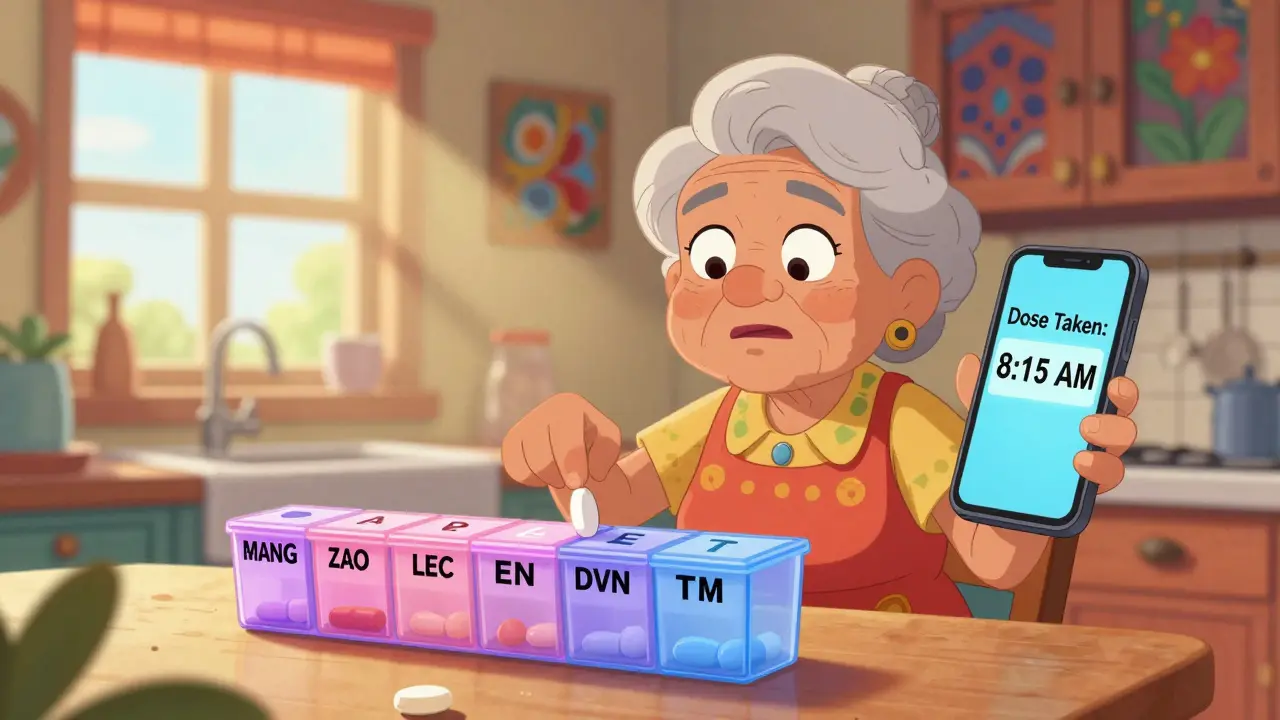
Every year, thousands of people accidentally take two doses of the same medication - not because they meant to, but because they forgot if they already took it. This isn’t just a minor mistake. It can lead to serious harm, hospital visits, or even death. The risk is higher than most people realize. In homes across the country, nearly half of all medication errors happen because someone took an extra pill, poured too much liquid, or didn’t realize two different bottles contained the same active ingredient. The good news? Simple, practical steps can cut these risks by more than half.
Why Double-Dosing Happens at Home
Most people don’t set out to overdose. It happens quietly. Maybe your parent took their blood pressure pill before breakfast but then got distracted by the news. Later, they sat down for lunch and thought, "Did I take that already?" - so they took another. Or maybe your child refused their morning antibiotic, so you tried again at dinnertime without telling your partner. In both cases, the same medicine ends up in the body twice.
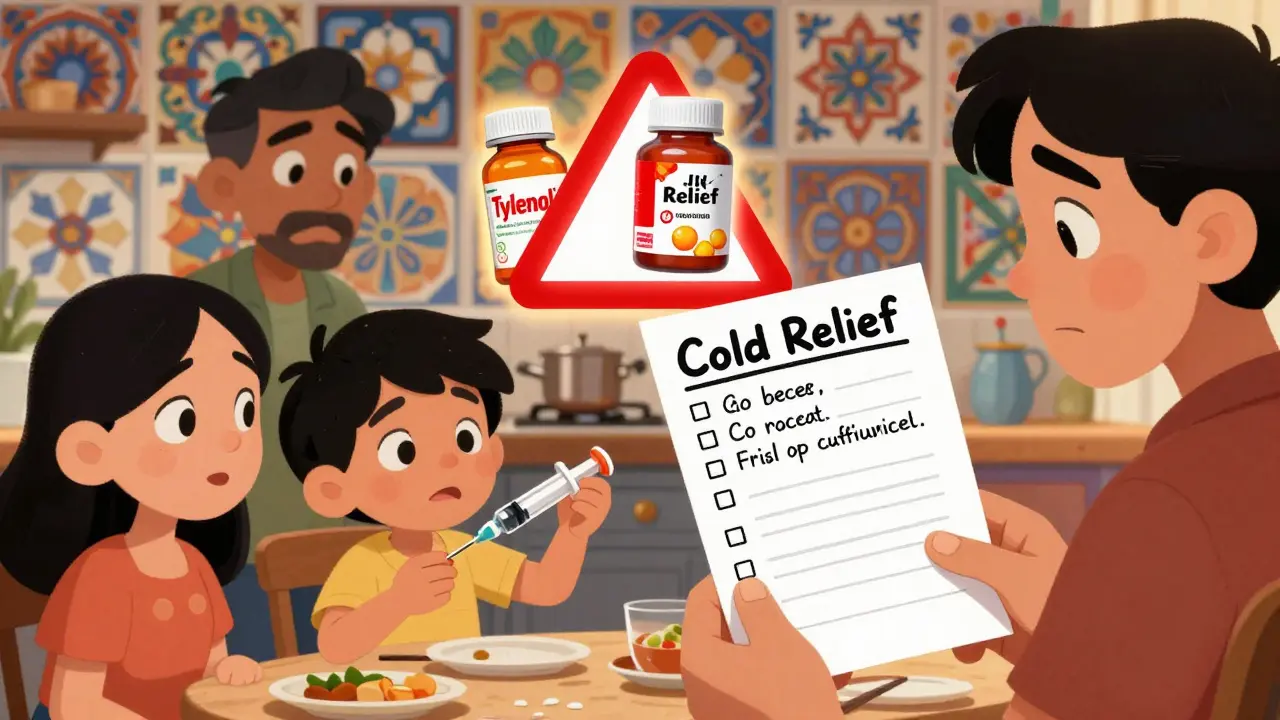
Older adults are especially at risk. The average senior takes four to five prescription medications daily, plus vitamins and over-the-counter painkillers. Many of these drugs have similar names or overlapping ingredients. For example, Tylenol and many cold medicines both contain acetaminophen. Taking both without realizing it can cause liver damage. A 2023 report found that 32% of double-dosing incidents involved hidden duplicate ingredients that patients didn’t recognize.
Children are another high-risk group. Nearly 86% of emergency visits for medicine poisoning in kids involve medications taken from a family member’s cabinet. It’s not always about curiosity - sometimes it’s a caregiver giving a second dose because the child spit out the first one. Without clear communication between adults, mistakes happen fast.
The Four Best Ways to Stop Double-Dosing
1. Use a Pill Organizer - Not Just Any One
A weekly pill organizer with separate compartments for morning, afternoon, evening, and bedtime is the single most effective tool for preventing double-dosing. Don’t use a simple one-day box. You need one that shows you exactly what’s been taken and what’s left. Studies show that using a proper pillbox reduces errors by 35%. When paired with other methods, that number jumps to 62%.
Look for organizers with clear labels and easy-to-open lids. Many come with alarms or locking lids, but even a basic plastic one works if used consistently. The key is visibility. If you can look at it and instantly tell whether you’ve taken your dose, you’re already ahead of 63% of seniors who report daily "Did I take it?" anxiety.
2. Set Digital Reminders - And Make Them Smart
Smartphone apps like Medisafe or MyTherapy don’t just remind you to take your medicine. They track each dose, log when it’s taken, and notify family members if a dose is missed. In a 2022 study, users of these apps improved adherence by 87%. That’s not just about remembering - it’s about knowing.
Set up the app together with a family member. Input every medication - including supplements and OTC drugs. Add notes like "Take with food" or "Avoid alcohol." The app will flag if two different pills contain the same active ingredient. One patient in Missouri avoided a dangerous warfarin overdose after the app alerted her that her fish oil and daily aspirin both thinned her blood. She didn’t know that.
3. Measure Liquids Right - No Kitchen Spoons
Never use a kitchen spoon to measure liquid medicine. A teaspoon can hold anywhere from 2.5 mL to 7.3 mL - that’s a 20% to 65% difference. For a child or elderly person on a precise dose, that’s the difference between safety and overdose.
Always use the syringe or dosing cup that came with the medicine. If it’s missing, ask your pharmacist for a new one. They’re free. Many pharmacies now include them with every liquid prescription. If you’re giving medicine to a child who resists, try mixing it with a small amount of applesauce - but never increase the dose because they refused it once. Always tell the other caregiver what happened.
4. Keep a Written Medication List - And Update It
Write down every single thing you or your loved one takes. Include:
- Prescription drugs (name, dose, frequency)
- Over-the-counter meds (ibuprofen, cold pills, antacids)
- Vitamins and supplements (fish oil, vitamin D, herbal blends)
- Reason for taking it (e.g., "for high blood pressure")
Keep this list in your wallet, on your phone, and give a copy to your doctor and pharmacist. Update it every time a new medicine is added or stopped. This simple step helps catch duplicates. For example, if you’re taking a sleep aid and a painkiller, the list might reveal both contain diphenhydramine - and taking them together could cause confusion or falls.
Who Should Take Responsibility?
One of the biggest causes of double-dosing? Too many people trying to help.
Studies show that when multiple caregivers are involved - like adult children, spouses, or home helpers - double-dosing incidents rise by 47%. Assigning one person to manage all doses cuts that risk dramatically. It doesn’t mean that person does everything. It means they’re the one who:
- Checks the pillbox each morning
- Sets the app reminders
- Knows what’s been given
- Communicates with others
If you’re the one managing medications, make sure everyone else knows: "I’m the one handling the pills. If you give something, tell me first." A simple rule like that prevents chaos.
What to Do If You Accidentally Double-Dose
Even with the best systems, mistakes happen. If you realize you’ve taken two doses:
- Don’t panic. Most single accidental doubles don’t cause serious harm.
- Don’t wait to see symptoms.
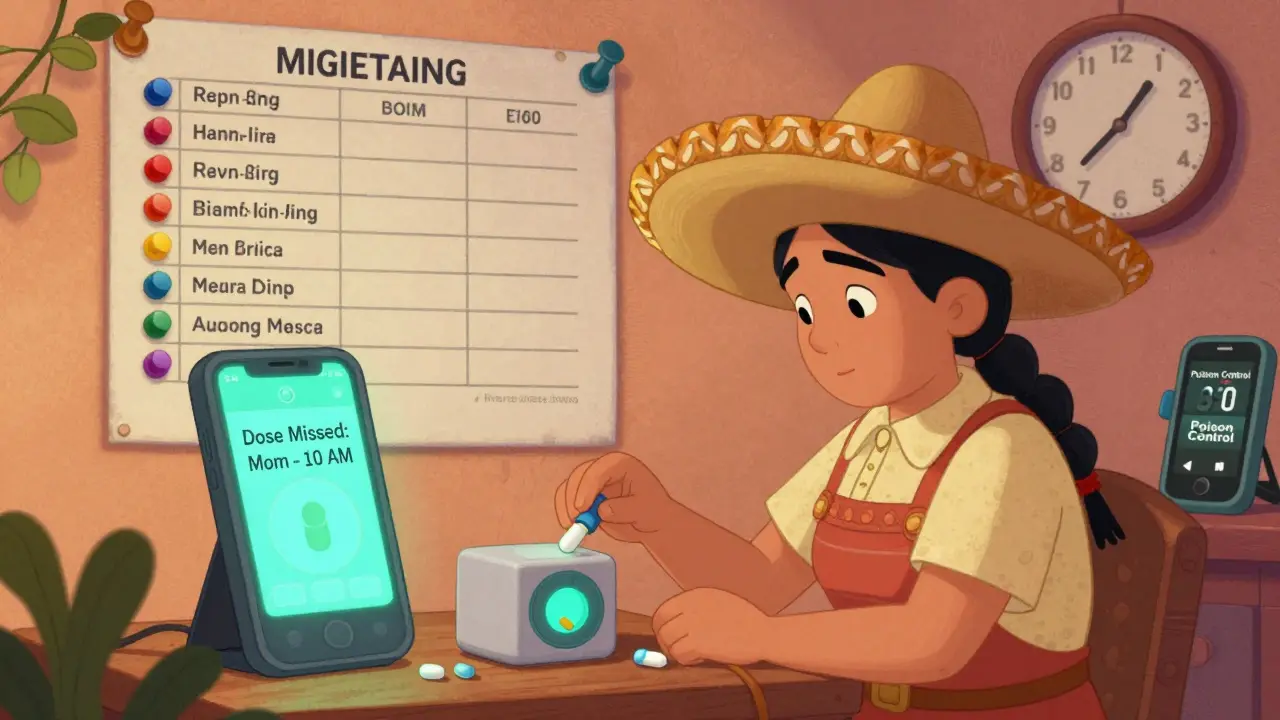
- Call the Poison Control Center immediately at 1-800-222-1222.
They’re free, confidential, and available 24/7. Have your medication list ready. They’ll tell you whether to monitor at home or go to the ER. Waiting for nausea or dizziness to appear is too late. Poison Control has saved lives by acting before symptoms start.
What’s Changing in Medication Safety
Technology is making prevention smarter. New smart pill dispensers lock after a dose is given and only open again at the next scheduled time. A 2023 Johns Hopkins study found these devices reduced double-dosing by 76%. Some even send alerts to family members if a dose is skipped.
But tech isn’t for everyone. About 41% of seniors still prefer paper and plastic. That’s okay. The most effective systems combine low-tech and high-tech: a pillbox for daily use, a phone app for backup, and a written list for emergencies.
The FDA is also pushing for clearer labeling on medicine bottles. Starting in 2025, all OTC drugs will be required to list active ingredients in bold print - no more hiding them in tiny text. This will help people spot duplicates.
Final Thought: It’s Not About Being Perfect
You don’t need to be flawless. You just need a system that works for your life. If you forget your pillbox one day, use the app. If the app dies, check your written list. If you’re unsure? Call your pharmacist. They’ve seen this before - and they’re trained to help.
Medication safety isn’t about memorizing every name or dose. It’s about building habits that protect you - and the people you care about - from a mistake that could change everything.
Comments (11)
Laura Gabel
This whole thing is overkill. I take my meds without any fancy boxes or apps. Just remember. If you can't remember, maybe you shouldn't be taking them at all.
jerome Reverdy
Honestly? The pill organizer + app combo is the gold standard. I've seen older folks go from 3 errors a week to zero after implementing this. The key isn't tech-it's consistency. And yeah, using a kitchen spoon? That's how you end up in the ER. Simple math: 5mL vs 7mL = 40% overdose. No joke.
Andrew Mamone
I use MyTherapy every day. 📱 It flagged that my 'sleep aid' and 'allergy pill' both had diphenhydramine. I had NO idea. My pharmacist said I was lucky I didn't end up confused and falling. 🙏 This isn't just advice-it's a lifesaver. Seriously, if you're on more than 3 meds, get an app. It's like a seatbelt for your brain.
MALYN RICABLANCA
OH MY GOD. I JUST REALIZED MY MOM TOOK TWO DOSES OF HER BLOOD PRESSURE MED LAST WEEK BECAUSE SHE FORGOT. SHE'S IN THE HOSPITAL NOW. THIS ARTICLE ISN'T JUST 'ADVICE'-IT'S A WARNING. I'M SO ANGRY. WHY DOESN'T THE FDA MAKE ALL MEDS HAVE BRIGHT RED WARNINGS? WHY ARE WE STILL USING TINY PRINT? I'M CALLING MY CONGRESSMAN. THIS IS A CRISIS. 🤬💔
gemeika hernandez
My grandma takes 7 pills a day. I told her to write them down. She said 'I don't need paper.' Then she took two ibuprofen and two Tylenol. Same thing. Liver damage. We had to take her to the hospital. Now she has a list. And I check it. Every day. No excuses.
Nicole Blain
I started using a pillbox after my dad almost overdosed. Best thing I ever did. 😊 Simple. Cheap. Works. I keep the list in my wallet too. No apps needed. Just clarity.
Kathy Underhill
The most important thing isn't the tool-it's the system. Whether it's paper, app, or box, what matters is that one person is responsible for tracking. That reduces confusion. And if you're unsure? Call the pharmacist. They don't judge. They just help. That's the quiet hero work that keeps people alive.
Srividhya Srinivasan
This is all a government scam to sell you pill organizers and apps. The real reason people overdose? Because the pharmaceutical industry floods the market with duplicate drugs. They WANT you to take too much. Then they sell you the antidote. Wake up. Who profits? Big Pharma. Always.
Prathamesh Ghodke
Haha, I love how this article is basically 'use a calendar and a syringe.' But honestly? It works. My uncle used to guess with spoons. Now he uses a dosing cup. No more ER trips. Sometimes the dumbest solutions are the smartest. And yeah, call Poison Control. They're like the Avengers for accidental overdoses.
Stephen Habegger
You don't need to be perfect. Just consistent. One system. One person. One list. That's it.
Justin Archuletta
I'm the one who handles meds in my house. My wife? She knows: 'If you give it, tell me first.' It's that simple. No drama. No guesswork. Just clarity. 🙌