
When a new drug safety alert pops up, it’s not a panic button-it’s a conversation starter.
You’re taking a medication that’s been working for you. Then you see a headline: “FDA Issues Warning About [Drug Name]”. Your heart drops. Is this dangerous? Should you stop? Who do you even ask? The truth is, most drug safety alerts don’t mean you need to quit your medicine overnight. They mean you need to talk to your doctor-smartly.
The U.S. Food and Drug Administration (FDA) issues hundreds of these Drug Safety Communications every year. They’re not random scare tactics. They’re based on real data: thousands of patient reports, clinical studies, and long-term monitoring. In 2022 alone, the FDA received over 1.2 million adverse event reports. That’s how they catch risks that didn’t show up in clinical trials-like rare heart rhythm changes, liver damage, or unexpected interactions with other meds you’re taking.
But here’s the catch: doctors are overwhelmed. A 2021 study found only 37% of primary care doctors regularly check for new safety updates between visits. That means if you don’t bring it up, it might not get addressed. And if you walk in saying, “I saw on Facebook that this drug causes brain damage,” you’ll likely get dismissed. But if you come prepared, you turn a potential conflict into a collaboration.
Don’t trust headlines. Go straight to the source.
Before you say anything to your doctor, find the actual FDA Drug Safety Communication. Type the name of your medication into the search bar on the FDA’s official website: www.fda.gov/drugs/drug-safety-and-availability. Look for the exact date of the alert-like “May 11, 2023” or “July 31, 2025.” Don’t rely on news sites, YouTube videos, or Reddit threads. Those often exaggerate, misquote, or leave out key details.
For example, an alert from August 27, 2025, removed a major safety restriction (REMS) for the antipsychotic Clozapine. That doesn’t mean it’s riskier-it means it’s now safer to prescribe under updated guidelines. Another alert from May 2023 required all ADHD stimulants to update their boxed warnings about abuse and addiction. But that doesn’t mean your 12-year-old with ADHD needs to stop their medication. It means doctors should now monitor for signs of misuse more closely.
Read the full alert. Look for phrases like “patients with X condition,” “when taken with Y drug,” or “in individuals over 65.” Those are the qualifiers. Most alerts apply to specific groups-not everyone.
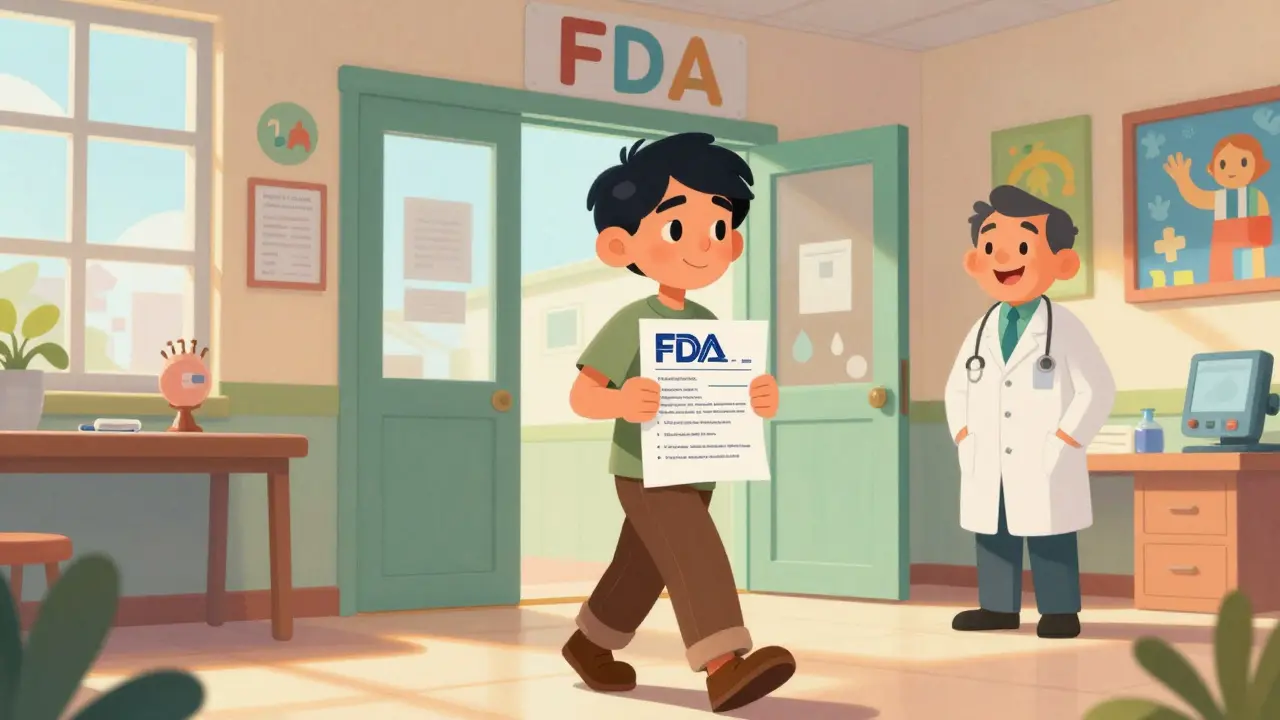
Bring the printed alert. Not your phone.
When you walk into the office, don’t pull up the alert on your phone. Print it. Bring the PDF from the FDA website. Why? Because it shows you’ve done your homework. It signals respect for your doctor’s time and expertise. In a 2023 Mayo Clinic survey, doctors said patients who brought printed FDA communications were taken more seriously-9 out of 10 times.
Don’t highlight the scary parts. Don’t circle “warning” or “risk.” Just hand them the page and say: “I read this and wanted to understand how it applies to me.” That simple shift-from alarm to inquiry-changes the tone of the whole conversation.
Start with this script. Say it out loud before you go.
Here’s what works: “I saw an FDA safety alert about [medication name] dated [date]. I wanted to talk about whether this affects me, and if we should adjust anything.”
That’s it. No accusations. No drama. Just facts and curiosity.
Studies show that patients who raise safety concerns in the first two to three minutes of an appointment-when doctors are most alert-get better responses. Don’t wait until the end, when your doctor is rushing to the next patient.
Ask the right questions. Not the emotional ones.
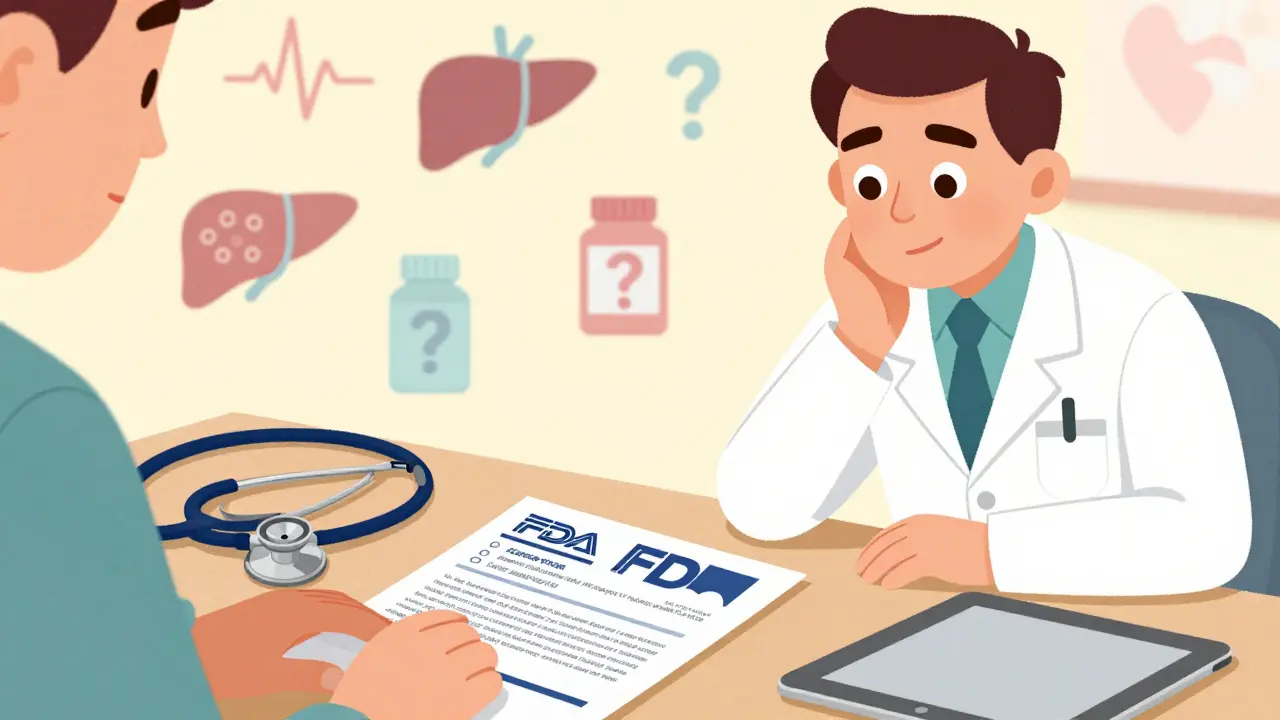
Instead of asking, “Is this drug dangerous?” ask:
- “Does this new information change how we should monitor my condition?”
- “Are there alternative medications we should consider based on this update?”
- “Do I need any new tests because of this alert?”
- “Is this risk higher for someone like me-[age], [other conditions], [other meds]?”
These questions show you’re thinking like a partner, not a patient who’s scared. They also give your doctor a clear path to respond with evidence, not emotion.
For example, if you’re on a blood pressure med and the alert mentions increased risk of cough in elderly patients, your doctor might say: “You’re 52, no history of lung issues, and you’ve been on this for two years without side effects. We’ll keep monitoring, but no change needed.” That’s a good outcome.
Understand why doctors sometimes seem dismissive.
It’s not because they don’t care. It’s because they’re drowning in alerts.
Studies show doctors override drug safety warnings in electronic systems between 49% and 96% of the time. Why? Many alerts are irrelevant to the patient in front of them. A warning about liver damage in people over 70 doesn’t matter if you’re 35. A warning about interactions with aspirin doesn’t apply if you don’t take aspirin.
When a doctor says, “That doesn’t apply to you,” they’re not shutting you down-they’re using their expertise to filter noise. Your job is to make sure they have the full picture. If they say, “It’s alarmist,” ask: “Can you show me why it doesn’t apply to me?” That invites a real explanation, not a dismissal.
What if your doctor says to stop the drug?
Never stop a medication on your own, even if the alert sounds scary. Some drugs-like antidepressants, blood thinners, or seizure meds-can cause serious withdrawal or rebound effects if stopped suddenly.
If your doctor suggests stopping, ask: “What’s the plan for replacing it?” and “How will we monitor for side effects during the switch?”
For example, a 2025 alert on Leqembi (used for Alzheimer’s) recommended earlier MRI monitoring. That didn’t mean stop the drug-it meant schedule an MRI sooner than planned. The alert changed the protocol, not the treatment.
What if your doctor says nothing needs to change?
That’s okay. It doesn’t mean you were wrong. It means your doctor understood the context.
Many alerts are about population-level risks. Your personal risk might be near zero. If you’re on a statin and there’s a new alert about muscle pain in older adults, but you’re 48, active, and have no muscle symptoms, the alert may not apply. That’s not ignorance-it’s precision.
Ask: “Will you note this alert in my file so we can revisit it next year?” That way, if your health changes, you’ve already started the conversation.
Use the FDA’s email alerts. Set it and forget it.
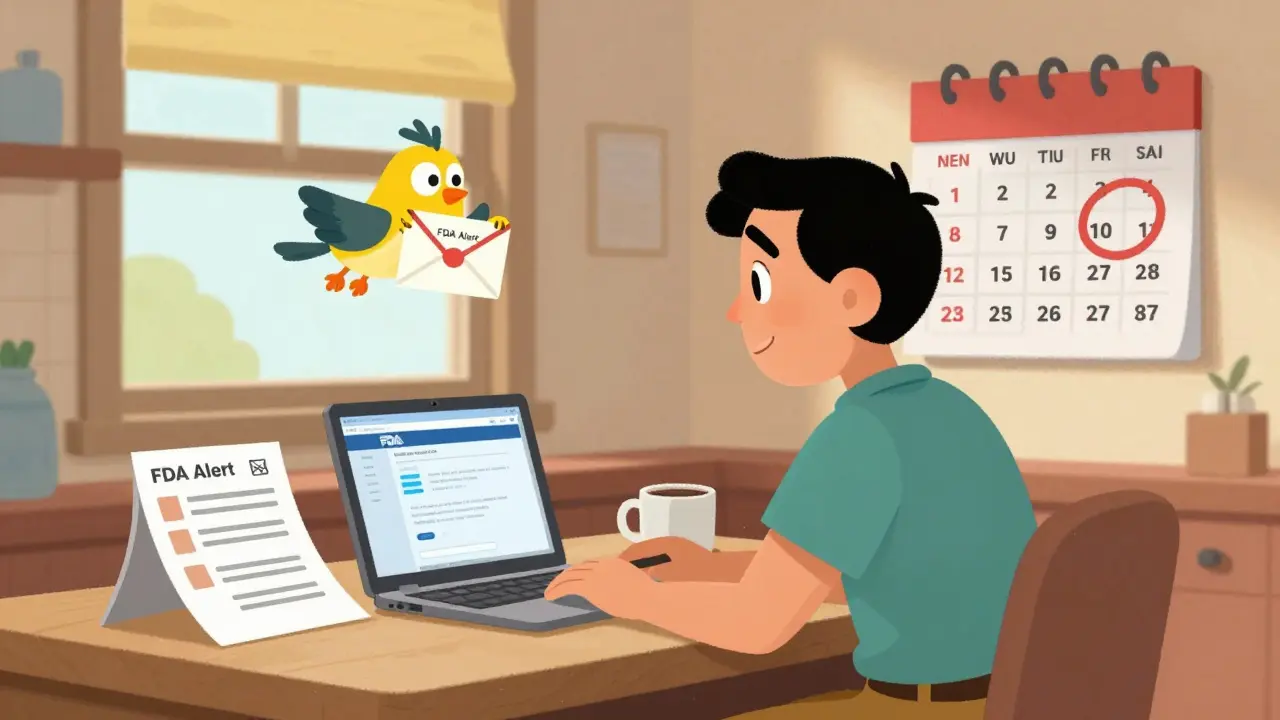
Since 2020, the FDA has let patients sign up for email alerts on specific drug types or medical conditions. Go to www.fda.gov/drugs/drug-safety-and-availability, scroll to the bottom, and click “Subscribe.” Pick your medications or conditions-like “antidepressants” or “blood pressure meds.” You’ll get a clean, plain-text email when something new drops. No ads. No clickbait. Just facts.
Set a calendar reminder to check your inbox once a month. That’s all it takes to stay informed without getting overwhelmed.
It’s not about fear. It’s about partnership.
Drug safety alerts exist because medicine isn’t perfect. Clinical trials involve thousands of people. Real-world use involves millions. Side effects that show up in 1 out of 10,000 patients won’t be caught in a trial of 5,000. That’s why post-market monitoring matters.
You’re not a troublemaker for asking. You’re a partner in your care. The best outcomes happen when patients come prepared, ask thoughtful questions, and respect their doctor’s expertise. You’re not replacing their judgment-you’re helping them make better decisions with more complete information.
Next time you see an alert, don’t panic. Don’t post it online. Don’t call your sister. Print it. Bring it. Ask. You’ve got this.
What should I do if I see a drug safety alert on social media?
Don’t act on it. Social media posts often misrepresent FDA alerts. Go straight to the official FDA Drug Safety Communications page and search for the exact medication and date. If you can’t find it there, it’s likely not real. Always verify before sharing or worrying.
Can I call my doctor’s office instead of scheduling an appointment?
You can call, but don’t expect a full answer over the phone. Nurses or medical assistants can pass along your concern, but only your doctor can make changes to your treatment. Ask if they offer brief “medication check-in” appointments-many do, and they’re often 10-15 minutes long.
Are drug safety alerts only for prescription medications?
No. The FDA issues alerts for over-the-counter drugs, vitamins, supplements, and even medical devices like insulin pumps or joint replacements. If it’s regulated by the FDA, it can be included in a safety alert. Always check the official source, even for “natural” products.
How often do drug safety alerts happen?
The FDA issues about 10-15 new Drug Safety Communications each month. That’s roughly 120-180 per year. Most are minor updates-like adding a new warning to the label. A few are major, like boxed warnings or REMS changes. Signing up for email alerts helps you focus only on what matters to you.
What if my doctor won’t listen to me?
If your doctor consistently dismisses your concerns without explanation, it’s time to find a new one. You deserve a provider who respects your role in your care. Look for doctors who encourage questions, share resources, and treat you as a partner-not a passive recipient of treatment.
Comments (9)
Chris & Kara Cutler
OMG YES THIS!!! 🙌 I printed the FDA alert about my blood pressure med and handed it to my doctor like it was a treasure map. She actually paused, read it, and said "You’re right, let’s check your labs." Best 10 minutes of my life. Don’t be shy-bring the paper, not the panic!
Rachel Liew
i just wanted to say thank you for writing this. i’ve been scared to talk to my dr about my antidepressant alert because i thought i’d sound crazy. but you made it feel so normal. i printed the page last week and we talked about it. no drama. just facts. i feel so much better now. ❤️
Lisa Rodriguez
I’ve been a nurse for 18 years and I can tell you this: patients who bring printed FDA alerts? They’re the ones who get the most time and attention. Not because they’re pushy, but because they show up prepared. Most people just say "I read online..." and we tune out. But when you hand me a PDF with the date and link? That’s partnership. Keep doing this. We need more people like you.
Lilliana Lowe
While the sentiment is laudable, the article’s reliance on anecdotal survey data (e.g., "9 out of 10 doctors") without citing peer-reviewed sources undermines its credibility. Furthermore, the phrase "you’ve got this" is a patronizing trope that infantilizes patient autonomy. The FDA’s communications are legally binding documents-not motivational posters. A more rigorous approach would involve referencing 21 CFR Part 314 or the REMS database directly.
Melissa Melville
so like… you’re telling me i shouldn’t trust my aunt’s friend’s cousin’s Instagram post about my meds being a "brain melting poison"? shocker. next you’ll say i shouldn’t believe TikTok when it says coffee causes time travel. 🤦♀️ but hey, at least i can print the FDA page now. thanks for the reminder that real life is weirdly boring.
Deep Rank
i read this and i just feel so sad for people who think they can fix their health with a printed pdf. the real issue is the pharmaceutical industry is poisoning us and the FDA is just a puppet. you think your little printout changes anything? you’re just being used to make doctors feel better about ignoring real systemic problems. i’ve been on 17 different meds and every single one had a hidden danger they never told you about. you think your 10-minute check-in fixes that? please. you’re just part of the machine now. wake up.
Bryan Coleman
This is solid. I’m a pharmacist and I see this all the time. People panic over alerts that say "risk increases in patients over 70" and they’re 32. I just say, "Does that sound like you?" and they laugh. Bring the doc the alert. Ask one question. Walk out smarter. That’s all it takes.
Nidhi Rajpara
I appreciate the intention behind this article, but I must respectfully point out that the assumption that patients can accurately interpret FDA Drug Safety Communications without medical training is fundamentally flawed. The language is often technical, and contextual factors such as pharmacokinetics, comorbidities, and drug interactions require clinical expertise to evaluate. Relying on self-education without professional guidance may lead to inappropriate discontinuation or unnecessary anxiety. The FDA’s communications are intended for healthcare providers, not laypersons.
Donna Macaranas
I just signed up for the FDA email alerts for my diabetes med. It’s so nice to get a quiet, clean email instead of some clickbait headline. I’ll check it once a month. No stress. Just info. Thanks for the nudge.