
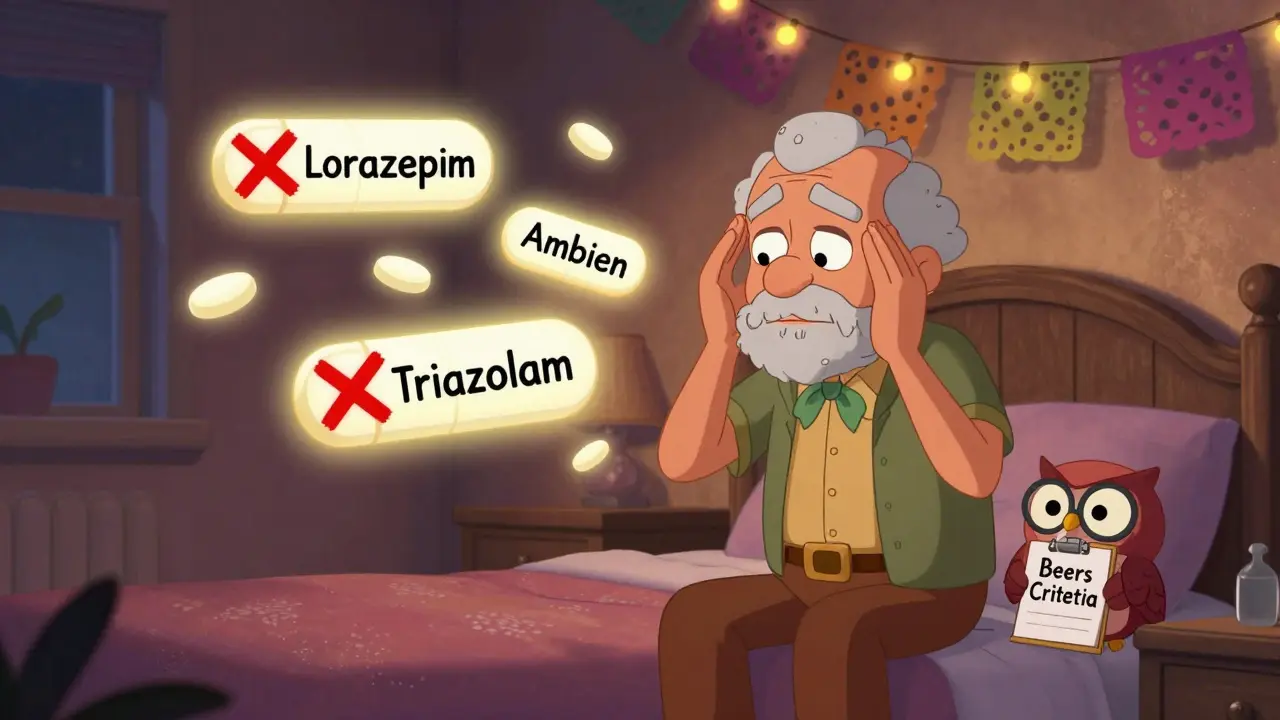
More than one in three adults over 65 struggle with insomnia. It’s not just trouble falling asleep-it’s waking up too early, lying awake for hours, or feeling exhausted all day. For older adults, this isn’t normal aging. It’s a medical issue that can lead to falls, memory problems, and even disability. And while pills are often the first thing doctors reach for, many of them are riskier than people realize.
Why Older Adults Need Safer Sleep Meds
As we age, our bodies change. The liver and kidneys don’t clear drugs as quickly. Medications stick around longer, increasing side effects. Many older adults take five or more pills a day. Add a sleep med, and the risk of dangerous interactions shoots up. The American Geriatrics Society has been clear since 2012: benzodiazepines like lorazepam and temazepam should not be first-line treatment. Why? They double the risk of falls and hip fractures. A 2018 study found that combining these drugs with other sedatives-like painkillers or anti-anxiety meds-increases fall risk by 70%.Even short-acting drugs like triazolam, which seem harmless because they wear off fast, carry hidden dangers. They can cause confusion, memory gaps, and next-day grogginess. One study showed that 2.3 times more older adults had bad reactions to triazolam than to a placebo. And it’s not just physical risks. Long-term use can make insomnia worse over time, creating dependency. The brain starts to rely on the drug to sleep, making it harder to stop.
The Newer, Safer Options
Thankfully, better choices exist. The FDA has approved several newer medications designed specifically with older adults in mind. These aren’t just ‘newer’-they’re built differently.Lemborexant (brand name Dayvigo) works by blocking orexin, a brain chemical that keeps us awake. It’s not a sedative-it helps the brain shift naturally into sleep. Clinical trials in adults over 65 showed it reduced the time to fall asleep by 15 minutes and added over 40 minutes of total sleep. Most importantly, only 12% of users reported next-day drowsiness. A 2025 study found that people taking lemborexant had 18% less disability progression over a year compared to those on benzodiazepines.
Suvorexant (Belsomra) works the same way but has a slightly shorter half-life. It’s effective for both falling asleep and staying asleep. Side effects are mild-mostly dizziness or headache-and usually fade after a week.
Ramelteon (Rozerem) mimics melatonin, the body’s natural sleep signal. It doesn’t cause dependence or next-day grogginess. It’s not a strong sleep inducer-it helps you fall asleep faster, but doesn’t necessarily keep you asleep all night. Still, for older adults who struggle to fall asleep but don’t wake up often, it’s a clean, safe option. Studies show it increases total sleep time by about 23 minutes.
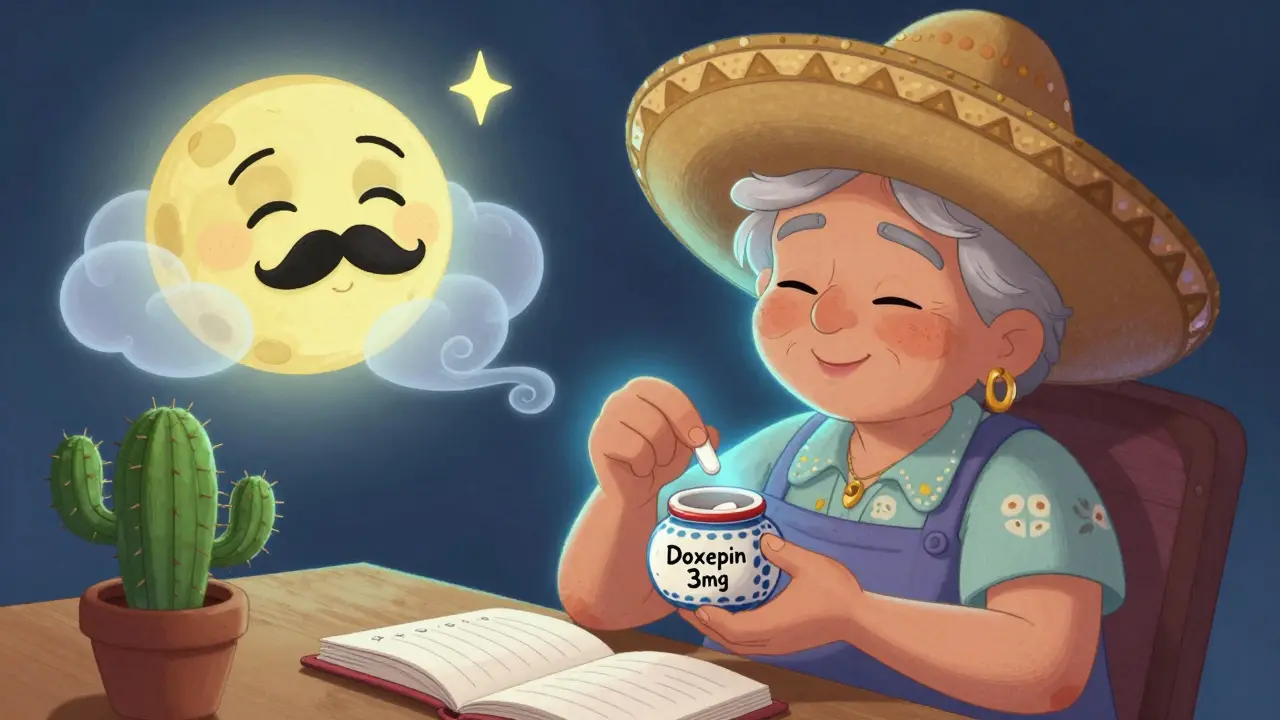
Low-dose doxepin (Silenor) is the quiet hero here. At 3 to 6 mg, it’s not used as an antidepressant-it’s used solely for sleep maintenance. It blocks histamine receptors in the brain, helping you stay asleep without causing confusion or muscle weakness. A 2024 meta-analysis found it improved sleep efficiency more than any other medication tested. Patients report fewer side effects: only 12% felt groggy the next morning at the 3 mg dose. And it costs about $15 a month, compared to $750 for lemborexant without insurance.
What to Avoid
Despite guidelines, many older adults are still prescribed risky meds. Here’s what doctors should stop giving:- Zolpidem (Ambien): Even at low doses, it’s linked to sleepwalking, driving while asleep, and memory loss. One in 12 users reports these behaviors.
- Eszopiclone (Lunesta): Can cause dizziness, metallic taste, and next-day impairment. Risk increases with age.
- Zaleplon (Sonata): Short-acting, but still carries fall risk and is often overused.
- Benzodiazepines: Triazolam, temazepam, lorazepam-these are outdated for seniors. The risks far outweigh the benefits.
A 2024 Medicare analysis found that 7.2 million older adults were still prescribed benzodiazepines for sleep-despite clear warnings. That’s nearly half of all insomnia prescriptions. It’s not just doctors’ fault. Many patients ask for ‘something stronger.’ But stronger doesn’t mean better. It means more dangerous.
How to Talk to Your Doctor
If you or a loved one is struggling with sleep, here’s what to do:- Ask: ‘Is this the safest option for someone my age?’
- Request a sleep diary: Track when you go to bed, wake up, and how rested you feel. This helps your doctor see patterns.
- Ask about non-drug options: Cognitive Behavioral Therapy for Insomnia (CBT-I) is proven to work better than pills long-term. It’s not magic-it’s structured training to fix bad sleep habits.
- Check for interactions: Bring your full medication list. Even over-the-counter antihistamines (like diphenhydramine in Benadryl) can cause confusion and falls.
- Start low, go slow: If a med is prescribed, ask for the lowest dose possible. Evaluate after 2-4 weeks. Don’t keep taking it ‘just in case.’
Many doctors don’t have time to explore alternatives. But you can help. Print out a list of safer options. Bring up the Beers Criteria. Say: ‘I’ve read that doxepin or ramelteon might be better for me. Can we try one of those first?’
The Real Cost of Sleep Meds
Cost matters. Lemborexant is effective-but expensive. Low-dose doxepin costs $15 a month. Controlled-release melatonin (2 mg) is under $10. Ramelteon is mid-range. Many seniors can’t afford newer drugs. Insurance often blocks them. Medicare Part D requires prior authorization for lemborexant in 78% of cases.But the real cost isn’t just the price tag. It’s the hospital bill after a fall. The lost independence. The cognitive decline that follows years of sedative use. Studies show that each additional insomnia symptom increases disability risk by 15%. Using sleep meds adds another 27% risk over a year. That’s not just sleep-it’s safety.

What Works Best in Real Life
Patient reviews tell a clear story. On Drugs.com, low-dose doxepin got a 7.2/10 rating. Users said: ‘I finally slept through the night without feeling drugged.’ One Reddit user, u/Senior_Sleeper_65, wrote: ‘Doxepin 3mg gave me 5 extra hours of solid sleep without the hangover I got from Ambien-wish my doctor had tried this first.’Lemborexant users on PatientsLikeMe reported 72% satisfaction. But many noted the cost was a barrier. One Amazon reviewer said: ‘It works great. But I can’t keep paying $750 a month.’
The pattern is obvious: the safest, cheapest, most effective option for most older adults is low-dose doxepin or ramelteon. They don’t cause confusion. They don’t increase fall risk. They don’t create dependency. And they actually work.
Next Steps: What to Do Today
If you’re taking a sleep med right now:- Don’t stop suddenly. Talk to your doctor.
- Ask if you can switch to low-dose doxepin or ramelteon.
- Request a CBT-I referral. Many community health centers offer it for free or low cost.
- Review all your meds with a pharmacist. They can spot dangerous combinations.
- Keep a sleep log for two weeks. It’s the best way to show your doctor what’s really happening.
Insomnia isn’t a life sentence. But the wrong pill can make it worse. The right choice doesn’t have to be expensive. It doesn’t have to be strong. It just has to be safe.
What is the safest sleep medication for older adults?
The safest options are low-dose doxepin (3-6 mg) and ramelteon (8 mg). Doxepin helps with staying asleep and has minimal next-day effects. Ramelteon helps with falling asleep and carries no risk of dependence or cognitive impairment. Both are much safer than benzodiazepines or z-drugs like Ambien or Lunesta.
Why are benzodiazepines dangerous for seniors?
Benzodiazepines increase the risk of falls by 50-60%, raise the chance of hip fractures, and can cause confusion, memory loss, and next-day drowsiness. Older adults metabolize these drugs slower, so they build up in the body. Even short-acting ones like triazolam carry high risks. The American Geriatrics Society recommends avoiding them entirely for insomnia in older adults.
Can melatonin help older adults sleep better?
Yes, but only controlled-release melatonin (2 mg) is recommended. Regular melatonin supplements vary widely in dose and quality. Controlled-release versions help maintain sleep through the night, not just help you fall asleep. Studies show it’s modestly effective and very safe, with almost no side effects.
Is CBT-I really better than medication?
Yes. CBT-I (Cognitive Behavioral Therapy for Insomnia) is the most effective long-term treatment for insomnia in older adults. It teaches you how to fix sleep habits, reduce anxiety around sleep, and improve sleep efficiency. Studies show it works as well as or better than pills-and the benefits last years after treatment ends. It’s recommended as the first-line treatment by the American Academy of Sleep Medicine.
How long should older adults take sleep medication?
Most sleep meds should be used for no more than 4-5 weeks. Long-term use increases dependency and side effects. Low-dose doxepin is an exception-it can be used safely for months or years under a doctor’s supervision. Always have a plan to taper off. Never take sleep meds ‘just in case.’
Comments (8)
bob bob
Finally, someone said it straight - doxepin at 3mg is the unsung hero of senior sleep. I’ve been on it for a year, and my wife says I don’t groan in my sleep anymore. No zombified mornings. No walking to the fridge at 3 a.m. like a ghost. Just quiet, deep sleep. Why the hell are doctors still pushing Ambien? 😅
Jack Wernet
While I appreciate the clinical precision of this post, I must emphasize the ethical imperative to prioritize patient autonomy and informed consent. The pharmacological landscape for geriatric insomnia is fraught with unintended consequences, and the marginalization of non-pharmacological interventions remains a systemic failure. CBT-I, though underfunded and underpromoted, is not merely an alternative - it is the gold standard. We must advocate for policy reform that ensures equitable access to evidence-based care, not merely cheaper pills.
Vikram Sujay
Respectfully, the focus on medication efficacy overlooks the deeper cultural and social dimensions of sleep disruption in older adults. In many Indian households, elders sleep in the same room as grandchildren - noise, light, and familial obligation disrupt circadian rhythm more than any neurotransmitter imbalance. Medication may mask symptoms, but it does not restore harmony. Perhaps we should also ask: Who is keeping the house quiet? Who is listening to the elder’s fears at night? Sleep is not a biochemical problem - it is a relational one.
Jay Tejada
So let me get this straight - we’ve got a $750 pill that works, and a $15 pill that works just as well… but the $750 one gets all the ads and the fancy brochures? Classic. Pharma’s got the marketing team on steroids and the doctors on commission. I’m just glad my grandpa switched to doxepin after his third fall. Now he just naps on the porch like a contented cat. 🐱
Justin Lowans
This is one of the most lucid, meticulously researched pieces on geriatric sleep I’ve encountered in years. The distinction between pharmacokinetic changes in aging and the industry’s persistent reliance on outdated sedatives is chilling - and yet, so few clinicians are equipped to challenge the status quo. I’ve shared this with my entire geriatric practice team. The data on doxepin’s sleep efficiency, coupled with its negligible cognitive impact, should be mandatory reading in residency programs. Thank you for this.
Michael Rudge
Oh wow, another ‘just use melatonin and talk to your dog’ solution. Real groundbreaking. You know what else works? A good, old-fashioned, FDA-approved z-drug. People aren’t dying from Ambien - they’re dying from loneliness and boredom. Maybe if their kids visited instead of texting ‘u up?’ at 2 a.m., they wouldn’t need meds at all. Just saying.
Cassie Tynan
Let’s be real - if you’re still prescribing temazepam to someone over 70, you’re either asleep at the wheel or getting kickbacks from Pfizer. I’ve seen grandmas on these drugs wander into traffic thinking they’re in their 30s. The real scandal? Insurance won’t cover CBT-I unless you’ve already nearly broken your hip. We’re treating symptoms while the system burns down. 🤦♀️
Rory Corrigan
doxepin 3mg = 🌙✨
ambien = ☠️💀
cbt-i = 🧘♂️🧠
benzos = 🚫👵
ramelteon = 🌙💤
my grandpa’s new favorite thing: silence.