
When Your Life-Saving Medication Expires, It’s Not Just Old - It’s Dangerous
You check the date on your insulin vial. It’s three months past expiration. You’ve been saving money by using it anyway. Or maybe your EpiPen’s label says it expired last year, but it still looks fine - no leaks, no discoloration. You tell yourself, It’ll probably work. But here’s the truth: expired insulin, EpiPens, and nitroglycerin don’t just lose effectiveness. They can kill you.
These aren’t ordinary pills you can skip for a day. These are emergency drugs. The kind you use when your body is falling apart. And when they fail, there’s no second chance.
Insulin: A Protein That Breaks Down - Fast
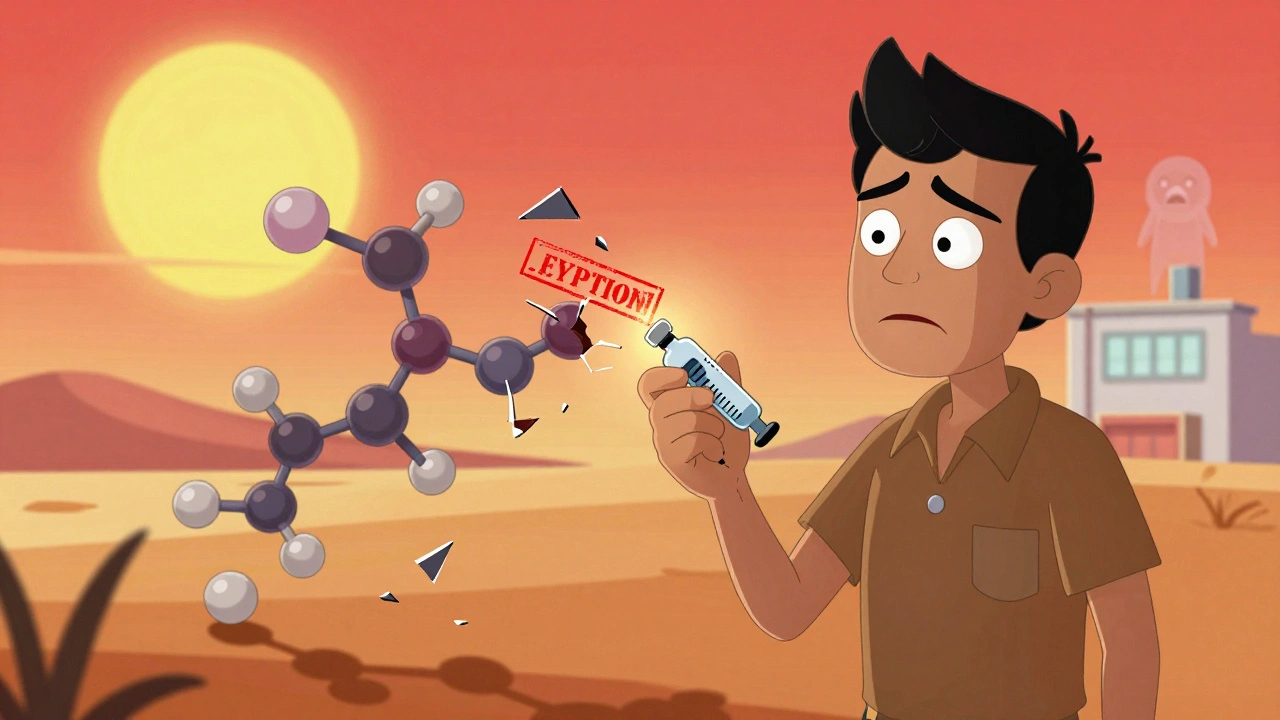
Insulin is a protein. Not a chemical. A living molecule that unfolds and breaks apart when it gets too hot, too old, or too shaken. Once it’s opened, most types last only 28 to 42 days - no matter what the bottle says. That’s not a suggestion. That’s science.
Studies from the American Diabetes Association show that insulin can lose up to 50% of its potency within six months after expiration, especially if stored at room temperature. One patient in a 2023 case study used insulin that was three months past its date. His blood sugar swung wildly - from 50 to 450 mg/dL - even though he was dosing the same amount. He ended up in the hospital with diabetic ketoacidosis. That’s not a glitch. That’s a direct result of degraded insulin.
Even unopened vials aren’t safe past their printed date. Refrigeration keeps them stable, but once that date passes, the risk of unpredictable dosing rises. And if you’re using insulin in a hot climate - like Perth in summer - even a few hours in a car or sunlit bag can ruin it before the expiration date even hits.
EpiPens: The 10% That Could Save Your Life
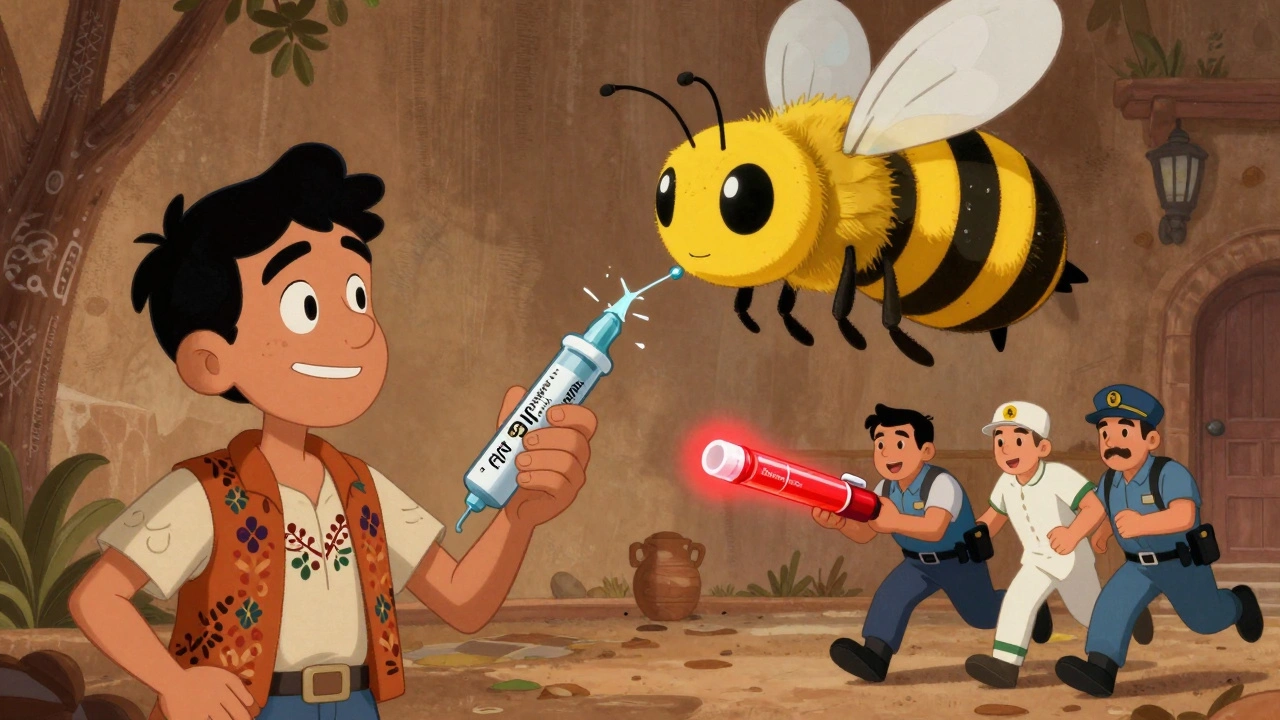
An EpiPen isn’t just a needle. It’s your body’s last line of defense against anaphylaxis. A bee sting. A peanut. A shellfish reaction. In seconds, your airway can close. The epinephrine inside must hit your bloodstream fast - and hard.
Manufacturers say EpiPens are good for 18 months. But here’s what they don’t tell you: even at the printed expiration date, the device delivers only about 80% of the labeled dose. After that? It drops fast. A 2021 study found that 12 months past expiration, EpiPens delivered just 52-68% of the needed epinephrine. That’s not enough to reverse a life-threatening reaction.
There’s a story from Reddit where a man used an expired EpiPen after a bee sting. It didn’t work. He needed three doses from paramedics to stabilize. Another person used a 2-week-expired EpiPen during a mild reaction - and it worked. But that’s luck, not reliability. Anaphylaxis doesn’t wait for perfect conditions. It doesn’t care if your EpiPen is slightly past date. It only cares if it works now.
The American College of Allergy, Asthma, and Immunology says: if you have no other option, use an expired EpiPen. But call 911 immediately. And tell them it was expired. Because every second counts.
Nitroglycerin: The Heart’s Emergency Brake - and Why It Fails
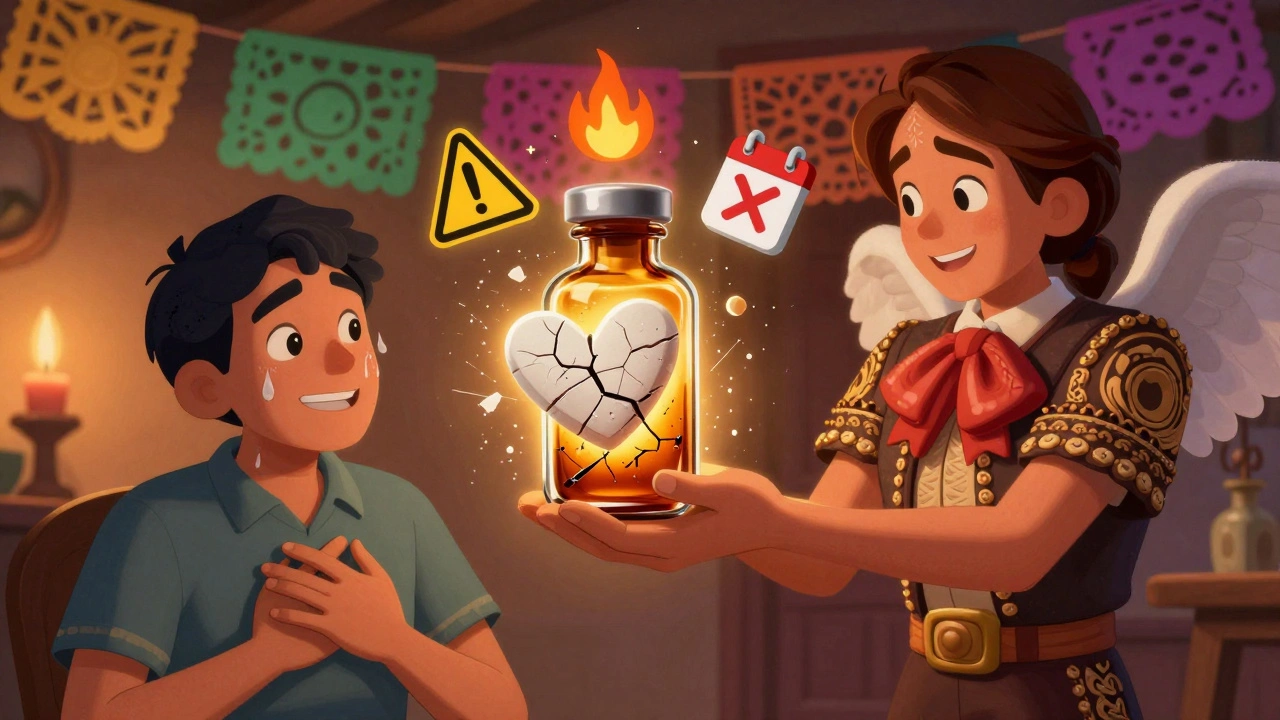
Nitroglycerin tablets are tiny. They fit in a glass vial the size of a matchbox. But they’re the difference between chest pain and a heart attack. They work by relaxing blood vessels - instantly. But they’re also incredibly unstable.
Even before expiration, nitroglycerin starts losing strength. A 2018 study showed a 20% drop in potency within just 30 days of opening the bottle. After six months past expiration? It’s often completely useless. That’s not speculation. It’s what happened in a Baptist Health study: 78% of patients who used expired nitroglycerin during chest pain ended up in the ER. Only 22% who used fresh tablets did.
And storage matters. If you keep it in your bathroom, in the heat, or in a plastic pill organizer, it degrades faster. The original amber glass bottle? That’s not for show. It blocks light. It keeps air out. Repackaging it? That’s a mistake. The American Heart Association says replace your nitroglycerin every 3-6 months after opening - even if you haven’t used it once.
One cardiac patient in San Antonio reported his nitro “just didn’t work” during chest pain. He thought it was a bad batch. Turns out, it was 14 months old. He survived. But he didn’t get lucky. He got lucky that someone else called 911 fast.
Why Other Medications Can Wait - But These Can’t
You’ve heard the story: the FDA tested expired drugs and found 90% still worked years past their date. That’s true. But that’s for antibiotics, blood pressure pills, or painkillers. Not for these.
Insulin, epinephrine, and nitroglycerin are unstable by nature. They’re biologics or volatile compounds. They don’t sit quietly on a shelf. They react. They break down. They lose power. And when they do, they don’t just underperform - they fail catastrophically.
Compare that to an expired ibuprofen. It might take longer to work. But it won’t stop your heart from beating. An expired albuterol inhaler? Still 85-92% effective past expiration. An expired EpiPen? Down to 50%. That’s not a small difference. That’s the difference between life and death.
How to Stay Safe: Simple Rules for Critical Medications
You don’t need to be a pharmacist to keep these drugs working. Just follow these steps:
- Track two expiration dates for insulin: the manufacturer’s date (for unopened vials) and the 28-42 day clock (for opened ones). Write both on the bottle with a Sharpie.
- Replace nitroglycerin every 3-6 months after opening. Don’t wait for it to expire. Don’t rely on how it looks. Set a calendar reminder.
- Check your EpiPen every month. Look at the solution. If it’s cloudy, brown, or has particles - throw it out. Even if the date is still good.
- Store them right. Insulin: refrigerated until opened. EpiPens: room temperature, away from heat and light. Nitroglycerin: in the original glass bottle, in a cool, dry drawer - not your purse or glove compartment.
- Dispose of them properly. Don’t flush them. Don’t toss them in the trash. Take expired insulin, EpiPens, or nitroglycerin to a pharmacy with a drug take-back program. They’re hazardous waste.
What If You Can’t Afford to Replace Them?
One in five low-income patients in the U.S. admit to using expired insulin because they can’t afford new ones. That’s not just risky - it’s deadly. And it’s happening in Australia too, where prescription costs still bite hard.
But there are options:
- Ask your doctor about insulin assistance programs. Sanofi, Novo Nordisk, and Eli Lilly all have patient support plans.
- Some pharmacies sell generic insulin for under $25 per vial.
- Call your local diabetes center. Many offer free or low-cost supplies.
- For EpiPens, consider Symjepi - a newer autoinjector with a 24-month shelf life and lower cost.
There’s no excuse for using expired critical meds because of cost. But there’s every reason to avoid it because of risk.
The Future Is Smarter Packaging - But Don’t Wait for It
Some new insulin pens now have built-in temperature sensors. New nitroglycerin vials are being tested with color-changing indicators that warn you when potency drops below 90%. EpiPens may soon come with 24-month shelf lives instead of 18.
But none of that is here yet for most people. And even if it were, you’d still need to check. You’d still need to replace. You’d still need to act.
Technology won’t save you if you ignore the date on the bottle.
Can I use expired insulin if it looks fine?
No. Insulin degrades at a molecular level - you can’t see it. Even if it looks clear and clean, it may have lost half its potency. Using expired insulin can cause dangerous blood sugar swings, diabetic ketoacidosis, or long-term organ damage. Never use it past its expiration or 28-42 days after opening.
Is it safe to use an expired EpiPen in an emergency?
If you have no other option, yes - use it. But call 911 immediately. An expired EpiPen may deliver only half the needed epinephrine. It’s better than nothing, but it’s not reliable. Emergency responders need to know it was expired so they can treat you appropriately.
How often should I replace my nitroglycerin?
Replace nitroglycerin every 3-6 months after opening the bottle - even if you haven’t used it. The tablets lose potency rapidly when exposed to air, light, or heat. Keep them in the original amber glass bottle and store them in a cool, dry place. Don’t transfer them to pill organizers.
Why can’t I just keep using these meds past expiration like other drugs?
Most medications are stable chemicals. Insulin, epinephrine, and nitroglycerin are not. They’re biologics or volatile compounds that break down quickly. Their failure isn’t gradual - it’s sudden and life-threatening. A 10% drop in potency for an antibiotic might not matter. A 50% drop in insulin or epinephrine could kill you.
What’s the safest way to dispose of expired insulin, EpiPens, or nitroglycerin?
Take them to a pharmacy with a drug take-back program. Never flush them down the toilet or throw them in the trash. These are hazardous materials. Pharmacies are equipped to dispose of them safely and legally. Some local health departments also offer disposal events.
Final Thought: Your Life Depends on This
These aren’t just medications. They’re your emergency lifelines. You wouldn’t drive a car with worn brakes and say, It’s still got tread. You wouldn’t use a fire extinguisher that’s three years past its date. So why risk your life with expired insulin, EpiPens, or nitroglycerin?
Check the dates. Replace them on time. Store them right. And if you can’t afford them - ask for help. There are programs. There are options. But there is no safe way to use these drugs past their expiration.
One day, you might need them. And when you do, they have to work - perfectly - the first time.
Comments (10)
Michaux Hyatt
Just had to replace my insulin after reading this-my vial was two months past opening, and I thought I was being smart. Turns out I was just being reckless. Thanks for the wake-up call. I’m setting calendar reminders now for everything.
Raj Rsvpraj
How dare you suggest that Indians, or any non-Westerners, are ignorant about medication storage?! In my village, we’ve been storing epinephrine in clay pots to keep it cool for centuries-before your fancy refrigerators even existed! Your Western obsession with expiration dates is colonial nonsense. We know what works!
Jack Appleby
Let’s be precise: insulin degradation isn’t merely ‘loss of potency’-it’s a cascade of conformational denaturation, peptide bond hydrolysis, and aggregation kinetics accelerated by thermal energy and oxidative stress. The 28-day rule? Not arbitrary-it’s empirically derived from HPLC stability profiles. And nitroglycerin’s volatility? It’s an organic nitrate ester with a half-life of mere weeks in ambient conditions. You don’t ‘guess’ with bioactive compounds-this isn’t a buffet. It’s biochemistry. And if you’re still using expired EpiPens, you’re not brave-you’re statistically doomed.
Frank Nouwens
Thank you for taking the time to compile such a thorough and clinically accurate overview. I work in public health, and I’ve seen too many patients delay replacing their critical medications due to cost or misinformation. Your advice on storage and disposal is spot-on. I’ll be sharing this with our community clinics.
Kaitlynn nail
Life’s too short to babysit pills. But also… yeah, don’t die because you were cheap.
Aileen Ferris
lol expiration dates are just corporate propaganda to sell more stuff. my grandad used penicillin from 1972 and lived to 98. also nitroglycerin? more like nitro-garbage. who even needs it?
Michelle Edwards
Hey-I’ve been there. I skipped replacing my EpiPen for a year because I was saving for rent. Then I had a reaction, and it didn’t work. I’m alive because my roommate called 911. You’re not alone in this. Reach out. There are people who want to help. You deserve to be safe.
David Palmer
Wait so you’re saying I can’t just keep my nitro in my pocket? That’s ridiculous. I’ve had it for 2 years. It’s fine. I’m not gonna buy a new one just because some guy wrote a long post. My heart’s fine. I’m fine.
Vivian Amadi
YOU’RE ALL IGNORANT. I’ve been using expired insulin since 2020. I’ve had 3 ER visits. I’m still standing. You think science is some holy book? I’ve lived. You just need to be tougher. Stop whining about dates. The system is rigged. I’m not buying new vials. I’ll use what I have. And I’ll survive.
Jimmy Kärnfeldt
There’s something deeply human here-not just about medicine, but about fear. We all know what we should do. But we delay because we’re scared: scared of cost, scared of change, scared of admitting we’re vulnerable. The real tragedy isn’t the expired vial. It’s the silence we keep while our bodies beg for help. You don’t have to be perfect. Just be honest. Reach out. Ask. Someone’s waiting to say yes.