
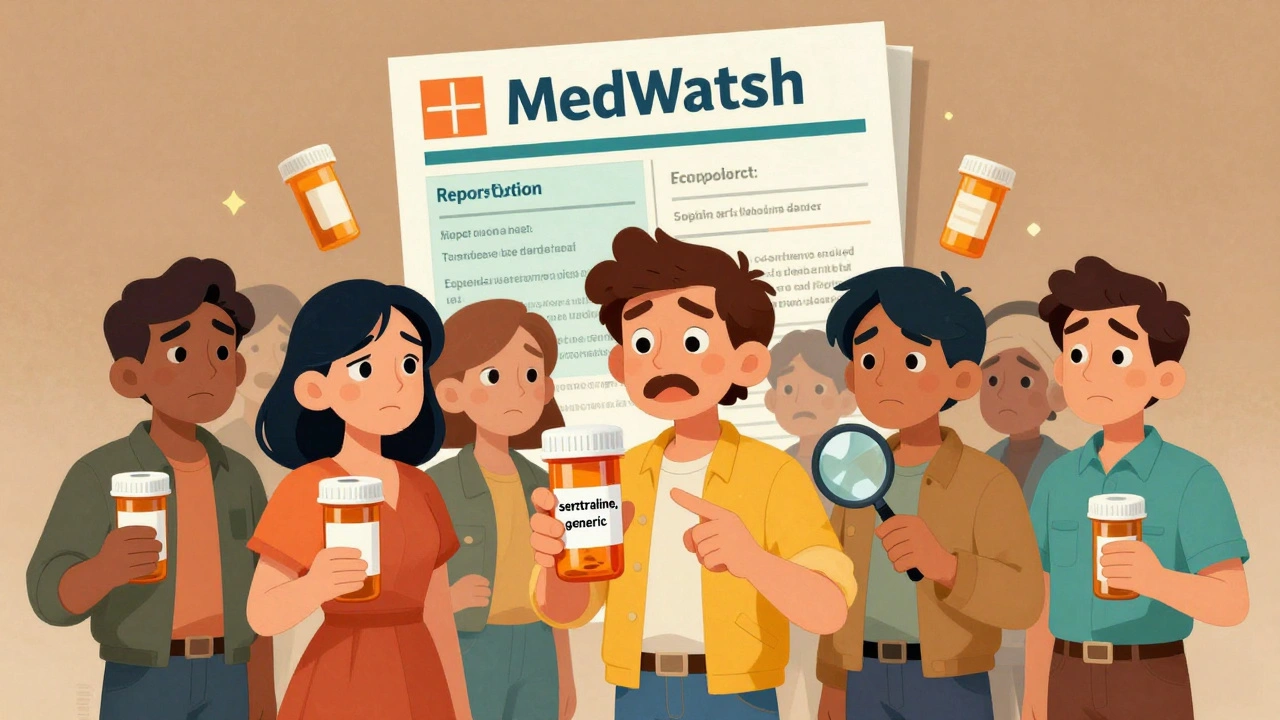
Every year, Americans fill over 4 billion prescriptions for generic drugs. That’s about 9 out of every 10 prescriptions written. But when something goes wrong-when a generic version of your blood pressure pill doesn’t seem to work like it used to, or you start having strange side effects you never had before-the system for reporting it is surprisingly broken. This is where MedWatch comes in. It’s the FDA’s main tool for collecting safety data on all drugs, including generics. But collecting that data isn’t as simple as filling out a form. There are gaps. Missteps. And a lot of silent patients who don’t know how or even if they should report a problem.
What MedWatch Actually Does for Generic Drugs
MedWatch isn’t a fancy lab or a secret database. It’s a reporting system. Anyone-patients, doctors, pharmacists, even manufacturers-can submit a report when something bad happens after taking a medicine. For generics, that means reporting things like: the drug didn’t control your seizures like the brand did, you broke out in a rash after switching to a cheaper version, or you felt dizzy and nauseous for the first time after your pharmacy switched your levothyroxine to a different generic manufacturer. The FDA doesn’t test every batch of every generic drug after it hits the shelf. Instead, they rely on real-world data. That’s where MedWatch steps in. It’s the only nationwide system that captures what patients actually experience after taking a generic medication. And it’s not just about side effects. Reports also include cases where the drug simply didn’t work-what experts call therapeutic inequivalence. That’s when a generic version doesn’t produce the same clinical result as the brand-name drug, even if it’s technically "bioequivalent" under lab conditions.How Reports Get Into the System
There are two main ways to file a MedWatch report: online or on paper. The online portal at www.fda.gov/MedWatch is the most common. It walks you through a simple form asking for the drug name, what happened, when it happened, and who reported it. For generics, the instructions are clear: enter the generic name first, then add "generic" and, if you know it, the manufacturer’s name. So instead of just typing "sertraline," you’d write "sertraline, generic, Teva" or "sertraline, generic, Mylan." But here’s the problem: most people don’t know who made their generic pill. The bottle might say "Generic Sertraline 50 mg" with no manufacturer listed. Even pharmacists sometimes don’t know which supplier their wholesaler sent that month. That’s why only about 28% of consumer reports include the manufacturer name. And that’s a huge blind spot. Healthcare professionals do better. About 78% of doctors and pharmacists who report know to look for the National Drug Code (NDC) on the packaging. That 11-digit number is unique to each drug, strength, package size, and manufacturer. But even then, the MedWatch form doesn’t have a dedicated field for it. You have to type it into a free-text box. That means the FDA’s computers have to guess what it means. And sometimes they get it wrong.The Hidden Gap: Brand vs. Generic
The biggest challenge isn’t getting reports-it’s telling them apart. The FDA’s database, called FAERS, holds over 9 million reports. But only about 33% of reports involving generics include the manufacturer name. Compare that to brand-name drugs: nearly 90% of reports correctly name the maker. That means if 100 people report feeling worse after taking a generic antidepressant, the FDA might only know that 33 of them switched from a brand to a specific generic version. The other 67? They just say "generic sertraline." That creates a serious blind spot. If 50 people report the same problem with a generic made by Company A, but 30 others report the same issue with Company B’s version, the system can’t tell which one is the problem. It just sees "generic sertraline." That’s why researchers spent years building an algorithm to automatically sort through reports and flag likely generic cases. As of early 2024, that algorithm is live. It’s 92% accurate at spotting generic reports. But it’s still not perfect.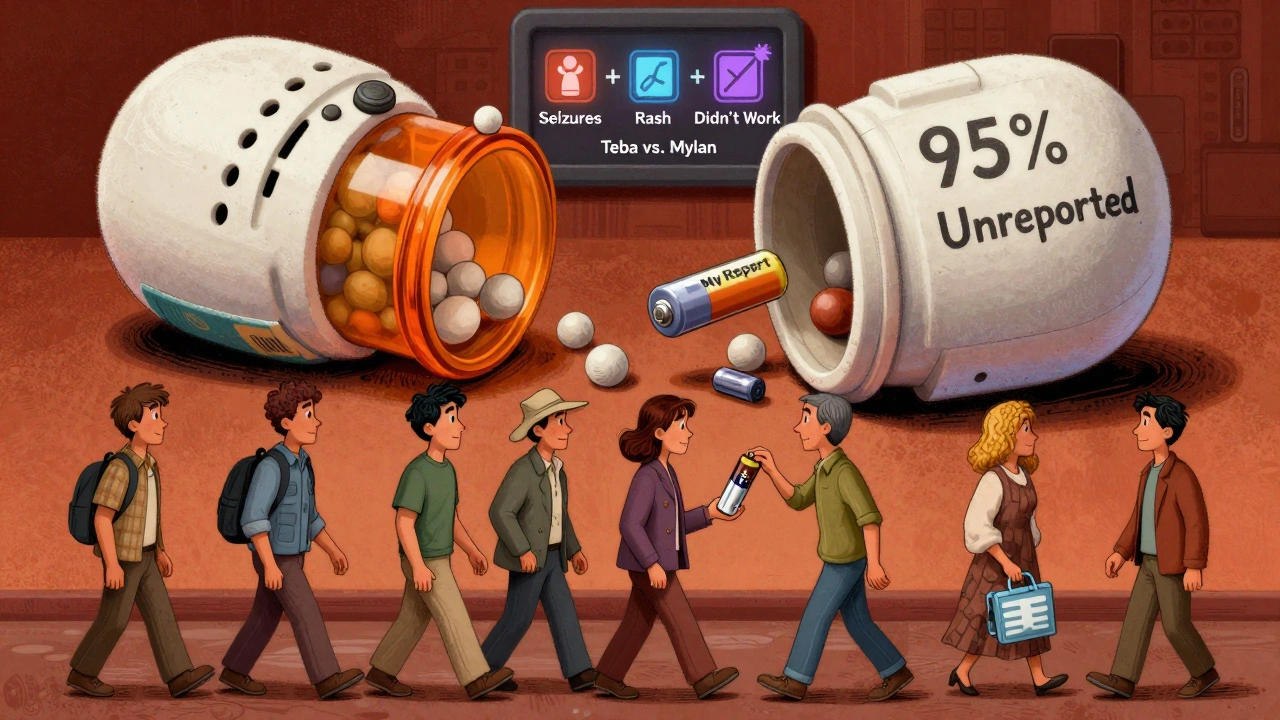
Why Patients Don’t Report-And Why They Should
Most patients don’t report because they don’t think it matters. "I just thought it was me," one patient told a forum in January 2025. She switched from brand-name sertraline to a generic and started having panic attacks. She didn’t connect the two until she read about others having the same experience. By then, she’d already stopped taking it. Another barrier: the system feels anonymous. You don’t get a confirmation email. You don’t get a follow-up. Most reports never get a response. A pharmacist in Ohio reported 17 cases of therapeutic failure with generic levothyroxine over three years. Only two got replies. But one of those led to a label change-adding a warning about possible absorption issues with certain generic versions. That’s the power of MedWatch: one report might not change anything. But 50 reports from the same drug? That’s a signal. The FDA says MedWatch is voluntary. That’s true. But that’s also the problem. If only 5% of people who have problems with generics report them, the system is missing 95% of the data. That’s why experts call it "underreported"-especially for generics, where patients often don’t realize they’re even taking a generic version.What Happens After You Submit
Once a report lands in FAERS, it doesn’t go to a person. It goes into a machine. The system looks for patterns. If 10 people report the same side effect with the same generic drug within a month, it gets flagged. If 50 people report therapeutic failure with a specific manufacturer’s version of bupropion XL, the FDA investigates. That’s exactly what happened in 2022. Multiple reports of seizures and mood swings linked to a Mylan-made generic bupropion led to a formal review. Within 11 months, the FDA required a label update warning about potential differences in how the drug is absorbed. That’s rare. But it’s possible. And it only happens because someone took the time to report it.What’s Changing-and What’s Not
The FDA knows the system is flawed. That’s why they launched GDUFA III in 2023-a plan to improve how generics are tracked. One big push: integrating MedWatch with electronic health records by 2026. Imagine if your doctor’s system automatically sent the NDC code and manufacturer name to the FDA every time a generic was prescribed. No more guessing. No more missing data. But until then, the burden is still on you. If you’re on a generic drug and something feels off-whether it’s a new side effect, a drop in effectiveness, or a weird reaction-you can report it. You don’t need to be a doctor. You don’t need to know the manufacturer. Just write down what happened, when, and what drug you were taking. If you can find the NDC code on the bottle, include it. If not, just write "generic" and the drug name.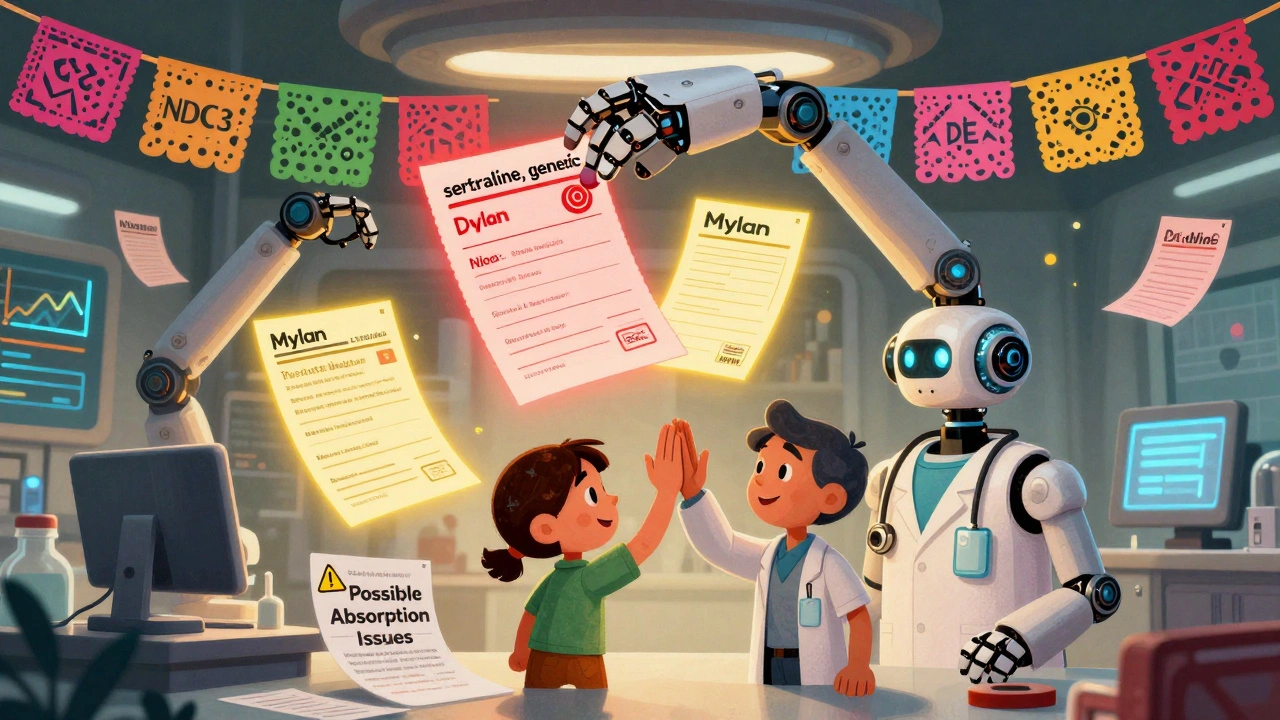
Why This Matters More Than You Think
Generics save the U.S. healthcare system over $300 billion a year. That’s huge. But cost shouldn’t come at the cost of safety. If a generic version of your medication causes more side effects than the brand, you deserve to know. And if that’s happening to thousands of others, the FDA needs to know too. Right now, the system is like a smoke alarm with a dead battery. It’s there. It’s supposed to work. But it won’t wake you up unless you change the battery. That battery? Your report.How to Report a Generic Drug Problem
You don’t need to be an expert. Here’s how to do it in five steps:- Write down the exact name of the drug (e.g., "sertraline").
- Check the bottle for the manufacturer name (e.g., "Teva," "Sandoz," "Mylan").
- Write down what happened (e.g., "increased anxiety," "headaches," "didn’t work like before").
- Note when it started (e.g., "two weeks after switching pharmacies").
- Go to www.fda.gov/MedWatch and fill out the form. If you don’t know the manufacturer, just write "generic" next to the drug name.
What the FDA Can’t Fix (Yet)
Even with better algorithms and new tech, MedWatch has limits. It can’t tell you if a generic is safer than another. It can’t force manufacturers to change their formula. And it can’t guarantee you’ll get a reply. But it can spot trends. And trends lead to action. The European Union already has a system that tracks generic manufacturers automatically. The U.S. is catching up. But until then, the only thing standing between a dangerous generic and a warning label is you.Do I need to know the generic manufacturer to report a problem?
No. You can still report even if you don’t know the manufacturer. Just write the drug name followed by "generic"-for example, "sertraline, generic." The FDA can still analyze the report. But if you can find the manufacturer name on the bottle or receipt, include it. That helps them pinpoint which version might be causing the issue.
Can I report side effects from a generic even if my doctor says it’s "bioequivalent"?
Yes. Bioequivalence means the drug is absorbed similarly in lab tests. But real people aren’t lab animals. Differences in inactive ingredients, coating, or manufacturing can affect how a drug works in your body. If you feel different after switching to a generic, your experience matters. The FDA takes patient reports seriously-even when the science says it "shouldn’t" happen.
How long does it take for the FDA to act on a MedWatch report?
There’s no set timeline. Most reports are reviewed as part of larger data trends, not individually. If multiple reports point to the same problem with a specific generic, the FDA may launch an investigation. That can take months or even over a year. But once enough data accumulates, the FDA can require label changes, issue safety alerts, or even request a recall.
Are generic drugs less safe than brand-name drugs?
Not necessarily. The FDA requires generics to meet the same standards for quality, purity, and strength as brand-name drugs. But small differences in inactive ingredients or manufacturing can lead to different experiences in patients. Most generics are safe and effective. But when problems do occur, they’re often missed because reports don’t identify the specific manufacturer. That’s why reporting matters.
Can I report a problem if I didn’t take the drug as directed?
Yes. The FDA wants to know about all problems, even if the drug was misused. That includes taking too much, mixing with alcohol, or not following instructions. These reports help the FDA understand real-world risks and update warnings on labels.
Comments (13)
Lara Tobin
I switched to a generic levothyroxine last year and started feeling like a zombie. Took me months to connect the dots. I reported it and forgot about it... until I got a letter from the FDA asking for more info. Turns out, they were investigating the same batch. You never know what your one report might do. 💔
Jamie Clark
Let’s be real-this isn’t about safety. It’s about corporate greed. The FDA lets generics slide because Big Pharma pays them in lobbying cash. You think they care if 50 people get panic attacks from a Mylan pill? No. They care if the stock price dips. The system is rigged. And you’re just a data point in their spreadsheet.
Harriet Wollaston
I used to think generics were just cheaper versions of the same thing... until my mom had a seizure after switching. She didn’t even know she was on a different maker. Now I check every bottle like it’s a bomb. If you’re on a generic, please report. Even if you think it’s "just you." It’s not. You’re not alone. 🤍
Lauren Scrima
So... you’re telling me the FDA’s entire safety net for 90% of our prescriptions... is a Google Form?
sharon soila
Everyone deserves safe medicine. No one should have to guess if their pill is working-or if it’s quietly harming them. Reporting isn’t just a duty. It’s a kindness. To yourself. To others. To the future. Please. Just take two minutes. It matters more than you know.
Tyrone Marshall
I’ve reported three times. Zero replies. Zero changes. Zero accountability. The system doesn’t care. It’s a ghost box. But I keep doing it anyway. Because maybe-just maybe-one day, someone will look at the data and say, ‘Wait. This isn’t normal.’ And then... something changes.
Emily Haworth
I think the FDA is secretly working with Big Pharma to keep us docile. Why else would they let the same manufacturer make 80% of generics? And why do all the bad reports disappear? 🕵️♀️👁️👁️ They’re deleting them. I’ve seen the patterns. The NDC codes? They’re being scrubbed. Wake up. This is a controlled release. 🧪
Yatendra S
In India, we have no choice but generics. We do not have luxury of brand names. But we also do not have MedWatch. So we suffer in silence. You in US have system. Use it. If you do not, who will? The corporations? They already won.
Himmat Singh
The premise of this article is fundamentally flawed. Bioequivalence is not a heuristic-it is a statistically validated pharmacokinetic standard. If patients perceive differences, it is either placebo effect, non-adherence, or psychological attribution bias. The system is not broken; the patients are misinformed.
kevin moranga
Hey, I know it’s easy to feel like your report won’t matter. I felt that way too. But I reported my weird rash after switching generics-and three months later, the FDA sent out a safety alert for that exact batch. I didn’t get a thank you. But I got peace of mind. You’re not just reporting a side effect-you’re helping someone else avoid it. So go ahead. Click the link. You’ve got this. 💪
Alvin Montanez
I can’t believe people still believe this nonsense. The FDA doesn’t need your reports. They already know which manufacturers are cutting corners. They just don’t care because the profits are too high. You’re not a hero for reporting. You’re a sucker. The system was designed to make you feel like you’re helping-while they keep collecting your data and ignoring it. Wake up. This is psychological manipulation dressed as public service.
Webster Bull
report it. even if u dont know the maker. just write generic. it helps. trust me.
Bruno Janssen
I used to report everything. Then I realized no one reads them. Now I just sit here, staring at my pill bottle, wondering if this one’s going to kill me. I don’t even have the energy to click the link anymore.