
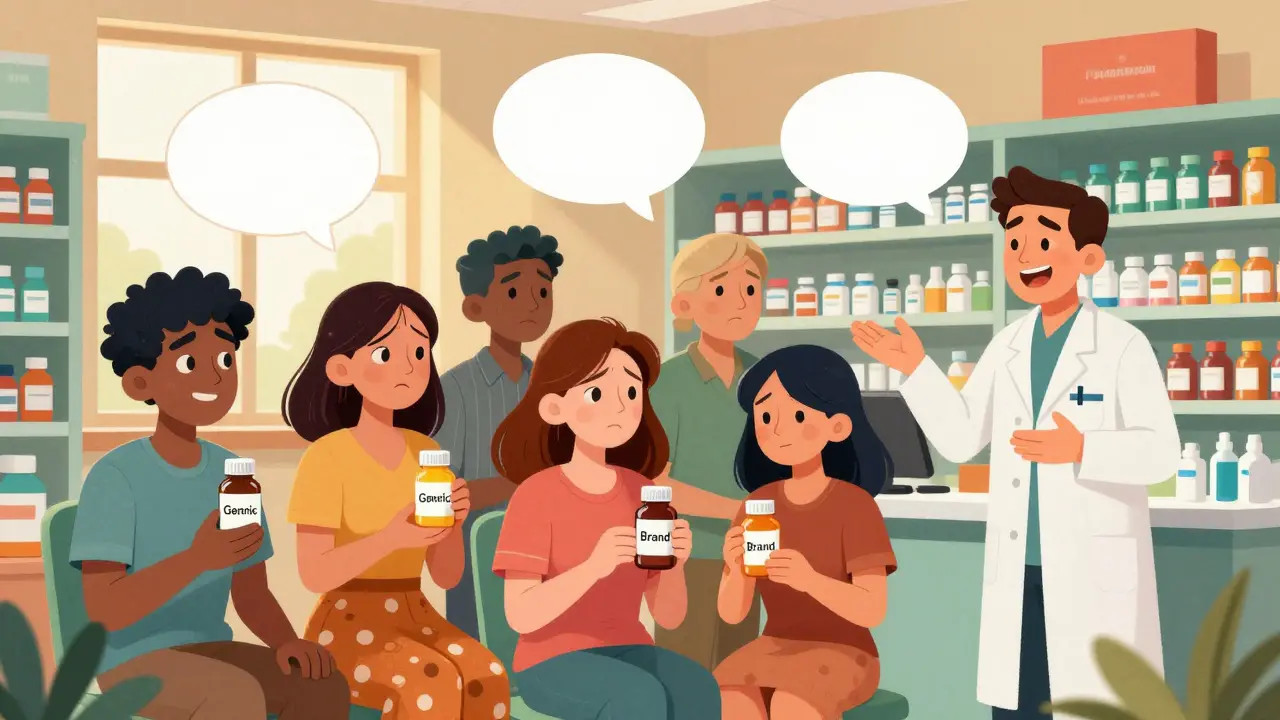
When you pick up a prescription for a generic drug, you’re getting the same active ingredient as the brand-name version-same chemistry, same FDA approval, same bioequivalence standards. But if you’ve read online reviews from other patients who say the generic ‘didn’t work’ or ‘gave me weird side effects,’ you might hesitate. You’re not alone. And it’s not just about cost. It’s about trust.
Why Do People Think Generics Don’t Work?
Generic drugs are legally required to be bioequivalent to their brand-name counterparts. That means they deliver the same amount of active ingredient into your bloodstream at the same rate. The FDA requires a 90% confidence interval for absorption to fall between 80% and 125% of the brand. For most drugs, that’s more than enough. But patients don’t read regulatory guidelines. They read Reddit threads. A 2023 analysis of over 6,000 posts on forums like PatientsLikeMe and r/pharmacy found that nearly half (47.3%) of negative comments blamed generics for ‘different side effects.’ Another third (32.9%) said the medication ‘just didn’t work like before.’ One user wrote: ‘I switched from Lyrica to the generic and my nerve pain came back worse. I’m not crazy-I know the difference.’ The problem? It’s often not the drug. It’s the placebo-or rather, the nocebo effect. When you expect something to fail, your brain can make you feel worse. Studies show patients who believe they’re taking a cheaper version report higher pain levels, more side effects, and lower satisfaction-even when the pill is identical to the brand.The Cost-Perception Trap
Generics cost 80-85% less than brand-name drugs. That’s why they make up 90% of all prescriptions filled in the U.S. But that same low price triggers suspicion. A 2020 study found that 31.7% of patients distrusted generics simply because they were cheaper. ‘If it’s so much cheaper, it must be lower quality,’ is a common assumption-even though the active ingredient is identical. This isn’t just irrational. It’s psychological. We associate price with value. A $12 bottle of ibuprofen feels like a bargain. A $45 bottle of the same ibuprofen feels like a scam. But when the $45 version is the brand, and the $12 is the generic, people often pick the brand-even if their insurance won’t cover it. The result? People skip doses, switch back to expensive brands, or stop taking medication altogether. That’s not just a personal choice-it’s a public health issue. The Congressional Budget Office estimates that perception-driven non-adherence costs the U.S. healthcare system over $14 billion a year.What Patients Actually Experience
Not all stories are negative. On the same forums, 23.7% of posts praised generics for saving hundreds per month with zero side effects. One Reddit user, u/BudgetSavvyPatient, shared: ‘Three years on generic sertraline. Saved $2,180. No difference in mood, sleep, or anxiety. My therapist didn’t even notice.’ But positive experiences don’t spread as fast. Negative reviews have more emotional weight. A single bad experience gets shared across multiple platforms. A good one? It’s quiet. That imbalance skews perception. And sometimes, the difference isn’t all in the mind. For drugs with a narrow therapeutic index-like warfarin, levothyroxine, or seizure meds-even tiny variations in inactive ingredients can affect absorption in sensitive individuals. That’s why some doctors still recommend sticking with one brand or generic manufacturer for these drugs. But this is the exception, not the rule.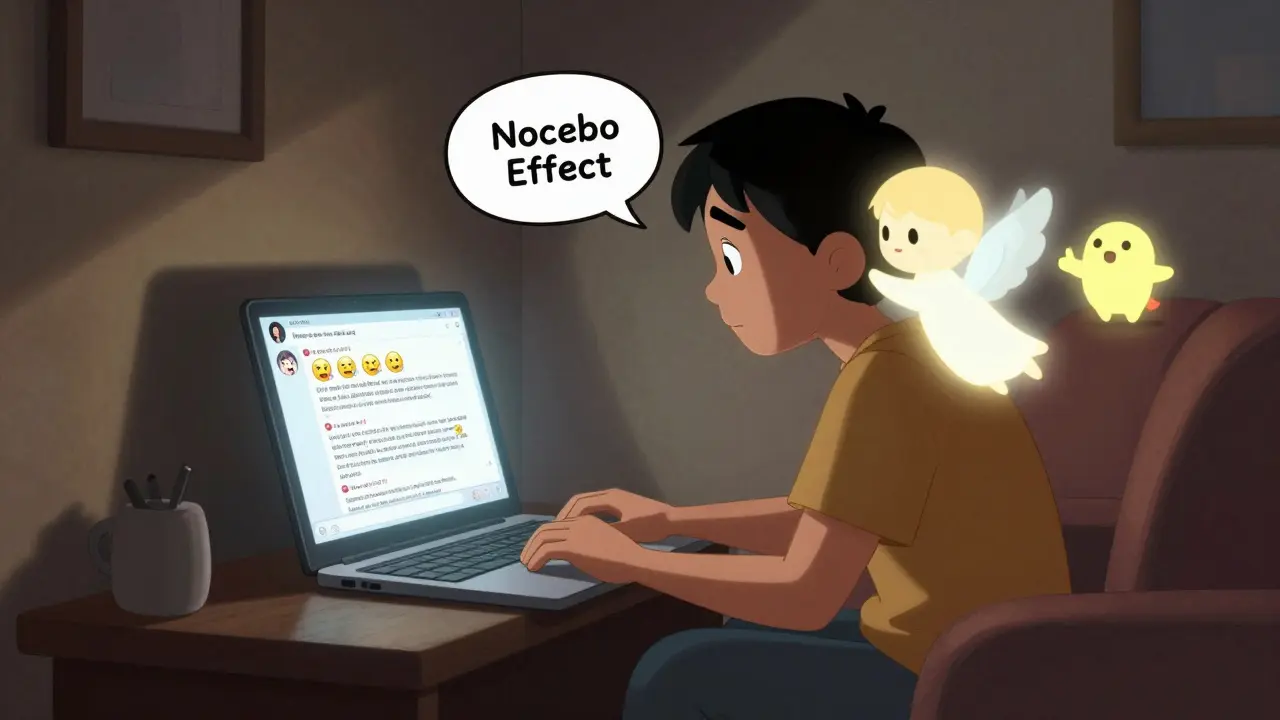
Who Influences Patient Trust the Most?
You’d think drug ads or online reviews would be the biggest influence. But they’re not. The strongest predictor of whether someone accepts a generic? What their doctor or pharmacist says. A 2024 study found that 69.8% of patients were more likely to try a generic if their provider recommended it. When a pharmacist says, ‘This is the exact same medicine, just without the brand name,’ patient acceptance jumps by 40%. That’s huge. But here’s the catch: most doctors have less than two minutes to discuss medications during a visit. Pharmacists are often swamped. So the conversation rarely happens. Or worse-it’s rushed. ‘It’s just a generic. It’ll work fine.’ That kind of dismissal makes patients feel unheard. The most effective approach? A simple, clear explanation. ‘The FDA requires this generic to perform exactly like the brand. The only differences are the color, shape, or filler ingredients-none of which affect how the medicine works in your body.’How Healthcare Providers Can Turn the Tide
Kaiser Permanente tried something simple: they gave every patient a one-page handout called ‘Generic Medication Facts.’ It showed side-by-side comparisons of brand and generic, explained bioequivalence in plain language, and listed common myths. Within six months, patient questions about generics dropped by 52%. Adherence rose by nearly 19%. Pharmacists who spent just 90 seconds explaining generics saw a 38.7% increase in patient acceptance. Training programs that teach providers how to talk about generics-using motivational interviewing, not jargon-boosted provider confidence by 63%. It’s not about convincing people. It’s about listening. Asking: ‘What’s your experience been with generics before?’ Letting them share. Then responding with facts, not dismissal.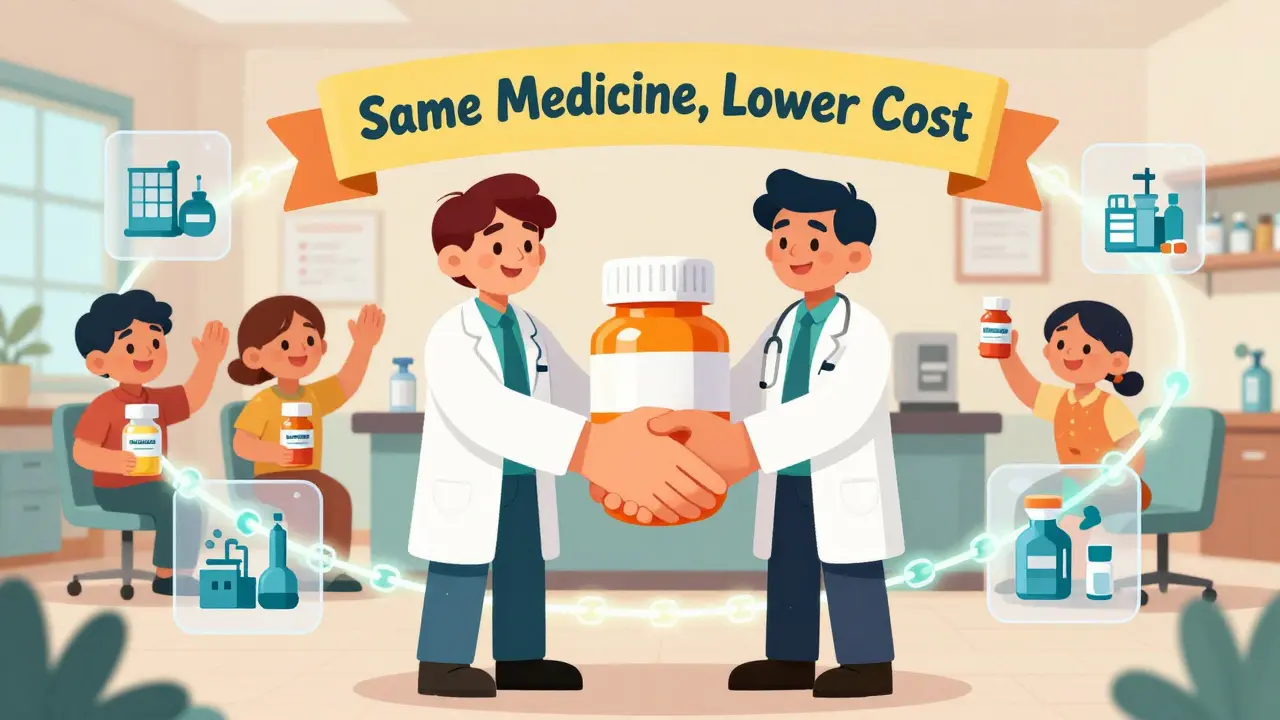
What’s Changing Now?
The FDA is finally stepping in. In 2023, they launched the ‘Generics: Same Medicine, Lower Cost’ campaign with $15.7 million in funding. Early results show a 22.4% increase in consumer confidence after six months. Some drugmakers are also trying a new trick: ‘authorized generics.’ These are brand-name drugs sold under a generic label-same factory, same formula, same packaging, just no brand name. They’re priced like generics but carry the brand’s reputation. Sales of authorized generics grew 37.6% in 2023. Meanwhile, blockchain tech is being tested to let patients scan a code on their pill bottle and see the full supply chain-where it was made, tested, and shipped. Early pilots show 98.7% accuracy in verifying authenticity. That kind of transparency could rebuild trust.What You Can Do
If you’re on a generic medication and feel something’s off:- Don’t assume it’s the drug. Talk to your pharmacist first.
- Ask: ‘Is this the same active ingredient as my brand?’
- Check if you switched manufacturers-sometimes, a new batch from a different company can cause temporary adjustments.
- Track your symptoms. Write down when you started, what changed, and how you feel.
- Don’t stop taking it without talking to your provider.
The Bigger Picture
Generic drugs are one of the most powerful tools we have to make healthcare affordable. They’ve saved trillions globally. But their potential is limited-not by science, but by perception. The gap between what we know and what we believe isn’t just about information. It’s about emotion, memory, and trust. Online reviews amplify fear. Real conversations build confidence. The solution isn’t more ads. It’s more human interaction. More listening. More clarity. Because at the end of the day, a pill doesn’t care if it’s labeled ‘Lipitor’ or ‘atorvastatin.’ But you do.Are generic medications really the same as brand-name drugs?
Yes, by law. Generic medications must contain the same active ingredient, strength, dosage form, and route of administration as the brand-name version. The FDA requires them to be bioequivalent-meaning they deliver the same amount of medicine into your bloodstream at the same rate. Differences in color, shape, or inactive ingredients don’t affect how the drug works in your body.
Why do some people say generics don’t work as well?
Often, it’s not the drug-it’s the expectation. When patients believe a cheaper drug is lower quality, their brain can trigger real physical symptoms, known as the nocebo effect. Studies show patients given identical pills labeled as generic report more side effects and worse outcomes than those given the same pills labeled as brand-name. Personal anecdotes and negative online reviews reinforce this belief, even when the science says otherwise.
Can generic medications have different side effects?
The active ingredient causes the side effects, and that’s identical in generics and brands. But inactive ingredients-like fillers or dyes-can sometimes cause reactions in sensitive individuals. This is rare and usually mild, like a rash or upset stomach. For drugs with a narrow therapeutic index (like warfarin or levothyroxine), even small formulation changes can matter, which is why some providers recommend sticking with one manufacturer. But for most medications, side effects are the same.
How can I tell if my generic is working properly?
Track your symptoms before and after switching. Keep a simple log: date, dosage, how you feel, any new side effects. If you notice a clear change-especially if it’s negative-talk to your pharmacist or doctor. Don’t assume it’s the generic. It could be stress, diet, sleep, or another factor. Your provider can check blood levels if needed, especially for critical medications.
Should I avoid generics if I’m on a narrow therapeutic index drug?
Not necessarily. But it’s smart to be cautious. For drugs like warfarin, levothyroxine, or certain seizure medications, even small differences in absorption can matter. Many providers recommend staying with the same manufacturer once you find one that works. If you must switch, monitor closely and ask your doctor if blood tests are needed. The FDA allows generics for these drugs too-but individualized care matters.
Why do pharmacies sometimes switch my generic without telling me?
Pharmacies often switch to the lowest-cost generic available under your insurance plan. This is legal and common. But they’re not always required to notify you unless you ask. If you’ve had a good experience with a specific brand or manufacturer, ask your pharmacist to ‘dispense as written’ or request the same manufacturer each time. You have the right to request consistency.
Can I trust online reviews about generic medications?
Use them as a starting point, not a final verdict. Online reviews are full of personal stories-some valid, some misleading. Look for patterns: if dozens say ‘no difference,’ that’s more reliable than one person saying ‘it didn’t work.’ Also, consider the source. Reviews from people who understand bioequivalence are more trustworthy than those based on assumptions about price. Always talk to a healthcare provider before making changes.
Healthcare isn’t just about science. It’s about trust. And trust is built one honest conversation at a time.
Comments (13)
christy lianto
My mom switched to generic levothyroxine last year and her TSH went haywire for three months. We thought it was stress, then we realized the pharmacy switched manufacturers. She went back to the original generic-same dose, same pill, just different filler-and boom, stable again. It’s not placebo. Sometimes the binders mess with absorption, especially if you’re sensitive. Talk to your pharmacist. Ask which maker it is. Don’t just take what’s cheapest.
Luke Crump
So let me get this straight-we’re telling people their brains are lying to them because they’re too poor to afford the branded version? That’s not science. That’s capitalism gaslighting the working class. If you can’t afford the brand, you’re forced to take a pill made by some factory in India that doesn’t even have running water, and then you’re told you’re ‘imagining’ the side effects? That’s not psychology. That’s cruelty dressed up as pharmacology.
Annette Robinson
I appreciate how you framed this. So many providers just say ‘it’s the same’ and move on. But trust isn’t built by repeating facts-it’s built by listening. I had a patient last week who cried because she felt ‘cheated’ by the generic version of her antidepressant. We sat for 20 minutes. She told me about her dad’s heart attack and how the brand was the only thing that kept him alive. I didn’t argue. I just said, ‘That’s a lot to carry.’ Then we looked up the bioequivalence data together. She cried again-but this time, it was relief. It’s not about the pill. It’s about the story behind it.
Ken Porter
China makes 80% of our generic pills. You think that’s safe? The FDA inspects like once every 10 years. Meanwhile, we’re telling people to trust a blue pill with ‘Mylan’ on it? Wake up. This isn’t science-it’s national security failure.
swati Thounaojam
in india we get generics all the time and they work fine. no drama. maybe its just us being dramatic over here?
Evan Smith
So… if I pay $45 for a pill and it works better than the $12 one… is it because the $45 one has magic fairy dust? Or is it just my brain being a drama queen? Asking for a friend who just spent $200 on brand-name insulin.
Lois Li
I’ve been on generic sertraline for five years. Zero issues. But I know someone who had panic attacks after switching-same dose, same manufacturer, same pharmacy. She blamed the drug. Turns out she’d just lost her job. The pill didn’t change. Her life did. We need to stop blaming the medicine and start asking: what else is going on? Mental health isn’t just chemistry-it’s context.
Manish Kumar
Let us consider the ontological weight of the pharmaceutical object. The pill, in its essence, is a symbol-of corporate control, of economic stratification, of the commodification of healing. When we take a generic, we are not merely ingesting a molecule-we are submitting to a system that equates value with price, and dignity with disposable cost. The nocebo effect, then, is not a flaw of perception, but a protest of the soul against a world that says: ‘You are not worthy of the brand.’ The body responds not because it is fooled-but because it remembers oppression.
Aubrey Mallory
My doctor told me to switch to generic metformin. I said no. He rolled his eyes. So I switched anyway. Two weeks later, my blood sugar spiked. I went back. He said, ‘It’s placebo.’ I said, ‘Then why did my numbers drop when I switched back?’ He didn’t answer. I’m not crazy. I’m just tired of being told I’m imagining my own health.
Dave Old-Wolf
My cousin’s kid has seizures. They switched generics twice and had two hospital visits. Now they only use the one brand the neurologist says works. It’s expensive. Insurance hates it. But the kid hasn’t had a seizure in 18 months. So yeah-sometimes the generic isn’t the same. And that’s okay. We don’t need to pretend it’s always fine. Just be honest about when it might not be.
Prakash Sharma
Why are we letting foreign countries control our medicine supply? We used to make pills here. Now we import them from places that don’t even have clean water. This isn’t about trust-it’s about sovereignty. Buy American. Demand domestic manufacturing. Stop letting Big Pharma outsource our health.
Donny Airlangga
I’ve worked in pharmacies for 12 years. People get mad when we switch generics. I get it. But here’s what I’ve learned: 9 out of 10 times, the issue isn’t the drug. It’s the person’s anxiety. The other 1? They switched from one generic to another-and the new one had a different dye that caused a rash. We fixed it. Just ask. Don’t assume. We’re here to help, not to judge.
Molly Silvernale
It’s not the pill that’s broken-it’s the story we’ve been told. The brand-name drug is a fairy tale: golden packaging, celebrity endorsements, a name that sounds like a superhero. The generic? It’s a gray tablet with a barcode and a whisper. We’ve been trained to equate glamour with efficacy. But truth? The truth is quiet. It doesn’t have a logo. It doesn’t sing jingles. It just… works. And maybe that’s the real tragedy-not that generics are doubted-but that we’ve forgotten how to believe in something that doesn’t scream for attention.