
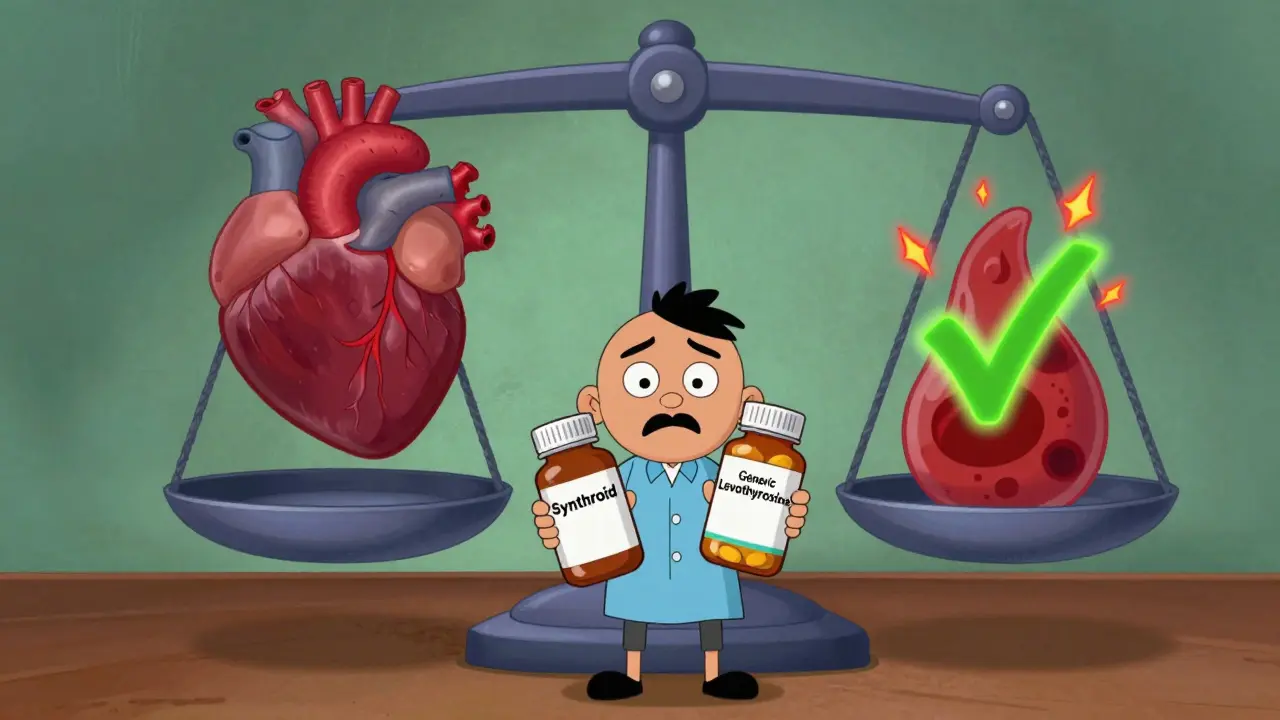
When you’re on a medication where even a tiny change in dose can cause serious problems-like a seizure, a blood clot, or organ rejection-it’s natural to wonder: should you stick with the brand name, or is the cheaper generic just as safe? This isn’t just a cost question. It’s a safety question. And for NTI drugs, the answer isn’t simple.
What Exactly Are NTI Drugs?
NTI stands for Narrow Therapeutic Index. These are medications where the difference between a dose that works and a dose that harms is razor-thin. Think of it like walking a tightrope. One step too far, and you fall. The FDA defines them as drugs where small changes in blood concentration can lead to treatment failure or dangerous side effects. Common examples include:- Levothyroxine (Synthroid) - for thyroid disorders
- Warfarin (Coumadin) - a blood thinner
- Tacrolimus - used after organ transplants
- Phenytoin and carbamazepine - antiseizure medicines
Why Do People Worry About Generic NTI Drugs?
Generic drugs are required to be bioequivalent to the brand name. That means their active ingredient must reach the same level in your blood, within a certain range. For most drugs, that range is 80% to 125% of the brand’s concentration. But for NTI drugs, the FDA tightened the rules in 2014. Now, the acceptable range can be as narrow as 90% to 111%, depending on the drug. Still, some doctors and patients remain skeptical. Why? Because even small shifts in blood levels can matter. A patient on warfarin might see their INR (a measure of blood clotting) swing after switching generics. A transplant patient on tacrolimus might have a sudden drop in drug levels, putting their new organ at risk. A person on levothyroxine might feel fatigued, gain weight, or have heart palpitations if their thyroid hormone level dips too low. Real-world reports back this up. On patient forums, about 30% of people switching from brand to generic levothyroxine report needing a dose adjustment. A small but significant number say they had to go back to the brand after symptoms returned.But the Data Says Otherwise - Mostly
Here’s where it gets interesting. Large studies don’t support the fear. A 2022 FDA-funded analysis of nearly 18,000 patients found no meaningful difference in thyroid hormone control between those on brand-name Synthroid and those on generic levothyroxine. Another study of over 3.5 million people showed similar outcomes for generics versus brand names in chronic conditions like high blood pressure, diabetes, and depression. Pharmacists surveyed in 2022 reported that 87% believed generic NTI drugs were just as effective, and 94% said they were just as safe. Eighty-two percent said they routinely substituted generics for initial prescriptions. The truth? For most people, generics work fine. The problem isn’t the generic itself - it’s switching back and forth between different manufacturers.
The Real Culprit: Switching Between Generics
Here’s the key point most people miss: the issue isn’t brand vs. generic. It’s switching between different generic versions. A generic made by Company A might be perfectly bioequivalent to Synthroid. A generic made by Company B might also be perfectly bioequivalent to Synthroid. But Company A’s version and Company B’s version aren’t necessarily bioequivalent to each other. That’s because generics don’t have to match each other - only the brand. So if you’re on a generic from Company A, and your pharmacy switches you to Company B without telling you, your body might react. It’s not because generics are bad. It’s because your body got used to one formulation, and then got a slightly different one. This is especially true for drugs like tacrolimus and phenytoin. Studies show that switching between different generic manufacturers is linked to spikes in drug levels or drops that trigger rejection or seizures.What Should You Do?
There’s no one-size-fits-all answer. But here’s a practical guide:- If you’re starting treatment: Start with the generic. It’s cheaper, and the evidence shows it works just as well for most people. Save the brand name for if the generic doesn’t work.
- If you’re already stable on a brand: Don’t switch unless you have to. Talk to your doctor. If your insurance forces a switch, ask for a prior authorization exception.
- If you’re on a generic: Stick with the same manufacturer. If your pharmacy changes the brand of generic you get, ask them to notify you first. You have the right to know.
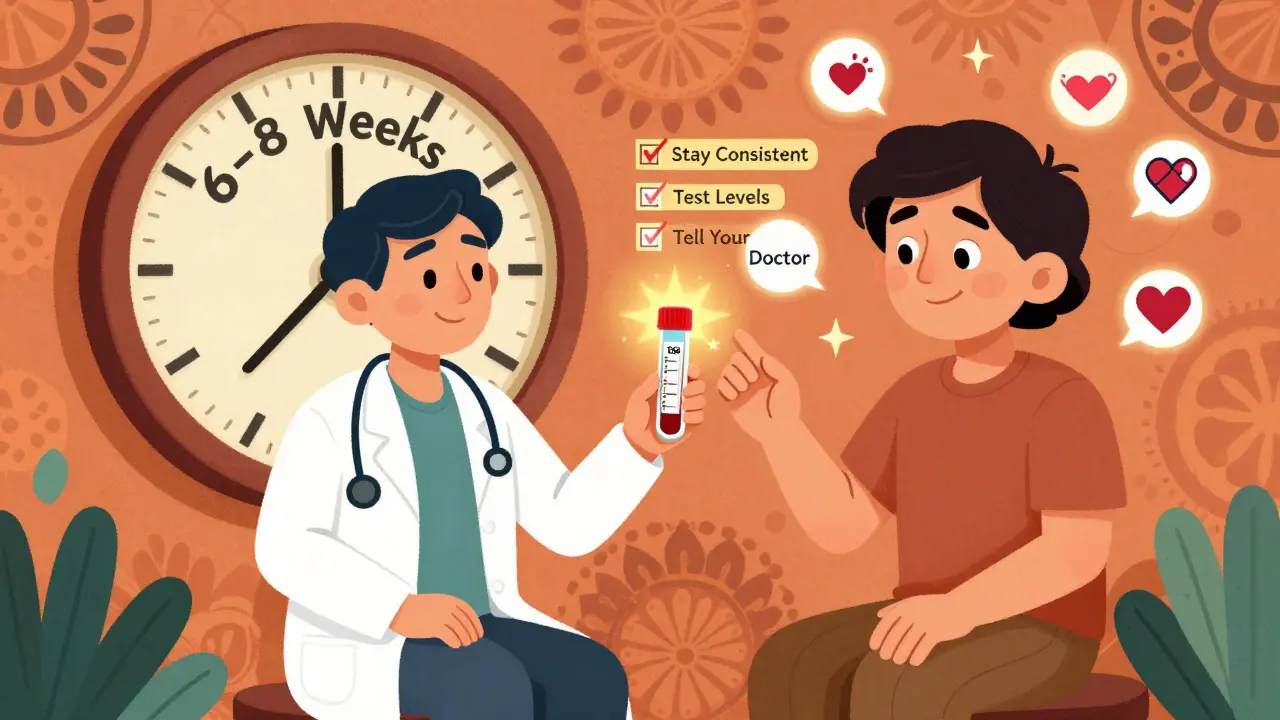
- After any switch: Get your blood tested. For warfarin, check INR within 1-2 weeks. For levothyroxine, check TSH in 6-8 weeks. For tacrolimus, monitor levels every 1-2 weeks for the first month.
Insurance and the Law
Most insurance plans push for generics. Blue Cross Blue Shield of Kansas, for example, makes patients pay the full price difference if they want the brand name. That’s a financial incentive to switch. But 28 states have laws that restrict automatic substitution for NTI drugs. In those states, the pharmacist must contact your doctor or get your consent before switching. Check your state’s rules. If you’re in a state without protections, you may need to ask your doctor to write “dispense as written” or “do not substitute” on your prescription.What’s Changing?
The FDA is now running the NTI Drug Registry to track real-world outcomes after substitutions. A $2.4 million study by the Agency for Healthcare Research and Quality is following 50,000 patients over the next two years to see who does well - and who doesn’t. Experts predict that by 2025, we’ll have enough data to say generics are safe for most NTI drugs - except maybe a few with extreme variability, like phenytoin.Bottom Line
You don’t need to stay on brand-name NTI drugs forever. But you shouldn’t switch randomly, either. The goal isn’t brand vs. generic. It’s consistency. If you’re stable, stay put. If you’re starting out, try the generic. If you switch, test your levels. And always, always tell your doctor and pharmacist if you notice any changes - fatigue, dizziness, unusual bruising, or seizures. Your body remembers the drug it’s used to. Don’t let a pharmacy change that without you knowing.Are generic NTI drugs as safe as brand-name drugs?
For most patients, yes. The FDA requires generics to meet strict bioequivalence standards, especially for NTI drugs. Large studies show similar outcomes for levothyroxine, warfarin, and other NTI medications when patients stay on the same generic formulation. The biggest risk comes from switching between different generic versions, not from using generics in general.
Can I switch from brand to generic without problems?
Many people can. But it’s not risk-free. If you’ve been stable on brand-name medication for months or years, switching could cause your body to react. Talk to your doctor first. If you do switch, get blood tests done 4-8 weeks later to make sure your levels are still in the safe range.
Why do some patients have issues after switching to generic levothyroxine?
Levothyroxine is absorbed in the gut, and small differences in inactive ingredients (like fillers or coatings) between manufacturers can affect how well it’s absorbed. Some patients are extra sensitive to these changes. Symptoms like fatigue, weight gain, or heart palpitations can signal that your dose needs adjusting - not that the drug is unsafe.
What should I do if my pharmacy switches my NTI drug without telling me?
Call your pharmacy right away. Ask which generic manufacturer they gave you. Then call your doctor. If you’re on a drug like warfarin or tacrolimus, you may need a blood test within a week. You have the right to request the same manufacturer each time - and your doctor can write "do not substitute" on your prescription if needed.
Are there any NTI drugs where generics are never recommended?
No drug is completely off-limits, but phenytoin and tacrolimus carry higher risks when switching between generics. The American Academy of Neurology and transplant specialists often recommend staying on the same manufacturer once a stable dose is found. For these drugs, consistency matters more than cost.
Comments (10)
Cara Hritz
i just switched my levothyroxine to generic last month and now i’m exhausted all the time and my hair is falling out 😭 i thought generics were the same?? my pharmacist didnt even tell me they switched me. this is wild. someone please help
Nader Bsyouni
the real issue isnt generics its the capitalist machinery that treats human biology like a spreadsheet. you think your thyroid cares about shareholder value? no. your body remembers the molecular fingerprint of the drug it was raised on. the FDA’s 90-111% range is a corporate compromise masquerading as science. we’ve reduced medicine to a commodity and now we’re surprised when the human body rebels
Candy Cotton
As a registered pharmacist with over 18 years of clinical experience, I must emphasize that the data overwhelmingly supports the bioequivalence of FDA-approved generic NTI drugs. The anecdotal reports of adverse effects are often confounded by non-adherence, dietary interactions, or concomitant medications. The notion that generic substitution is inherently dangerous is a myth perpetuated by pharmaceutical marketing and fearmongering. Patients should be empowered with evidence, not emotional appeals.
Jeremy Hendriks
you know what’s more dangerous than switching generics? letting a corporation decide what your body needs. the system is rigged. brand names pay for favorable studies, pharmacists get kickbacks to switch, and patients are the lab rats. and don’t get me started on how the FDA’s "tightened" range still allows 21% variation. that’s not science, that’s a loophole written by lobbyists with a calculator and a smirk
Aliyu Sani
in nigeria, we dont even have access to brand name drugs most times. we use generics for everything. i’ve seen people on tacrolimus for 5 years on different generics and they’re fine. the problem is not the generic, its the lack of follow-up. if you dont monitor levels, you’re gonna have issues. its not about the pill, its about the care behind it. also, some of us spell 'tacrolimus' as 'tacrolimis'… we all make mistakes 😅
Gabriella da Silva Mendes
okay but like… why is this even a debate?? 🤦♀️ i’m on warfarin and my INR went from 2.8 to 4.6 after they switched my generic. i almost bled out. i dont care if the FDA says its "bioequivalent" - my body said NOPE. i’m paying extra for brand now and my doctor says it’s worth it. also why does my pharmacy keep changing my pill color?? it’s like a slot machine and i’m the sucker. 💸🩸 #genericwars #dontswitchmybloodthinners
Kiranjit Kaur
everyone is so scared of change! 🌱 but what if we looked at this differently? generics are the people’s medicine. they let millions afford life-saving drugs. yes, some people react to switches - that’s why we need better communication, not fear. if you’re stable, stay put. if you’re starting out, try generic. if you switch, test your levels. it’s not magic, it’s medicine. let’s stop treating patients like fragile glass and start treating them like partners 💪❤️
Art Van Gelder
let me tell you about my cousin in Texas. She’s on phenytoin. Switched from brand to generic A, then generic B, then generic C - all within six months. She had two seizures. One at her daughter’s birthday party. The pharmacy didn’t tell her. The doctor didn’t know. The insurance company saved $47 a month. She’s now on brand, on Medicaid, and her neurologist says she’s lucky to be alive. This isn’t about cost. This is about dignity. We treat our pets better than we treat patients on NTI drugs. We need laws. We need accountability. We need to stop pretending this is just a "pharmacy logistics issue". It’s a public health crisis.
Tarun Sharma
Consistency is paramount. Switching manufacturers introduces variability that may be clinically significant. Prescribers should clearly indicate "do not substitute" on NTI prescriptions when clinically indicated. Pharmacists must honor this. Patients should be informed of any changes. Evidence supports generic use, but only when stability is maintained.
Jim Brown
the tragedy isn’t that generics exist - it’s that we’ve turned medicine into a game of musical pills. your body isn’t a vending machine that resets every time you swap out the cartridge. we’ve built a system where profit trumps physiology, where a pharmacist’s paycheck depends on how many bottles they can shuffle. and now we’re surprised when someone’s kidney rejects a new liver because their tacrolimus dose drifted 8%? this isn’t pharmacology - it’s theater. and we’re all just waiting for the curtain to fall on someone’s life.