
Drowsiness Side Effects: Causes, Medications, and What to Do
When you take a new medication and suddenly feel like you’re dragging through fog, you’re not imagining it—drowsiness side effects, a common reaction to certain drugs that slows down brain activity and reduces alertness are real, measurable, and often preventable. It’s not just about feeling tired; it’s about impaired reaction time, poor focus, and in some cases, dangerous falls or accidents. This isn’t just a nuisance—it’s a safety issue, especially for older adults, drivers, or people operating machinery.
Drowsiness side effects don’t come from just one type of drug. They’re tied to antidepressants, medications that alter brain chemistry to improve mood but often cause sedation as a side effect, muscle relaxants, drugs meant to ease muscle spasms but that also depress the central nervous system, and antihistamines, common in cold and allergy meds, known for their strong sedating properties. Even some blood pressure pills, pain relievers, and sleep aids can make you feel drugged up. The problem? Many people don’t realize their drowsiness is drug-related. They blame stress, lack of sleep, or aging—when it’s actually the medicine they’re taking.
It’s not just about the drug itself, but how it interacts with others. Combining gabapentin with opioids, for example, can deepen drowsiness to dangerous levels. Same with mixing sedating antidepressants and anti-anxiety meds. The body doesn’t handle these combinations well, and the result isn’t just tiredness—it’s slowed breathing, confusion, or worse. That’s why tracking your meds and symptoms matters. A lab monitoring calendar can help you spot patterns before things get serious.
Some people think if a drug is over-the-counter, it’s safe to use without thinking. Not true. Diphenhydramine in nighttime sleep aids or allergy pills is one of the most common culprits behind daytime drowsiness. Even if you take it only once, it can linger in your system for hours. And if you’re over 65, your body clears these drugs slower—making side effects stronger and longer-lasting.
What can you do? First, don’t stop your meds cold turkey. Talk to your doctor. They might adjust the dose, switch you to a non-sedating version, or suggest taking it at night instead of in the morning. Hydration helps—dehydration makes drowsiness worse. Avoid alcohol entirely when you’re on these drugs. And if you’re driving or working with heavy equipment, be honest with yourself: are you really alert enough?
The posts below cover real cases and practical fixes—from how gabapentinoids and opioids together can turn drowsiness into a medical emergency, to why generic versions of certain drugs might hit you harder than brand names, to how proper storage keeps your pills from becoming unpredictable. You’ll find advice on managing side effects without giving up your treatment. This isn’t about avoiding medicine. It’s about using it smarter, safer, and with full awareness of what’s really happening in your body.
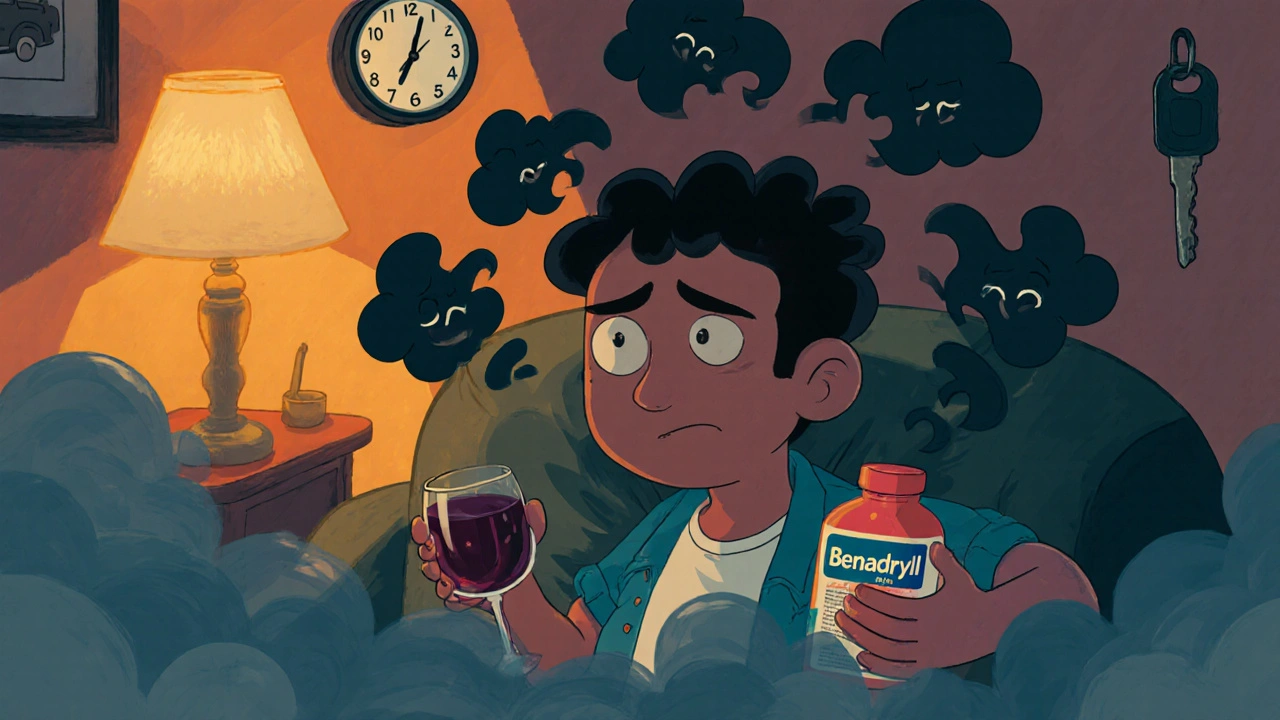
Antihistamines and Alcohol: Why Mixing Them Increases Drowsiness Dangerously
Mixing antihistamines and alcohol can cause extreme drowsiness, impaired coordination, and dangerous accidents. Learn why even 'non-drowsy' options aren't safe with alcohol and what to use instead.
read more