
FDA Foreign Inspections: What You Need to Know About Drug Safety Overseas
When you take a pill, it might have been made halfway across the world—and the FDA foreign inspections, the process by which the U.S. Food and Drug Administration checks drug manufacturing sites outside the United States. Also known as overseas pharmaceutical audits, these inspections are your last line of defense against contaminated, weak, or fake medicines. Every year, the FDA sends teams to countries like India, China, and others where most of the world’s generic drugs are made. These aren’t visits for tourism—they’re unannounced, high-stakes checks that can shut down entire factories if they find violations.
FDA foreign inspections tie directly to drug safety, the assurance that medications meet quality, purity, and effectiveness standards before reaching patients. A single bad batch of active ingredient can ruin hundreds of thousands of pills. That’s why the FDA looks at everything: how clean the facility is, whether workers follow procedures, if records are forged, and if the final product even contains what it claims. It’s not just about cleanliness—it’s about trust. And when inspections uncover problems, like the 2018 case where a Chinese plant was found to be hiding data and using unapproved chemicals, the FDA pulls those drugs off shelves fast.
These inspections also connect to overseas manufacturing, the global supply chain where most active pharmaceutical ingredients are produced, often at lower cost than in the U.S.. While this keeps prices down, it also creates blind spots. That’s why the FDA has to travel farther and inspect more often. In 2023, over 60% of FDA drug inspections happened outside the U.S. Most of the posts here—like those on extended expiration dates, generic medications, and moisture damage to pills—all link back to this reality. If a factory in Hyderabad skips humidity controls, your capsules might turn to mush. If a lab in Mumbai cuts corners on purity tests, your blood pressure pill might not work. These aren’t hypotheticals—they’re real risks that FDA inspections try to catch.
You won’t always hear about these inspections. But when they fail, you feel it. That’s why the FDA’s work overseas matters more than ever. The posts below show how these hidden systems affect your daily health: from how generics are made, to why your pills might expire early, to what happens when a drug shortage forces the FDA to extend dates. Each article connects to the bigger picture: your safety depends on what happens in factories you’ll never see.
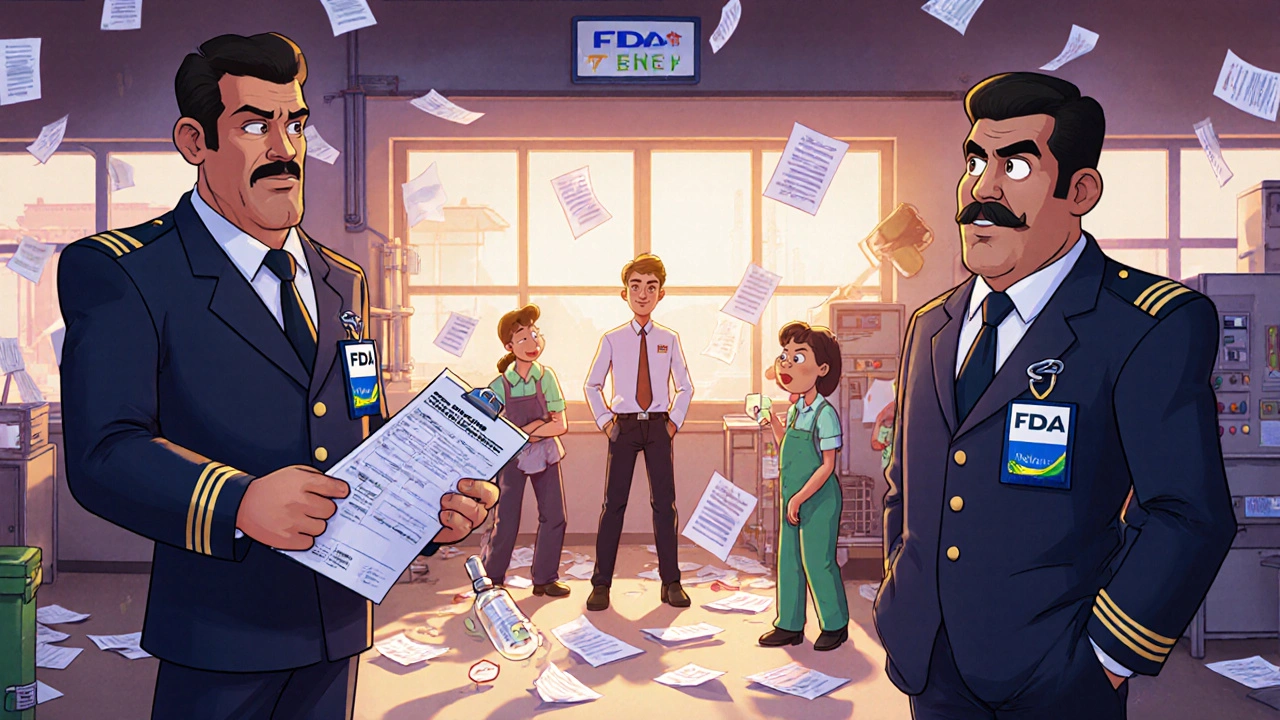
Unannounced FDA Inspections: Why Surprise Visits Are Critical for Drug and Food Safety
Unannounced FDA inspections ensure real-world compliance in drug and food manufacturing. Since May 2025, surprise visits now apply to foreign facilities too, closing a dangerous loophole. Learn how they work-and how to be ready without warning.
read more