
Unannounced FDA Inspections: What Pharmacies Must Know
When the unannounced FDA inspections, surprise visits by the U.S. Food and Drug Administration to verify compliance with pharmaceutical standards. Also known as surprise audits, these inspections are a core part of how the FDA ensures drugs are safe, pure, and properly labeled. They don’t call ahead. They show up—sometimes early, sometimes late, sometimes during a busy shift—and start asking questions, pulling records, and checking storage conditions. This isn’t about catching small mistakes. It’s about stopping dangerous drugs from reaching patients.
These inspections target manufacturers, distributors, and mail-order pharmacies that handle prescription drugs. If your facility stores controlled substances, ships medications across state lines, or repackages pills, you’re on the radar. The FDA doesn’t need a warrant. Under the Federal Food, Drug, and Cosmetic Act, they have the right to walk in and inspect any facility involved in drug production or distribution. And they’ve been doing it more often—especially after recent shortages and counterfeit drug scares. In 2023, over 60% of inspected facilities had at least one serious violation, from improper temperature control to missing batch records.
It’s not just about paperwork. Inspectors check if refrigerated drugs are kept at the right temperature, if expiration dates are clearly marked, if employees are trained on contamination controls, and if records match what’s actually in stock. One pharmacy in Texas got shut down after inspectors found expired insulin sitting next to new stock. Another lost its license because someone had scribbled over a lot number with a Sharpie. These aren’t rare cases. They happen every month.
What you can’t control is when they show up. But you can control how ready you are. Staff should know where every record is stored. Storage areas need to be clean and labeled. Temperature logs? They better be up to date. And if someone’s been cutting corners to save time—now’s the time to fix it. The FDA doesn’t warn you. They don’t give you a chance to clean up. If they find a problem, they can issue a warning letter, seize inventory, or even push for criminal charges.
You’ll see posts here about how to store pills safely, why lab monitoring matters for certain drugs, and how extended expiration dates are handled during shortages. All of that ties into what inspectors look for. If your moisture control is sloppy, they’ll catch it. If your staff doesn’t know how to handle biologic injections properly, they’ll notice. If you’re selling generic meds but can’t prove they meet FDA standards, you’re at risk. These aren’t theoretical concerns—they’re daily realities for pharmacies and suppliers.
There’s no magic trick to passing an unannounced inspection. It’s not about luck. It’s about consistency. Every day, you’re either building a record of compliance—or hiding gaps that will blow up when the inspector walks in. The posts below give you real, practical ways to tighten up your operations so you’re not caught off guard. Whether you’re managing a small mail-order pharmacy or handling high-volume drug distribution, what you learn here could keep your business open and your patients safe.
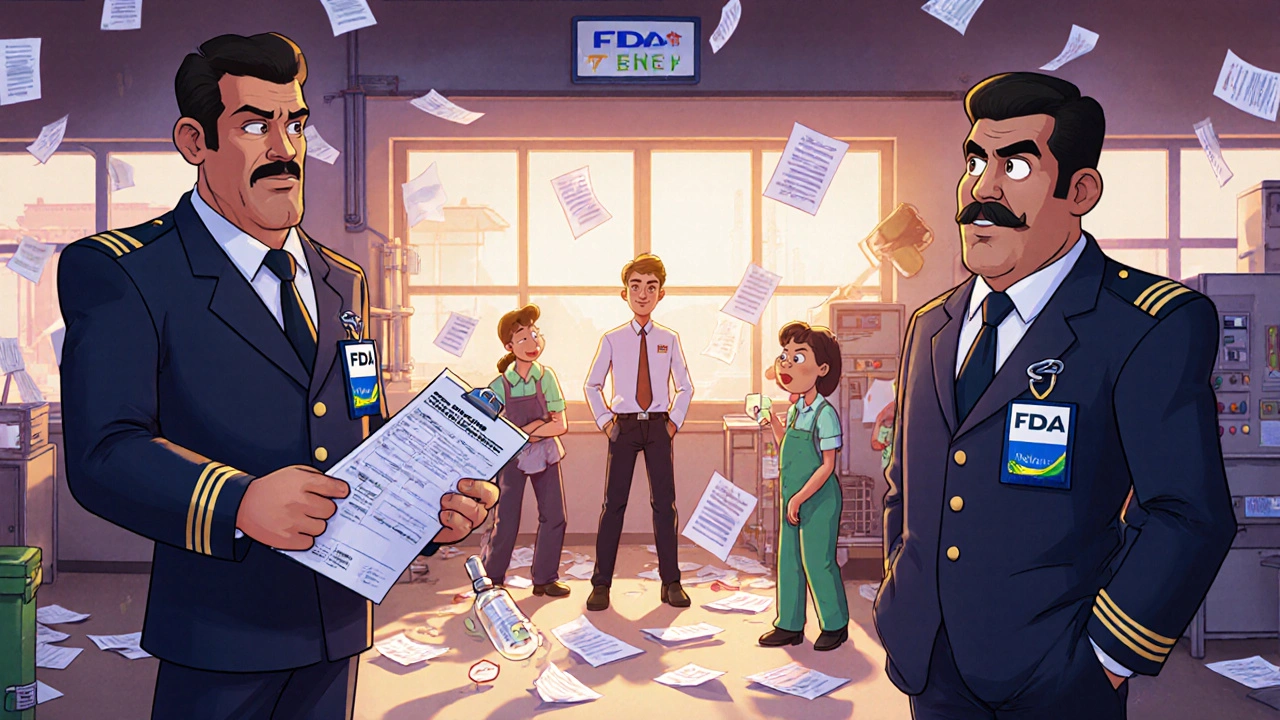
Unannounced FDA Inspections: Why Surprise Visits Are Critical for Drug and Food Safety
Unannounced FDA inspections ensure real-world compliance in drug and food manufacturing. Since May 2025, surprise visits now apply to foreign facilities too, closing a dangerous loophole. Learn how they work-and how to be ready without warning.
read more