
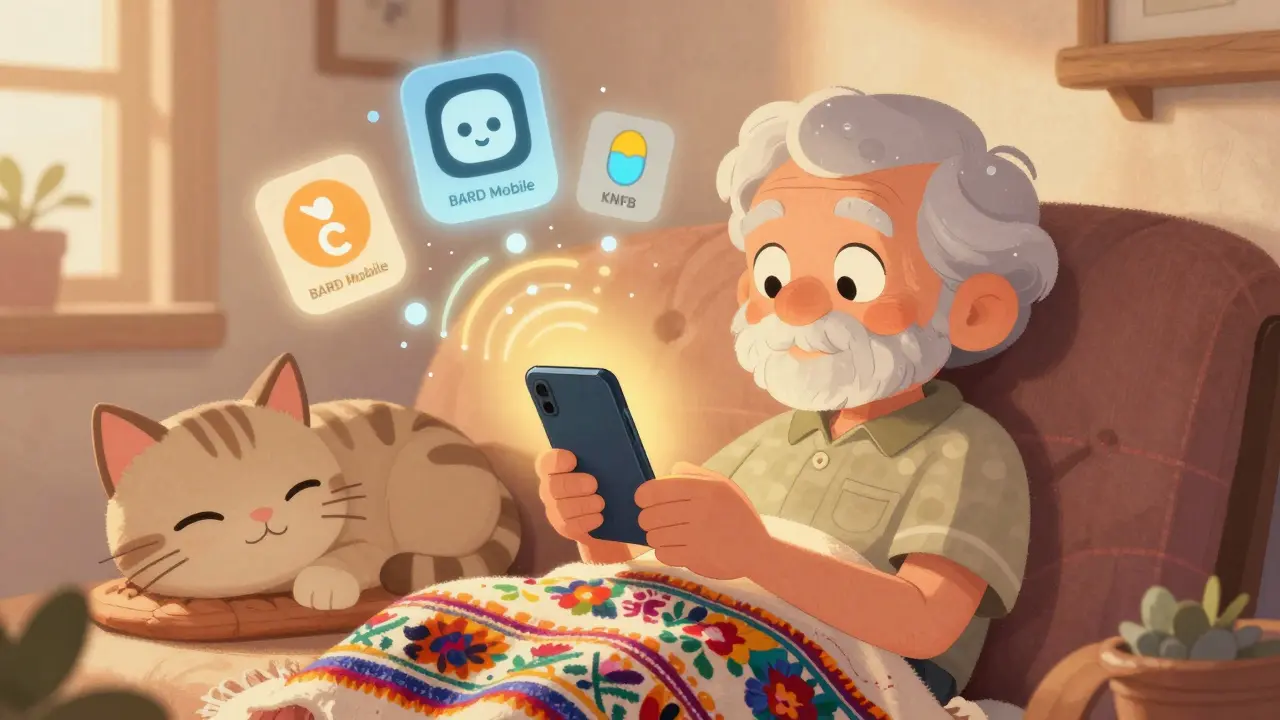
Imagine you’re told you have diabetes. Your doctor hands you a thick packet of printed instructions-dosages, warning signs, diet charts. But you can’t see any of it. Without audio alternatives, that information might as well not exist. For the 7.6 million Americans aged 16 and older with vision loss that affects daily life, this isn’t hypothetical. It’s everyday reality. And it’s not just inconvenient-it’s dangerous.
Why Audio Matters in Healthcare
When patients can’t read labels, forms, or discharge instructions, they’re at risk. Studies show visually impaired patients experience 2.3 times more medication errors than sighted ones when audio alternatives aren’t provided. That’s not a small gap. That’s a life-or-death difference. Audio resources don’t just make information accessible-they prevent harm.It’s not just about reading. It’s about understanding. Audio lets patients hear dosage instructions clearly, grasp complex terms like "hypoglycemia" or "anticoagulant," and follow step-by-step care routines without relying on someone else. And it’s not optional. Federal laws like the Americans with Disabilities Act (ADA) and Section 504 of the Rehabilitation Act require healthcare providers to offer auxiliary aids-including audio-to ensure equal access.
Top Audio Tools Used in Healthcare Today
There are dozens of tools out there, but only a few are truly built for medical use. Here’s what’s working:- BARD Mobile from the National Library Service for the Blind and Physically Handicapped offers nearly 50,000 audio titles, including medical guides, drug handouts, and condition-specific booklets. It’s free for eligible users who complete a simple certification. No subscription. No ads. Just direct access to trusted health content.
- Voice Dream Reader ($29.99) turns any digital document into speech. You can upload a PDF of your lab results, a hospital discharge summary, or even a prescription label, and it reads it aloud in over 100 voices across 30 languages. It’s the go-to tool for patients who get paper or digital documents from their doctor.
- KNFBReader ($99) uses your phone’s camera to scan printed text-like a pill bottle or a clinic sign-and reads it instantly. Developers tested it at 98.7% accuracy. It works in under three seconds. No internet needed.
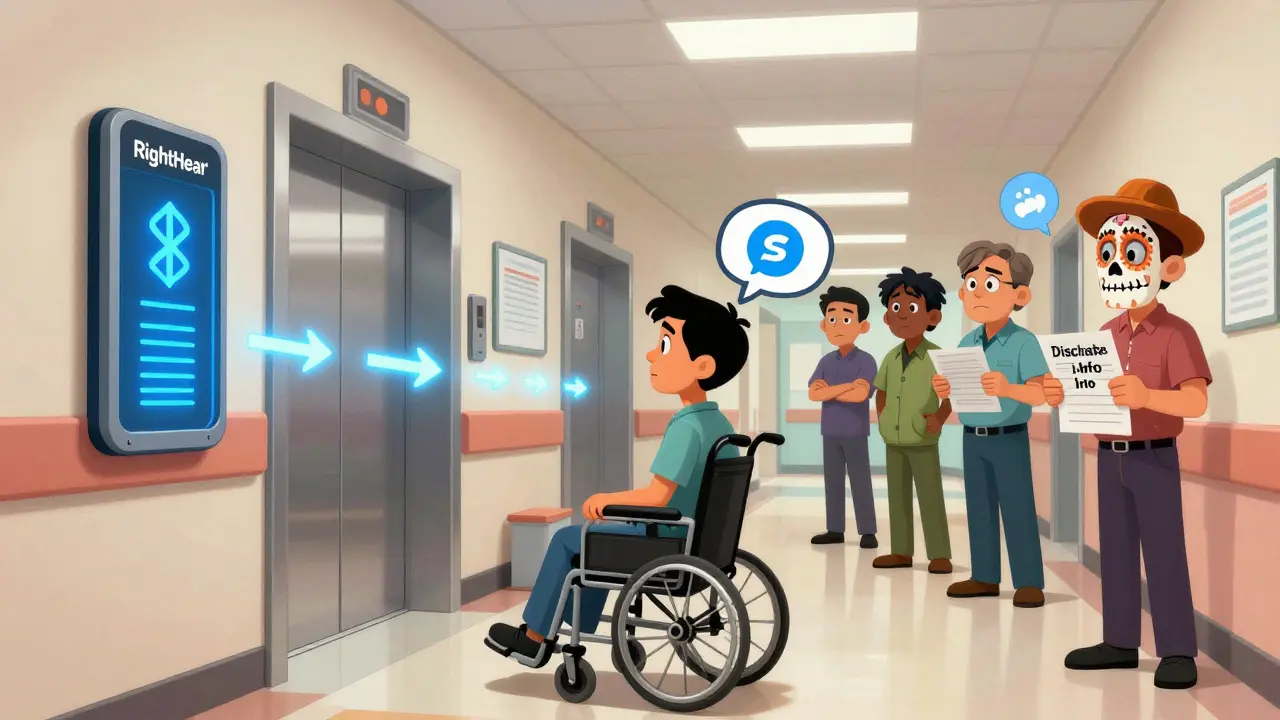
- RightHear’s Talking Signage is a game-changer for navigating hospitals. Using Bluetooth beacons, it gives real-time audio directions: "Turn left at the elevators. Lab testing is 45 feet ahead." Hospitals that installed it saw a 47% drop in requests for staff assistance. That means less stress, faster service, and more independence.
- CRIS Radio and Spectrum Access are free, nonprofit services that stream health education programs, interviews with doctors, and patient stories. Great for learning while commuting or relaxing at home.
These aren’t just apps. They’re lifelines. And they’re getting better. In early 2024, the National Library Service expanded BARD Mobile’s medical library by 37%. That’s hundreds of new audio guides on cancer care, mental health, and chronic disease management-all free.
What Hospitals Are Doing Right (and Wrong)
Some hospitals are leading the way. St. Jude’s implemented VisionConnect™, a custom audio system that sends appointment reminders, lab result summaries, and medication alerts directly to patients’ phones. One user tracked their confusion levels before and after: it dropped from 67% to 12%. That’s not luck. That’s design.But most hospitals? Still falling short. A 2024 survey by the National Federation of the Blind found that 63% of visually impaired patients faced inconsistent access to audio materials across different clinics. One place gives you an audio CD. Another says, "We don’t have that." A third asks you to wait two weeks for a staff member to record your discharge instructions.
And even when audio is available, staff often don’t know how to help. In one study, 58% of patients said their providers had no idea what tools were available. That’s not negligence-it’s ignorance. And it’s fixable.
How to Get Started: A Simple Plan
If you or someone you care for is visually impaired, here’s how to get the right audio tools:- Ask for audio versions of all written materials-prescriptions, consent forms, lab reports. You have the right to them.
- Apply for BARD Mobile through the Braille Institute. It’s free. You’ll need a letter from your doctor confirming vision loss. Processing takes 14-21 days.
- Download Voice Dream Reader or KNFBReader. Both work on iOS and Android. Test them with a simple document first.
- Check if your hospital uses RightHear. Look for small blue dots on walls or ask at the front desk. If not, suggest it. Hospitals are more likely to adopt it if patients ask.
- Save audio recordings of important conversations. Many smartphones have built-in voice recorders. Ask your doctor if you can record your visit. Most say yes.
Don’t wait for the system to catch up. Take control. Start with one tool. Build from there.
The Bigger Picture: Why This Is Changing Fast
This isn’t just about fairness. It’s about law, money, and aging.The 21st Century Cures Act now requires all electronic health record systems to include audio output by December 2024. That means your doctor’s digital chart will soon speak to you-not just show you. Medicare started covering audio description services for certified visually impaired beneficiaries in January 2023. That’s a big shift. It means audio tools are no longer a "nice to have"-they’re part of care.
And the demand is growing. One in four Americans over 65 has vision loss. By 2030, that number will jump. The assistive tech market for vision loss is projected to hit $18.9 billion by 2027. Hospitals that ignore this aren’t just falling behind-they’re risking lawsuits, lost patients, and bad outcomes.
But progress isn’t automatic. Only 62% of hospitals have dedicated budgets for audio accessibility beyond minimum legal requirements. That’s the gap. That’s where patient advocacy makes the difference.
What’s Next: AI and Personalized Audio
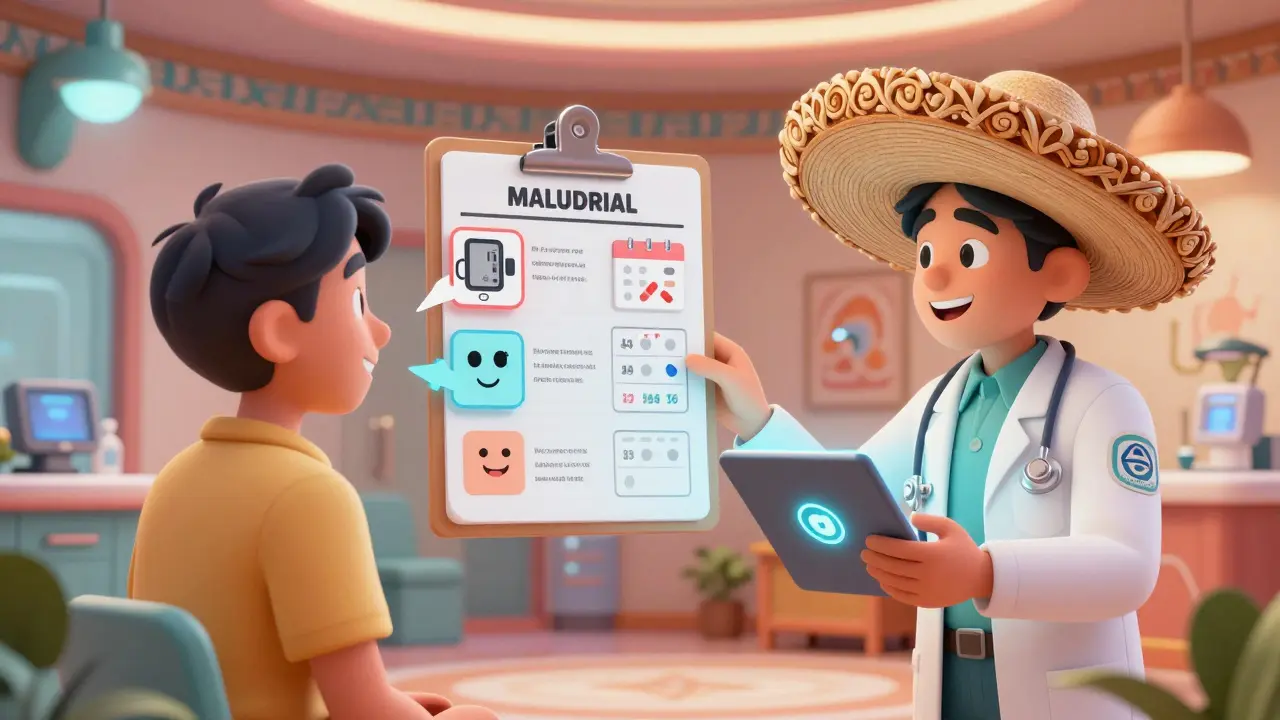
The future is personal. Mayo Clinic is testing AI that turns your entire medical record into a short, clear audio summary. Instead of listening to 45 minutes of jargon, you get: "Your blood pressure is high. Take this pill daily. Avoid salt. Come back in three weeks."That’s the goal: not just access, but clarity. Not just information, but understanding.
And soon, hospitals will be required to offer real-time audio translation for non-English speaking patients with vision loss. That’s coming in 2025. It’s not a dream. It’s a rule.
Final Thought: You’re Not Asking for Special Treatment
You’re asking for the same access everyone else has. A sighted patient reads their prescription. You should be able to hear it. A sighted patient walks into a clinic and finds the lab. You should be able to hear the way. A sighted patient understands their diagnosis. You should be able to understand it too.Audio isn’t a luxury. It’s a necessity. And with the right tools, it’s completely within reach.
Comments (8)
John Brown
Just had my dad set up BARD Mobile last week after his macular degeneration got worse. He cried when he heard his diabetes guide read aloud - said it felt like someone finally saw him. No more begging nurses to read his prescriptions. This stuff isn’t just helpful - it’s humanizing.
Also, KNFBReader saved him when he got lost in the VA hospital. No staff help needed. Just point the phone at the sign and boom - audio directions. Game changer.
John Samuel
It is with profound admiration and unwavering conviction that I extol the transformative efficacy of these audio-based healthcare interventions. The confluence of technological innovation and human dignity is not merely commendable - it is, in the truest sense, a moral imperative. 🌟
One cannot help but marvel at the elegance of RightHear’s Bluetooth beacon architecture - a symphony of precision engineering and compassionate design. The 47% reduction in staff assistance requests? A statistical triumph of autonomy over dependency. 🎯
Let us not forget: ADA compliance is the floor, not the ceiling. We must ascend - with grace, with rigor, with relentless zeal - toward universal sensory equity.
Benjamin Glover
US hospitals still can’t get this right? Pathetic. In the UK, we’ve had audio NHS forms since 2010. You people still treat accessibility like a charity, not a right.
Mike Nordby
While the tools listed are indeed valuable, the systemic failure lies in the lack of standardized integration into EHR workflows. Voice Dream Reader and KNFBReader are stopgaps - not solutions. True accessibility requires API-level interoperability between clinical documentation systems and assistive technologies.
Without mandatory certification standards for audio output in certified EHRs, we’re merely rearranging deck chairs on the Titanic. The 21st Century Cures Act is a step, but enforcement is nonexistent. Hospitals are still treating audio as an afterthought - not a core component of care delivery.
Sai Nguyen
Why do you Americans always make everything so complicated? In India, we just have family members read the papers. No apps needed. You overthink everything.
Michelle M
There’s something deeply spiritual about hearing your own health story told back to you in a calm voice - no rush, no judgment, no glare of a screen.
I used to think accessibility was about compliance. Now I see it’s about belonging. When my aunt heard her chemotherapy plan read aloud by a voice that sounded like her granddaughter, she smiled for the first time in weeks.
It’s not about the tech. It’s about the silence being broken. The isolation being lifted. The fear being replaced with clarity.
We’re not just giving people information - we’re giving them back their dignity, one audio file at a time.
Lisa Davies
OMG I just sent this to my mom’s oncologist 😭 she’s been struggling with low vision since chemo and they never gave her anything audio. I just applied for BARD Mobile for her - took 10 minutes. She’s gonna cry.
Also, KNFBReader is a miracle. I scanned her pill bottle last night and it said ‘Take with food, avoid grapefruit’ - I had no idea what the tiny print said. THANK YOU for sharing this 🙏❤️
Nupur Vimal
Everyone’s so excited about these apps but nobody talks about how most elderly people can’t even turn on their phones
And don’t get me started on the cost - $99 for KNFBReader? That’s a luxury for people on fixed incomes
Real solution? Train nurses to read aloud properly and stop pretending tech fixes everything