

When you're pregnant and dealing with a headache, fever, or back pain, the last thing you want is to guess whether a common painkiller is safe. You're not alone-most pregnant people feel this way. The truth is, not all pain relievers are created equal during pregnancy. Acetaminophen and NSAIDs like ibuprofen and naproxen are two of the most commonly used medications, but their safety changes dramatically depending on which trimester you're in.
Acetaminophen: The Only Over-the-Counter Pain Reliever Safe All Through Pregnancy
Acetaminophen, also known as paracetamol, is the only over-the-counter pain reliever recommended by major medical groups-including the American College of Obstetricians and Gynecologists (ACOG), the Society for Maternal-Fetal Medicine, and the FDA-for use in all three trimesters. It’s been used safely by millions of pregnant women since the 1950s, and decades of research back that up.
Studies tracking over 97,000 mother-child pairs found no link between acetaminophen use and autism, ADHD, or intellectual disability in children. The adjusted odds ratios were nearly 1.0-meaning no increased risk. Even when used for fever, which itself can raise the risk of neural tube defects if left untreated, acetaminophen reduces that danger instead of adding to it.
How much is safe? Stick to 325-1,000 mg per dose, no more than 4,000 mg total in a day. Most people find 500 mg every 4-6 hours works well for headaches or mild aches. Don’t take it longer than 3-5 days in a row without checking in with your provider. That’s not because it’s dangerous, but because prolonged use without a clear reason isn’t necessary-and we don’t want to overdo anything during pregnancy.
There’s been noise online about acetaminophen causing endocrine disruption or neurodevelopmental issues. A 2021 consensus statement from 14 international experts raised theoretical concerns, but no study has proven harm in real-world use. Dr. Salena Zanotti at Cleveland Clinic says it plainly: “Acetaminophen is still the safest known drug to take during pregnancy for problems like fever and pain.”
NSAIDs: Avoid After 20 Weeks-Here’s Why
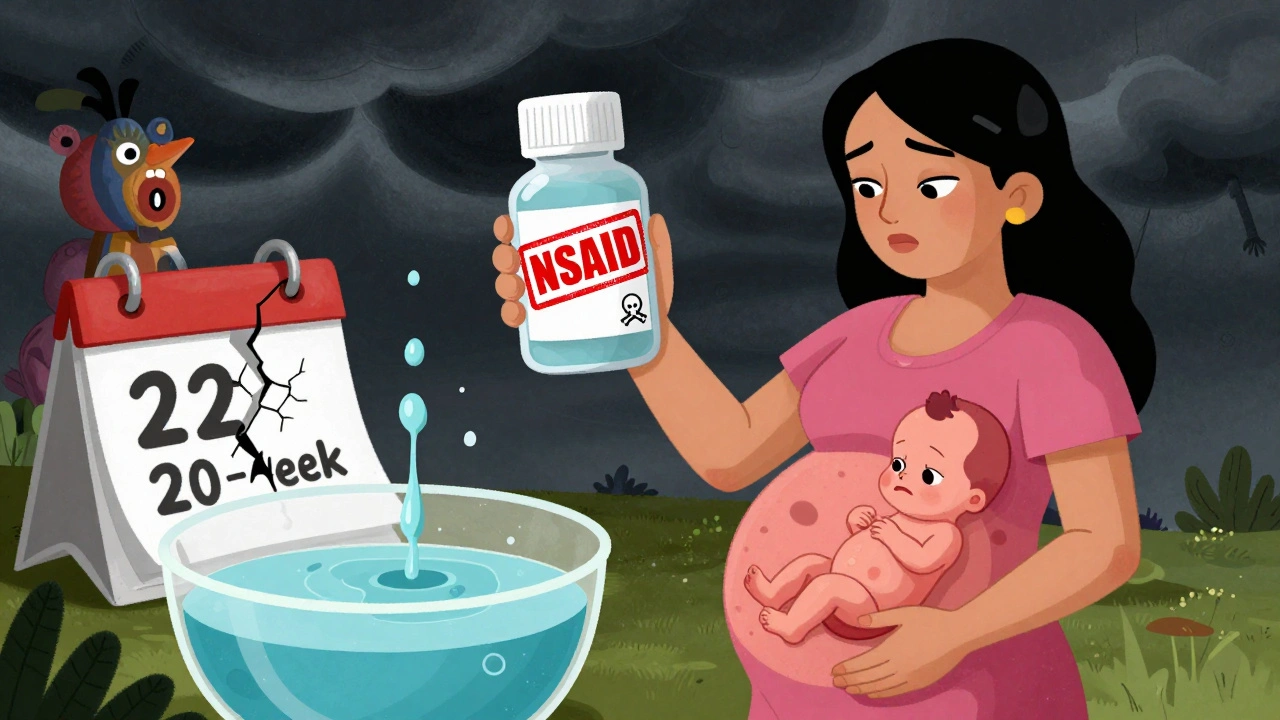
NSAIDs-like ibuprofen (Advil, Motrin), naproxen (Aleve), and diclofenac (Voltaren)-are a different story. They’re great for inflammation and pain, but they’re not safe for your baby after 20 weeks of pregnancy.
In October 2020, the FDA updated its warning: NSAIDs must carry a label saying to avoid them at 20 weeks or later. Before that, the cutoff was 30 weeks. Why the change? Because research showed kidney problems in the fetus can happen as early as 20 weeks.
NSAIDs block an enzyme called COX-2, which helps regulate blood flow to the baby’s kidneys. When that’s disrupted, the baby makes less urine. Less urine means less amniotic fluid. That’s called oligohydramnios. If amniotic fluid drops below 5 cm (measured by ultrasound), it can lead to lung underdevelopment, limb contractures, or even stillbirth.
One study found that 1.2% of fetuses exposed to NSAIDs after 20 weeks developed oligohydramnios-compared to just 0.1% in unexposed pregnancies. That’s a 12-fold increase. And once it starts, it can happen in as little as 48 hours.
After 30 weeks, there’s another risk: the fetal ductus arteriosus-a blood vessel that bypasses the lungs before birth-can close too early. That puts strain on the baby’s heart and can lead to pulmonary hypertension. That risk is small, about 0.5-1%, but it’s real.
Here’s the kicker: many OTC cold and flu meds contain NSAIDs. One in three of them does. You might think you’re just taking something for a stuffy nose, but you’re exposing your baby to a drug that’s now banned after 20 weeks. Always check the Drug Facts label. Look for “ibuprofen,” “naproxen,” or “NSAID” in the active ingredients.
What About Aspirin?
Low-dose aspirin (81 mg) is the only NSAID that’s still allowed throughout pregnancy-but only when prescribed for a specific reason, like preventing preeclampsia. It’s not for headaches or muscle pain. It’s used under strict medical supervision because it has different effects on blood clotting and placental blood flow.
Don’t take regular aspirin (325 mg or higher) at any point during pregnancy. It increases bleeding risk and can interfere with labor. And never combine it with other NSAIDs.
Trimester-by-Trimester Breakdown
- First trimester (weeks 1-12): Acetaminophen is safe and recommended for fever or pain. Fever above 100.4°F raises miscarriage risk by 1.5 times, so treating it matters. NSAIDs are not ideal, but short-term use (1-2 days) before 20 weeks is unlikely to cause harm. Still, avoid them unless absolutely necessary.
- Second trimester (weeks 13-26): Acetaminophen remains the go-to. NSAIDs are now officially unsafe after 20 weeks. If you took ibuprofen at 18 weeks for a bad backache, don’t panic-but stop immediately. If you’re over 20 weeks and need pain relief, acetaminophen is your only OTC option.
- Third trimester (weeks 27-40): No NSAIDs. Period. Even one dose after 30 weeks can trigger ductus arteriosus closure. Acetaminophen is still safe, but again, use the lowest dose for the shortest time. If you’re still in pain, talk to your provider about physical therapy, heat packs, or other non-drug options.
Why So Much Confusion?
Here’s the real problem: patients are getting mixed messages.
A 2023 survey found 68% of pregnant women avoid all pain meds out of fear. Nearly half of them avoid acetaminophen-even though it’s the only safe option. Why? Social media posts. Viral headlines about “acetaminophen and autism.” But correlation isn’t causation. Those studies looked at patterns, not cause. They didn’t control for the fact that moms who took acetaminophen were often the ones with infections, stress, or chronic pain-factors that themselves might affect development.
And then there’s the labeling issue. The FDA required NSAID labels to include the 20-week warning in 2021, but 38% of combination products still don’t say it clearly. You might buy a “sinus relief” tablet thinking it’s just for congestion, only to find out it contains naproxen.
Doctors report a 45% jump in patient questions about acetaminophen safety since the 2021 consensus statement-even though no major medical group has changed its guidance.
What Should You Do?
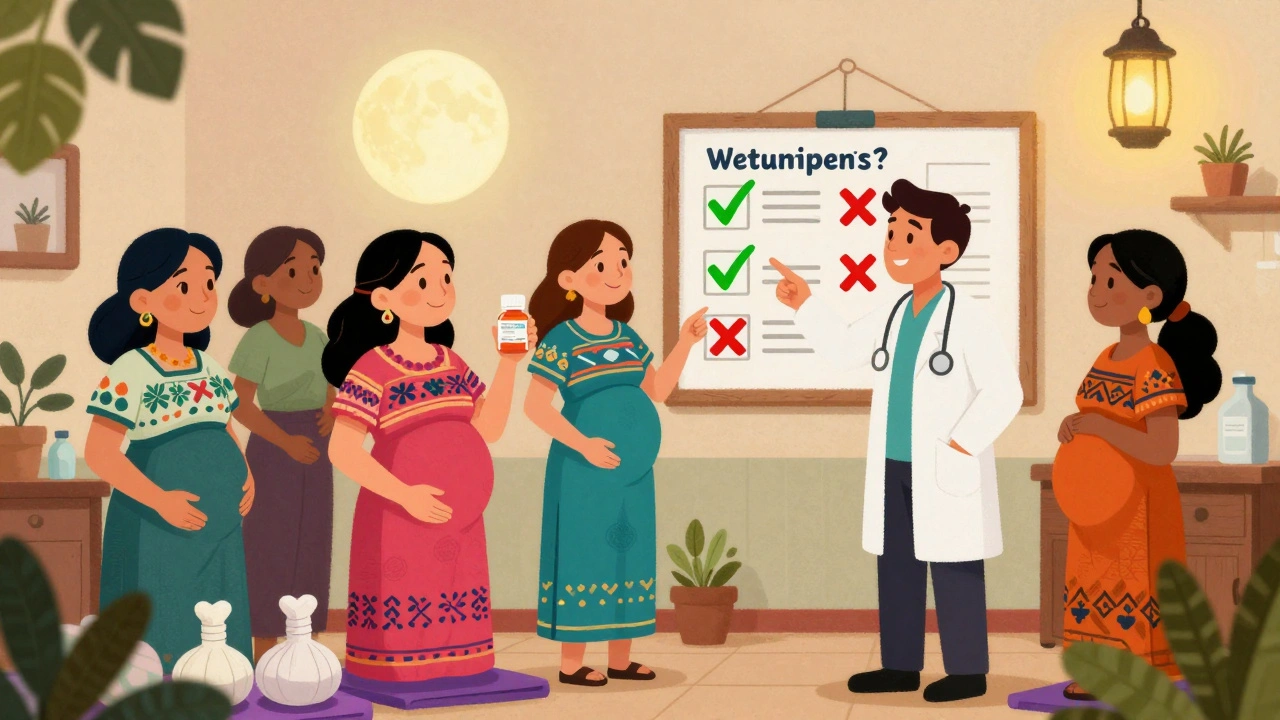
- Keep acetaminophen on hand. It’s safe. Use it when you need it.
- Never take NSAIDs after 20 weeks. Not even once.
- Always read OTC labels. Look for “ibuprofen,” “naproxen,” “ketoprofen,” or “NSAID.”
- If you’re unsure what’s in a product, ask your pharmacist or provider. Don’t guess.
- Use the lowest effective dose for the shortest time. No need to take more than 500 mg every 6 hours unless directed.
- If you’ve taken NSAIDs after 20 weeks, tell your provider. They may recommend an ultrasound to check amniotic fluid levels.
- For chronic pain, talk about alternatives: prenatal yoga, physical therapy, acupuncture, or heat therapy.
What’s Next?
Research is ongoing. The NIH is tracking 10,000 pregnant women through 2027 to see if long-term acetaminophen use affects child development. Early data hasn’t shown harm, but science keeps evolving.
One thing we already know: untreated fever or unmanaged pain can be far more dangerous than acetaminophen. High fever in early pregnancy increases the risk of birth defects. Chronic pain can lead to stress, sleep loss, depression, and even preterm birth.
The goal isn’t to avoid all medication-it’s to use the right one, at the right time, in the right dose. Acetaminophen is that medication. NSAIDs are not.
Bottom line: If you’re pregnant and in pain, acetaminophen is your best and safest bet-throughout your whole pregnancy. Everything else? Wait until after delivery.
Is acetaminophen safe in the first trimester?
Yes. Acetaminophen is the only over-the-counter pain reliever recommended for use in all trimesters, including the first. Treating fever during this time is especially important-untreated fever above 100.4°F can increase the risk of neural tube defects by up to 2.3 times. Stick to 500 mg every 6 hours as needed, and don’t exceed 4,000 mg per day.
Can I take ibuprofen before 20 weeks?
It’s not recommended. While the FDA’s official warning starts at 20 weeks, studies suggest even short-term use before that can affect fetal development. Many providers advise avoiding NSAIDs entirely during pregnancy unless absolutely necessary. If you have pain, acetaminophen is safer and just as effective for most symptoms.
What happens if I accidentally took ibuprofen after 20 weeks?
One or two doses are unlikely to cause harm, but you should stop immediately and tell your provider. If you’ve taken NSAIDs for more than 48 hours after 20 weeks, your provider may order an ultrasound to check your amniotic fluid levels. Oligohydramnios (low fluid) can develop quickly, and early detection means better outcomes.
Are there natural alternatives to acetaminophen for pregnancy pain?
Yes-for some types of pain. Heat packs, prenatal yoga, massage, and acupuncture can help with back pain, headaches, and muscle soreness. For fever, staying hydrated and using cool compresses can help. But if your pain is severe or you have a fever above 100.4°F, acetaminophen is still the fastest, safest option. Don’t wait for natural remedies to work if you’re in real discomfort.
Can I use acetaminophen while breastfeeding?
Yes. Acetaminophen passes into breast milk in very small amounts and is considered safe for nursing mothers. The American Academy of Pediatrics lists it as compatible with breastfeeding. You can use the same dosing guidelines: 500-650 mg every 6 hours as needed.
Why do some websites say acetaminophen causes autism?
Some observational studies noticed a statistical link between acetaminophen use and autism diagnosis, but they couldn’t prove cause. Moms who took acetaminophen were often the ones with infections, high stress, or chronic illness-all of which are linked to neurodevelopmental differences. When researchers controlled for those factors, the link disappeared. Major health organizations agree: there’s no credible evidence that acetaminophen causes autism.
Comments (8)
Isabelle Bujold
Just wanted to add some context from my OB-GYN’s practice - we’ve seen a huge uptick in anxiety around acetaminophen since those 2021 observational studies got picked up by mommy blogs. But here’s the thing: when you actually look at the data from prospective cohort studies with controlled confounders, the signal disappears. The real risk isn’t the drug - it’s the untreated fever or chronic pain that can trigger inflammation or stress hormones that cross the placenta. I always tell my patients: if you’re worried about a headache, take the Tylenol. If you’re worried about taking Tylenol, that’s the real stressor. And stress? That’s the silent villain in pregnancy outcomes.
Also, don’t forget that acetaminophen is the only option that doesn’t interfere with prostaglandins. NSAIDs? They’re basically a hormonal grenade in the third trimester. I’ve seen cases where a single dose of ibuprofen at 28 weeks led to oligohydramnios in under 72 hours. It’s not theoretical. It’s clinical reality.
And yes, the labeling on combination cold meds is a mess. I had a patient last week who took a ‘sinus relief’ pill thinking it was just pseudoephedrine - turned out it had naproxen. She didn’t even know. That’s why I hand out printed cheat sheets now. Simple. No jargon. Just: ‘If it says NSAID or ibuprofen - skip it after 20 weeks.’
Bottom line: acetaminophen is the gold standard. The fear around it is disproportionate. The fear around NSAIDs? That’s justified. Please, let’s stop scaring people into suffering needlessly.
Rachel Bonaparte
Let’s be real - acetaminophen is just the FDA’s way of keeping Big Pharma happy. They’ve known for decades that it disrupts endocrine pathways, especially in utero. The 2021 consensus? That was a PR stunt. The real studies - the ones buried in toxicology journals - show a clear link to altered testosterone levels in male fetuses and early puberty in girls. But you won’t hear that from ACOG because they’re funded by Merck. And don’t get me started on how they downplay the oxidative stress from chronic use. It’s not just about autism - it’s about generational hormonal chaos. We’re literally poisoning the next generation with ‘safe’ meds while pretending we’re being responsible. Wake up, people.
Scott van Haastrecht
So let me get this straight - you’re telling me it’s okay to give a developing fetus a drug that’s been linked to liver damage in adults, but you’re terrified of a 2-day course of ibuprofen? That’s not logic, that’s cognitive dissonance. And now we’re supposed to trust the FDA after they approved opioids for pregnancy? The whole system is broken. If you want to be ‘safe,’ don’t take anything. Let your body handle it. Fever is a defense mechanism. Pain is a signal. Suppressing them with chemicals is just medical arrogance disguised as care.
Chase Brittingham
I just want to say how much I appreciate this post. I was terrified after my first trimester when I read that viral post about acetaminophen and autism. I stopped taking it for two weeks and ended up with a 102°F fever for three days because I was too scared to use Tylenol. My OB had to call me personally to tell me I was risking more harm by not treating it. I cried in her office. Thank you for giving me back the confidence to use what’s actually safe. I’ve been taking 500mg every 6 hours for my back pain since week 18 and feel so much better - mentally and physically. If you’re reading this and scared - please, talk to your provider. Don’t let fear make you suffer. You’re not alone.
Bill Wolfe
Wow. Just… wow. You people are so naive. Acetaminophen isn’t ‘safe’ - it’s the default. The lowest common denominator. The pharmaceutical industry didn’t invent it because it’s the best - they invented it because it’s the only one they can patent and sell without lawsuits. And now we’ve turned it into a religious sacrament. Meanwhile, natural alternatives like magnesium, ginger, and acupuncture have been used for millennia. But no - we need a pill. Because convenience trumps wisdom. And don’t even get me started on how we’ve normalized chemical dependency in pregnancy. It’s not empowerment - it’s chemical surrender. 🤦♂️
Ollie Newland
From a clinical pharmacology standpoint, the key is understanding the pharmacokinetic and pharmacodynamic profiles. Acetaminophen has a hepatic metabolism via glucuronidation and sulfation, with minimal placental transfer and no COX inhibition - hence its safety profile. NSAIDs, conversely, inhibit COX-1 and COX-2, reducing prostaglandin E2, which is critical for renal perfusion and ductus arteriosus patency. The 20-week cutoff is evidence-based, not arbitrary. The real issue is polypharmacy and lack of patient education. OTC labels are deliberately ambiguous to maximize sales. This isn’t about fear - it’s about informed consent. We need better labeling, provider training, and patient literacy - not moral panic.
Rebecca Braatz
TO EVERYONE WHO’S AFRAID TO TAKE ACETAMINOPHEN: YOU’RE NOT WEAK FOR USING IT - YOU’RE STRONG FOR PRIORITIZING YOUR HEALTH.
I had preeclampsia in my second pregnancy. My doctor told me to take 81mg aspirin daily - and acetaminophen for headaches. I was terrified too. But guess what? I had a healthy baby. And I didn’t suffer through migraines because I was scared of a pill.
You’re not ‘toxic’ for needing pain relief. You’re human. And your baby needs you healthy. So take the Tylenol. Drink water. Rest. Call your provider. You’ve got this. 💪
Michael Feldstein
Just wanted to respond to Rachel’s comment - I get where you’re coming from, but I think we’re missing the forest for the trees. The fact that acetaminophen is the *only* safe option doesn’t mean it’s perfect - it just means it’s the least bad. And sometimes, in medicine, that’s all you get.
I had a patient last month who refused all meds because she read a blog that said ‘acetaminophen causes autism.’ She ended up with a UTI that turned into pyelonephritis and was hospitalized at 24 weeks. She was in so much pain she couldn’t sleep. We gave her acetaminophen - and within 12 hours, she was smiling again.
The goal isn’t to eliminate all risk - it’s to minimize harm. And right now, that’s acetaminophen.
If you want to explore alternatives, great. But don’t let fear stop you from doing what’s proven to work. And if you’ve already taken NSAIDs after 20 weeks - don’t panic. Just tell your provider. They’ve seen it before. We’re here to help, not judge.