
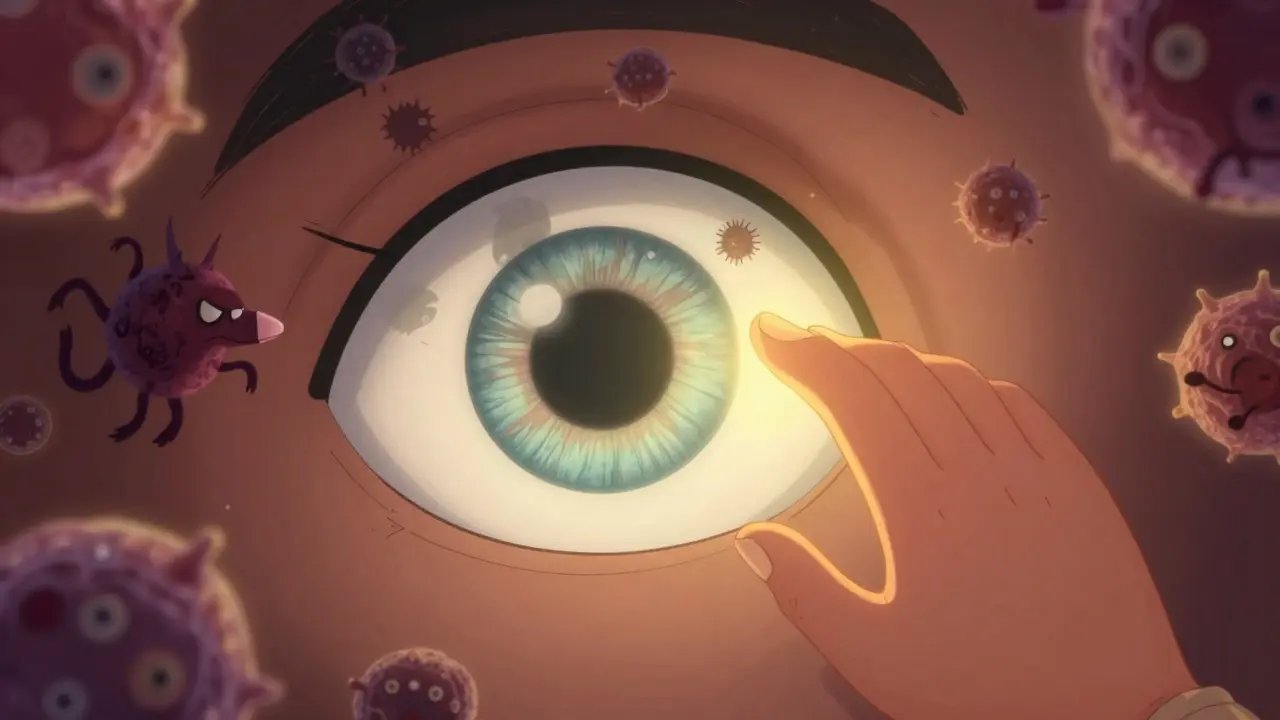
Autoimmune uveitis isn’t something most people hear about until it hits them-or someone they love. It’s inflammation deep inside the eye, caused when the immune system mistakenly attacks healthy tissue. Unlike an infection that clears with antibiotics, this is a silent, creeping problem: redness, blurred vision, light sensitivity, floaters. It can start in one eye, then jump to the other. Left unchecked, it doesn’t just cause discomfort-it can steal your sight permanently.
What Exactly Is Autoimmune Uveitis?
The uvea is the middle layer of the eye: the iris, the ciliary body, and the choroid. When autoimmune uveitis strikes, the immune system turns on these parts like they’re foreign invaders. It’s not caused by dirt, trauma, or a virus. It’s an internal betrayal. And it’s rare-fewer than 200,000 people in the U.S. have it, which is why doctors sometimes miss it early.
This isn’t just an eye problem. Autoimmune uveitis often rides shotgun with other autoimmune diseases. You might have ankylosing spondylitis, rheumatoid arthritis, lupus, Crohn’s disease, or sarcoidosis. In fact, up to half of all uveitis cases are linked to a systemic condition. That’s why a simple eye exam isn’t enough. If you’re being treated for one autoimmune disease and suddenly notice vision changes, your eye doctor and your rheumatologist need to talk-right away.
Why Steroids Are the First Line, But Not the Solution
Corticosteroids are the go-to for getting inflammation under control fast. Eye drops for front-of-the-eye inflammation. Injections near the eye for deeper cases. Pills if it’s widespread. They work. They work well. That’s why they’re used first.
But here’s the catch: long-term steroid use is a trade-off you can’t afford. Cataracts form. Eye pressure spikes, leading to glaucoma. Weight gain, mood swings, bone thinning, diabetes. For someone with chronic uveitis, steroid dependence means trading one set of health problems for another. That’s why doctors don’t keep you on steroids forever. They use them to buy time-time to find a better, longer-term plan.
Steroid-Sparing Therapy: What It Is and Why It Matters
Steroid-sparing therapy isn’t a single drug. It’s a strategy: replace or reduce steroids with medications that calm the immune system without wrecking your body. These are called immunosuppressants or biologics. They don’t cure uveitis, but they help you live with it without constant steroid side effects.
The biggest breakthrough came in 2016, when the FDA approved Humira (adalimumab) for non-infectious uveitis. It’s not just another drug-it’s the first biologic specifically approved for this condition. Humira blocks TNF-alpha, a protein that drives inflammation in the eye. For many patients, it cuts flare-ups by more than half and lets them ditch or slash their steroid dose.
Other options include methotrexate, a classic immunosuppressant used for decades in rheumatoid arthritis, and cyclosporine, which suppresses T-cells. Then there’s infliximab, another TNF inhibitor that’s shown strong results in kids with uveitis, even helping them avoid steroids entirely.
These aren’t magic pills. They take weeks to kick in. You need regular blood tests to watch for liver issues or low white blood cell counts. And yes-they increase your risk of infections. But compared to years of steroids? Most patients say the trade-off is worth it.

How Doctors Decide What Treatment to Use
There’s no one-size-fits-all. Your treatment depends on three things: where the inflammation is, how bad it is, and whether you have another autoimmune disease.
Anterior uveitis (front of the eye) might start with eye drops and a quick steroid taper. But if it’s posterior uveitis (back of the eye) or panuveitis (all parts), you’re likely headed for injections or pills from day one. If you’ve got Crohn’s disease and uveitis? You’re probably already on a biologic like Humira-so that same drug becomes your uveitis treatment too.
Doctors don’t guess. They test. Slit-lamp exams. OCT scans to see retinal swelling. Fluorescein angiography to map leaking blood vessels. Blood work to check for HLA-B27 (a genetic marker linked to spondylitis-related uveitis). If infection is even a remote possibility-like tuberculosis or syphilis-they rule it out before giving you anything that suppresses your immune system. Giving an immunosuppressant to someone with an infection could be deadly.
What Life Looks Like on Steroid-Sparing Therapy
Patients often describe it as a rollercoaster. In the first few months, you’re watching for flare-ups. You’re getting blood drawn every few weeks. You’re learning to recognize the early signs: a slight haze in your vision, a new headache, sensitivity to sunlight. You might feel anxious. You’re taking a drug that makes you more vulnerable to colds, flu, even shingles.
But then, slowly, things shift. You stop needing steroid eye drops every day. Your eye pressure returns to normal. You sleep better. You gain back energy you didn’t know you’d lost. Your vision stabilizes. You can drive at night again. You stop worrying about losing your sight.
One woman in her 40s, diagnosed with uveitis tied to psoriatic arthritis, told her doctor: “I thought I’d be on prednisone for the rest of my life. Now I’m on Humira once every two weeks. My joints feel better. My eyes feel better. I’m not scared anymore.”
That’s the goal. Not just controlling inflammation-but reclaiming your life.
The Future: Personalized Treatment and New Drugs
The field is moving fast. Researchers are testing drugs that target different parts of the immune system-like interleukin-6 inhibitors and JAK inhibitors. These might work for people who don’t respond to TNF blockers. Some are even looking at genetic markers to predict who’ll respond best to which drug.
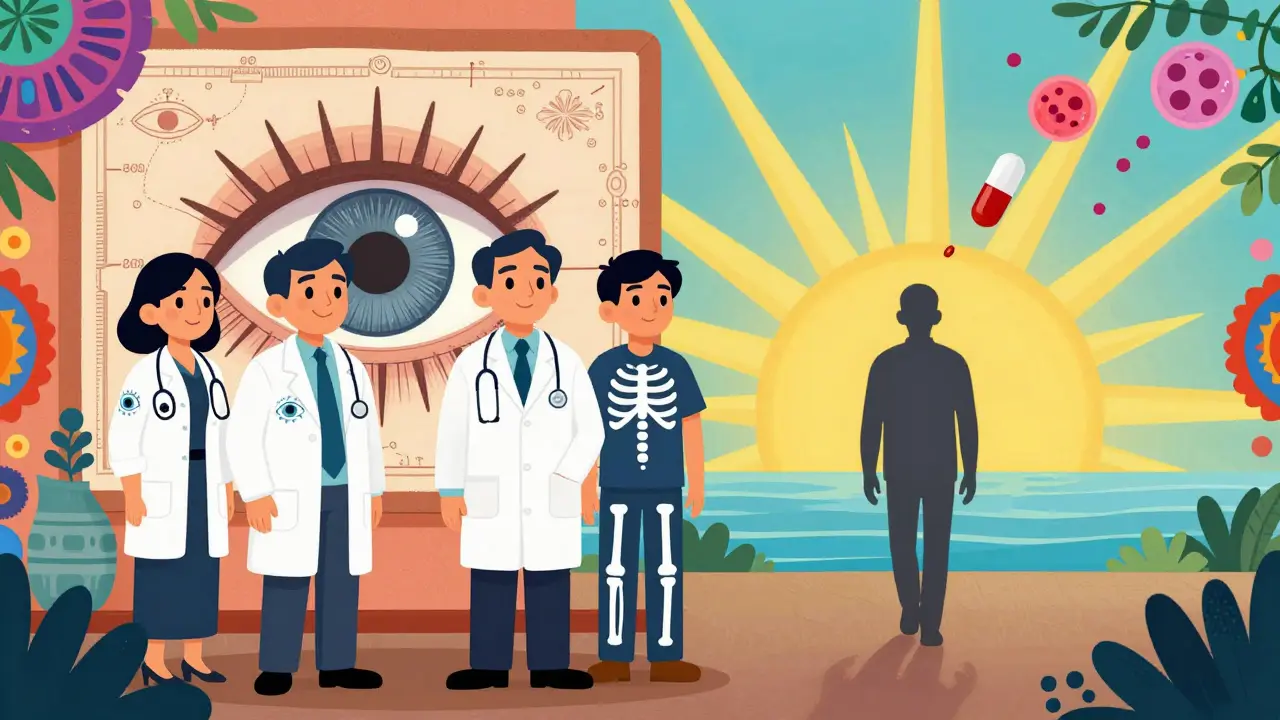
Specialized uveitis clinics have grown from just 15 in 2010 to over 50 today. That’s because this condition demands expertise. You need an ophthalmologist who knows the latest biologics and a rheumatologist who understands how eye inflammation connects to the rest of your body.
And while surgery might still be needed for complications like cataracts or retinal detachment, those are becoming rarer. Why? Because better drugs are catching the inflammation before it causes permanent damage.
What You Need to Do Right Now
If you’ve been diagnosed with autoimmune uveitis:
- Don’t delay treatment. Vision loss can happen fast.
- Ask if you have an underlying autoimmune disease. Get tested.
- Ask your doctor about steroid-sparing options-even if you’re feeling better now.
- Find a specialist. General ophthalmologists can manage mild cases. Chronic or severe uveitis needs a uveitis expert.
- Keep your appointments. Monitoring isn’t optional. It’s how you stay safe.
If you’re on steroids and feel like you’re just waiting for the next side effect to hit-you’re not alone. But you don’t have to stay there. Steroid-sparing therapy isn’t experimental. It’s the new standard. And for many, it’s the difference between living with a disease and living well despite it.
Can autoimmune uveitis be cured?
There’s no cure yet, but it can be controlled. With the right treatment, many people go years without a flare-up. The goal isn’t to eliminate the disease-it’s to keep it from damaging your vision.
Are steroid-sparing drugs safe?
They carry risks-like increased infection risk or liver stress-but they’re safer than long-term steroids. Doctors monitor you closely with blood tests and adjust doses as needed. For most, the benefits outweigh the risks, especially when steroids have already caused side effects.
How long until steroid-sparing therapy starts working?
It varies. Methotrexate can take 6 to 12 weeks. Biologics like Humira often show results in 4 to 8 weeks. You won’t feel better overnight, but steady improvement is normal. Don’t stop treatment if you don’t see instant results.
Can I stop taking my medication if my eyes feel fine?
No. Stopping medication without medical supervision can trigger a severe flare-up, sometimes worse than before. Even if you feel fine, inflammation can still be active. Always work with your doctor to taper off safely-if at all.
Is Humira the only FDA-approved drug for uveitis?
As of 2025, Humira is the only biologic specifically approved by the FDA for non-infectious uveitis. But other drugs like infliximab and methotrexate are commonly used off-label and are backed by strong clinical evidence. Your doctor will choose based on your specific case.
What should I do if I develop an infection while on immunosuppressants?
Call your doctor immediately. Even a mild fever or sore throat could signal something serious. Don’t wait. Your immune system is suppressed, so infections can spread quickly. Your doctor may pause your medication temporarily until the infection clears.
Autoimmune uveitis is complex, but it’s not hopeless. The tools to manage it have improved dramatically in the last decade. What once meant lifelong steroid dependence now often means targeted therapy, fewer side effects, and a real chance at preserving vision for decades. The key? Acting early, staying informed, and working with the right team.