
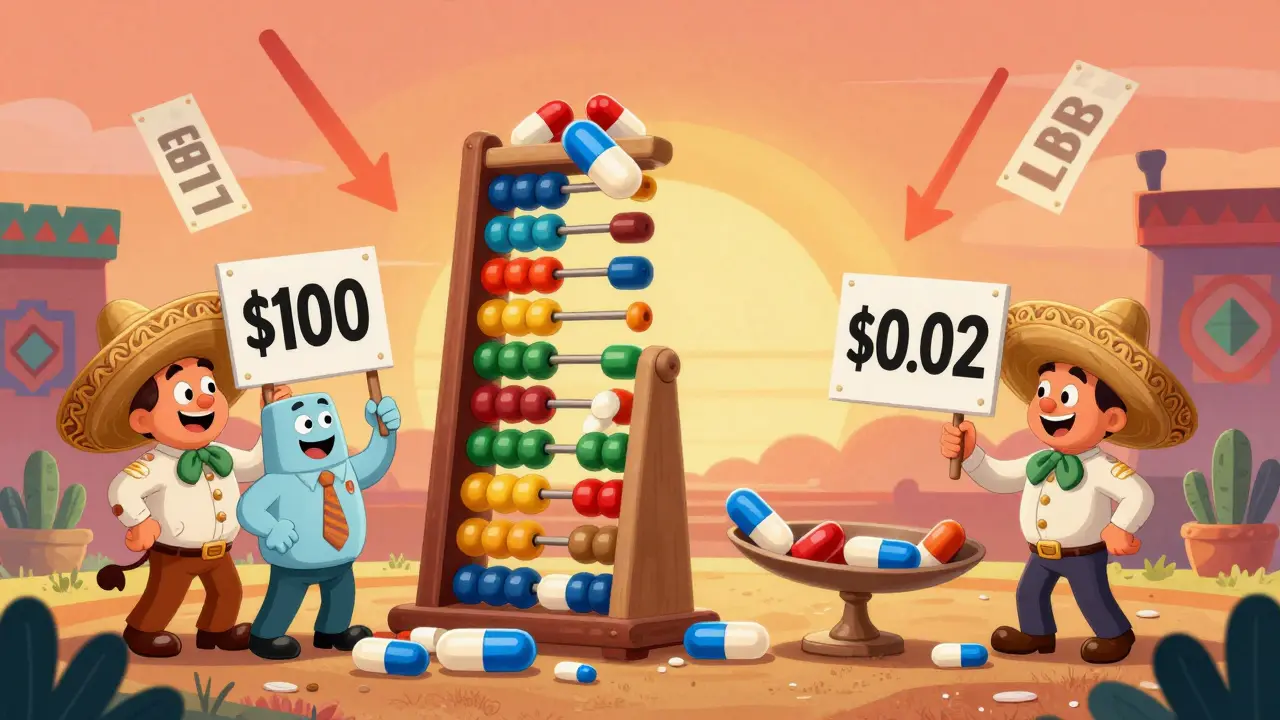
Most people think generic drugs are cheap because they’re generic. But here’s the truth: bulk buying and tendering are what make them affordable at all. Without these strategies, insurers wouldn’t be able to keep premiums down, and millions of Americans would be paying hundreds of dollars for pills that cost pennies to make.
It’s not magic. It’s math. When an insurer buys 10 million pills of a generic blood pressure medication instead of 10,000, the price per pill drops-sometimes by 90%. That’s not theory. It’s what happens every time a manufacturer wins a tender bid. And it’s why your $10 copay for lisinopril isn’t actually $10-it’s a fraction of what the drug really costs, thanks to aggressive negotiation.
How Tendering Works Behind the Scenes
Tendering is just a fancy word for competitive bidding. Insurers and pharmacy benefit managers (PBMs) don’t just pick a generic drug and pay whatever the pharmacy charges. They send out requests to every manufacturer that makes a specific drug-say, metformin or atorvastatin-and ask for the lowest possible price for a guaranteed volume over 1-3 years.
Manufacturers compete. One might offer $0.02 per pill. Another, $0.015. The insurer picks the lowest. But here’s the catch: not all generic drugs are created equal. Some have 10+ manufacturers bidding. Others? Only two or three. That’s when prices don’t drop as much. And that’s when insurers get stuck paying more than they should.
That’s why top plans track which generics are costing the most. A 2022 study in JAMA Network Open found that a small number of generic drugs-often those with few manufacturers-were driving up spending. One drug, for example, had three manufacturers, but two had stopped making it. The third was charging $0.18 per pill. Another version, made by a different company, was $0.03. The insurer switched. Saved $1.5 million in six months.
The Hidden Game: Spread Pricing and Opaque Costs
Here’s where things get messy. Many PBMs don’t tell insurers what they’re really paying. They use something called “spread pricing.”
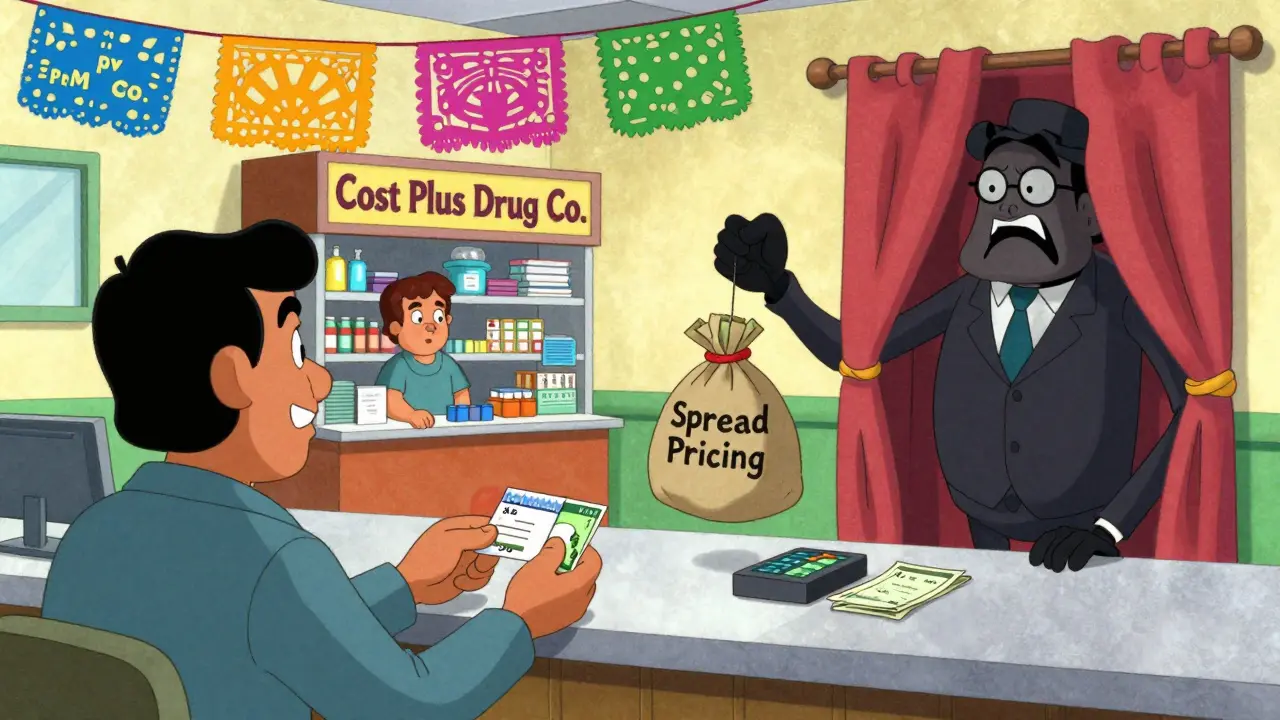
Imagine this: The PBM agrees to pay a pharmacy $5 for a 30-day supply of generic insulin. But the insurer is billed $15. The PBM pockets the $10 difference. That’s spread pricing. And it’s legal. And it’s everywhere.
That’s why you might see your insurance card say “generic copay: $10,” but when you check your explanation of benefits, you realize the drug cost $22. The insurer paid $22. You paid $10. The PBM kept $12. And you never knew.
That’s not how bulk buying is supposed to work. Real bulk buying means transparency. Companies like Cost Plus Drug Company and Costco cut out the middleman. They buy directly from manufacturers, mark up the price by a fixed percentage (usually 15%), and sell it to you for less than your insurance copay. A 2023 NIH study found patients saved an average of $231 per prescription on expensive generics using these models.
Why Your Insurance Might Be Making You Pay More
Even though generics make up over 90% of prescriptions, they only account for 17% of total drug spending. That sounds good-until you realize insurers are often putting high-cost generics on lower tiers to maximize rebates from manufacturers.
Here’s how it works: A brand-name drug maker pays a rebate to the PBM if the PBM puts their drug on a preferred tier. The PBM then pushes the insurer to keep that brand drug on the list-even if a cheaper generic exists-because the rebate is bigger than the savings from switching.
It’s perverse. You’re paying more because the system rewards high prices. The 2024 Association for Accessible Medicines report found that 78% of Medicare Part D plans still put generics on higher copay tiers than they should. That means you’re paying $25 for a drug that costs $3 to make.
Who’s Actually Saving Money?
Not everyone is losing. The biggest winners are large employers, government programs, and patients who skip insurance entirely.
The Veterans Health Administration negotiates directly with manufacturers and pays 24% less than Medicare Part D. Medicare itself has cut total drug spending by 80% since 2007-mostly because it started using bulk purchasing and formulary controls.
And then there’s the cash pay crowd. In 2020, 97% of all cash payments for prescriptions were for generics. Why? Because paying out of pocket with GoodRx or at Cost Plus Drug Company often costs less than using insurance. One Reddit user paid $87 through insurance for a generic drug. Paid $4.99 cash. Same pill. Same pharmacy.
Blueberry Pharmacy, a direct-to-consumer model, has a 4.7/5 rating on Trustpilot. Customers love it because they know exactly what they’ll pay. No surprises. No formulary changes mid-year. Just $15 for blood pressure meds. Every month.
What Insurers Are Doing Right
The smartest plans don’t just set a formulary and forget it. They audit quarterly. They look for drugs with low manufacturer competition. They switch to cheaper alternatives. They demand transparency from PBMs.
California passed Senate Bill 17 in 2017, forcing PBMs to disclose any spread pricing over 5%. The result? More insurers started asking for contract clauses that cap markups. Navitus Health Solutions, a PBM that works with employers, reported 22% lower generic costs in 2023 compared to traditional PBMs.
Some insurers now use “value-based contracts” for specialty drugs. But for generics? Still mostly fee-for-service. That’s changing. The FDA’s GDUFA III rules, launched in 2023, are speeding up generic approvals. More manufacturers means more competition. Lower prices.
What You Can Do
If you’re on insurance, ask your plan: “Do you use transparent pricing for generics? Can I see the actual cost of my prescriptions?” Most won’t tell you. But asking makes a difference.
Check GoodRx or SingleCare before you fill a script. Compare the cash price to your insurance copay. If the cash price is lower, pay cash. You’re not cheating the system-you’re bypassing the middlemen who are inflating the cost.
And if you’re an employer or part of a large group plan, push for contract terms that ban spread pricing. Demand that PBMs disclose every fee. Ask for quarterly reports on which generics are costing the most. And switch to alternatives when you find them.
It’s not about being anti-insurance. It’s about making insurance work the way it’s supposed to: lowering costs, not hiding them.
Why This Matters for Everyone
Generic drugs saved the U.S. healthcare system $445 billion in 2023. That’s $194 billion saved just for adults aged 40-64. Without bulk buying and tendering, that number drops to zero. People would skip doses. They’d ration pills. They’d go without.
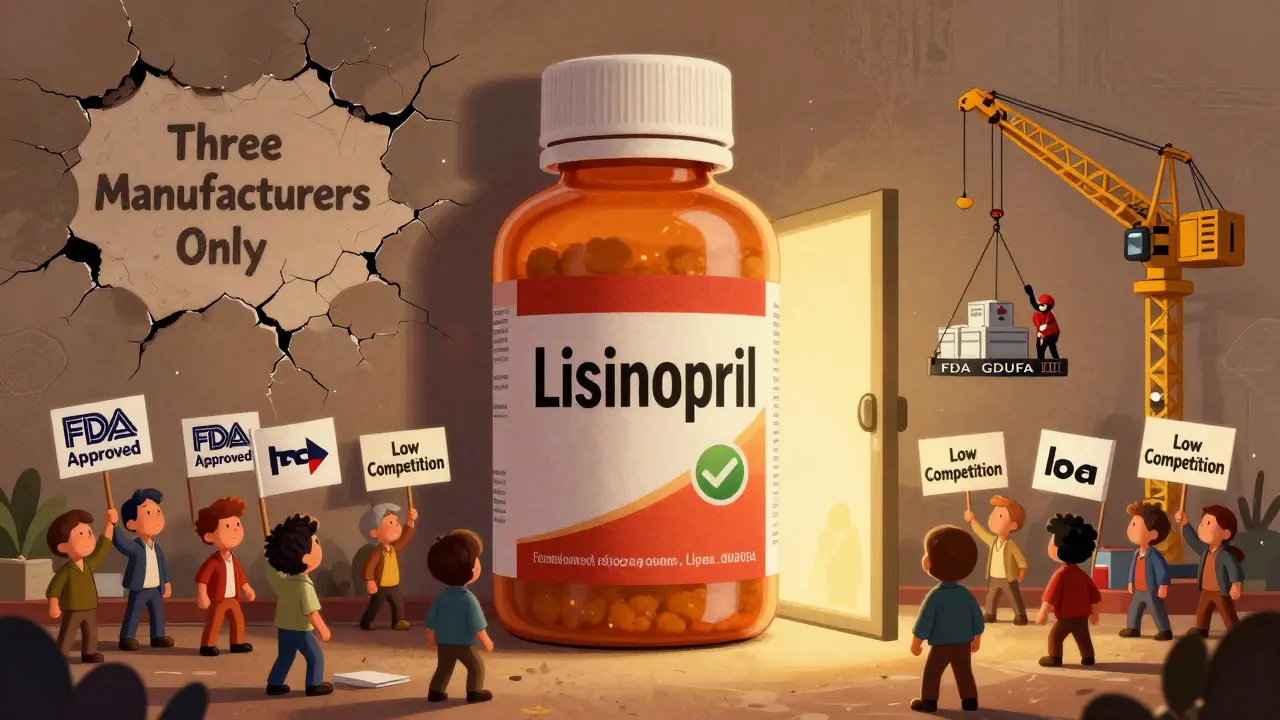
But the system is broken. Manufacturers are consolidating. Only three companies make 80% of some generics. That limits competition. That drives prices up. That’s why FDA’s Drug Competition Action Plan warns that we’re heading for shortages-like the albuterol inhaler crisis in 2020, when prices dropped so low that manufacturers stopped making it.
So the real question isn’t whether insurers save money on generics. It’s whether they’re saving it the right way. And whether you’re getting your share of those savings.
Next time you pick up a prescription, ask yourself: Who’s really paying for this? And who’s getting rich off the difference?
How do insurers save money on generic drugs?
Insurers save money by using bulk buying and tendering-negotiating lower prices with generic drug manufacturers by committing to buy large volumes. They compare bids from multiple companies and choose the lowest price, often saving 80-90% compared to brand-name drugs. This process is managed by pharmacy benefit managers (PBMs) who handle formulary lists and pricing tiers.
What is spread pricing, and why is it a problem?
Spread pricing is when a pharmacy benefit manager (PBM) charges an insurer more for a generic drug than what they pay the pharmacy, keeping the difference as profit. This creates a hidden cost that isn’t passed on to the patient or the insurer. It’s a major reason why insurance copays can be higher than the actual cash price of the drug. California’s SB 17 law now requires PBMs to disclose spreads over 5%, pushing more transparency into the system.
Why is my generic drug more expensive with insurance than without?
Your insurance might be paying more than necessary due to spread pricing, hidden rebates, or formulary decisions that favor higher-priced generics. Meanwhile, cash prices at pharmacies like Costco or Cost Plus Drug Company are often lower because they cut out the middleman and pass manufacturer discounts directly to you. A 2023 NIH study found cash prices for generics were 76% lower on average than retail pharmacy prices.
Are all generic drugs the same quality?
Yes. The FDA requires all generic drugs to have the same active ingredients, strength, dosage form, and bioequivalence as the brand-name version. The only differences are in inactive ingredients, packaging, or manufacturer. Price differences reflect manufacturing costs and competition-not quality. A $0.02-per-pill generic is just as effective as a $0.18 one.
What’s the difference between a PBM and an insurer?
An insurer (like Blue Cross or Aetna) pays for your healthcare coverage. A pharmacy benefit manager (PBM)-like CVS Caremark or Express Scripts-is a third-party company hired by the insurer to manage drug benefits: negotiating prices, creating formularies, and processing claims. Many PBMs are owned by insurers, creating a conflict of interest where profits come from opaque pricing rather than savings.
Can I save money by paying cash for generics?
Yes, often. A 2023 NIH study found cash payments for generics saved patients an average of $231 per prescription on expensive drugs and $19 on common ones. Services like GoodRx, SingleCare, and Cost Plus Drug Company often offer prices lower than insurance copays. If your cash price is cheaper than your insurance rate, pay cash-it’s legal, safe, and smart.
Why do some generic drugs have shortages?
When tendering drives prices too low, manufacturers can’t profit and stop making the drug. In 2020, albuterol inhalers went into shortage because prices dropped below production costs. Only a few companies make certain generics-sometimes just two or three-so if one quits, supply vanishes. This is a growing risk as price pressure increases.
What’s the future of generic drug pricing?
The FDA’s GDUFA III rules aim to speed up generic approvals, increasing competition. CMS now requires more pricing transparency in Medicare Part D. Companies like Cost Plus Drug Company and Navitus Health Solutions are proving that transparent, direct models work. The Congressional Budget Office estimates $127 billion in savings over the next decade-if we fix the broken rebate system and stop rewarding high prices.
Comments (11)
Vu L
Wait, so you’re saying I should just pay cash instead of using insurance? Bro, I’ve been getting my lisinopril for $3 through my plan. You’re telling me I’m getting scammed? 😏
James Hilton
Let me get this straight - the system is rigged so that the cheapest drugs cost the most because someone in a suit gets a kickback? That’s not capitalism. That’s a Netflix show about corrupt PBMs. I need a season 2. 🍿
Mimi Bos
i just checked goodrx for my metformin and it was $4.99 cash. my copay was $15. i felt so dumb. like why do i even have insurance?? 🤦♀️
Payton Daily
Think about it - this isn’t just about drugs. It’s about power. The entire healthcare system is built on illusion. We’re told we’re getting care, but we’re really just paying for middlemen to do math on spreadsheets while real people ration pills. The real tragedy? We’ve been trained to believe this is normal. We’ve forgotten what fairness looks like. And now, we’re paying for it - literally - in insulin vials and asthma inhalers. This isn’t economics. This is moral decay dressed in corporate jargon.
Kelsey Youmans
It is deeply concerning that the structural incentives within the pharmacy benefit management ecosystem actively discourage transparency and commoditize essential therapeutics. The absence of standardized disclosure protocols perpetuates inequitable access, particularly among vulnerable populations. A systemic recalibration is not merely advisable - it is ethically imperative.
Sydney Lee
Of course the system is broken - because the people who designed it never had to take a pill they couldn’t afford. You think a PBM exec pays $15 for metformin? Please. They get it for free through their ‘corporate wellness program.’ Meanwhile, you’re choosing between insulin and rent. That’s not capitalism. That’s a crime.
oluwarotimi w alaka
USA always lie. They say generic drugs cheap but in real they steal from poor people. Why other country not have this problem? Because they not let greedy white companies control medicine. Nigeria make good drugs without middlemen. You think you free? You slave to PBM.
Debra Cagwin
If you’re reading this and didn’t know you could pay cash for generics - you’re not alone. Many people don’t. But now you do. And that’s powerful. Start small: check GoodRx next time. You might be surprised. And if you’re an employer? Push for change. One person asking questions can start a ripple.
Hakim Bachiri
Okay - so let me get this straight: the government lets companies charge $22 for a $3 pill… and then we’re supposed to be grateful because it’s ‘generic’?!!? This isn’t a free market - it’s a monopoly with a PowerPoint presentation. And don’t even get me started on how the FDA approves generics from factories in India that have 12 violations… but hey, at least it’s ‘bioequivalent’… right? 😒
Celia McTighe
Just paid $4.99 for my blood pressure med with GoodRx. 😭 I cried a little. Not because I was sad - because I realized I’ve been overpaying for YEARS. To everyone reading: please, please check your cash price. You deserve to know what you’re really paying. 💙 #GenericDrugRevolution
Ryan Touhill
It’s fascinating how we’ve normalized exploitation under the banner of ‘efficiency.’ The real innovation here isn’t bulk purchasing - it’s psychological manipulation. We’ve been conditioned to believe that lower copays equal savings, when in fact, they’re just a distraction from the true cost being absorbed by the system - and ultimately, by you. The irony? The very people who benefit most from this arrangement are the ones screaming loudest about ‘personal responsibility.’