
One in four women will experience a yeast infection at some point in their lives - and for many, it comes out of nowhere. Itchy, burning, uncomfortable - and often misunderstood. If you're dealing with symptoms that feel like a classic yeast infection, you might be tempted to grab an over-the-counter treatment right away. But here's the truth: yeast infection symptoms can look a lot like other conditions, and using the wrong treatment can make things worse. This isn't just about itching. It's about knowing when OTC options work - and when they don't.
What Does a Yeast Infection Actually Feel Like?
Most women know the signs: intense itching, swelling, and that thick, white discharge that looks like cottage cheese. But not everyone has the textbook version. The CDC reports that 97% of cases involve vulvar itching, 77% have vaginal soreness, and nearly half experience pain during sex or urination. The discharge isn't always white - sometimes it's yellowish, or even pinkish-green. And while many assume the smell is strong, yeast infections usually don't have a foul odor. If it smells fishy, that's likely bacterial vaginosis, not yeast. Physical signs include redness (seen in 85% of cases), swelling, and in severe cases, cracks or sores on the vulva. These aren't just "annoyances." They're signs your body is fighting an overgrowth of Candida albicans - the fungus that causes 80-90% of vaginal yeast infections. It's not a sexually transmitted infection, but it can flare up after sex, especially if you're already prone to it.What Triggers a Yeast Infection?
Your vagina has a delicate balance of good bacteria and yeast. When that balance shifts, Candida takes over. Common triggers aren't always what you think. Antibiotics are the biggest culprit - they kill off the good bacteria that normally keep yeast in check. About 30-50% of yeast infections happen after a course of antibiotics. Pregnancy is another major factor. Rising estrogen levels during pregnancy create a sugar-rich environment yeast loves. About 20-30% of pregnant women get at least one infection. Uncontrolled diabetes also raises your risk - if your blood sugar is high (HbA1c over 7%), you're more than twice as likely to get recurrent infections. Other triggers? Tight clothing, damp swimsuits, hormonal birth control, and even stress. And yes - hot weather plays a role too. Studies show yeast infections spike 25% during summer months, likely because heat and sweat create the perfect moist environment for yeast to thrive.What OTC Treatments Actually Work?
If you're sure it's a yeast infection - and you've had one before - three OTC options are backed by solid evidence: clotrimazole, miconazole, and tioconazole. All are azole antifungals, meaning they stop yeast from growing. They come as creams, suppositories, or tablets.- Clotrimazole: Available as 1% cream (apply twice daily for 7-14 days), 2% cream (once daily for 3 days), or vaginal tablets (100mg or 200mg, used once daily for 3-7 days). The 3-day tablet form has an 85% cure rate.
- Miconazole: 2% cream (apply once daily for 7 days) or 100mg suppositories (once daily for 7 days). Similar effectiveness to clotrimazole.
- Tioconazole: A single-dose 6.5% ointment. Convenient, but slightly less effective than 7-day regimens.
When OTC Treatments Fail - And Why
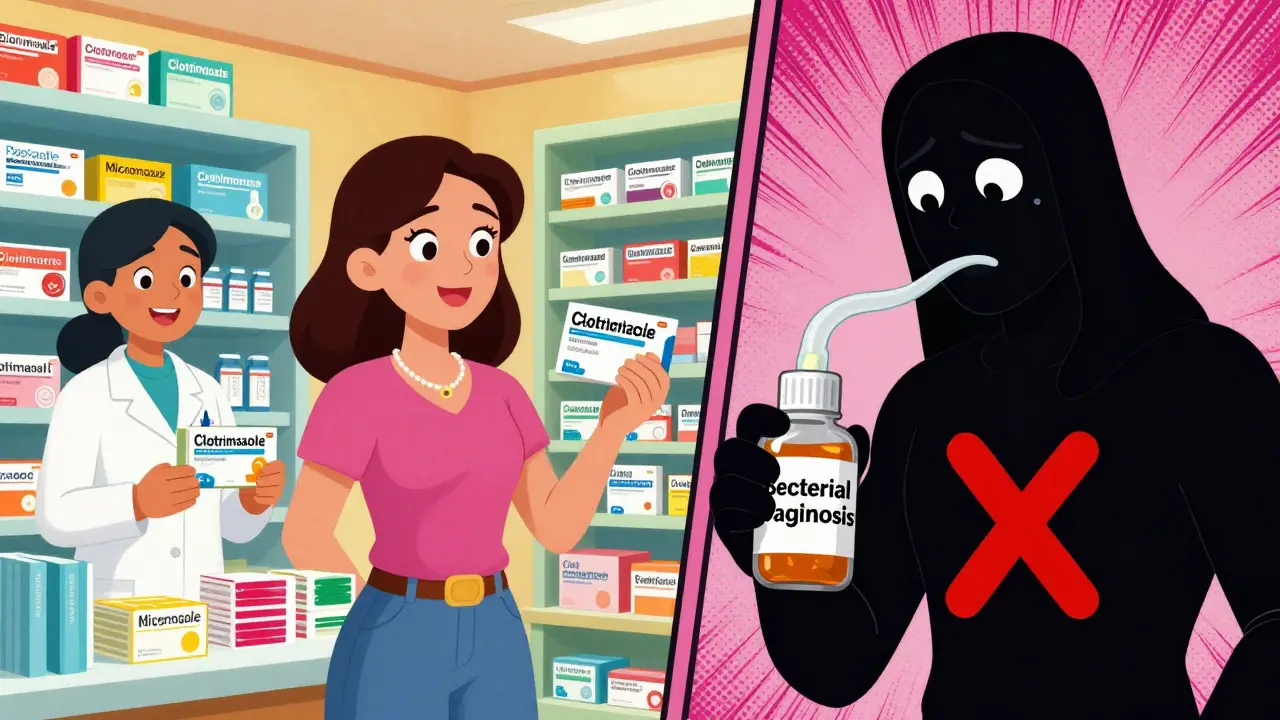
About 50% of women who self-treat for a yeast infection are wrong. That's not a small number - that's half of all OTC users. You might think it's yeast because of the itching, but it could be bacterial vaginosis, trichomoniasis, or even a skin condition like eczema. A Drugs.com analysis of 4,321 reviews found 47% of women who used OTC yeast meds had a different condition. They didn't get better - and waited too long to see a doctor. Even if it *is* yeast, the type matters. Candida albicans responds well to OTC drugs. But 5-10% of infections are caused by non-albicans species like Candida glabrata. These are harder to treat. Cure rates drop to 50-60%. And resistance is rising. A 2023 study in the Journal of Antimicrobial Chemotherapy found 8% of C. glabrata strains are now resistant to clotrimazole - up from 3% in 2018. The CDC warns against OTC use if:- This is your first yeast infection
- You're pregnant
- Your symptoms are severe (extensive redness, deep cracks, or fever)
- You've had four or more infections in a year
How to Use OTC Treatments Right
Using the product correctly matters just as much as choosing the right one.- Apply at bedtime. A Johns Hopkins study found 85% of successful users applied treatment before sleeping. Lying down helps the medicine stay in place.
- Don't have sex. Intercourse during treatment reduces effectiveness by 30%. It can also push the medication out or irritate the area further.
- Insert suppositories properly. Many women don't push them deep enough. Virtus Medical's 2022 analysis found 70% of treatment failures were due to improper insertion. Use the applicator - don't guess.
- Don't use douches or scented products. These disrupt your natural balance even more. Plain water is fine.
When to See a Doctor
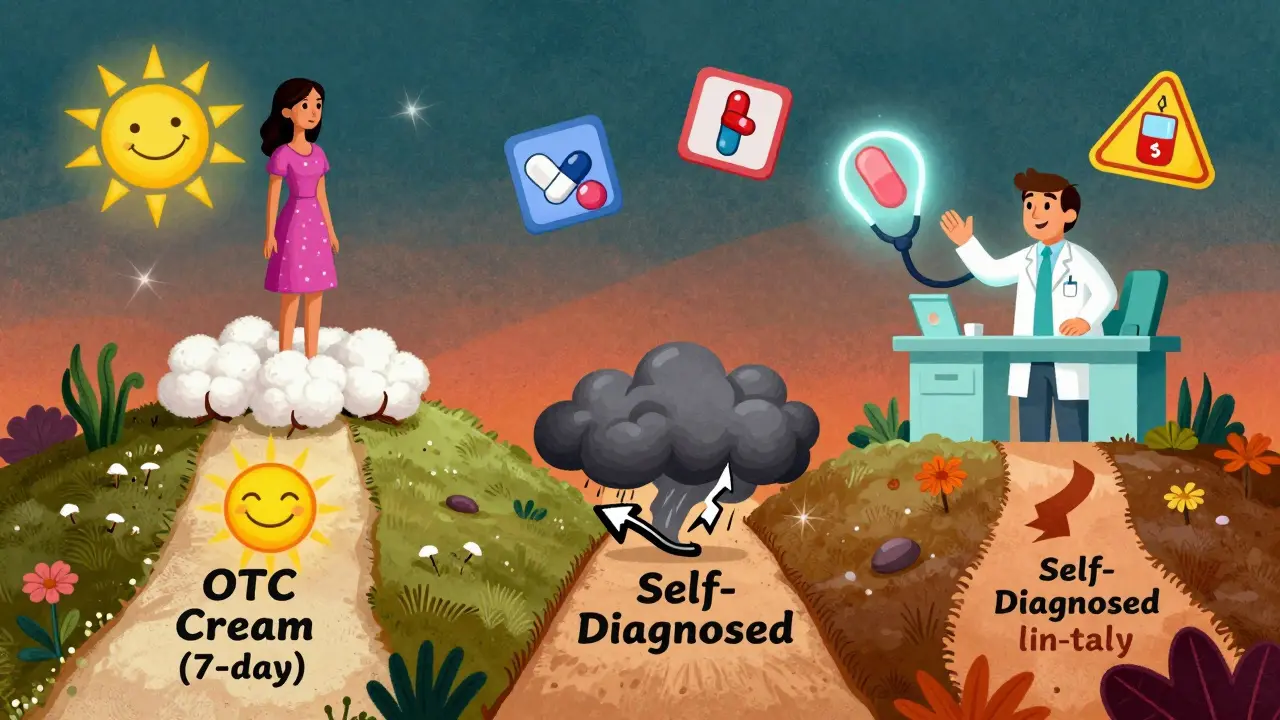
You don't need to panic - but you do need to act if:- Symptoms don't improve after 3 days of OTC treatment
- They get worse after 72 hours
- You develop a fever, pelvic pain, or unusual discharge
- You've had four or more infections in a year
What's Changing in Yeast Infection Treatment?
New developments are happening fast. In June 2023, the FDA approved a new clotrimazole bioadhesive tablet (Gyne-Lotrimin BV) that sticks to vaginal walls for 24 hours. In trials, it cured 92% of infections - better than older 7-day creams. This could become the new gold standard. Telemedicine tools are helping too. Platforms like Virtus Medical now use AI to ask you CDC-approved questions before recommending treatment. They've cut misdiagnosis rates from 50% to 28%. That's huge. But the bigger issue? Overuse. The CDC and ACOG are pushing for pharmacist consultations before repeat OTC sales. In the UK, you already need to talk to a pharmacist. In the U.S., you can buy it like candy. And that's why 35% of treatment failures happen - not because the drugs don't work, but because people use them wrong.Final Advice: Don't Guess. Know.
Yeast infections are common. But they're not always what they seem. If you're sure it's yeast - and you've had one before - OTC options are safe and effective. Use them correctly. Finish the full course. Avoid sex. Don't douche. But if this is your first time, you're pregnant, symptoms are severe, or they keep coming back - see a provider. Don't risk delaying care because you're trying to save time or money. A quick exam can save you weeks of discomfort. And remember: the goal isn't just to make the itching stop. It's to get to the root of why it happened in the first place.Can I treat a yeast infection while pregnant?
Yes - but only with topical treatments like clotrimazole or miconazole creams and suppositories. Oral fluconazole (the pill) is not safe during pregnancy and can harm the baby. Always check the label and confirm with your provider before using any product.
Why does my yeast infection keep coming back?
Recurrent yeast infections (four or more per year) often point to an underlying issue - uncontrolled diabetes, a weakened immune system, frequent antibiotic use, or even a non-albicans yeast strain. If you're getting infections often, see a doctor. You may need a longer course of treatment, a different antifungal, or tests to find the root cause.
Are OTC yeast infection treatments safe for everyone?
No. Avoid them if you're pregnant, have a fever or pelvic pain, or if this is your first infection. Also, if you're allergic to azole antifungals (like fluconazole or ketoconazole), these products can cause reactions. Always read the ingredient list.
How long does it take for OTC yeast treatments to work?
Most women notice relief from itching and burning within 24 to 72 hours. But full healing takes longer - even if symptoms disappear, you need to finish the full treatment course (3 to 14 days, depending on the product) to prevent recurrence.
Can I use OTC yeast infection treatments if I have an IUD?
Yes. IUDs don't interfere with vaginal antifungal treatments. You can use creams, suppositories, or tablets normally. However, if you're experiencing recurrent infections, talk to your provider - hormonal IUDs can sometimes affect vaginal pH and increase yeast risk.
Is it normal to have discharge after using a yeast infection treatment?
Yes. Creams and suppositories can cause increased discharge as the medication dissolves and your body clears out dead yeast. This discharge is usually white or creamy and should clear up within a few days. If it becomes foul-smelling, green, or bloody, contact your provider.
Comments (15)
Gretchen Rivas
Just had my third yeast infection this year. OTC worked for the first two, but the third? Turned out to be BV. Got tested at the clinic, $20 copay, saved me weeks of misery. Don't guess. Test.
Milad Jawabra
Y’all act like OTC meds are magic pills 😑 I’ve been dealing with this since college. Antibiotics? Stress? Periods? Doesn’t matter. Your body flips a switch and boom - cottage cheese city. I use clotrimazole every time. 3-day dose. Done. No drama. Stop overthinking it.
Stephen Vassilev
Have you considered that the rise in yeast infections is directly tied to glyphosate in our food supply? The CDC has suppressed data linking agricultural fungicides to vaginal microbiome collapse. This isn't just about hygiene - it's systemic. The pharmaceutical industry profits from repeat infections. Fluconazole is overprescribed. OTC is a Band-Aid on a bullet wound.
Mike Dubes
lol i thought i had yeast for weeks till i went to the doc and it was just a rash from my new laundry detergent. no joke. i used all 3 days of miconazole and it did nothing. then i switched detergents and poof. gone. point is: don't assume. check your soap. your underwear. your stress level. everything.
Helen Brown
They say not to use OTC if you're pregnant but what if you're in rural Texas with no OB and no car? You think they care? You just do what you gotta do. I used the cream. My baby's fine. The system is broken.
John Cyrus
Anyone who uses OTC without seeing a doctor first is just being lazy. This isn't a cold. It's a biological imbalance. You wouldn't take ibuprofen for appendicitis. Why do this? You're not saving time. You're wasting it. Get tested. It's a 10 minute visit.
John Smith
Yeast infections? Nah fam. That's just your body saying 'I'm tired of your toxic lifestyle.' No more sugar. No more tight jeans. No more stress. Stop treating symptoms. Fix your damn life. I went primal. No more infections. Ever. Try it. You'll thank me later.
Sharon Lammas
I used to panic every time I felt itchy. Now I pause. Breathe. Ask myself: Did I change soap? Start birth control? Take antibiotics? The answer is almost always yes. It's not a failure. It's feedback. My body talks. I just have to listen.
Aisling Maguire
My gosh I had this last month. Used the 1-day tioconazole. Felt better in 12 hours. But I still did the full 7-day because I read it here. And guess what? No复发. Thank you for the science, not the fear.
Shivam Pawa
Non-albicans strains are underreported. In India, 18% of recurrent cases are C. glabrata. OTC fails here. We need better diagnostics. Pharmacies should have dipstick tests. Not just creams. This is public health.
Diane Croft
You got this. You're not alone. Every single woman has been here. The fact that you're reading this means you're already taking care of yourself. That's huge. Keep going. You're stronger than you think.
Justin Rodriguez
Bedtime application works because gravity helps. Also, cotton underwear. Always. No synthetics. I learned this the hard way. One change. No more recurring. Simple. But nobody talks about it.
Megan Nayak
Who decided yeast infections are 'common'? That's a social construct. The medical industrial complex needs you to believe this is normal so you keep buying drugs. What if the real problem is that we live in sterile, over-sanitized environments? What if your vagina needs dirt? What if you're not supposed to be 'clean'?
Divya Mallick
USA thinks everything can be fixed with a pill. In India, we have turmeric, neem, and yoga. You think your clotrimazole is better? We've been treating this for 5000 years. You're just late to the party. Your culture is broken.
Pankaj Gupta
Clotrimazole bioadhesive tablet has 92% efficacy in trials. This is significant. The 7-day regimen is outdated. Regulatory bodies should update guidelines. Evidence-based medicine requires adaptation. The current OTC protocols are not aligned with recent clinical data.