
When you pick up a generic pill at the pharmacy, you expect it to work just like the brand-name version. But behind that simple tablet lies a complex manufacturing process where tiny errors can have big consequences. Between 2019 and 2023, generic drugs had 3.2 times more quality defects than their branded counterparts, according to FDA inspection data. These aren’t just cosmetic flaws-they can mean the difference between a drug working as intended and failing to treat your condition-or worse, causing harm.
What Exactly Are Generic Drug Manufacturing Defects?
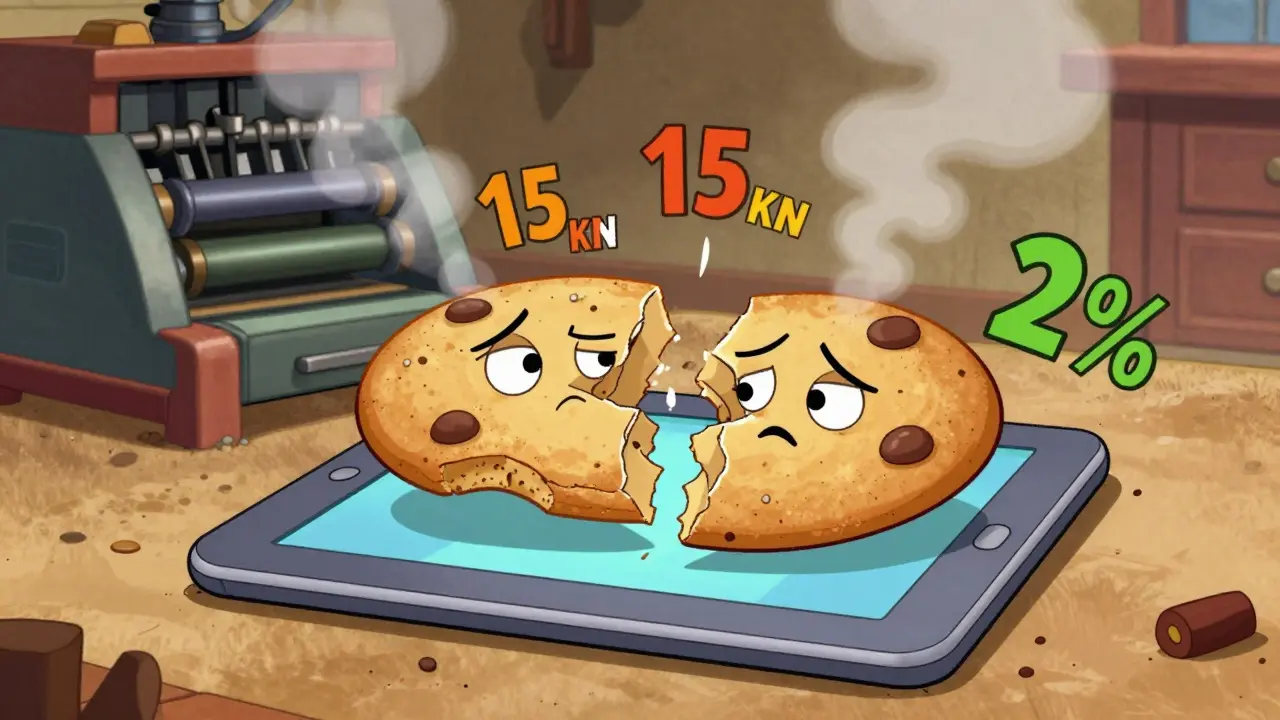
Quality defects in generics aren’t random mistakes. They’re systematic failures tied to how the drug is made. The most common issues fall into three categories: physical defects, contamination, and dosing errors.Capping happens when a tablet splits horizontally, like a cookie breaking in half. This usually occurs when the powder mixture is too dry or the compression force is too high. If the tablet breaks before you swallow it, you might not get the full dose. In hydrophobic formulations, capping spikes when moisture drops below 2% and compression exceeds 15 kN.
Lamination is when layers peel apart inside the tablet. It often shows up when the tablet press runs too fast-above 40 rotations per minute-or when pre-compression isn’t strong enough. You might not notice it until you drop the pill and see it flake.
Sticking occurs when the drug material clings to the machine’s punch heads. This is worse with active ingredients that melt easily, like those with a melting point under 120°C, especially when humidity rises above 4%. The result? Tablets come out misshapen, or worse, the machine jams and the whole batch gets tossed.
Mottling looks like uneven color patches on the tablet. It’s mostly a cosmetic issue, but it signals inconsistent mixing. In a world where patients trust what they see, even minor mottling can make someone doubt whether the drug will work.
Then there’s weight variation. The USP <905> standard says tablets must weigh within 5% of the target. But when granule flow rates drop below 0.5 g/s, batches fail this test 12.7% of the time. That means some pills have too little medicine, others too much. For drugs like levothyroxine, where even a 5% dose difference can cause heart palpitations or fatigue, this isn’t just a quality issue-it’s a safety crisis.
Why Are Generic Drugs More Prone to These Problems?
It’s not that generic manufacturers are careless. It’s that the system pushes them to cut corners.Branded drug companies spend 15-18% of their production budget on quality control. Generic manufacturers? On average, just 8-10%. Why? Because they’re locked in a race to the bottom on price. A single generic pill might sell for pennies. Profit margins are razor-thin. Investing in modern equipment, better training, or real-time monitoring feels like a luxury they can’t afford.
Many generic plants still use machinery from the 1980s or 90s. Calibration drifts. Sensors wear out. Operators aren’t trained on new protocols. The FDA found that 57% of generic manufacturing facilities failed inspections in 2023-nearly double the failure rate of branded drug plants.
Shared facilities make things worse. One machine might produce a blood pressure pill one day, then a steroid the next. If cleaning isn’t perfect, cross-contamination happens. Patients end up with traces of another drug in their system-something they didn’t ask for and could react badly to.
Complex generics are the most vulnerable. Inhalers, modified-release tablets, and injectables have more moving parts, more steps, more chances for error. Inhalers have a defect rate of 18.2%. Modified-release tablets? 14.7%. Even simple immediate-release tablets aren’t safe-9.3% still fail quality checks.
Real-World Consequences: What Patients and Pharmacists Are Seeing
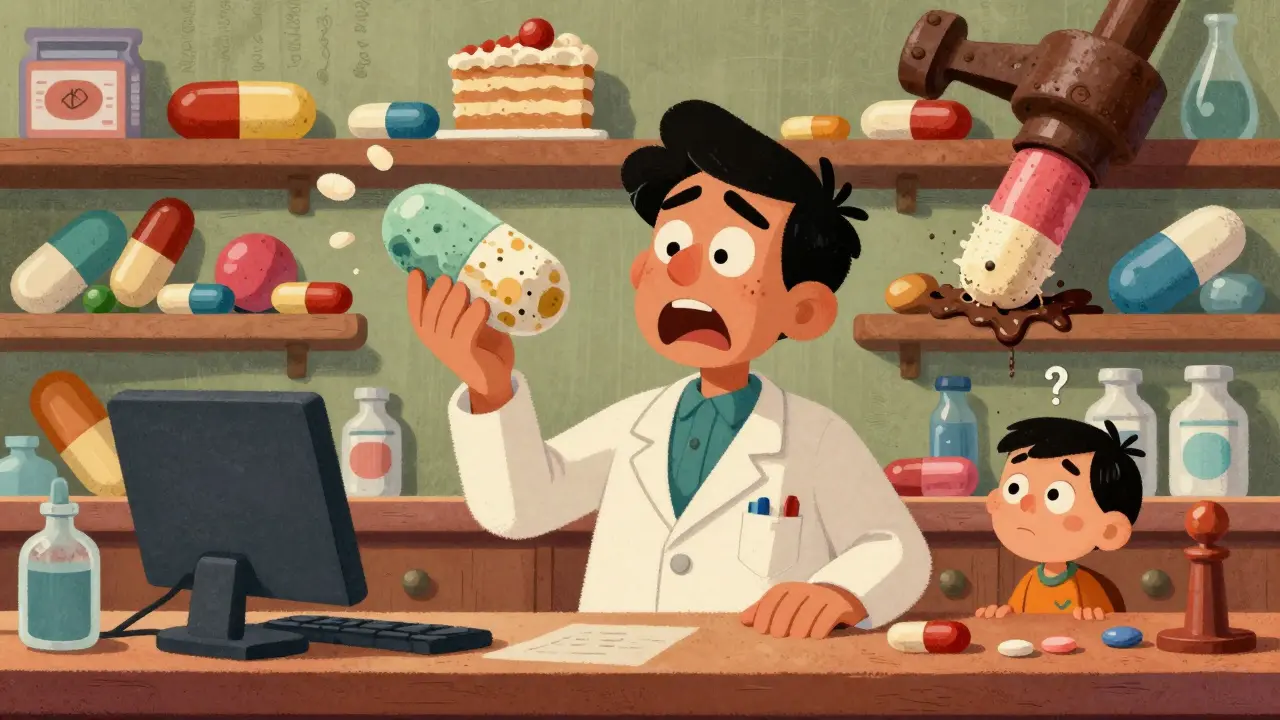
Behind the statistics are real people.In 2023, a survey of 1,247 pharmacists found 68% had seen quality issues with generics in the past year. Forty-two percent reported patients complaining about tablets that crumbled, cracked, or looked discolored. One pharmacist described a batch of metformin ER that fell apart during dispensing. Another said patients on levothyroxine generics were reporting sudden fatigue or anxiety-even though they hadn’t changed dosage.
Hospitals are noticing too. In 2023, nearly 1 in 5 generic substitution requests came with quality concerns. Almost 10% of those cases led doctors to insist on keeping the brand-name drug-even if it cost ten times more.
The FDA’s MedWatch system logged 1,842 adverse events in 2023 tied directly to generic drug quality. Over 300 of those involved visible defects: chipped tablets, uneven coloring, or tablets that looked like they’d been crushed before packaging.
And it’s not just patients. Pharmacists are under pressure to dispense generics. But when they see a batch that looks off, they’re caught between policy and safety. Many now keep a log of problematic lots-and quietly switch patients back to brand names when they can.
How Manufacturers Are Trying to Fix This
Some companies are stepping up.The FDA’s Emerging Technology Program has helped 47 generic manufacturers switch to continuous manufacturing. Unlike old batch methods, this process runs nonstop, with sensors monitoring every gram, every second. Early results show a 65% drop in defects.
AI-powered visual inspection systems are replacing human inspectors. Machines can spot defects as small as 0.1 mm at 600 tablets per minute. Human error used to miss 30% of flaws. Now, it’s under 2%.
Real-time weight monitoring is another win. Systems now reject tablets outside ±5% of target weight during production-no waiting for lab tests. One manufacturer reduced batch rejections by 40% in six months just by installing this.
Training is improving too. Staff now get 40+ hours of GMP training annually, with requalification tests showing over 85% proficiency. That’s up from 60% a decade ago.
But these improvements aren’t universal. They’re happening mostly at big players like Teva, Sandoz, and Dr. Reddy’s. Smaller manufacturers? Many still rely on manual checks, outdated presses, and paper logs.

What’s Holding Back Widespread Change?
The biggest barrier? Money.Bringing every U.S. generic manufacturing facility up to modern standards would cost $28.7 billion. Annual investment? Just $1.2 billion. That’s a gap of over $27 billion.
Regulators are pushing. The FDA issued 42% of its 2023 Warning Letters to generic manufacturers for quality defects. The EMA saw a rise in refused certifications-from 29% in 2019 to 37% in 2023. But enforcement alone doesn’t fix machines or fund training.
Price pressure remains the root cause. If a generic pill sells for 10 cents, there’s no room to spend 5 cents on quality. The market rewards the cheapest bid-not the safest product.
McKinsey & Company predicts that without major investment, 15-20% of generic manufacturers could exit the market in the next five years. That’s not a solution-it’s a collapse waiting to happen.
What You Can Do
As a patient, you have more power than you think.- If a generic pill looks different from your last bottle-different color, shape, or texture-ask your pharmacist. It might be a new manufacturer.
- Keep a log: Note any changes in how you feel after switching generics. Fatigue, dizziness, or worsening symptoms could signal a dosing issue.
- If your doctor has prescribed a brand-name drug for a reason (like levothyroxine or seizure meds), don’t assume the generic is interchangeable. Ask if it’s safe to switch.
- Report suspicious pills to the FDA’s MedWatch system. Even one report helps build the case for better oversight.
Generic drugs saved billions in healthcare costs. But if we keep sacrificing quality for price, we’re trading short-term savings for long-term risk. The system isn’t broken-it’s being starved. And the cost of that neglect is paid by patients.
Comments (15)
Beth Cooper
Okay but have you ever heard of the FDA being bought out by Big Pharma? 🤔 I mean, why else would they let these sketchy generics slip through? I heard a guy on YouTube who used to work at a plant in India-he said they mix the active ingredient with chalk and call it a day. And the FDA? They just approve it because the CEO golfed with the commissioner. 🍷
Melissa Cogswell
Actually, the data on defect rates is misleading because the FDA inspects generic plants more aggressively than branded ones-partly because there are so many more of them. The real issue is that generics are held to the same standards as brand-name drugs, but with 1/10th the budget. It’s not that they’re cutting corners-it’s that they’re trying to meet impossible benchmarks with broken tools.
Diana Dougan
LOL ‘manufacturing defects’? More like ‘corporate greed defects’. You know what’s really dangerous? Paying $200 for a brand-name pill when the generic works just fine. Unless you’re one of those people who thinks ‘FDA approved’ means ‘magic fairy dust’. 🙄
Bobbi Van Riet
I’ve been on levothyroxine for 12 years and switched generics three times. The first time I felt like I was drowning in fatigue-like, 3 p.m. nap on the bathroom floor tired. The second time, my heart raced like I’d chugged three espressos. Third time? Same as the original brand. I started keeping the pill bottles and comparing colors. Turns out, the ones with the pale yellow tint and slightly rough edges? Always the bad batch. I stopped trusting the label and started trusting my body. It’s not paranoia-it’s survival.
Holly Robin
THIS IS A GENOCIDE. 🚨 They’re poisoning us with chalk pills and calling it ‘affordable healthcare’. The FDA is complicit. The pharmaceutical conglomerates are laughing all the way to the bank while grandmas collapse from underdosed thyroid meds. And you? You’re still buying it because it’s ‘cheap’. Wake up. This isn’t capitalism-it’s mass murder with a pharmacy receipt.
Shubham Dixit
Why are Americans so obsessed with blaming generics? In India, we make 40% of the world’s generics and our quality control is better than your local Walmart pharmacy. We export to Europe, Canada, and even the U.S.-and we follow WHO-GMP standards. You think your $5 pill is safer? Please. The real problem is your government doesn’t regulate the price gouging of brand-name drugs. Stop blaming the makers and start blaming the middlemen who jack up the cost.
KATHRYN JOHNSON
There is no systemic defect. There is only negligence. The FDA has the authority. The infrastructure exists. The technology is proven. The failure is moral. If a pill can kill, and we allow it to be sold, then we are all complicit. This is not an economic issue. It is an ethical one.
kate jones
Continuous manufacturing is the real game-changer here. The shift from batch to continuous isn’t just about efficiency-it’s about real-time process control. When you can monitor particle size, moisture, and weight at 100Hz, you eliminate 90% of the variability that causes defects. The problem isn’t the manufacturers-it’s the market incentives. If regulators rewarded quality over cost, the industry would adapt overnight.
Kelly Weinhold
Hey, I know this sounds crazy, but what if we started a community watchdog group? Like, patients who track their generic pills-take photos, note lot numbers, report symptoms? We could build a crowdsourced database. Imagine if we could show a pattern: ‘Lot #X472 from Teva caused 17 people to feel dizzy’. Pharma companies would have to respond. And maybe-just maybe-the FDA would listen. We’re not powerless. We just need to speak up together.
Kimberly Reker
My pharmacist started keeping a notebook of ‘bad lots’-she doesn’t tell you unless you ask, but if you say ‘I’m feeling weird since the last refill’, she’ll switch you to another brand without making you feel dumb. She’s a quiet hero. We need more pharmacists like her. And we need to stop shaming people for asking questions. Your health isn’t a transaction.
Darren Gormley
So… you’re telling me the FDA is like a 1998 Nokia with a cracked screen and a dying battery? 🤡 And we’re still using it to run a nuclear power plant? 😂
Russ Kelemen
It’s easy to blame manufacturers, but the real question is: why do we accept a system where the cheapest option is the only option? We don’t do that with cars, or baby cribs, or airplane parts. Why do we accept it with medicine? Maybe the problem isn’t the pill-it’s the value we assign to life itself. Are we worth more than a dollar?
Diksha Srivastava
India and China make generics because they care about global health. We don’t need to fear them-we need to learn from them. Their quality is high because they’re not trapped in a profit-driven system. Maybe instead of screaming about defects, we should ask: how can we build a system where quality isn’t a luxury? Maybe the answer isn’t more regulation-it’s a different kind of capitalism.
Sarah Blevins
Statistical analysis of FDA inspection data from 2019–2023 reveals a 3.2x defect rate differential, but this metric is confounded by inspection frequency and facility volume. The raw defect rate per unit produced is not significantly different between branded and generic manufacturers when normalized by production volume. The narrative is misleading.
Jason Xin
My cousin’s dad died because his generic blood thinner didn’t dissolve right. The pharmacy didn’t even flag the batch. No one knew. No one cared. Until it was too late. So yeah, I’m not here to debate stats. I’m here because I lost someone to a pill that looked fine but wasn’t. And I’ll never stop asking: why?