
Decongestant Safety Risk Calculator
Risk Assessment Form
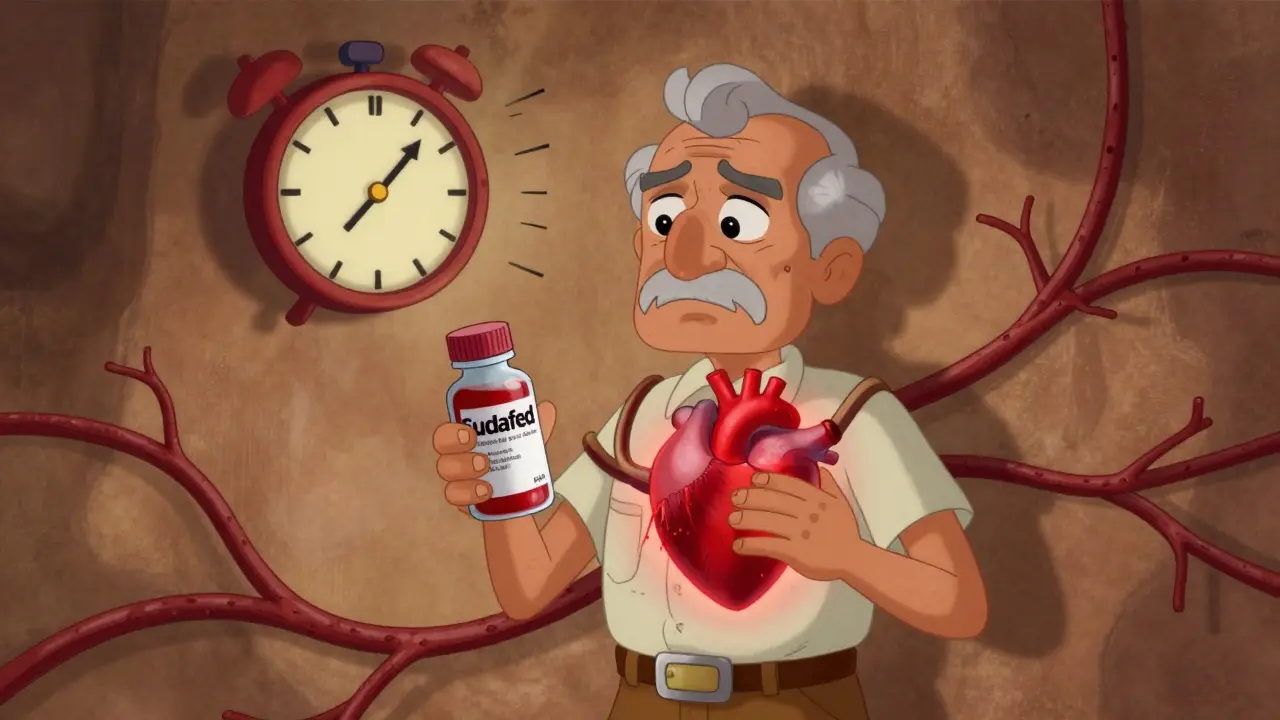
If you have heart disease or high blood pressure, taking a common cold medicine might be riskier than you think. Over-the-counter decongestants like pseudoephedrine and phenylephrine promise quick relief from a stuffy nose-but they can also push your blood pressure higher, strain your heart, and even trigger dangerous heart rhythms. This isn’t a rare side effect. It’s a well-documented, serious risk that doctors and pharmacists warn about every day.
How Decongestants Work (and Why They’re Dangerous for Your Heart)
Decongestants work by tightening blood vessels. That’s why they clear nasal congestion-they shrink swollen tissues in your nose. But your body doesn’t know the difference between a blood vessel in your nose and one in your heart or brain. When these medications enter your bloodstream, they constrict vessels everywhere, including those that supply blood to your heart. This forces your heart to work harder, raises your blood pressure, and can spike your heart rate.
Oral decongestants like Sudafed (pseudoephedrine) and newer phenylephrine products are the biggest concern. A 2005 meta-analysis found that even standard doses of pseudoephedrine cause a small but measurable increase in systolic blood pressure-enough to be dangerous if you already have uncontrolled hypertension. One case study documented a 5-year-old girl who developed high blood pressure after taking phenylephrine at the recommended pediatric dose. Her blood pressure didn’t return to normal until the medication was stopped. No other cause was found.
Topical Decongestants Aren’t Safe Either
Many people assume nasal sprays like Afrin (oxymetazoline) or naphazoline are safer because they’re applied locally. That’s a dangerous assumption. While they don’t enter the bloodstream as much as oral pills, they still can. A 2015 case report in PubMed described a 40-year-old man who went into cardiac arrest after overusing nasal sprays containing naphazoline. He developed malignant hypertension and heart failure-something never before linked to topical decongestants. Even short-term use at recommended doses can raise heart rate. In one study of 100 patients, heart rate climbed from 80.79 to 84.33 beats per minute by day 7 of daily use.
Who Is at Highest Risk?
Not everyone with heart issues needs to avoid decongestants entirely-but some groups are at extreme risk:
- People with uncontrolled high blood pressure (systolic over 140 or diastolic over 90)
- Those with heart failure-their hearts are already struggling to pump blood
- Patients with arrhythmias (irregular heartbeats)-decongestants can trigger dangerous rhythms like ventricular tachycardia
- People with coronary artery disease or a history of heart attack or stroke
- Those with Prinzmetal angina-a condition where heart arteries spasm suddenly
The American Heart Association says it plainly: avoid decongestants if you’ve had a heart attack, stroke, or have uncontrolled hypertension. Harvard Health adds that even in people with controlled high blood pressure, the rise in pressure from decongestants is small-but in uncontrolled cases, it’s enough to cause a stroke or heart attack.
Why Illness Makes It Worse
Here’s the hidden danger: when you’re sick with a cold or flu, your body is already under stress. Your heart rate goes up. Inflammation increases. Blood vessels tense. Adding a decongestant on top of that is like pouring gasoline on a fire. A 2017 study of nearly 10,000 people hospitalized for heart attacks found they were more than three times as likely to have another heart attack within a week if they took NSAIDs or decongestants while sick. That risk doesn’t come from the cold itself-it comes from combining illness with medication.
What the Labels Say (And Why You Should Read Them)
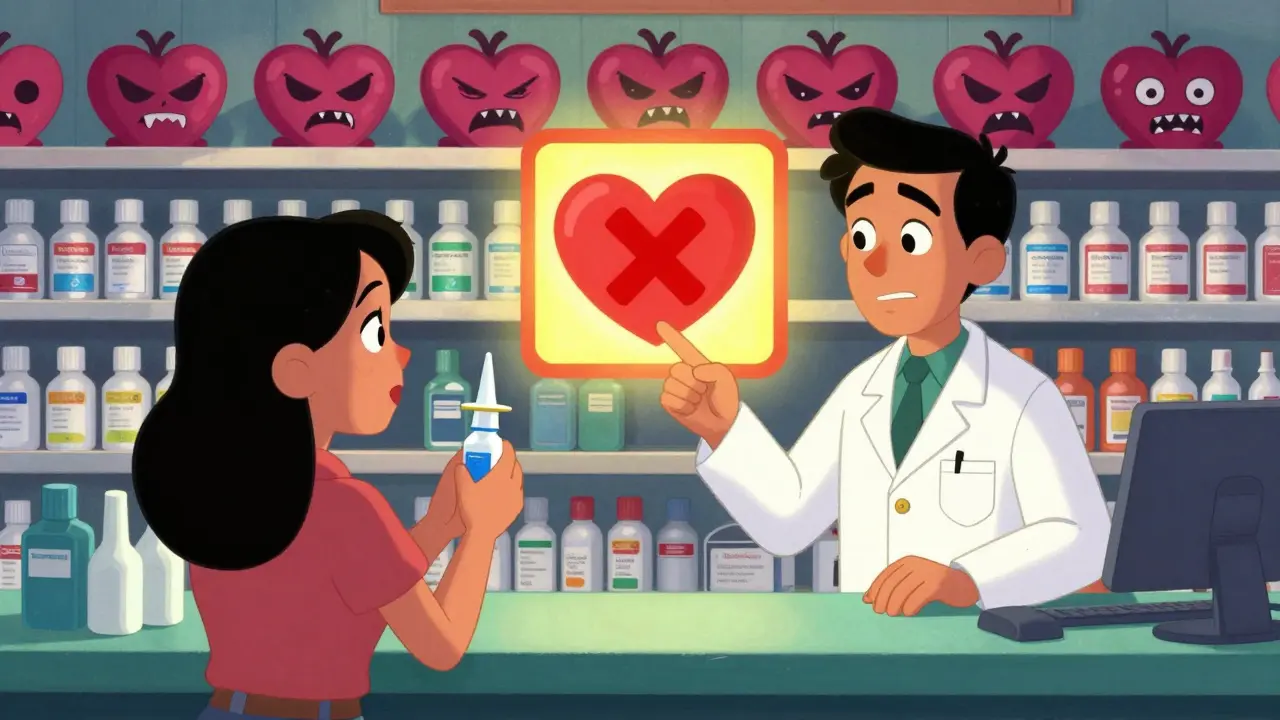
Every decongestant package in the U.S. has a warning. It’s small, but it’s there: “Do not use if you have high blood pressure, heart disease, or thyroid problems.” The FDA requires this. Pharmacists are trained to ask about these conditions when you buy pseudoephedrine behind the counter. That’s not just bureaucracy-it’s a safety net. In countries where decongestants are sold openly, emergency rooms see more cases of hypertensive crises linked to these drugs.
Topical sprays carry the same warnings. Yet many people ignore them because they think, “It’s just a spray.” But one case report showed that even nasal sprays, when used beyond the recommended 3 days, can lead to life-threatening complications. The European Journal of General Medicine says bluntly: these medications only relieve symptoms. They don’t cure anything. And for people with heart disease, the risks far outweigh the benefits.
What Can You Use Instead?
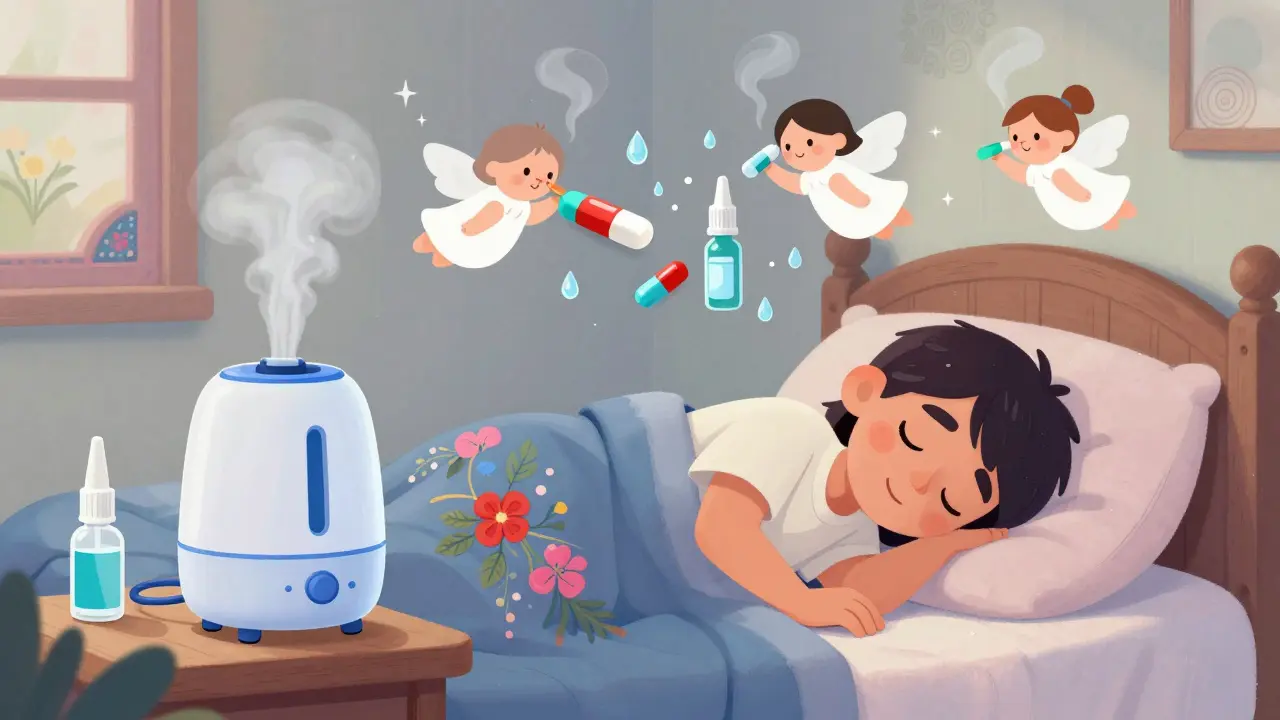
You don’t need decongestants to feel better. Safer alternatives exist:
- Saline nasal sprays-no medication, just salt water. They moisten and clear nasal passages without affecting blood pressure.
- Humidifiers-adding moisture to the air reduces congestion naturally.
- Guaifenesin (Mucinex)-this expectorant helps thin mucus. It doesn’t constrict blood vessels.
- Steam inhalation-breathe in warm, moist air from a bowl of hot water (keep your distance to avoid burns).
- Rest and hydration-your body heals best when it’s not fighting extra stress.
Some people swear by herbal remedies like eucalyptus or peppermint oil. But be cautious-some essential oils can also affect heart rate or interact with medications. Always check with your doctor before trying anything new, especially if you have heart disease.
When to Talk to Your Doctor
If you have heart disease or high blood pressure and you’re considering a cold remedy, don’t guess. Call your doctor or pharmacist. Tell them exactly what you’re feeling and what medications you’re already taking. Even if you think your blood pressure is under control, your doctor may want to check it before you take anything. A simple test can prevent a hospital visit.
And if you’ve already taken a decongestant and feel your heart racing, your head pounding, or you’re short of breath-stop taking it immediately. Call your doctor or go to the ER. These symptoms aren’t normal. They’re warning signs.
The Bottom Line
Decongestants aren’t harmless. For people with heart disease or high blood pressure, they’re a ticking time bomb. The relief they offer is temporary. The damage they can cause is real-and sometimes fatal. The medical community agrees: if you have heart problems, avoid these drugs. There are safer ways to breathe easier. Don’t risk your heart for a few days of nasal comfort. Your body is already working hard to fight off infection. Don’t make it harder by adding a medication that forces your heart to work even more.
Can I take decongestants if my blood pressure is controlled?
Even if your blood pressure is controlled, decongestants can still raise it enough to cause problems. Small increases can be dangerous if your heart is already weakened. Doctors generally advise avoiding them entirely if you have heart disease, regardless of how well your blood pressure is managed. Always check with your provider before taking any decongestant.
Is phenylephrine safer than pseudoephedrine?
No. While pseudoephedrine has been studied more extensively and shows a clear, measurable rise in blood pressure, phenylephrine is not safer. Recent studies suggest phenylephrine may be less effective as a decongestant, but it still raises blood pressure and heart rate. The FDA and American Heart Association treat both as risky for people with heart conditions. Neither is recommended.
What happens if I take a decongestant and don’t feel anything?
Just because you don’t feel symptoms doesn’t mean your body isn’t being stressed. Decongestants can silently raise your blood pressure and heart rate, increasing strain on your heart. This silent stress can lead to heart attack, stroke, or arrhythmia-even if you feel fine. That’s why avoiding them is the safest choice if you have heart disease or hypertension.
Are nasal sprays safer than pills?
Not necessarily. While nasal sprays deliver less medication into the bloodstream, they can still cause dangerous spikes in blood pressure, especially with prolonged use. A documented case of heart failure was directly linked to nasal spray overuse. The risk is lower than with oral pills-but still present. Both should be avoided if you have heart disease.
Can I use decongestants after a heart attack?
No. After a heart attack, your heart is extremely vulnerable. Decongestants can trigger another heart attack, worsen heart failure, or cause dangerous heart rhythms. The American Heart Association explicitly advises against any decongestant use after a heart attack. Use only non-decongestant remedies and consult your cardiologist before taking anything.
Comments (13)
David L. Thomas
I've been on beta-blockers for years and still reach for Sudafed when I'm stuffed up. Didn't realize how much I was turbocharging my heart. This post is a wake-up call. I'm switching to saline sprays and humidifiers now. No more guessing with my health.
LiV Beau
I just read this while sniffling at my desk 😔 I’ve been using Afrin for weeks because ‘it works so well.’ Now I’m terrified. My husband has hypertension. We’re tossing the whole cabinet. Saline spray it is! 🙏
Denise Jordan
So… you’re saying I can’t take that cold medicine I’ve been using since college? Lmao. My heart’s fine. I’m 28. I don’t have ‘heart disease’.
Chris Bird
This is why big pharma loves decongestants. They make billions while people die quietly. The FDA warning? Too small. The real story? Doctors get kickbacks from pharma. You think they’d tell you to stop using it? Nah.
Randall Walker
I’ve had three heart attacks. I’ve also taken pseudoephedrine twice. I felt fine. So… what’s the point? If I don’t feel it, is it even happening? My cardiologist says ‘use it if you must.’ So I do. I’m not scared of a number on a machine.
Mike Winter
Interesting how we equate symptom relief with safety. But the body doesn't care about convenience. It cares about homeostasis. Decongestants disrupt vascular tone systemically-not just locally. Even ‘minor’ increases in afterload can precipitate ischemic events in compromised myocardium. We’re talking about a pharmacological stress test you didn’t consent to.
Alexander Erb
I’m a pharmacist. I’ve seen this too many times. Old man with stents, buys Sudafed, ends up in ER with BP 220/110. He says ‘I didn’t think it’d do anything.’ I say ‘you didn’t read the label, did you?’ Half the time they didn’t even know it was a decongestant. Just saw ‘cold medicine’ and grabbed it. Please. Read the damn label.
Shourya Tanay
In India, these are sold over the counter without question. No pharmacist asks. No warning label. I’ve seen patients with CAD take phenylephrine for sinusitis. One had a cardiac arrest in the waiting room. We need better public awareness-not just in the US. This isn’t a privilege issue. It’s a global blind spot.
Gene Forte
Your body is not a machine you can tweak with a pill. It’s a living system. When you force it to work harder during illness, you’re asking it to fight two wars at once. Rest. Hydration. Patience. These are not weak choices. They’re the most courageous ones. Healing isn’t fast. It’s sacred.
Kenneth Zieden-Weber
So let me get this straight. The same drug that shrinks my nasal passages also shrinks my coronary arteries? That’s not science. That’s a horror movie plot. And yet we treat this like it’s just ‘one of those things.’ Meanwhile, the FDA says ‘don’t use if you have heart disease’ but doesn’t ban it. Why? Because profits > people. Again. 🤦♂️
Miranda Varn-Harper
I find it deeply concerning that people are being told to avoid decongestants, yet the medical community continues to endorse them as ‘safe for occasional use.’ This is cognitive dissonance at its finest. If the risk is real, the recommendation should be absolute. Not ‘maybe, if you’re careful.’ That’s not medical advice. That’s negligence dressed in a white coat.
Bridgette Pulliam
I have atrial fibrillation. I used to take decongestants. Then I had a scary episode where my heart felt like it was trying to escape my chest. I stopped. Now I use a neti pot and steam. It’s slower. But I’m alive. And that’s worth the wait. If you’re reading this and you’re still using it… please, stop. You’re not invincible.
Adam Kleinberg
This is all just fearmongering by the medical industrial complex. You think they really care about your heart? No. They care about you paying for their expensive ‘alternatives’ like humidifiers and saline sprays. Meanwhile, the real cause of heart attacks? Sugar. Processed food. Stress. Not Sudafed. You’re being manipulated. Read the studies yourself. Don’t trust some blog with a red warning label.