
NSAID Kidney Risk Calculator
Calculate Your Risk
Your Risk Assessment
Based on your inputs, your risk of acute kidney injury from NSAID use is:
Key Risk Factors
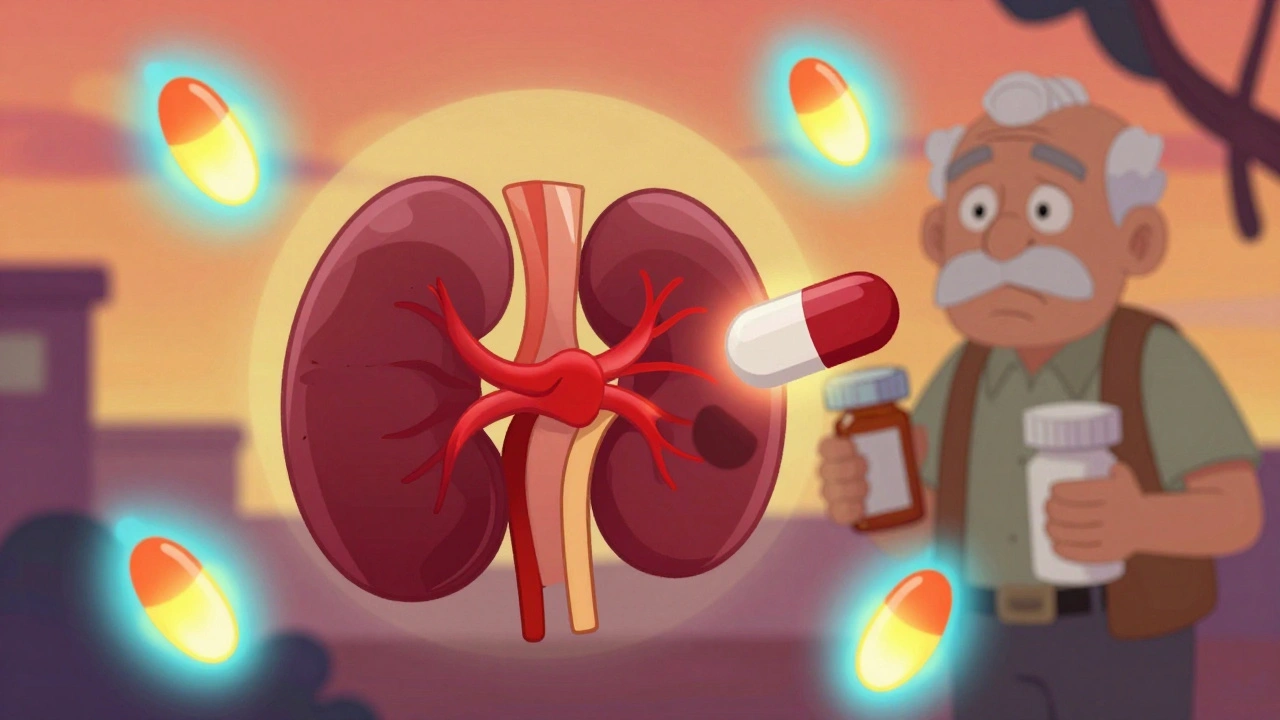
Every year, tens of thousands of people end up in the hospital with sudden kidney damage - and many of them never saw it coming. It’s not from a rare disease or a bad accident. It’s from something most people keep in their medicine cabinet: ibuprofen, naproxen, or other NSAIDs. These drugs are sold over the counter, labeled "safe," and taken without a second thought. But for people with kidney disease or even just mild kidney stress, these medications can trigger acute kidney injury - and fast.
How NSAIDs Hurt the Kidneys
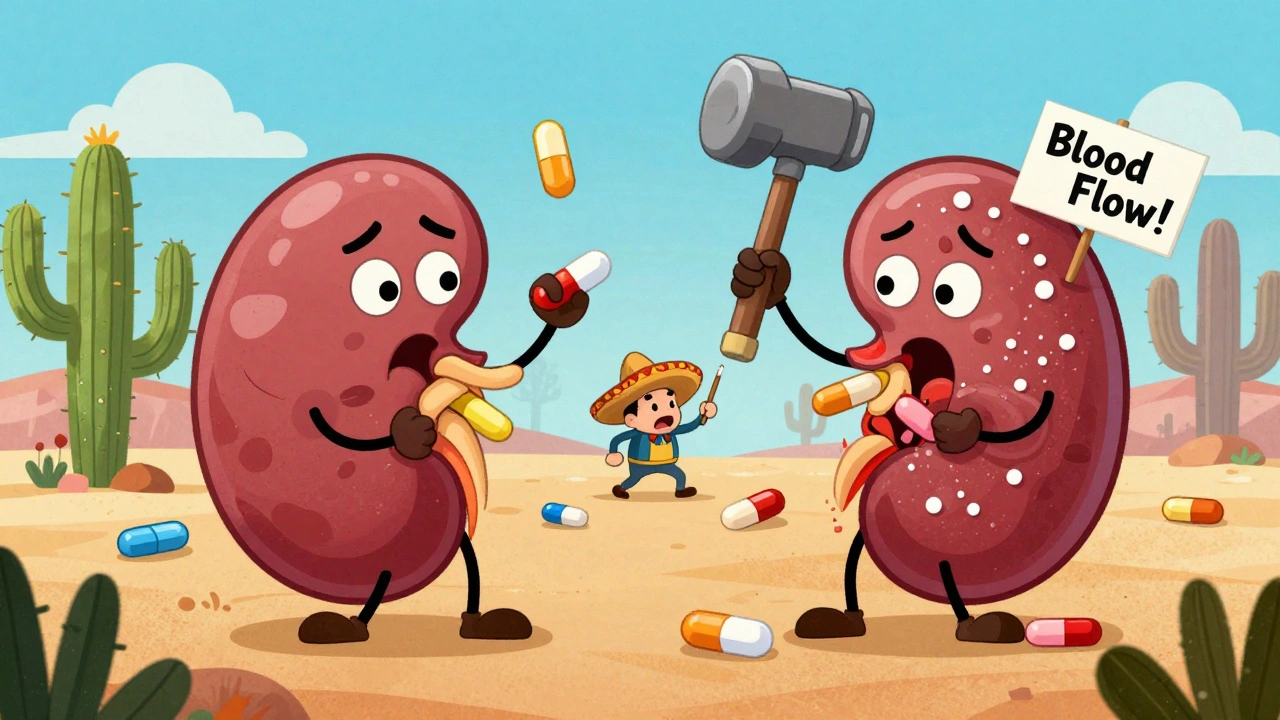
NSAIDs work by blocking enzymes called COX-1 and COX-2. That reduces pain and swelling, but it also cuts off a key signal your kidneys use to stay healthy. Prostaglandins, made by those enzymes, help keep blood flowing through your kidneys. When NSAIDs shut them down, your kidneys don’t get enough blood - especially if you’re already low on fluids, dehydrated, or have existing kidney problems.
This isn’t just theory. In hospital settings, 1 to 5% of all cases of acute kidney injury are directly linked to NSAID use. For someone with chronic kidney disease, that risk jumps dramatically. A 2023 study found that people with existing kidney issues who took NSAIDs regularly had a 50% higher chance of their condition getting worse. And it doesn’t take long. In some cases, kidney function can drop 20 to 40% within 24 hours of taking a single dose.
There’s another, less common but still dangerous pathway: acute interstitial nephritis. This is an immune reaction where your body attacks the kidney tissue itself. It can cause fever, rashes, and high protein levels in the urine. It’s rare - only 5 to 15% of NSAID-related kidney injuries - but it’s often missed because symptoms are vague. Many patients think they’re just "feeling off" until their creatinine levels spike.
The "Triple Whammy" You Need to Avoid
One of the most dangerous combinations in medicine is also one of the most common. It’s called the "triple whammy": NSAIDs + ACE inhibitors (like lisinopril) + diuretics (like furosemide). This trio is often prescribed together for high blood pressure and heart failure. But together, they can crash kidney function.
Here’s why: ACE inhibitors and diuretics already reduce blood volume and pressure. NSAIDs block the kidneys’ backup system for maintaining blood flow. When all three are used, the kidneys lose all their safety nets. Studies show this combo increases the risk of acute kidney injury by 31%, and in the first 30 days of use, the risk nearly doubles.
Patients on this combo often don’t realize the danger. They’re told to take their blood pressure pills and their pain reliever. No one warns them that these drugs are fighting each other inside their kidneys. A 2020 case study from the University of Rhode Island showed a 72-year-old man with mild kidney decline (eGFR 58) developed severe kidney injury (eGFR 22) after just 72 hours of taking 800 mg of ibuprofen three times a day. He didn’t have other health problems - just the triple whammy.
Who’s Most at Risk?
Not everyone who takes NSAIDs will get kidney damage. But some people are walking into danger without knowing it.
- People over 65 - kidneys naturally decline with age, and they’re more likely to be on multiple medications.
- Those with chronic kidney disease (eGFR under 60) - even mild decline raises risk.
- People with heart failure, liver disease, or diabetes - these conditions stress the kidneys already.
- Anyone dehydrated - from illness, heat, or exercise.
- Those taking diuretics, ACE inhibitors, or ARBs - especially in combination with NSAIDs.
Here’s the scary part: many people with early kidney disease don’t know they have it. Symptoms like fatigue, swelling in the feet, or reduced urine output are often blamed on aging or being "out of shape." By the time creatinine rises, damage may already be done.
What to Use Instead
Not all pain relief is created equal. If you have kidney disease, acetaminophen (Tylenol) is generally safer for short-term use. It doesn’t affect kidney blood flow the way NSAIDs do. Studies show it carries 40 to 50% less risk of acute kidney injury.
But it’s not perfect. Too much acetaminophen can damage the liver. Stick to the lowest effective dose - no more than 3,000 mg per day - and avoid alcohol.
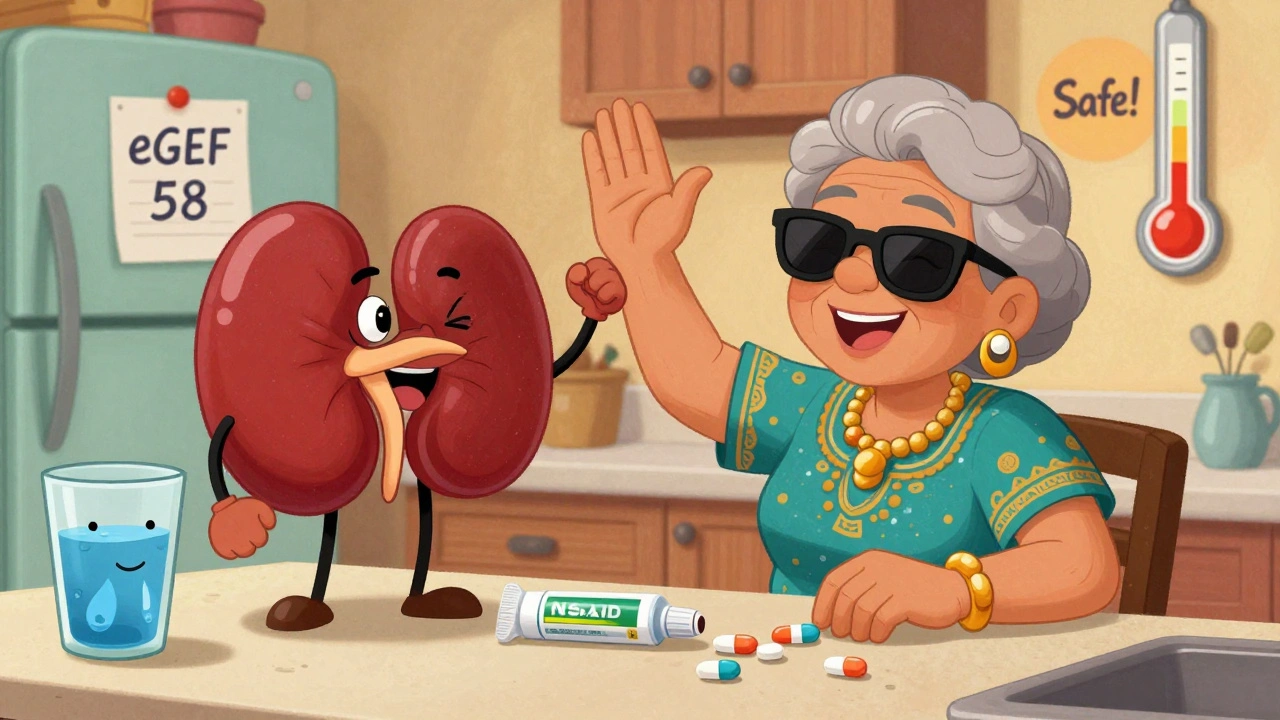
For localized pain - like a sore knee or back - topical NSAID gels (like diclofenac gel) are a smart alternative. They deliver the pain relief right where you need it, with 70 to 80% less drug entering your bloodstream. A 2024 trial with 3,200 patients found topical NSAIDs cut kidney injury risk by nearly half compared to pills.
Opioids are sometimes suggested, but they come with their own risks: addiction, constipation, drowsiness. They don’t help inflammation, and long-term use isn’t sustainable. They’re not a good first choice unless other options fail.
How to Protect Your Kidneys
If you need pain relief and have kidney disease - or even just risk factors - here’s what you need to do:
- Check your kidney function. Ask your doctor for an eGFR and urine albumin test before starting any long-term pain medication.
- Avoid the triple whammy. If you’re on an ACE inhibitor or diuretic, don’t take NSAIDs without talking to your doctor.
- Use the lowest dose for the shortest time. Seven to ten days max for acute pain. If pain lasts longer, see your doctor - don’t just keep taking more pills.
- Stay hydrated. Drink water before, during, and after exercise. If you’re sick with vomiting or diarrhea, skip NSAIDs until you’re back to normal.
- Watch for warning signs. Less urine, swollen ankles, unexplained tiredness, or nausea could mean your kidneys are struggling.
For older adults, the American Geriatrics Society says NSAIDs should be avoided entirely if eGFR is below 30. For those with eGFR between 30 and 60, use them only if absolutely necessary - and never more than three days a week.
What’s New in Kidney Protection
Science is catching up. In 2023, the American Society of Nephrology launched the NSAID-RF Risk Calculator. It uses 12 factors - age, blood pressure, medication use, kidney function - to predict your personal risk of kidney injury in the next 30 days. It’s not perfect, but it’s better than guessing.
Researchers are also testing new drug combinations. One trial is looking at ibuprofen paired with acetylcysteine, an antioxidant that may protect kidney cells. Early results are promising.
And in 2025, a breakthrough in genetics identified specific gene variants (in the PTGS2 gene) that make some people far more sensitive to NSAID kidney damage. In the future, a simple blood test might tell you if you’re at high risk - before you even take your first pill.
Right now, the best protection is awareness. Most people don’t realize NSAIDs can hurt their kidneys. They think "over-the-counter" means "harmless." It doesn’t. Especially if you have kidney disease, are older, or take other medications.
Don’t wait for symptoms. Talk to your doctor before using NSAIDs regularly. Ask about your kidney numbers. Ask about alternatives. Your kidneys can’t tell you they’re in trouble - until it’s too late. But you can.
When to Call Your Doctor
If you’ve taken NSAIDs and notice any of these, call your doctor immediately:
- Urine output drops significantly - less than half your normal amount.
- Your ankles or feet swell suddenly.
- You feel unusually tired, dizzy, or nauseous.
- You have unexplained confusion or trouble thinking clearly.
These aren’t normal side effects. They’re red flags. Early intervention can prevent permanent damage.
Comments (11)
Ada Maklagina
Been taking ibuprofen for my back since 2018. Never knew it could do this. Guess I’m lucky my kidneys didn’t quit on me yet.
Norene Fulwiler
I’ve been telling my mom for years not to pop those pills like candy. She’s 71, on lisinopril, and still reaches for naproxen every time her knees ache. I printed out this article and taped it to her medicine cabinet. She still ignores it. But at least now I can say I tried.
Michael Dioso
Oh wow so NSAIDs are bad. Who knew. Next you’ll tell me water is wet and oxygen causes cancer if you breathe it too much. This is why people think doctors are just fearmongers selling tests. I’m 52 and take 400mg of ibuprofen every night. My kidneys are fine. My doctor says so. End of story.
sean whitfield
They’re not warning you because they want you to suffer. They want you addicted to opioids so Big Pharma can keep raking in billions. NSAIDs are the people’s medicine. The system doesn’t want you to know you can heal yourself without their patented poison
Juliet Morgan
My grandma had a stroke last year and now she’s on diuretics and an ACE inhibitor. She still takes Advil for her arthritis. I had to sit her down and cry while explaining this. She said she didn’t know. No one ever told her. Thank you for writing this. I’m printing it for her doctor too.
William Chin
As a nephrologist with over two decades of clinical experience, I must emphasize that the data presented here is not only accurate but underrepresents the true burden of NSAID-induced nephrotoxicity. The 1–5% incidence cited is derived from hospitalized populations; in outpatient primary care settings, the rate of subclinical AKI is closer to 12–18% among high-risk cohorts. Furthermore, the term "triple whammy" is not a formal medical classification but a colloquialism used by residents to describe a lethal triad that remains tragically underrecognized by non-specialists. I routinely counsel patients on this. Most are shocked. That shock, however, is not a failure of education-it is a failure of systemic oversight.
Philip Kristy Wijaya
Let me ask you something. If NSAIDs are so dangerous then why are they sold next to aspirin and vitamin C in every pharmacy without a prescription Why are they marketed as safe for daily use Why does the FDA not require a warning label as bold as cigarette packs Because the system is rigged. The pharmaceutical lobby owns the FDA. The same people who told us cigarettes were harmless now tell us ibuprofen is harmless. Wake up. This is not medicine. This is control. You think your kidneys are fine because your numbers are normal But what about the silent damage The microinflammation The fibrosis The slow erosion Nobody tests for that. They wait until you’re on dialysis and then they act surprised
Harry Nguyen
So now we’re supposed to believe that American-made painkillers are secretly killing our kidneys But what about the Chinese herbal supplements everyone’s taking These are far worse and nobody’s writing articles about them. We need to stop letting foreign medicine dictate our health policies. This is a distraction. Focus on real threats not over-the-counter pills
Katie Allan
This is the kind of post that makes me believe people still care about each other. Thank you for writing it with such clarity. I’m sharing this with my book club. We’re all over 60. We’ve all been taking these pills without thinking. Now we’re going to start asking questions. Not just about our kidneys but about who gets to decide what’s safe. This isn’t just medical advice. It’s a call to be active in our own care.
James Moore
It is, in fact, a profound metaphysical paradox that we have allowed ourselves to commodify pain relief to such an extent that we treat our own biological integrity as expendable collateral damage in the pursuit of momentary comfort. The NSAID is not merely a molecule-it is a symbol of our collective denial of mortality. We swallow it like a prayer, hoping it will absolve us of the suffering inherent in being embodied creatures in a decaying world. And yet, the kidneys-the quiet, tireless, unsung architects of homeostasis-do not pray. They do not forgive. They simply fail. And when they do, we are left not with a diagnosis, but with an existential reckoning: we were warned, we chose convenience, and now we must live with the silence of our own organs.
Deborah Jacobs
My cousin was on dialysis for six months after taking ibuprofen for a sprained ankle. He didn’t even have kidney disease. Just a guy who thought "it’s just a pill." Now he’s on the transplant list. I used to take naproxen like it was gum. Not anymore. I switched to Tylenol and a heating pad. And I tell everyone I know. You don’t know what you’ve got till it’s gone. And your kidneys? They don’t come back.