
Buying prescription meds can feel like paying for a luxury item when you’re just trying to stay healthy. You hand over your script, and the pharmacist hands you a pill bottle with a price tag that makes you pause. Then you wonder: is there a cheaper generic version of this? The answer isn’t always obvious - but it’s easier to find than you think.
Why Generic Medications Matter
Generic drugs aren’t "second-rate" - they’re the exact same medicine as the brand-name version, just without the marketing budget. The FDA requires them to have the same active ingredient, strength, dosage form, and route of administration. They must also be bioequivalent, meaning your body absorbs them at the same rate and to the same extent as the brand-name drug - within 80% to 125% of the original. That’s not a guess. It’s tested in clinical trials.And the savings? Huge. In 2022, the average cost of a brand-name drug was $765.09. The generic version? Just $15.23. That’s over 98% less. For people on fixed incomes, chronic conditions, or just trying to stretch their budget, this isn’t a small detail - it’s life-changing.
By 2023, 90% of all prescriptions filled in the U.S. were generics. That’s over 6 billion prescriptions a year. But here’s the catch: just because a generic exists doesn’t mean you’re automatically getting it. You have to ask.
How to Find Out If a Generic Is Available
There are three real ways to check - and one of them takes less than a minute.1. Ask your pharmacist - right now.
Don’t wait until you get the bill. When you drop off your prescription, say: "Is there a therapeutically equivalent generic available for this?" Don’t just ask, "Do you have a generic?" That’s too vague. Pharmacists are trained to know which generics are approved as interchangeable. In fact, a 2022 JAMA study found they correctly identify generic alternatives 98.7% of the time.
Most major chains - CVS, Walgreens, Rite Aid - have automated systems that flag generic options before the prescription is even filled. They’ll often suggest it without you asking. But if they don’t, speak up. You’re not being difficult. You’re being smart.
2. Use the FDA’s Drugs@FDA database.
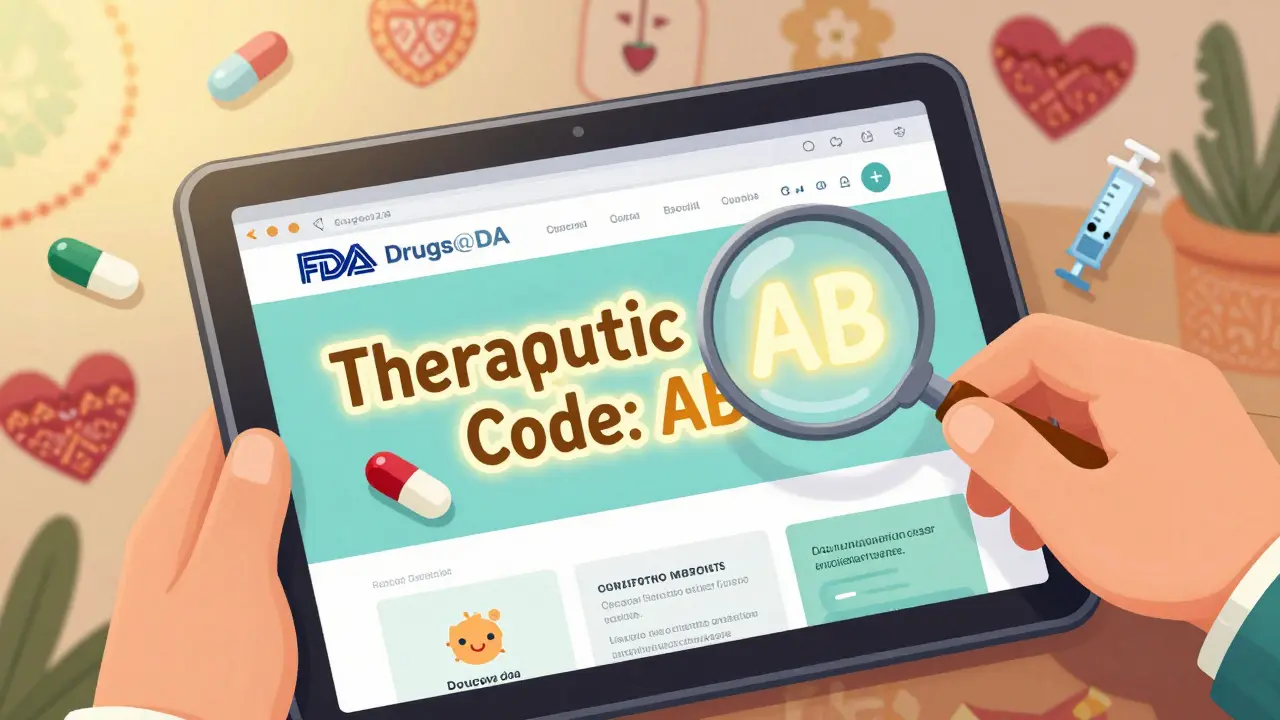
If you want to check yourself, go to Drugs@FDA. Type in the brand name - like "Lipitor" or "Zoloft" - and look at the approval details. Scroll down to the "Therapeutic Equivalence Code." If it says "AB," that means the generic is approved as interchangeable. "BX" means it’s not recommended for substitution. "A" alone means it’s bioequivalent but the formulation might vary slightly. "B" means there are known issues.
It sounds technical, but you don’t need to be a doctor. The FDA launched a simplified search tool in October 2023 just for patients. It takes 8-12 minutes the first time, but after that, it’s faster than scrolling through social media.
3. Check your insurance plan’s formulary.
If you’re on Medicare, Medicaid, or private insurance, your plan decides which drugs it covers - and which generics it prefers. Log into your plan’s website or use the Medicare Plan Finder (updated every October 15). Search your drug by name. If a generic is listed as preferred, you’ll pay less. If it’s not listed at all, your plan might not cover it - or you might need prior authorization.
Some plans automatically switch you to generics without telling you. That’s legal - but not always helpful. A 2023 Medicare.gov survey found 41% of beneficiaries were confused when their medication changed without notice. Always double-check the name on the bottle when you pick it up.
When Generics Might Not Be the Best Choice
Most of the time, generics are perfect. But there are exceptions.
Some drugs have a narrow therapeutic index - meaning the difference between a helpful dose and a harmful one is very small. Examples include warfarin (blood thinner), levothyroxine (thyroid hormone), and phenytoin (seizure control). Even tiny differences in how your body absorbs a generic version can affect how well it works. That’s why doctors sometimes stick with brand-name for these.
Also, complex formulations like inhalers, patches, or topical creams are harder to copy exactly. Bioequivalence testing isn’t as straightforward. The FDA still approves them - but if you’re switching for the first time and notice new side effects, talk to your provider.
And don’t confuse similar-sounding names. Zyrtec (allergy) and Zyprexa (psychiatric) look alike. Mixing them up is rare, but it’s happened. Always confirm the generic name - not just the brand.
Tools That Help - and Ones That Don’t
Apps like GoodRx are great for comparing prices. You can see how much a generic costs at CVS vs. Walmart vs. Costco. But GoodRx doesn’t tell you if the generic is therapeutically equivalent. It just shows you the lowest price. That’s useful - but incomplete.
Medfinder and other paid services charge $30 per search. They’ll find you a drug, but they’re not focused on therapeutic equivalence. You’re paying for convenience, not accuracy.
The best tool? Your pharmacist’s computer. They use databases like First Databank and Medi-Span that are updated in real time and linked to your insurance. They know what’s in stock, what’s covered, and what’s equivalent. Use them.
What to Do If a Generic Isn’t Available
Some drugs still don’t have generics - usually because they’re under patent. Patents last 20 years from filing, but companies often extend them with minor tweaks. That’s why some brand-name drugs still dominate even after 15 years.
If there’s no generic yet, ask your doctor: "Is there another drug in the same class that does the same thing but has a generic?" For example, if you’re on a brand-name statin with no generic, your doctor might switch you to atorvastatin (Lipitor’s generic) or rosuvastatin (which now has generics).
Or, ask if you can get a 90-day supply. Even if the brand-name is the only option, buying in bulk often lowers the per-pill cost. Some pharmacies offer discount programs for cash-paying patients, even on brand-name drugs.
Real Stories, Real Savings
On Reddit, a user named u/HealthSavvy2023 shared how switching from a brand-name antidepressant to its generic saved them $1,200 a year. They didn’t know it was possible until they asked their pharmacist. That same post got over 1,200 upvotes - and dozens of replies from people who’d done the same.
Another TikTok video by @nurse_jen showed how to use the FDA’s database step-by-step. It got 2.4 million views. People aren’t just watching - they’re acting.
It’s not magic. It’s just knowing where to look - and having the confidence to ask.
Final Checklist: Your Action Plan
- When you get a new prescription, ask your pharmacist: "Is there a therapeutically equivalent generic?"
- Check the bottle when you pick it up - make sure the name matches what you expected.
- If you’re on Medicare or private insurance, log into your plan’s formulary tool to see what’s covered.
- For high-risk meds (blood thinners, thyroid, seizure drugs), talk to your doctor before switching.
- Use FDA’s Drugs@FDA if you want to verify equivalence yourself - look for "AB" rating.
- Don’t rely on price apps like GoodRx alone - they don’t tell you if the generic is safe to substitute.
Generic medications aren’t a compromise. They’re a smart choice - and you’re entitled to know about them. You don’t need a medical degree. You just need to ask.
Are generic medications as safe as brand-name drugs?
Yes. The FDA requires generic drugs to meet the same strict standards as brand-name drugs for quality, strength, purity, and stability. They must be bioequivalent - meaning they work the same way in your body. Over 90% of prescriptions in the U.S. are filled with generics, and they’ve been used safely for decades.
Why do some pharmacies give me a brand-name drug even when a generic exists?
Sometimes, your doctor writes "Dispense as Written" or "Do Not Substitute" on the prescription. That means they want you to get the brand. Other times, your insurance plan doesn’t cover the generic - or it’s out of stock. Always check the label when you pick it up. If you’re surprised, ask your pharmacist why.
Can I switch from a brand-name drug to a generic without talking to my doctor?
For most medications, yes - pharmacists can substitute generics unless your doctor says otherwise. But for drugs with a narrow therapeutic index - like warfarin, levothyroxine, or certain seizure meds - even small changes can matter. Talk to your doctor before switching. They may want to monitor your levels after the change.
How do I know if a generic is truly equivalent?
Look for the "Therapeutic Equivalence Code" in the FDA’s Drugs@FDA database. If it says "AB," the generic is approved as interchangeable with the brand. "BX" means it’s not recommended for substitution. Your pharmacist can also tell you this - no need to look it up yourself unless you want to.
What if the generic doesn’t work as well for me?
If you notice new side effects, reduced effectiveness, or unusual symptoms after switching to a generic, contact your doctor. While rare, some people react differently to inactive ingredients or minor formulation changes. Your doctor can switch you back or try a different generic. Never stop a medication without medical advice.
Do all generic drugs cost the same?
No. Different manufacturers make the same generic, and prices vary. One generic version of metformin might cost $4 at Walmart, while another costs $12 at a local pharmacy. Use tools like GoodRx to compare prices - but make sure you’re comparing the same strength and quantity. The generic name doesn’t change, but the manufacturer does.
Are there any new developments in generic availability?
Yes. Starting January 1, 2024, Medicare Part D plans must show real-time generic substitution options through the Medicare Plan Finder. Also, the FDA launched a simpler search tool in late 2023, and major EHR systems like Epic plan to integrate FDA equivalence data directly into doctors’ prescription screens by late 2024. More generics are coming - over 70% of top-selling drugs will have generics by 2028.
Comments (15)
Jay Amparo
Just switched my dad’s blood pressure med to generic last month. He’s been on it for 12 years, never knew he could’ve been saving $80 a month. Now he’s buying extra socks with the cash. Small wins, man.
Thanks for the breakdown. I’ll be asking my pharmacist this next time I pick up my antidepressants.
Lisa Cozad
I work in a pharmacy and I can’t tell you how many people just take what’s handed to them. We’ve got systems that auto-flag generics, but if you don’t ask, we assume you’re okay with the brand. It’s not laziness-it’s just how the system works. But you? You’re the one who changes the game by asking.
Saumya Roy Chaudhuri
Look, I’ve got a PhD in pharmacology and I’ve reviewed FDA equivalence data for over a decade. The ‘AB’ rating is a myth. Most generics are fine for 95% of people, but the 5% who react? They’re the ones who end up in the ER. The FDA’s bioequivalence window is laughably wide-80% to 125%? That’s not medicine, that’s gambling with your liver.
And don’t get me started on Indian manufacturers. Half the generics sold in the U.S. are made in facilities with zero FDA oversight. You think you’re saving money? You’re just playing Russian roulette with your kidneys.
Ian Cheung
Man I used to think generics were just cheap knockoffs until I switched from brand-name Zoloft to the generic and my anxiety didn’t suddenly turn into a horror movie
Turns out my body doesn’t care if the pill has a different logo or costs $15 instead of $700
Now I check the FDA database like it’s my daily horoscope
And I yell at my pharmacist if they don’t offer it first
It’s not rebellion it’s just survival
anthony martinez
Wow. A whole article about asking your pharmacist if there’s a cheaper version. I’m shocked. Next you’ll tell us we can save money by not buying bottled water in the airport.
Mario Bros
Y’all need to stop overthinking this. Pharmacist says ‘yes’ to generic? Grab it. No side effects? Keep taking it. Weird symptoms? Call your doc. Done.
It’s not rocket science. It’s just being smart with your health. You’re not failing if you use a generic-you’re winning.
Jake Nunez
Coming from India, I’ve been on generics my whole life. We don’t have the luxury of brand-name drugs. But here’s the thing-our generics are often made in the same factories as the U.S. ones. Just sold under different labels.
Don’t assume ‘Made in India’ means ‘low quality.’ The science is the same. The cost difference? That’s capitalism, not chemistry.
Christine Milne
It is imperative to note that the FDA's therapeutic equivalence classification system is not infallible, nor is it universally accepted by international regulatory bodies. Furthermore, the assertion that generics are ‘just as safe’ is a gross oversimplification that disregards the nuances of pharmaceutical bioavailability and patient-specific pharmacokinetics. One cannot equate cost-efficiency with clinical equivalence, and to do so is to endanger public health.
Bradford Beardall
So I tried the FDA Drugs@FDA tool. Took me 15 minutes to figure out what ‘AB’ meant. Then I realized my pharmacist already told me that. Why does this feel like a tutorial for people who’ve never used Google?
Also-why is this even a thing? Why do we have to be detectives just to get a cheaper pill?
McCarthy Halverson
Ask your pharmacist. Check the bottle. If it’s not generic and you want it, say so. Done.
Don’t overcomplicate it. The system’s broken but you’re not helpless.
Dwayne Dickson
It is noteworthy that the pharmacoeconomic implications of generic substitution are not merely fiscal but also systemic, reflecting a broader neoliberal paradigm wherein healthcare is increasingly commodified and patient autonomy is subordinated to cost-containment imperatives.
While the FDA’s bioequivalence thresholds may meet regulatory minimums, they do not account for inter-individual variability in cytochrome P450 metabolism, nor do they mandate post-market surveillance of adverse events tied specifically to generic formulations.
Thus, while the act of requesting a generic may appear benign, it is, in fact, an act of complicity within a structural framework that prioritizes profit over precision medicine.
Ted Conerly
My mom’s on levothyroxine and her doctor switched her to generic without telling her. She got dizzy, lost weight, felt like garbage for three weeks.
Turns out the generic she got was from a different manufacturer than what she’d been on. Doctor didn’t realize it until we checked the bottle.
So yeah-ask. Always check the name. Even if it’s ‘generic,’ the maker matters.
Faith Edwards
It is truly astonishing that in the year 2024, individuals require a step-by-step guide to inquire about the availability of therapeutically equivalent pharmaceutical alternatives. One would assume that the ethical imperative of patient autonomy and fiscal responsibility would be inherent in the practice of medicine, not relegated to the domain of consumer advocacy. The fact that this article even exists speaks volumes about the degradation of healthcare literacy in this nation.
Michael Marchio
I used to think generics were fine until I got one that made me feel like I was slowly turning into a zombie. I didn’t know it was a different manufacturer until I checked the bottle. Took me three months to figure out why my depression got worse. I switched back to brand and boom-normal again.
So yeah, it’s not always the same. And no, your pharmacist doesn’t always know which generic you’re getting until it’s already in your hands.
And now I have to pay $700 a month because I trusted the system. Thanks, America.
Jake Kelly
Thanks for this. I’m sharing it with my mom. She’s on Medicare and has no idea how to check her formulary. She’s been paying full price for years. I’m printing this out and going with her to her next appointment.