

Every year, over 100,000 Americans die from drug overdoses. Most of those deaths involve opioids-especially synthetic ones like fentanyl-and many happen at home. If someone in your household takes prescription pain meds, or even just keeps them around for occasional use, you’re not just a bystander-you’re a potential lifesaver. The difference between life and death often comes down to what happens in the first few minutes. That’s why a family overdose emergency plan isn’t just smart-it’s essential.
Why This Plan Matters More Than You Think
You might think, “My family doesn’t use opioids,” or “That won’t happen to us.” But here’s the truth: 51.6 million U.S. adults got an opioid prescription in 2022. That’s more than 1 in 5 households. And fentanyl, which is 50 to 100 times stronger than morphine, can turn a single pill into a fatal mistake-even if it was prescribed legally. The average person takes 6 to 8 minutes to call 911 during an overdose. By then, brain damage can already be setting in. But if naloxone-the medication that reverses opioid overdoses-is nearby and someone knows how to use it, survival rates jump to 93%. That’s not luck. That’s preparation. This plan isn’t about assuming someone will overdose. It’s about making sure, if they do, your family doesn’t freeze. It’s about turning panic into action.Step 1: Know the Signs of an Overdose
You can’t respond to something you don’t recognize. An overdose doesn’t always look like someone slumped over with a needle in their arm. With fentanyl, it can happen in under three minutes. Here’s what to look for:- Unresponsiveness: Shake their shoulder hard. Yell their name. If they don’t wake up, it’s not sleep. It’s an overdose.
- Abnormal breathing: Are they gasping? Are they breathing fewer than 12 times a minute? Or worse-no breathing at all?
- Pinpoint pupils: Shine a light in their eyes. If the pupils are tiny like pinpricks, that’s a classic sign of opioid overdose.
Step 2: Get Naloxone Now
Naloxone (brand names Narcan, Kloxxado, or generic versions) is the only medication that can reverse an opioid overdose. It’s safe, non-addictive, and works only if opioids are in the system. If someone didn’t take opioids, naloxone does nothing-so there’s no risk in keeping it around. You don’t need a prescription in 46 states. You can walk into almost any CVS, Walgreens, or pharmacy and buy it off the shelf. Many offer it for $25 or less with insurance. Thanks to the Inflation Reduction Act, Medicare Part D covers it with $0 copay. Some cities even give it out for free. Get at least two doses. Fentanyl is so strong that one dose of naloxone often isn’t enough. Some people need three. Keep them both in the same place-easy to find, not buried in a drawer.Step 3: Store It Right
Naloxone doesn’t need refrigeration. But it does need to survive heat, light, and neglect.- Store it at room temperature: between 68°F and 77°F.
- Keep it away from direct sunlight-don’t leave it in the glovebox or bathroom cabinet.
- Check the expiration date every 18 months. Most kits last 2 years, but potency drops over time.
- Label the box clearly: “Naloxone - Emergency Use Only.”
Step 4: Train Everyone in the House
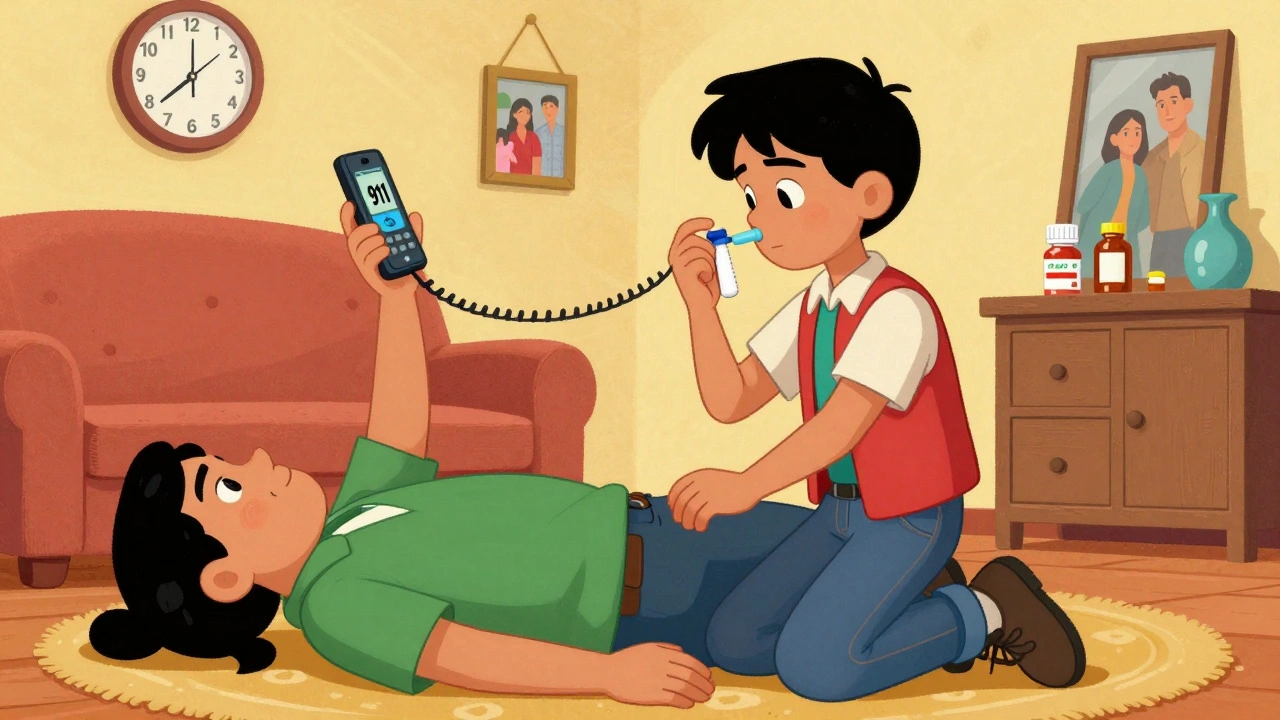
It doesn’t matter how good your plan is if no one knows how to use it. Studies show that 52% of people who own naloxone can’t correctly administer it without training. Here’s the simple 6-step process-called the A.N.C.H.O.R. method by New York’s Project COPE:- Assess: Check for unresponsiveness, slow or no breathing, pinpoint pupils.
- Naloxone: Grab the kit. If it’s nasal spray, remove the cap. Insert the nozzle into one nostril. Press the plunger all the way in.
- Call 911: Do this immediately after giving the first dose. Even if they wake up, they’re not out of danger.
- Have more ready: If they don’t respond in 3 minutes, give a second dose in the other nostril.
- Observe: Stay with them. Watch their breathing. Roll them on their side if they’re unconscious. Don’t leave them alone.
- Review: After EMS arrives, talk about what happened. Update your plan. Practice again next month.
Step 5: Build Your Emergency Card
In a crisis, you won’t remember every detail. That’s why you need a laminated card-keep it in your wallet, on the fridge, or taped to the inside of a medicine cabinet. Include:- Names and phone numbers of everyone in the household
- Names and dosages of all prescribed opioids (and who they’re for)
- Names of prescribing doctors
- Location of naloxone kits
- Emergency contacts: 911, poison control (1-800-222-1222), and a trusted neighbor
What About Non-Opioid Overdoses?
Naloxone only works on opioids. It won’t help with alcohol, benzodiazepines (like Xanax), or sleeping pills. But here’s the catch: many overdoses involve multiple drugs. Someone might take a painkiller and a sleep aid together. Or use fentanyl-laced pills thinking they’re just oxycodone. That’s why your plan must include this rule: Call 911 no matter what. Even if you give naloxone and they wake up, they could still crash again. This is called “renarcotization”-when the naloxone wears off before the opioid does. It happens in 2 to 4 hours. You must keep watching them. And if you’re unsure what was taken? Call 911 anyway. Emergency responders are trained for all types of overdoses. Your job is to act fast, not diagnose.
Common Mistakes (And How to Avoid Them)
From real family experiences, here are the top three reasons plans fail:- Expired naloxone: 31% of failed attempts involved outdated kits. Check expiration dates every 18 months. Set a phone reminder.
- Wrong administration: 24% didn’t give the full dose or didn’t insert the spray correctly. Practice with a training kit (many pharmacies give them for free).
- Delayed recognition: 19% of families thought the person was “just sleeping.” If they won’t wake up, don’t wait. Act.
What Happens After?
Surviving an overdose doesn’t mean the crisis is over. Most people who are revived with naloxone go on to seek treatment-89% do, according to SAMHSA. But that doesn’t happen automatically. After an overdose, your family needs to talk. Not in anger. Not in blame. But with honesty. Ask: “What led to this?” “Do we need help?” “How do we keep this from happening again?” Consider connecting with a counselor, support group, or addiction specialist. Many hospitals offer free family counseling after an overdose event. And if you’re worried about stigma-remember: this isn’t about addiction. It’s about survival.Final Thought: Be the One Who Acts
Only 12.3% of U.S. households have a formal overdose emergency plan. That means 87.7% are flying blind. You don’t need to be a doctor. You don’t need to be trained in medicine. You just need to be ready. This plan takes two hours to set up. It costs less than a dinner out. And it could save someone you love more than once. Naloxone isn’t magic. But when it’s in the right hands, at the right time-it’s the closest thing we have to a second chance.Can I get naloxone without a prescription?
Yes. In 46 states, you can buy naloxone directly from a pharmacy without a prescription. CVS, Walgreens, and many independent pharmacies stock it on the shelf. You can also get it for free through local health departments, community programs, or online mail-order services.
How do I know if my naloxone has expired?
Check the expiration date printed on the box or device. Most nasal sprays last 2 years. If the liquid inside looks cloudy or discolored, or if the device feels damaged, replace it-even if it hasn’t expired yet. Set a calendar reminder to check every 18 months.
What if I give naloxone and the person doesn’t wake up?
Give a second dose in the other nostril after 3 minutes. Keep checking their breathing. Even if they don’t respond, keep giving rescue breaths if you’re trained. Call 911 immediately-they still need emergency care. Naloxone is not a cure. It’s a bridge to medical help.
Is it safe to keep naloxone around kids?
Yes. Naloxone is not addictive and has no effect if opioids aren’t present. Store it out of reach of young children, but make sure older kids and teens know where it is and how to use it. In fact, teens are often the first to find someone overdosing-training them saves lives.
Will giving naloxone encourage drug use?
No. Studies show that having naloxone available does not increase drug use. In fact, people who survive an overdose with naloxone are more likely to seek treatment afterward-89% do. It’s not about enabling. It’s about giving someone a chance to get help.
Can I use naloxone for alcohol or benzodiazepine overdoses?
No. Naloxone only reverses opioid overdoses. If someone overdosed on alcohol, Xanax, or sleeping pills, naloxone won’t help. But you should still call 911 immediately. Emergency responders can treat all types of overdoses. Never delay calling for help just because you’re unsure what was taken.
Next Steps: Make Your Plan Today
Here’s what to do right now:- Check your medicine cabinet. Do you have any opioids? Even one bottle?
- Visit your local pharmacy. Ask for naloxone. No prescription needed.
- Watch a 15-minute training video from the American Red Cross (free online).
- Print out an emergency card. Fill it out. Laminate it. Put it on the fridge.
- Practice the steps with everyone in your house. Even if it feels awkward.
Comments (12)
Iris Carmen
i just got naloxone from cvs today. no prescription, $15 with my insurance. honestly, i didn’t think i’d ever need it… until my cousin overdosed last year. now it’s taped to our fridge. 🙏
Rich Paul
bro this is basic harm reduction 101. fentanyl is a silent killer-half the time people don’t even know they’re taking it. if you’re not carrying at least two doses of naloxone in your house and your teens know how to use it, you’re literally playing russian roulette with your family. also, check the expiration date. expired naloxone is just expensive paper.
Delaine Kiara
okay but let’s be real-this plan is only as good as the person who’s high. my cousin took fentanyl-laced xanax, got revived twice, then went right back to using. we had the naloxone, the card, the training… and still, it didn’t stop the cycle. this isn’t just about preparation-it’s about love, trauma, and whether your family can actually talk without yelling. i’m not judging. i’m just saying… it’s harder than this post makes it sound.
Ruth Witte
OMG YES THIS IS SO IMPORTANT!!! 🙌 I just did the 15-min Red Cross video with my 16-year-old and we practiced with the training spray! We made a card and put it on the fridge next to the emergency numbers. My mom cried. I cried. We’re doing this. 💪❤️ #NaloxoneIsLifeSaving
Noah Raines
if you’re not doing this, you’re a liability. not being prepared isn’t ‘hopeful’-it’s negligent. i’ve seen people die because someone waited to ‘see if they woke up.’ they didn’t. naloxone is free or cheap. the training is 10 minutes. your kid could be the one who saves your life. stop being lazy.
Katherine Rodgers
wow. another feel-good ‘just carry naloxone’ PSA. meanwhile, the real problem is the pharmaceutical companies who pushed opioids like candy, the doctors who overprescribed, and the government that still treats addiction like a moral failing instead of a public health crisis. yeah, sure, keep your spray handy… but don’t act like this fixes anything.
Lauren Dare
as a clinical social worker, i appreciate the actionable steps-but the framing here is dangerously reductive. ‘Family plan’ implies overdose is a predictable household incident. It’s not. It’s a symptom of systemic failure. You can’t ‘plan’ your way out of trauma, poverty, or lack of access to long-term care. This is triage, not treatment.
Gilbert Lacasandile
i just ordered two naloxone kits from my local health dept. free. they mailed them in 3 days. i showed my partner and we’re doing a drill this weekend. it feels weird to talk about, but… better weird than sorry.
Lola Bchoudi
you’re doing amazing just by reading this and thinking about it. that’s the first step. now go to your pharmacy, ask for naloxone, and say ‘i want to learn how to use it.’ they’ll walk you through it. no shame. no judgment. just action. you’re not just saving a life-you’re giving someone a chance to heal. and that’s powerful.
Morgan Tait
this is all just a distraction. the real issue? The government is using fentanyl to control the population. They’re lacing everything. Naloxone is just a placebo to make you feel safe while they track your meds. I’ve got a tinfoil hat and a backup generator. Don’t trust the pharmacy. Don’t trust the system. Just pray.
Darcie Streeter-Oxland
The efficacy of non-prescription naloxone distribution, while commendable in intent, remains empirically inconclusive in terms of long-term mortality reduction. Furthermore, the casualisation of emergency medical protocol within domestic environments may engender a false sense of security, potentially attenuating the imperative for systemic healthcare reform.
Sarah Gray
This post is dangerously oversimplified. You don’t just ‘tuck a card on the fridge’ and call it a plan. Addiction is a complex neurobiological disorder, not a household checklist. Your ‘emergency plan’ is performative activism disguised as responsibility. Real help requires therapy, insurance coverage, and decriminalization-not a laminated note and a nasal spray.