

Giving your child medicine when they have a fever at 2 AM is stressful enough without wondering if you're giving them too much or too little. A simple mistake in reading a label can lead to a trip to the emergency room; in fact, medication errors cause about 1.4 million ER visits every year in the US. The biggest culprit? Confusing age-based dosing with weight-based dosing. While labels often give you both, picking the wrong one can lead to errors in 23% of cases. To keep your kids safe, you need to know exactly where to look on that tiny label and why your child's current weight is the only number that truly matters.
Why Weight Trumps Age Every Time
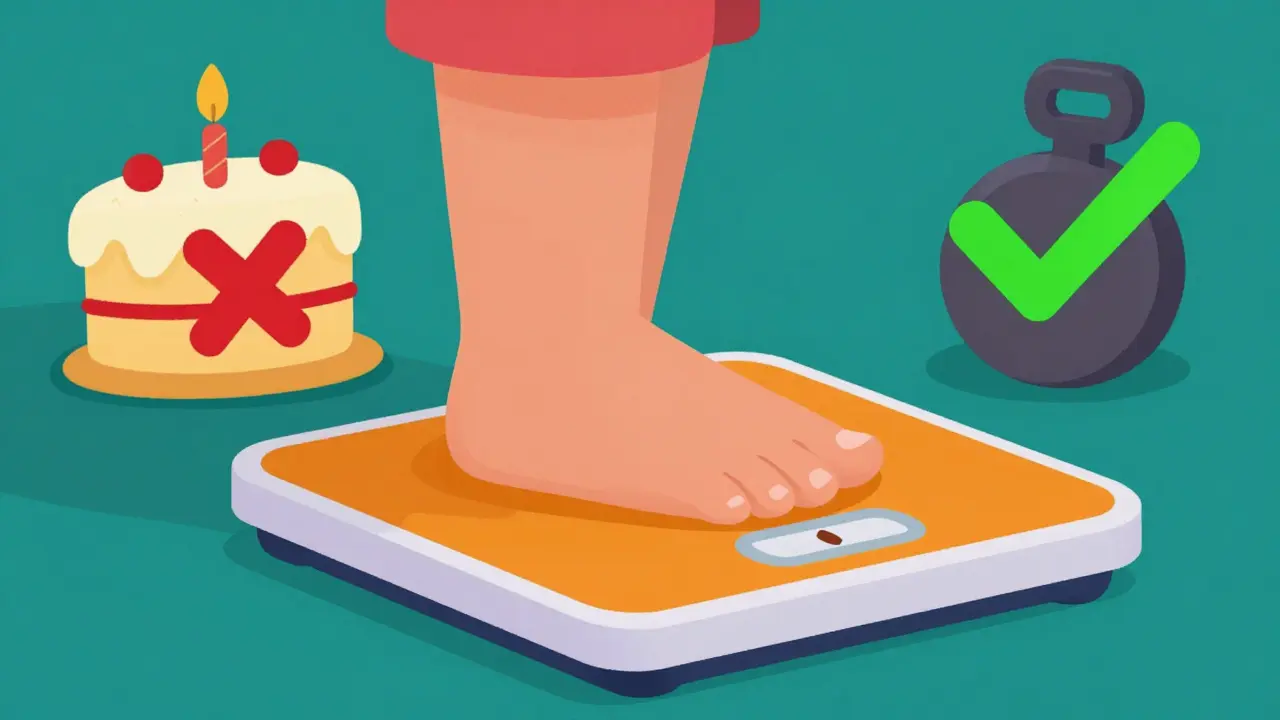
You might be tempted to just look at the "Age" column because it's faster, but children grow at wildly different rates. A 3-year-old can weigh 30 pounds or 45 pounds. If you dose by age, you're essentially guessing. Weight-based dosing is the gold standard for pediatric medicine because it accounts for a child's specific metabolic rate and body composition . When you use weight, you ensure the medicine is concentrated enough to work but not so high that it becomes toxic.
Medical experts, including those from the American Academy of Pediatrics, warn that relying on age alone leads to underdosing in 15% of cases and overdosing in 8%. In the case of acetaminophen, this isn't just about the medicine not working-overdose is a leading cause of acute liver failure in children. If you don't have a recent weight for your child, it is worth the extra minute to weigh them before dosing rather than guessing based on their birthday.
Decoding the Label: Step-by-Step
Modern labels are designed to be clearer, but they still contain a lot of data. Here is how to navigate them without getting overwhelmed:
- Check the Active Ingredient: First, identify what is actually in the bottle. Is it Acetaminophen is a common fever reducer and pain reliever found in brands like Tylenol or Ibuprofen is an anti-inflammatory medication used for pain and fever found in brands like Advil or Motrin ? This matters because they have different dosing schedules and age restrictions.
- Find the Concentration: Look for the "mg per mL" (milligrams per milliliter). For example, most children's liquid acetaminophen is standardized at 160mg/5mL. This tells you how much medicine is packed into every drop of liquid.
- Locate the Weight Chart: Skip the age column and find your child's weight in pounds or kilograms. If your child's weight falls exactly between two categories on the chart, the general rule from pediatric experts is to round down to the lower weight category to avoid overmedicating.
- Verify the Frequency: The label will tell you how often you can give the dose. Acetaminophen is typically given every 4 hours, while Ibuprofen is every 6 to 8 hours.
- Note the Maximums: Check the 24-hour limit. For instance, Tylenol labels strictly warn not to exceed 5 doses in a 24-hour period.
Acetaminophen vs. Ibuprofen: Key Differences
It is easy to mix these two up, but they behave differently in a child's body. The most critical difference is the age floor. While some pediatricians approve acetaminophen for infants as young as 2 months, ibuprofen is strictly prohibited for infants under 6 months. Giving ibuprofen too early can be dangerous for a developing baby's kidneys.
| Attribute | Acetaminophen (e.g., Tylenol) | Ibuprofen (e.g., Motrin/Advil) |
|---|---|---|
| Dosing Frequency | Every 4 hours as needed | Every 6-8 hours as needed |
| Max Daily Limit | Typically 5 doses per 24 hours | Varies by weight/chart |
| Minimum Age | 2 months (with doctor's OK) | 6 months |
| Primary Use | Fever and general pain | Fever and inflammation |
The Danger of the Kitchen Spoon
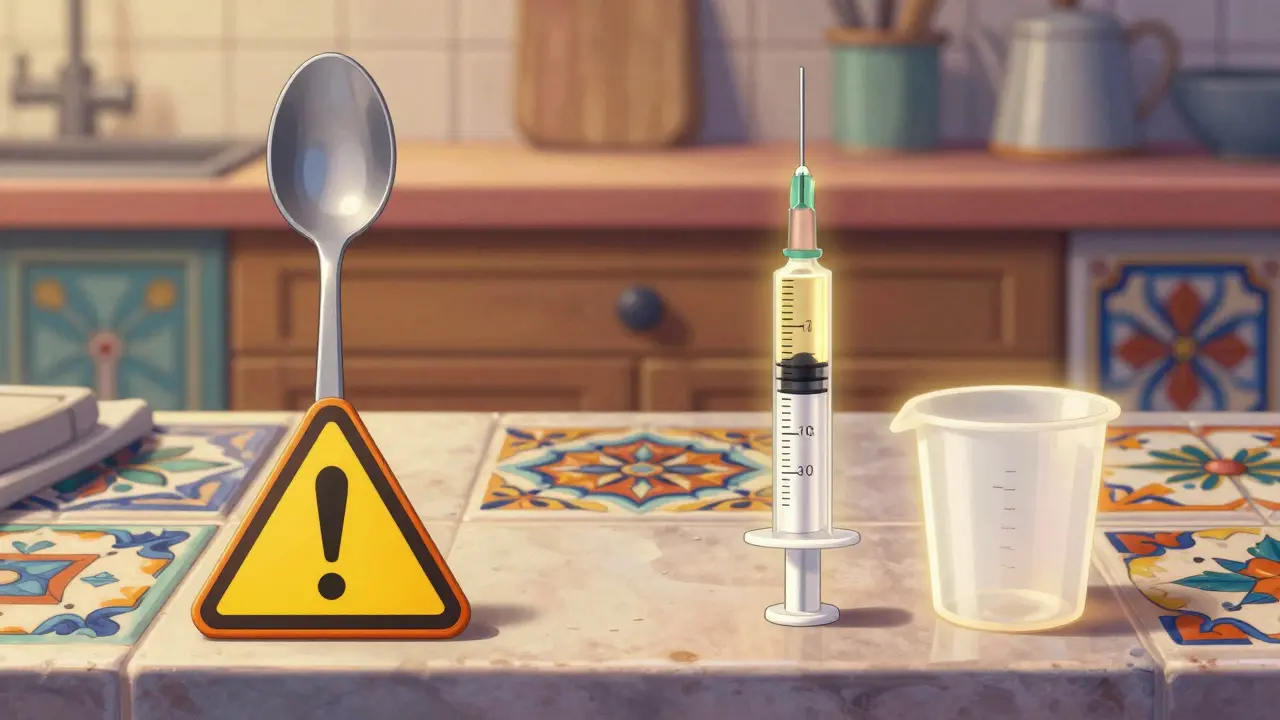
Stop using the silverware from your kitchen drawer. It sounds harmless, but a standard household teaspoon can vary by 20-30% in volume. One spoon might hold 4mL, while another holds 7mL. This discrepancy can result in your child receiving 2 to 3 times the intended dose, or far too little to break a fever.
Only use the measuring device that came with the medication. This includes:
- Oral Syringes: The most accurate for infants and toddlers.
- Dosing Cups: Better for older children who can swallow larger volumes.
- Medical Measuring Spoons: Specifically calibrated for medicine, not soup.
If you lose the dosing device, do not improvise. Go back to the pharmacy and ask for a replacement. Using a Milliliter (mL) is the standardized metric unit for liquid medication volume measurement is the only way to ensure accuracy.
Common Pitfalls and Warning Signs
One of the most dangerous mistakes parents make is "double-dosing" through multi-symptom medications. If you give your child a cold and cough syrup that contains acetaminophen and then give them a separate dose of Tylenol, you are risking a toxic overdose. Always read the ingredients of every liquid medicine you administer. If "acetaminophen" appears on two different bottles, you are giving the same drug twice.
Another point of confusion is the difference between "concentrated drops" and "children's liquid." In the past, infant drops were much more concentrated than children's syrup, leading to massive dosing errors. While the FDA has worked to standardize concentrations (like the 160mg/5mL standard), you must still verify the concentration on the bottle before pouring. A concentrated formula requires a much smaller volume of liquid to deliver the same amount of medicine.
What should I do if my child's weight is exactly between two categories on the chart?
According to pediatric guidelines, if your child's weight falls between two categories, you should generally round down to the lower weight category. This minimizes the risk of overdosing, which is more dangerous than a slightly lower dose.
Can I use a tablespoon for medicine if the dose is large?
Only if it is a medical-grade measuring tablespoon. A household tablespoon (TBSP) is approximately 15mL, and a teaspoon (TSP) is about 5mL. Using kitchen utensils is highly inaccurate and can lead to harmful dosing errors.
Is it okay to give ibuprofen to a 4-month-old for a high fever?
No. Ibuprofen should not be given to infants under 6 months of age. If your infant has a fever, contact your pediatrician immediately to determine the safe medication and correct dose for their specific age and weight.
Why is weight better than age for dosing?
Weight is a more accurate reflection of a child's body mass and how they will metabolize the drug. Using age as a proxy leads to errors in roughly 23% of cases because children of the same age can vary significantly in size.
How do I know if I've accidentally overdosed my child?
Symptoms of acetaminophen overdose may not appear immediately but can lead to acute liver failure. If you suspect a dosing error, contact your pediatrician or a poison control center immediately, even if your child seems fine.
Next Steps for Parents
To make the next fever emergency easier, try these proactive steps:
- Keep a Health Log: Note your child's most recent weight and the date it was taken.
- Create a Dosing Cheat Sheet: Once you've confirmed the dose with your doctor or the label, write the exact mL amount on a sticky note and attach it to the bottle.
- Audit Your Cabinet: Check for multi-symptom medications and ensure you aren't storing duplicate active ingredients under different brand names.
- Call the Pro: If you are ever confused by a label, your pharmacist is the best resource. They can double-check your calculations and ensure you have the right measuring device.
Comments (8)
Victoria Gregory
Omg this is such a lifesaver!! 🌟 I honestly never realized how dangerous the kitchen spoon thing was... just imagine how many of us were doing that for years!! 😱 Definitely going to double check my cabinet tonight!!! ✨
jack hunter
Weight is just another way to overcomplicate thing. Some kids are just small for their age and a bit of underdosing isnt gonna kill anyone. ppl treat these labels like they are holy script or somthing lol
Laurie Iten
the nuance here is the balance between safety and the anxiety of parenting. we strive for precision in a world that is inherently chaotic and imprecise
Ethan Davis
Funny how they push these 'standardized' doses but never mention how the pharmaceutical companies just want us dependent on the most expensive brands. The FDA basically rubber stamps whatever the big labs tell them to. Don't trust the labels blindly, trust your gut.
Kathleen Painter
I've spent a lot of time mentoring new parents in my community and I've noticed that the stress of a midnight fever often makes the simplest instructions feel like a foreign language, so having a a physical cheat sheet as suggested is genuinely a wonderful way to lower the cognitive load during a crisis. It is all about creating systems that protect our children when our own brains are fried from lack of sleep, and honestly, taking that extra minute to use a digital scale instead of guessing can be the difference between a peaceful night and a panic attack. I always tell people that the pharmacy is a resource, not just a store, and talking to the pharmacist is a completely free way to get peace of mind.
Ruth Swansburg
Excellent advice. Precision ensures safety. Everyone should implement the health log immediately.
Windy Phillips
It is simply fascinating that some people still manage to use kitchen spoons in the twenty-first century... Truly, the level of negligence is staggering!!! One would think basic literacy and a modicum of common sense would prevent such tragedies, but apparently, that is too much to ask from some parents!!!
Michael Flückiger
YES!!! This is exactly what we need to see more of!!! Total game changer for any parent!!! Let's all get those sticky notes going!!!