
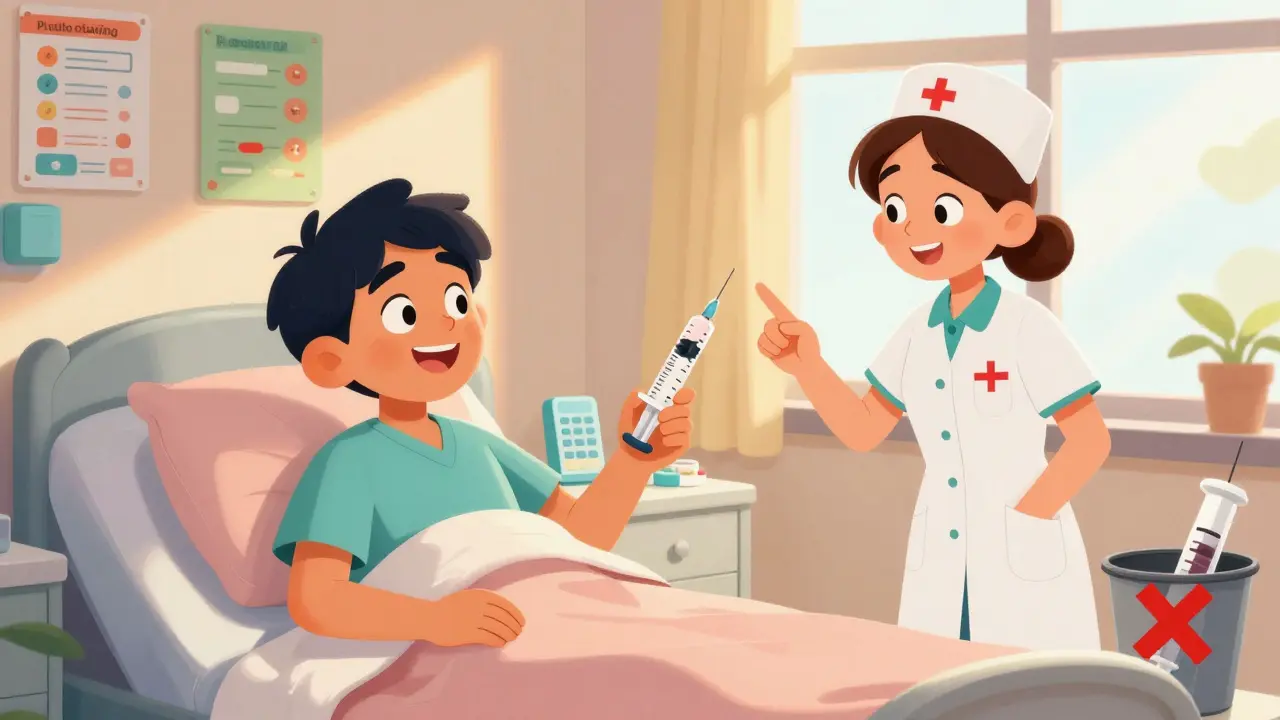
After surgery, you’re not out of the woods just because the procedure is over. The next few hours and days are when things can go wrong - especially with medications. You might be given painkillers, antibiotics, or anti-nausea drugs to help you recover. But if they’re not handled right, even short-term meds can cause serious harm. The good news? You don’t need to guess how to use them safely. There are clear, proven steps that hospitals, nurses, and patients can follow to avoid mistakes that could land you back in the hospital.
Why Medication Errors Happen After Surgery
It’s not because people are careless. It’s because surgery is chaotic. You’re tired. Your body is changing. Doctors and nurses are rushing between tasks. In that pressure, mistakes slip through. According to the World Health Organization, about 20% of all bad events in surgery are linked to medication errors. That’s not rare. That’s common enough to be a system problem.
Most errors happen because of miscommunication. A nurse hears a doctor say “morphine 5 mg” but writes down “50 mg.” A syringe labeled “epinephrine” gets mixed up with another one that looks the same. Or worse - a syringe isn’t labeled at all. The Joint Commission says 30% of all medication errors happen in surgical settings. That’s higher than any other part of the hospital.
High-alert drugs are the biggest risk. These include opioids like oxycodone and fentanyl, blood thinners like heparin, insulin, and muscle relaxants. One wrong dose of any of these can stop your breathing, drop your blood pressure, or cause a heart attack. The American Society of Anesthesiologists says these drugs must be clearly labeled with the exact strength - no shortcuts.
The Rules for Safe Medication Handling
Hospitals have rules. But they’re not just paperwork. They’re lifelines. Here’s what actually works:
- Every syringe must be labeled - immediately after it’s filled. No exceptions. Even if you’re in a hurry. Unlabeled syringes get thrown out. That’s not optional. It’s the law in most hospitals.
- Never reuse a syringe - even for the same patient. If you draw up a dose of painkiller, use it right away. If you don’t, toss it. The CDC says reusing syringes - even for one patient - increases infection risk. And if you leave it on the table, even for a second, it’s contaminated.
- Double-check the drug and dose - out loud. This is called a “read-back.” The nurse says: “I’m giving you 10 mg of hydromorphone IV.” The doctor replies: “Yes, that’s correct.” That simple exchange cuts errors by over half, according to the American College of Obstetricians and Gynecologists.
- Keep meds secure - not just locked up, but organized. If you have two strengths of the same drug (like 1:1000 and 1:10,000 epinephrine), they should never be on the same tray. Mixing them up can kill someone.
These aren’t suggestions. They’re backed by data. A 2022 study in the AORN Journal showed that hospitals using full labeling and verification protocols cut medication errors by 63%. That’s not a small win. That’s life or death.
What You Can Do as a Patient
You’re not just a passive receiver of meds. You’re part of the safety team. Here’s how to speak up:
- Ask what you’re getting - “What is this for?” “Is this the same as what I had before?” Don’t be shy. Nurses expect it.
- Check the label - If you see a syringe or pill bottle, look at the name and dose. Does it match what you were told? If it doesn’t, say something.
- Know your pain meds - Opioids are powerful. If you’ve never taken them before, ask: “How much can I take in a day?” “What happens if I take too much?” Signs of overdose: slow breathing, drowsiness, confusion. If you feel this way, tell someone immediately.
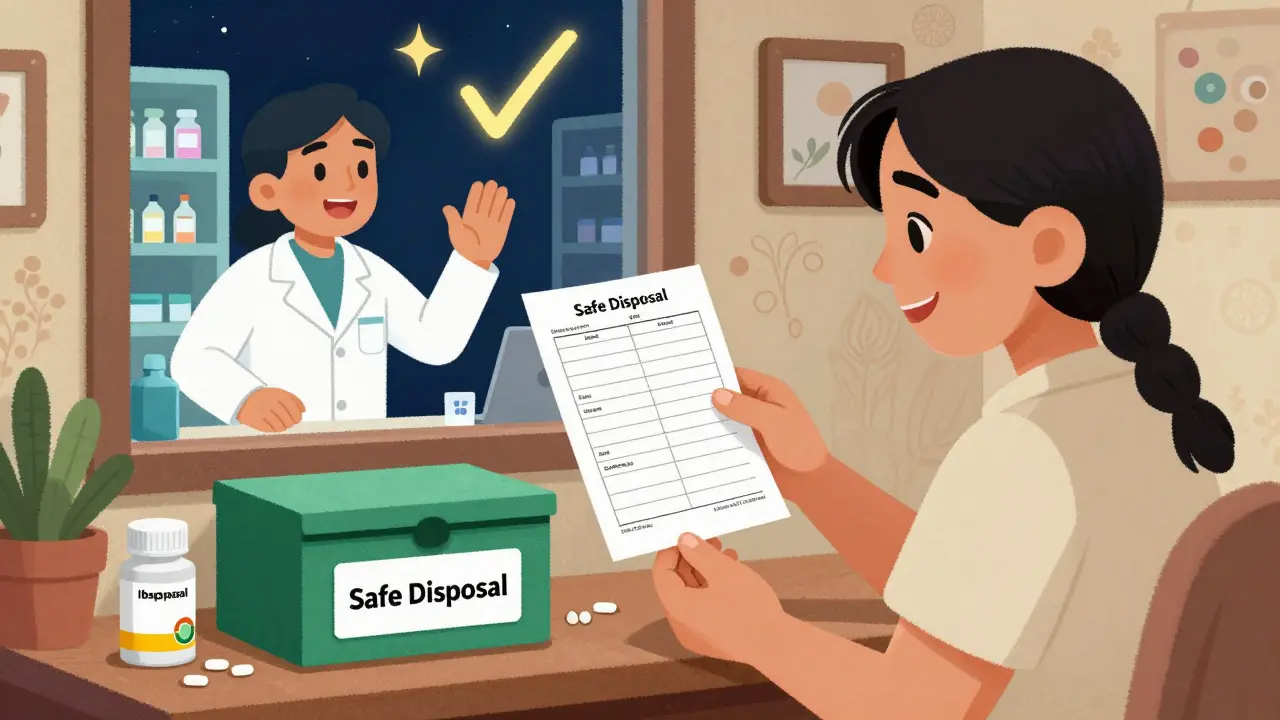
- Don’t take leftover pills - If you were given 10 pills for pain but only used 3, don’t save them for later. Opioids lose effectiveness over time and can be dangerous if misused. Ask how to dispose of them safely - most hospitals have drop boxes.
One patient told a nurse, “I think this is too much.” The nurse checked - and found the dose was 10 times higher than intended. That patient didn’t have a bad outcome because they asked. You can too.

The Hidden Dangers of Opioids
Painkillers like oxycodone and hydrocodone are common after surgery. But they’re not harmless. Even a few days of use can lead to dependence. The CDC says over 70% of people who become addicted to opioids started with a prescription after surgery or injury.
Here’s how to reduce the risk:
- Use the lowest dose possible - Ask if acetaminophen or ibuprofen can be used first. Often, they work just as well for mild to moderate pain.
- Set a time limit - “I’ll take this for 3 days, then switch to Tylenol.” Don’t wait until you’re out of pills to stop.
- Never mix with alcohol or sleep aids - That combo slows your breathing to dangerous levels. Even one drink can be risky.
- Watch for side effects - Constipation, nausea, dizziness are normal. But if you feel foggy, can’t stay awake, or your lips turn blue - call for help.
Studies show patients who follow these steps use 40% fewer opioids after surgery. That’s not just safer - it’s faster recovery.
What Happens When You Go Home
Leaving the hospital is a big transition. That’s when most errors happen. You’re tired. You’re confused. You might be on 3-4 new meds. Here’s how to stay safe:
- Get a written list - Every drug, dose, time, and reason. If you don’t get one, ask. Paper or digital - doesn’t matter. Just have it.
- Use a pill organizer - Especially if you’re on multiple meds. Fill it the night before. No guessing in the morning.
- Call your pharmacist - They can explain what each pill does and warn you about interactions. Most do this for free.
- Know your follow-up - Who do you call if you feel worse? When is your next appointment? Don’t wait until you’re in crisis.
According to the WHO, medication reconciliation - comparing what you were taking before surgery to what you’re on now - reduces bad events by up to 67%. That’s huge. Make sure your doctor or pharmacist does this before you leave.
What Hospitals Are Doing to Improve
It’s not just you. The system is changing.
Barcode systems are now being tested in operating rooms. Before a drug is given, the nurse scans the patient’s wristband and the medication. If it doesn’t match, the system blocks it. Pilot programs cut errors by 39%.
Smart syringes are coming too - devices that auto-detect what’s inside and alert staff if the dose is wrong. They’re still expensive, but hospitals are starting to invest.
Training is getting better. Surgical techs now get 12-15 hours of special training on meds. Nurses are required to do “time-outs” before giving any drug - just like surgeons do before cutting.
The goal? To make safety automatic. Not something you have to remember. Because when you’re in pain, tired, or scared - you shouldn’t have to be a safety expert.
Final Checklist: Your Safety Plan
Before you leave the hospital, make sure you’ve checked these boxes:
- I have a written list of all my meds, including doses and times.
- I know which drugs are opioids - and how to avoid overuse.
- I understand how to dispose of unused pills safely.
- I know who to call if I have side effects or questions.
- I’ve asked about non-opioid pain options.
- I’ve confirmed with my pharmacist that none of my new meds interact with my old ones.
If you can answer yes to all of these, you’re doing better than most. Medication safety after surgery isn’t about luck. It’s about knowing the rules - and using them.
Can I take over-the-counter painkillers with my prescription meds after surgery?
Yes - but only if you check with your doctor or pharmacist first. Common OTC drugs like ibuprofen or acetaminophen can interact with your prescription meds. For example, taking too much acetaminophen (from both your prescription and a cold pill) can damage your liver. Always compare the active ingredients on the label. When in doubt, stick to one pain reliever and ask your care team before adding another.
How long should I take opioid painkillers after surgery?
Most surgeons recommend no more than 3 to 7 days for acute pain after minor to moderate surgery. For major procedures like joint replacements, it may extend to 10-14 days - but only if absolutely necessary. The goal is to use the lowest dose for the shortest time. If your pain is manageable with Tylenol or ibuprofen after 5 days, stop the opioids. Don’t wait until your prescription runs out.
What should I do if I think I got the wrong medication?
Stop. Don’t take it. Call your nurse, pharmacist, or surgeon immediately. Show them the pill or syringe. Ask: “Is this the right drug and dose for me?” Hospitals have protocols to verify meds within minutes. It’s better to be safe than sorry. Even if you’re embarrassed - speaking up saves lives.
Are there safer alternatives to opioids for post-surgery pain?
Yes. Many surgeries now use multimodal pain control - combining acetaminophen, NSAIDs like ibuprofen, nerve blocks, ice, and physical therapy. Studies show this approach reduces opioid use by up to 50% without increasing pain. Ask your surgeon if you’re a candidate for this plan before your procedure. It’s becoming standard care.
Why are syringes labeled so strictly in the operating room?
Because looks can be deceiving. Two syringes can look identical - one might have morphine, another epinephrine. A 1000-fold difference in strength. If you give the wrong one, it can stop your heart. Labeling every syringe - even if you’re in a rush - is the only way to prevent that. The CDC and ISMP both say unlabeled syringes must be discarded. No exceptions.
Next Steps: What to Do Today
If you’re preparing for surgery:
- Ask your surgeon: “What pain meds will I get after?”
- Request a written discharge plan with all meds listed.
- Call your pharmacy ahead of time - make sure they have your prescriptions ready.
- Write down your questions. Don’t rely on memory.
If you’ve already had surgery:
- Review your meds. Are you taking anything you don’t recognize?
- Check expiration dates. Old meds can be ineffective or dangerous.
- Dispose of unused opioids properly - don’t flush or throw them in the trash. Use a drop box or take-back program.
- Call your doctor if you feel unusually drowsy, confused, or short of breath.
Safety after surgery isn’t complicated. It’s about paying attention. Asking questions. Not trusting appearances. And knowing that your voice matters - even when you’re weak, tired, or scared. You’re not just a patient. You’re the most important part of your own care team.
Comments (11)
Aurora Daisy
Oh wow, another government-approved pamphlet on how not to die from a syringe. Next they'll tell us to brush our teeth with a toothbrush labeled 'NOT TOOTHPOISON'.
Meanwhile, in real hospitals, nurses are working 16-hour shifts and still expected to be perfect. This isn't safety-it's liability theater.
Isaac Bonillo Alcaina
Let’s be precise: the article is technically accurate but dangerously naive. It assumes all healthcare workers are trained, rested, and motivated. In reality, understaffed units, outdated protocols, and institutional apathy make these rules impossible to follow consistently.
The ‘read-back’ protocol? Cute. Until the nurse is on her third 12-hour shift and the doctor’s voice is slurred from caffeine withdrawal. Then it’s just noise.
And don’t get me started on ‘patient empowerment’-most patients are sedated, confused, or terrified. Telling them to ‘ask questions’ is like telling a drowning person to swim better.
Joe Jeter
Everyone’s acting like this is some groundbreaking revelation. Newsflash: hospitals have had these rules for decades. The real issue? No one enforces them.
My cousin got a 10x overdose because the label was smudged. The nurse said, ‘I knew what it was.’ You don’t get to be a human barcode.
Also, why is everyone acting like opioids are the devil? I had a knee replacement. I needed them. And I didn’t get addicted. Stop the moral panic.
Sidra Khan
So let me get this straight: I’m supposed to be a medication detective while I’m still groggy from anesthesia? 😑
Also, why is the article 10,000 words long and the only advice I need is ‘don’t take stuff that looks like it might kill you’?
Also also-why are there so many subheadings? Did someone get paid per heading? 🤔
Lu Jelonek
As a former ICU nurse, I’ve seen both sides. The protocols work-but only when the system supports them.
Labeling syringes? Yes. Double-checking? Absolutely.
But if you’re staffing a unit with one nurse for six post-op patients and no pharmacist on call, no checklist will save you.
Real change means funding, not fear-mongering. Patients aren’t the problem. Underinvestment is.
Ademola Madehin
Bro, I had surgery last year and the nurse almost gave me morphine instead of saline. I caught it because I was watching her like a hawk. She looked at me like I was crazy.
Now I don’t trust ANYTHING. Even my water bottle. I swear, if I see a syringe near me again, I’m screaming.
Also, why do they keep giving me pills that look like candy? 😭
suhani mathur
Wow, so the solution to systemic healthcare failure is… asking nicely? 😏
Let me guess-the next article will be ‘How to Not Get Run Over by a Bus: Just Look Both Ways, Honey.’
Meanwhile, in India, we don’t even get labels on our IV bags. But hey, at least we’re ‘empowered’ to ask for the right dose while lying on a three-bed ward with no privacy.
Some of us don’t get the luxury of checklists. We get luck.
Jeffrey Frye
ok so i read this whole thing and like… why is everyone acting like this is new? i had a surgery in 2019 and the nurse said ‘this is your pain med’ and i said ‘what’s the dose?’ and she said ‘idk’ and i had to look it up on my phone.
also why do they give you 30 pills when you only need 5? and why does the bottle say ‘take as needed’ but the paper says ‘take every 4 hours’?
also i think the guy who wrote this has never actually been in a hospital.
also i think i’m allergic to bullet points.
Andrea Di Candia
It’s funny how we treat medicine like it’s a puzzle to be solved by the patient, instead of a system that should work without us having to be vigilantes.
I get that safety matters. But the burden shouldn’t fall on the person who’s just trying to heal.
What if the real question isn’t ‘how do we make patients safer’-but ‘how do we make the system worthy of trust?’
We don’t need more checklists. We need more humanity.
And maybe, just maybe, we need to stop pretending that a well-written PDF can fix a broken machine.
bharath vinay
Let me guess-this whole thing was written by Big Pharma to keep you hooked on opioids while they sell you more pills.
They don’t want you to know that acupuncture, crystal healing, and lemon water can cure post-op pain.
Also, the ‘smart syringes’? Totally a surveillance tool. They’re tracking your meds so your insurance can raise your rates.
And why are there so many ‘studies’ cited? Probably funded by hospital conglomerates who profit from readmissions.
Wake up. They’re lying to you. All of it.
Pankaj Chaudhary IPS
As someone who has worked in public health across 12 countries, I’ve seen this exact protocol work in rural clinics with no electricity, let alone barcode scanners.
It’s not about technology-it’s about discipline.
One nurse in a village hospital in Bihar labels every syringe with a permanent marker and a piece of tape. She doesn’t have a checklist, but she has integrity.
What this article misses is that safety isn’t a policy-it’s a culture.
And cultures are built by people who refuse to cut corners, even when no one’s watching.
You don’t need a hospital to be safe. You just need one person who cares enough to say ‘stop’.