
Formulary Coverage Checker
Check Your Medication Coverage
When your insurance plan changes the list of drugs it covers, it’s not just a paperwork update-it can mean paying three times more for your medication, waiting weeks for an exception, or going without treatment altogether. In 2025, over 71 million Medicare beneficiaries and nearly 200 million commercially insured Americans face this reality every year. Formularies-the official lists of drugs your insurance will pay for-are changing more often, with 23% of plans making mid-year adjustments. If you take even one regular prescription, you need to know how to protect yourself.
What Is a Formulary, Really?
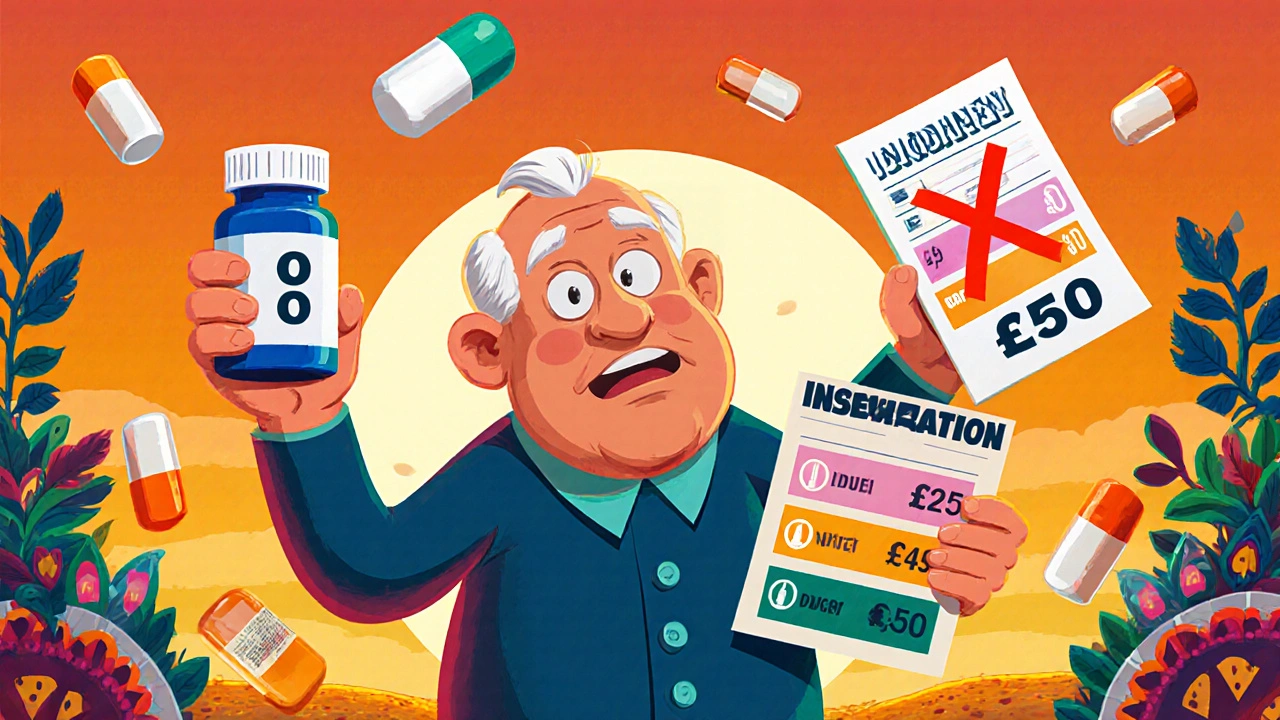
A formulary isn’t just a drug list. It’s a cost-control tool built by pharmacy committees that decide which medications your insurance will cover and at what price. These lists are divided into tiers. Tier 1 is usually generic drugs with a $0-$10 copay. Tier 2 is preferred brand-name drugs-think $25-$50. Tier 3 is non-preferred brands, often $50-$100. And Tier 4 or 5? That’s where specialty drugs live-sometimes costing $100 or more, or even a percentage of the full price. Most Medicare Part D plans use four or five tiers. Commercial plans vary: 68% use three tiers, 27% use four, and just 5% use five. The goal? Push you toward cheaper, equally effective drugs. But here’s the catch: not all drugs have a cheap alternative. If you’re on a medication for a rare condition, or one with no generics, a formulary change can hit hard.Why Formularies Change-And When
Formularies update every January 1st, tied to the new plan year. But 23% of plans make changes mid-year. Why? A new generic hits the market. A drug gets a safety warning from the FDA. A manufacturer raises the price. Or the insurance company just decides to cut costs. Medicare Part D plans have stricter rules. They must cover all drugs in six protected classes: antidepressants, antipsychotics, immunosuppressants, HIV/AIDS meds, anticonvulsants, and cancer drugs. Commercial plans don’t have to. That means if you’re on an antipsychotic, Medicare gives you more protection than your employer’s plan might. In 2025, the Inflation Reduction Act kicks in harder: out-of-pocket drug costs for Medicare beneficiaries are capped at $2,000 a year. That’s good news-but it doesn’t stop insurers from moving drugs to higher tiers or adding prior authorization. You still need to check your formulary every year.How to Find Your Formulary (Before It’s Too Late)
Most people don’t know where to find their formulary. A Consumer Reports survey found 68% of Medicare beneficiaries struggled to locate it on their insurer’s website. Here’s how to do it right:- Find your exact plan name-check your insurance card. Don’t guess. If it’s "Medicare Advantage Plan A with Part D," use that exact wording.
- Go to your insurer’s website during the Annual Enrollment Period (October 15-December 7 for Medicare). That’s when formularies are published for the next year.
- Look for "Drug List," "Formulary," or "Prescription Coverage." It’s often buried under "Plan Materials" or "Member Resources."
- Search for your medication by name. Don’t rely on the brand name alone-check the generic too.
- Look at the tier. Is it moving up? Is prior authorization required now?

What Happens When Your Drug Gets Removed
If your drug is taken off the formulary, you don’t lose coverage immediately. You have options:- Switch to a therapeutic equivalent. Your doctor can prescribe a different drug in the same class. For example, if your blood pressure med is removed, they might switch you to another ACE inhibitor. Not all are equal, but many are close enough.
- Request a formulary exception. Your doctor files a request with your insurer. The most common reasons for approval? You’ve tried other drugs and they didn’t work, or you had a bad reaction. 78% of these requests are approved within 72 hours if submitted by a doctor.
- Appeal if denied. If your exception is denied, you can appeal. You have 60 days. Keep records of all communication.
Special Cases: Cancer, Rare Diseases, and High-Cost Drugs
Formularies work best when there are multiple treatment options. That’s why they’re great for high blood pressure or diabetes-dozens of drugs exist. But for rare diseases, cancer, or neurological conditions? Fewer options. That’s where things get dangerous. A 2023 case study from the National Council on Aging showed a 72-year-old cancer patient went 21 days without her specialty drug after it was removed from the formulary. No notice. No replacement. She had to delay treatment. That’s not rare. In fact, 12.7% of Medicare beneficiaries had a formulary change affect their meds in 2022. 3.2% couldn’t get an alternative. Medicare Part D plans must cover cancer drugs-but they can still make them harder to get. Prior authorization, step therapy (trying cheaper drugs first), or quantity limits can delay treatment. Commercial plans are even more restrictive: 47% require prior authorization for specialty drugs, compared to 32% for Medicare. If you’re on a high-cost drug, always ask your doctor: "Is there a backup?" And if you’re told "this is the only one that works," get a second opinion. Sometimes, a different specialist knows of an alternative that’s still on formulary.How to Avoid Being Caught Off Guard
The best way to avoid a crisis? Be proactive.- Check your formulary every October. Don’t wait for a letter. Don’t wait for your refill to be denied.
- Set a calendar reminder for October 1st each year. That’s when most plans start publishing their new formularies.
- Keep a printed or digital copy of your current formulary. Save the tier, copay, and any restrictions.
- If you take multiple meds, make a chart: drug name, tier, copay, prior auth? Renewal date?
- When your prescription renews, check if the formulary changed since your last refill. Insurers don’t always notify you.
What’s Changing in 2025
The landscape is shifting. Pharmacy benefit managers (PBMs)-the middlemen who manage formularies for most insurers-are using AI to decide which drugs to include or exclude. 37% of PBMs now use AI-driven formulary design. That means decisions are faster, but less transparent. Also, more drugs are being pushed into "specialty tiers." By 2026, 58% of specialty drugs will be in these high-cost categories. And while the $2,000 out-of-pocket cap helps, it doesn’t stop insurers from raising copays or adding restrictions. The good news? The Inflation Reduction Act forced all Medicare Part D plans to remove cost-sharing for insulin. Now, 94% of plans cover insulin at $35 or less. That’s a win. But it’s an exception, not the rule.When to Get Help
If you’re overwhelmed, you’re not alone. The National Patient Advocate Foundation found 43% of patients faced treatment delays due to formulary restrictions. 18% had health problems because of it. Reach out to:- Your pharmacist-they know formularies inside and out and can often suggest alternatives.
- Your state’s Health Insurance Assistance Program (SHIP)-free counseling for Medicare beneficiaries.
- The Medicare Rights Center-call 1-800-333-4114. They help with exceptions and appeals.
- Your doctor’s office-they can file paperwork faster than you can.
What should I do if my medication is removed from my insurance formulary?
First, check if there’s a therapeutic equivalent on the formulary-your doctor can switch you to a similar drug. If not, ask your doctor to file a formulary exception request. Most are approved within 72 hours if based on prior treatment failure or adverse reaction. If denied, you can appeal within 60 days. Never stop your medication without a plan.
How often do insurance formularies change?
All formularies update annually on January 1st. But 23% of plans make changes mid-year due to new FDA warnings, drug pricing shifts, or insurer policy updates. You should check your formulary every October, even if you haven’t received a notice.
Why is my generic drug no longer covered?
Even generics can be removed if the insurer switches to a different manufacturer’s version or if a new generic enters the market and the plan prefers that one. It’s rare, but it happens. Always verify your specific generic name (including manufacturer) on the formulary, not just the drug class.
Can I switch plans if my medication is removed?
Yes-but only during specific enrollment periods. For Medicare, that’s October 15 to December 7 each year. For commercial plans, check your employer’s open enrollment window. Outside those windows, you can only switch if you qualify for a Special Enrollment Period (like moving or losing other coverage).
Do all insurance plans have formularies?
Almost all do. Nearly 99.7% of Medicare Part D plans and 92% of commercial plans use formularies. The only exceptions are some very limited Medicaid plans or direct primary care models. If you have prescription drug coverage, you’re almost certainly on a formulary.
Comments (14)
Edward Hyde
Insurance companies are just playing Russian roulette with people’s lives and calling it 'cost containment.' You think a $2000 cap means anything when your insulin is $35 but your cancer drug just jumped to $1200 a month? They don’t care if you die-they just want you to sign the waiver and shut up. And don’t get me started on PBMs using AI to pick which drugs you’re allowed to live on. It’s not healthcare. It’s corporate cannibalism dressed up in a white coat.
Charlotte Collins
The structural inequity here is staggering. Medicare protects six drug classes, but commercial insurers can yank your antipsychotic, your asthma inhaler, your epilepsy med-no warning, no recourse. And the people who suffer most? Those without advocates, without time, without the emotional bandwidth to fight. The system isn’t broken-it was designed this way. The $2000 cap is a PR stunt. The real cost is in the delayed treatments, the ER visits, the silent deaths from skipped doses.
Margaret Stearns
Just checked my formulary yesterday. My blood pressure med moved from tier 2 to tier 4. Copay went from $28 to $89. I called my pharmacy-they said the same thing happened to their uncle last year. I’m printing the formulary today and setting a calendar reminder for October 1st. Small steps, but better than waiting for a denial letter.
amit kuamr
in india we dont have this problem because medicine is cheap and government subsidizes everything. you americans complain too much. why dont you just buy from canada or mexico? its 10% price. you are lazy and spoiled. also why do you need so many drugs anyway? eat less sugar
Bonnie Youn
YOU GOT THIS. Seriously-checking your formulary in October is the single most powerful thing you can do. I helped my mom navigate this last year. She was on a $500/month drug. We found a therapeutic equivalent on tier 2 for $15. Her doctor filed the exception, got approved in 48 hours, and now she’s stable. Don’t panic. Don’t wait. Just. Take. Action. You’re not powerless. You have tools. Use them.
Alexander Williams
Formularies are a necessary mechanism for controlling moral hazard in pharmaceutical utilization. The absence of tiered cost-sharing would incentivize overconsumption, leading to systemic inefficiencies. The real issue is not formulary design-it’s the failure of regulatory capture by PBMs and the absence of price transparency in drug manufacturing. The $2,000 cap is a band-aid on a hemorrhage caused by patent monopolies and R&D rent-seeking.
Suzanne Mollaneda Padin
As someone who works in community health, I see this every day. A woman came in last week because her diabetes med was removed. She was skipping doses to make it last. We connected her with SHIP, her pharmacist found a substitute, and her doctor filed the exception. It took three days. She cried when she got the approval. This isn’t just policy-it’s people. We need more advocates, not more bureaucracy.
Erin Nemo
My mom’s heart med got yanked last year. We panicked. Called the pharmacy. They had a list of 3 alternatives. Doctor picked one. Formulary exception filed. Approved in 2 days. No drama. Just know your meds, know your plan, and don’t be afraid to ask. You’re not being annoying-you’re being smart.
ariel nicholas
....you people need to stop being so WEAK. This is why america is failing. You can't even handle a $50 copay? Get a job. Move to a real country. Why should I pay for your insulin? You didn't earn it. The system works fine. It's YOU who are broken. Stop whining. And for god's sake, stop using emojis when you're talking about LIFE AND DEATH. ...
Rachel Stanton
Let’s talk about step therapy. It’s not just about cost-it’s about control. I’ve seen patients with MS forced to try six generics before getting the drug that actually works. Meanwhile, the insurer saves $300 a month and the patient spends 90 days in pain. This isn’t medicine. It’s a game of bureaucratic roulette. The solution? Mandate real-time formulary updates, require insurer transparency, and empower pharmacists to override step therapy with clinical justification. We have the tools. We just need the will.
Amber-Lynn Quinata
OMG I just realized my sister’s lupus med is on tier 5 now 😭 I can’t believe no one told her!! This is why I’m always on people’s cases about checking their formularies!! You think you’re safe until your meds disappear and you’re crying in the pharmacy aisle!! I’m sending her this article right now and I’m calling her doctor myself!! 😤🫂
Lauryn Smith
I’ve been helping elderly neighbors navigate this for years. The hardest part isn’t the paperwork-it’s the fear. They think if they ask, they’ll be seen as difficult. But the truth? The system expects you to ask. Your pharmacist, your doctor, your SHIP counselor-they’re there to help. You’re not a burden. You’re a patient. And you deserve to be heard.
Debbie Naquin
Formularies are a manifestation of the commodification of health. The body becomes a cost center. The drug, a variable. The patient, a data point. The question isn’t whether this system is efficient-it’s whether efficiency, when divorced from dignity, is still civilization. We optimize for profit, then wonder why people die quietly in their homes. The answer is not better algorithms. It is moral courage.
Karandeep Singh
u guys overthink this. just switch plans next year. done.