
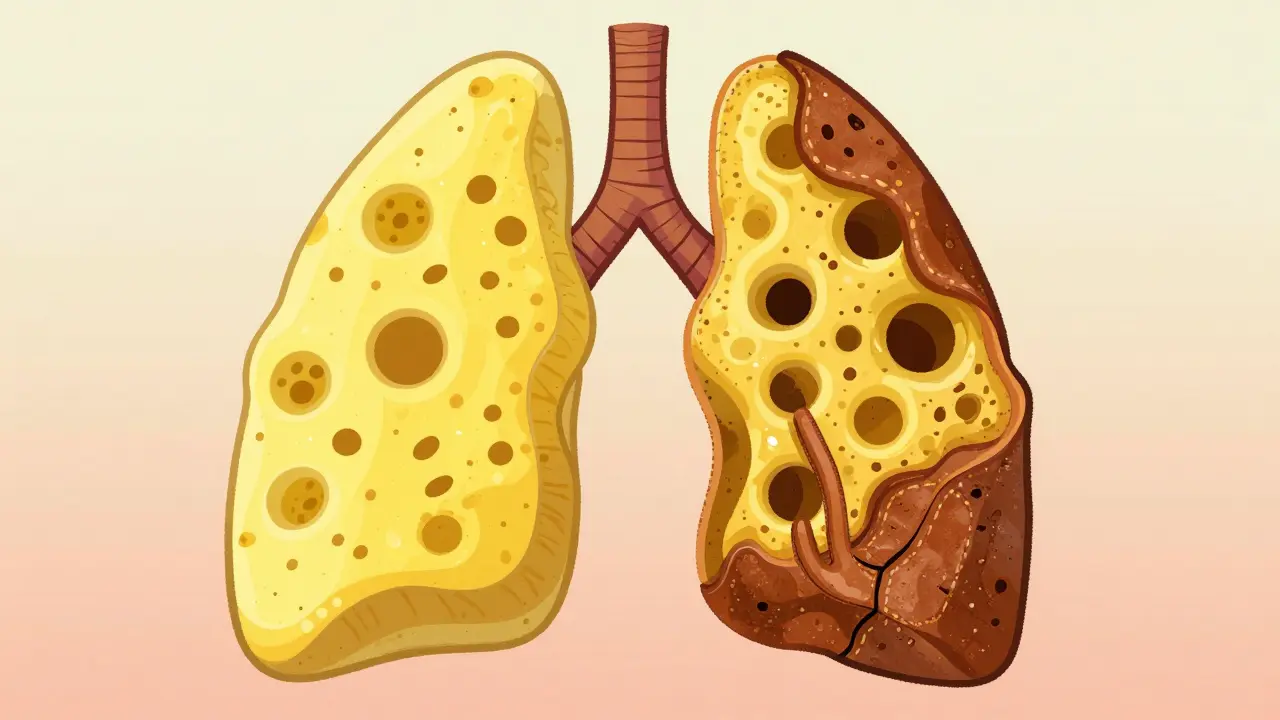
Quick Summary
- What it is: A group of 200+ diseases causing lung tissue scarring (fibrosis).
- Main Symptom: Progressive shortness of breath (dyspnea) and a dry, hacking cough.
- Key Goal: Slowing disease progression through early diagnosis and antifibrotic drugs.
- Primary Treatment: Use of medications like Nintedanib and Pirfenidone for specific types.
- Support: Pulmonary rehabilitation and supplemental oxygen to maintain quality of life.
The Different Faces of Lung Scarring
Not all ILD is the same. Some are caused by things you've breathed in, while others appear for no apparent reason. The most common and often most aggressive form is Idiopathic Pulmonary Fibrosis (IPF). "Idiopathic" is just a medical way of saying "we don't know why it started." This specific type makes up about 20-30% of all cases and is particularly common in people over 75. Other types are linked to specific triggers. For example, someone with Connective Tissue Disease, such as rheumatoid arthritis, might develop ILD as part of their autoimmune response. Then there are environmental causes-like asbestosis-where occupational exposure to minerals triggers the scarring. Comparing these can be eye-opening. While IPF can move quickly, cases caused by environmental exposures often progress more slowly. On the other end of the spectrum, Sarcoidosis, which affects about 15% of patients, can sometimes resolve on its own within two years, whereas acute interstitial pneumonitis can be fatal within months without intensive care.| Subtype | Typical Cause | Progression Rate | General Outcome |
|---|---|---|---|
| IPF | Unknown (Idiopathic) | Fast | Severe; focuses on slowing decline |
| CTD-ILD | Autoimmune (e.g., Lupus) | Moderate | Better 5-year survival (70-80%) |
| Sarcoidosis | Inflammatory/Unknown | Variable | Often resolves spontaneously |
| Asbestosis | Mineral Fiber Exposure | Slow | Chronic, gradual decline |
Recognizing the Warning Signs
The tricky part about ILD is that it creeps up on you. It usually starts with "exertional dyspnea," which is just a fancy way of saying you get winded doing things you used to find easy-like walking up a flight of stairs or carrying groceries. Over time, this can progress to feeling short of breath even while sitting still. Aside from the breathlessness, about 78% of people deal with a persistent dry cough that won't go away. You might also notice extreme fatigue or chest discomfort. In more advanced cases, especially with IPF, some people develop "clubbing," where the fingertips widen and the nails curve downward. Many patients report a frustrating journey to get a correct diagnosis. It's common for doctors to mistake early ILD for asthma or even just the natural effects of aging. In fact, some patients have been misdiagnosed an average of two times before getting the right answer. If you've noticed a decline in your breathing that doesn't fit a standard cold or asthma pattern, it's worth pushing for a specialist's opinion.
How Doctors Diagnose and Map the Damage
To get a clear picture, a pulmonologist won't just listen to your chest. They rely on High-Resolution Computed Tomography (HRCT). Unlike a standard CT scan, an HRCT takes incredibly thin slices (about 1mm) of the lung, allowing doctors to see the subtle patterns of fibrosis that a regular X-ray would miss. They also use Pulmonary Function Tests (PFTs). These tests measure your Forced Vital Capacity (FVC)-basically, how much air you can push out of your lungs. In moderate to severe ILD, the FVC can drop by 20-50%. Another key metric is the DLCO, which measures how well carbon monoxide (and therefore oxygen) diffuses from the air sacs into your blood. Recently, the medical field has started using AI to analyze these CT scans. Some studies show AI can be more accurate than human radiologists in distinguishing between different ILD subtypes, which is crucial because the treatment for a "drug-induced" ILD is very different from the treatment for an "idiopathic" one.Treatment Options: Slowing the Scarring
For a long time, we could only treat the symptoms. Now, we have Antifibrotic Therapy. These drugs don't remove existing scars, but they act like a brake on the disease. Nintedanib (brand name Ofev) and Pirfenidone (brand name Esbriet) are the heavy hitters here. Clinical trials have shown that these medications can slow the decline of lung function by about 50% over a year. However, they aren't without downsides. Pirfenidone users often deal with sun sensitivity (photosensitivity) and stomach issues. There's also a new player on the scene called zampilodib, approved in late 2023, which offers a different mechanism for reducing the rate of lung function loss. But remember, these antifibrotics work best for IPF; they may have minimal benefit for other types of ILD, which is why getting the right subtype diagnosis is so important.
Living with ILD: Support and Management
Medication is only one part of the puzzle. To actually improve your daily life, you need a combination of supportive therapies.- Pulmonary Rehabilitation: This is a supervised exercise and education program. It doesn't fix the lungs, but it trains your muscles to use oxygen more efficiently. Many patients report a significant boost in their ability to walk and move after an 8-12 week program.
- Oxygen Therapy: When your blood oxygen levels (SpO2) drop below 88% at rest, supplemental oxygen becomes necessary. While relying on a tank or concentrator can feel limiting, it prevents your heart from overworking and reduces the anxiety caused by air hunger.
- Energy Conservation: Learning how to pace yourself-like sitting while getting dressed or using a shower chair-can save precious energy for the activities you actually enjoy.
Can lung scarring from ILD be reversed?
Generally, no. Once lung tissue has turned into fibrosis (scar tissue), it cannot be turned back into healthy tissue. However, treatment can slow the progression of new scars and manage inflammation to preserve the remaining lung function.
How long does it take to get a diagnosis?
It varies, but data suggests an average of about 11.3 months from the onset of symptoms to a confirmed diagnosis. This is often due to the symptoms mimicking other conditions like asthma or COPD.
What is the difference between IPF and other ILDs?
Idiopathic Pulmonary Fibrosis (IPF) is a specific type of ILD where the cause is unknown. Other ILDs are caused by known factors, such as autoimmune diseases (CTD-ILD), environmental toxins (like asbestos), or drug reactions. IPF tends to progress more aggressively than many other subtypes.
Are there any natural ways to manage ILD?
While there are no natural cures for fibrosis, pulmonary rehabilitation (exercise) and breathing techniques are highly effective at improving quality of life. Avoiding smoking and environmental pollutants is also critical to prevent further lung damage.
When do I need to start using supplemental oxygen?
Doctors typically recommend supplemental oxygen when resting oxygen saturation (SpO2) levels consistently drop below 88%. This helps protect your heart and brain from the effects of low oxygen.