

Most people with seasonal allergies reach for an antihistamine pill when their nose starts running or their eyes itch. It’s quick, easy, and feels like instant relief. But what if the pill you’re taking isn’t actually the best tool for the job? For nasal symptoms like congestion, postnasal drip, and persistent sneezing, the real answer might be hiding in a small nasal spray bottle you’ve been ignoring.
Why Your Antihistamine Isn’t Doing Enough
Antihistamines block histamine, one piece of the allergic puzzle. That’s why they help with sneezing and itchy eyes. But allergic rhinitis isn’t just about histamine. It’s a full-blown inflammatory response inside your nasal passages-swelling, mucus overproduction, and tissue irritation. Antihistamines don’t touch most of that. A 1999 review of 16 studies involving over 2,200 people found that intranasal corticosteroids beat antihistamines in nearly every category: congestion, runny nose, nasal itching, and overall discomfort. The only symptom where antihistamines matched up? Eye symptoms. That’s why you might feel better for your eyes but still feel stuffed up and drained. And here’s the kicker: most people don’t take antihistamines regularly. They take them when symptoms hit. That’s fine for a quick fix, but it’s a problem because antihistamines don’t build up in your system. They work for a few hours and then fade. If you’re spraying your nose only when you’re miserable, you’re already behind the curve.How Intranasal Corticosteroids Actually Work
Intranasal corticosteroids-like fluticasone, mometasone, or budesonide-are not the same as the steroids athletes use. These are local, targeted anti-inflammatories. They calm down the immune system right where the problem is: inside your nose. They reduce swelling by stopping immune cells from rushing in. They lower the levels of inflammatory proteins like eosinophil cationic protein (ECP). They even prevent mast cells from releasing histamine in the first place. That’s why they’re so effective for congestion, which antihistamines barely touch. A 2001 study from the University of Chicago showed something surprising: when people used nasal steroids only when they needed them-not daily-their symptoms were still far better than those using antihistamines on an as-needed basis. That’s huge. It means you don’t have to be perfect. You don’t have to spray every morning for weeks before pollen season starts. Just spray when you feel it coming.Timing Matters More Than You Think
The old advice was: start nasal steroids two weeks before allergy season. That’s based on ideal conditions-people taking meds daily, as prescribed. But real life doesn’t work that way. Most of us forget. We get busy. We think, “I’ll start tomorrow.” Here’s what the evidence says now: if you’re using nasal steroids as-needed, you still get better results than antihistamines. You don’t need to be a model patient. You just need to use them early. Spray at the first sign of sniffles, even if it’s just a tickle. Don’t wait until your nose is clogged and your head feels heavy. One study tracked patients using a nasal steroid only on days they had symptoms. After four weeks, they had 40% fewer symptoms than those using antihistamines on the same schedule. The difference wasn’t subtle. It was noticeable in daily life-better sleep, less fatigue, fewer missed work hours.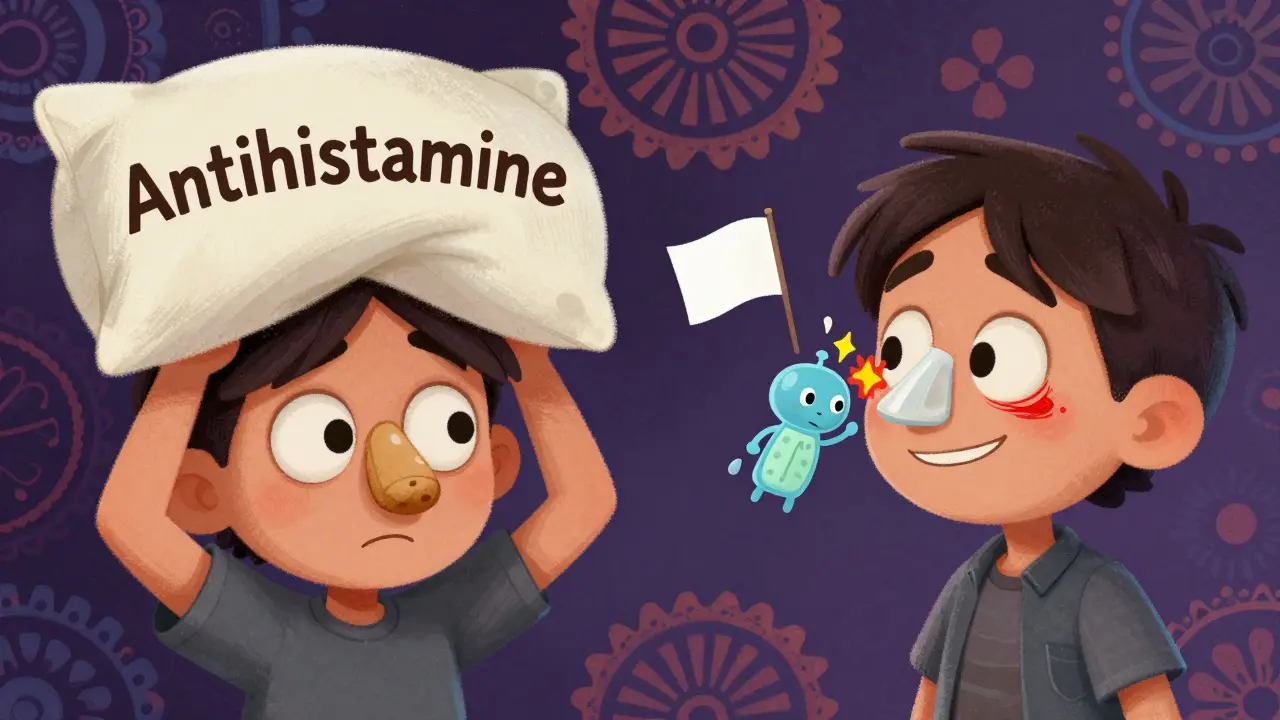
What About Eye Symptoms?
If your eyes are the worst part-itchy, watery, red-antihistamines still have a role. Oral ones like loratadine or cetirizine can help. But here’s a better move: try an intranasal antihistamine like azelastine. It works faster than oral ones and doesn’t cause drowsiness like older antihistamines. And when you pair it with a nasal steroid? That’s the gold standard. A 2020 study showed that adding azelastine to a nasal steroid gave better symptom control than the steroid alone. Especially for sneezing and itching. So if you’re still struggling after using a nasal steroid, don’t reach for a pill. Try a nasal spray that targets your eyes and nose together.Cost and Safety: The Real-World Edge
Nasal corticosteroids are cheaper than most non-drowsy oral antihistamines. Many are available over-the-counter now. Fluticasone, for example, costs less than $15 for a month’s supply at most pharmacies. Antihistamines might be the same price, but they don’t deliver the same results. Safety? These sprays are among the safest medications you can use long-term. A 1999 meta-analysis followed people for five years and found no serious side effects. The most common issue? A slight nosebleed or dryness. That’s easily fixed with saline spray or adjusting your technique. The big myth? “Steroids are dangerous.” No. Systemic steroids-pills or shots-are. Intranasal ones? They barely enter your bloodstream. You’re putting a tiny amount, less than a drop, directly into your nose. It’s like using a fire extinguisher on a candle flame instead of flooding the whole house.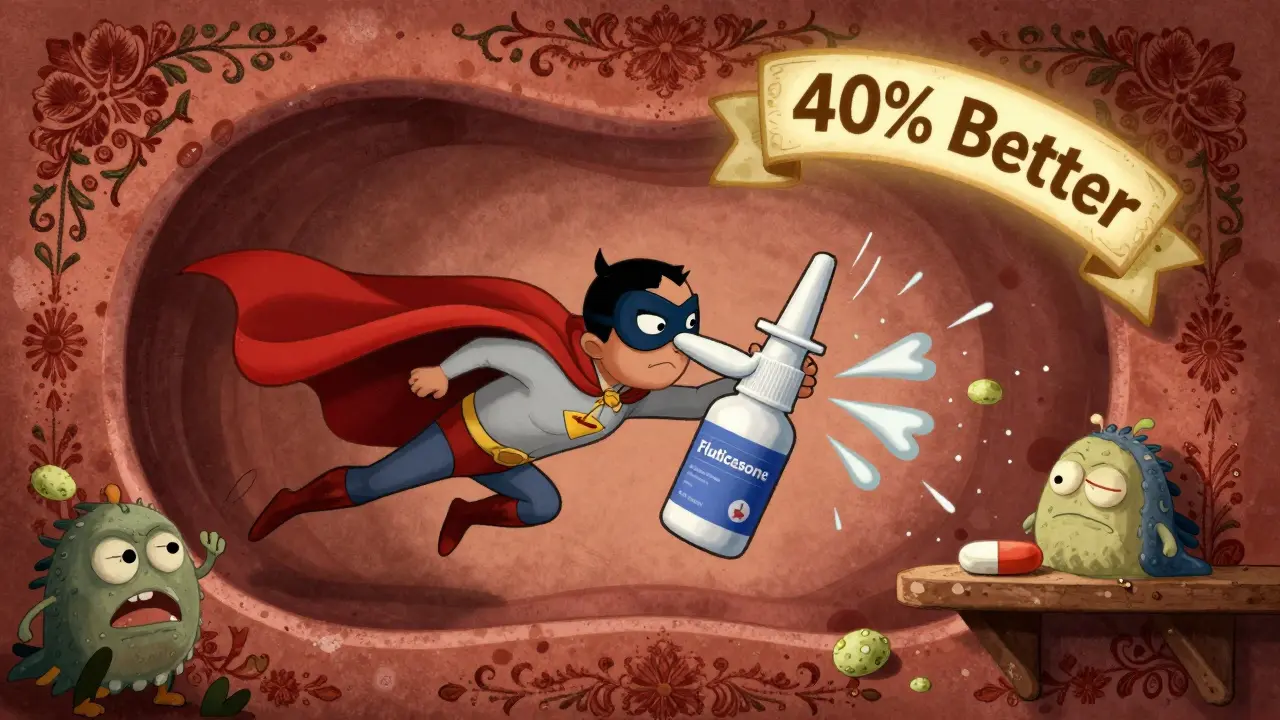
Why Doctors Still Prescribe Antihistamines First
It’s a mystery. Studies show nasal steroids are more effective. They cost less. They work even when used sporadically. Yet, doctors prescribe antihistamines three times more often. Why? Partly because they’re easier to explain. “Take a pill when you feel bad.” Simple. “Spray this in your nose every day, even if you feel fine.” Sounds complicated. Patients don’t like it. Doctors don’t push it. But here’s the truth: if you’re still miserable after trying antihistamines, you’re not failing. You’re just using the wrong tool. The science is clear. Nasal steroids are the better first step for nasal symptoms.What to Do Right Now
If you have seasonal allergies and your nose is the main problem:- Stop relying on pills as your only defense.
- Try an over-the-counter intranasal corticosteroid (fluticasone, triamcinolone, or budesonide).
- Use it at the first sign of symptoms-even if it’s just a tickle or slight stuffiness.
- Don’t wait for it to get worse.
- If your eyes are still bothering you, add an intranasal antihistamine spray (azelastine).
- Don’t panic if you miss a day. Just spray the next time you feel it coming.
When to Skip the Nasal Spray
There are times when antihistamines still make sense:- Your eyes are the worst symptom and your nose is fine.
- You’re traveling and can’t carry a spray bottle.
- You have a cold or sinus infection-steroids won’t help viruses.
- You’re pregnant and your doctor advises against nasal steroids (though most are considered low-risk).
Can I use intranasal corticosteroids every day for years?
Yes. Studies tracking patients for up to five years found no serious side effects from daily use. The most common issue is mild nose dryness or occasional nosebleeds, which can be reduced by proper spray technique-aiming away from the nasal septum, not straight up. Long-term use is safe and often necessary for chronic allergy sufferers.
Do nasal steroids cause weight gain or mood changes?
No. Unlike oral or injected steroids, intranasal corticosteroids are designed to stay local. Less than 1% enters your bloodstream. Weight gain, mood swings, and other systemic side effects are not associated with these sprays. If you’re experiencing those, it’s likely unrelated to the nasal spray.
How do I use a nasal steroid spray correctly?
Shake the bottle. Blow your nose first. Tilt your head slightly forward-not back. Insert the tip just inside the nostril, aiming the spray toward the outer wall of your nose (toward your ear), not straight up or toward the center. Breathe in gently through your nose as you press the pump. Avoid sniffing hard-it pushes the medicine to your throat. One spray per nostril is usually enough. Wash the nozzle weekly.
Is it better to use an oral or intranasal antihistamine?
For nasal symptoms, intranasal antihistamines (like azelastine) work faster and more directly than oral ones. They don’t cause drowsiness and are more effective at reducing congestion and postnasal drip. Oral antihistamines are still useful for eye symptoms or if you can’t use a spray. But for best results, combine a nasal steroid with a nasal antihistamine-not an oral one.
Can I stop using nasal steroids once my symptoms improve?
You can reduce frequency, but don’t stop cold. Allergic rhinitis is chronic. If you stop completely, symptoms return quickly. Instead, switch to using it only on days you’re exposed to triggers-like pollen, pets, or dust. Many people find they only need to spray 2-3 times a week after the first few weeks. Listen to your body.
Comments (10)
Ayodeji Williams
This is why Americans think pills fix everything 🤦♂️ I came from Nigeria where we just use salt water and turmeric, and still breathe better than you folks with your $15 sprays. Stop overmedicalizing everything.
Christine Joy Chicano
Finally, someone who understands that allergic rhinitis is an inflammatory cascade, not a histamine party. Antihistamines are Band-Aids on a ruptured artery. The fact that nasal corticosteroids suppress eosinophil cationic protein and mast cell degranulation at the source? That’s not just effective-it’s elegant. The real tragedy is that primary care docs still treat this like a 1990s cold.
Anastasia Novak
Oh my god I’ve been using fluticasone for 3 years and my ENT told me I’m basically a ‘steroid addict’ 😭 I thought I was being responsible! Turns out I’m just a genius who didn’t fall for the antihistamine scam. My sinuses haven’t felt this clean since I was 12 and didn’t know what pollen was. Also, I cried the first time I slept through the night. This isn’t medicine. It’s liberation.
Sai Ganesh
In India, we’ve known this for decades. My grandmother used neem oil and steam inhalation. But now, with so many OTC sprays available, even the poorest in rural areas are switching. No need for expensive pills that make you sleepy and useless at work. This is common sense, not science fiction.
Adam Gainski
Just wanted to add a practical tip: if you’re using a nasal spray and getting nosebleeds, make sure you’re not aiming it at the septum. Point it toward your ear, not your brain. Also, don’t sniff hard after spraying-let it sit. I used to do it wrong for years and wondered why it didn’t work. Changed my technique, and now I’m symptom-free. No magic, just mechanics.
Anthony Capunong
Look, I don’t care what studies say. If I’m sneezing and my eyes are watering, I want a pill I can swallow in 2 seconds. Not some fancy spray I have to aim like a sniper. This is America. We want fast. We want simple. If you need a whole manual just to use your medicine, you’re doing it wrong.
Paul Mason
Y’all are overcomplicating this. I’ve been using fluticasone for 8 years. I spray once in the morning, once at night. Done. No drama. No ‘when you feel it coming’ nonsense. If you can’t commit to twice a day, maybe you’re not ready for adulting. Also, azelastine? Yeah, that stuff works like a charm. But you gotta use it right. Not like a perfume.
Aparna karwande
Why do Westerners always think they invented medicine? In India, we’ve used turmeric, ginger, and steam for centuries. You’re just now catching up because your culture is addicted to pills and convenience. This isn’t innovation-it’s rediscovery. And don’t get me started on how you’ve turned a simple nasal spray into a lifestyle brand.
Emma Addison Thomas
Thank you for this. I’ve been using nasal steroids for years, but never knew why they worked better than pills. The explanation about eosinophil cationic protein was eye-opening. I’ve told three friends to try it. One said she cried when she could finally sleep without propping herself up with pillows. That’s not medicine. That’s dignity.
Elen Pihlap
I tried the spray and it made my nose bleed. Now I’m back on Zyrtec. At least I don’t feel like I’m stabbing myself in the face every time I sneeze.