
HIV Boosted Therapy: Drug Interaction Checker
This tool demonstrates the impact of CYP3A4 inhibitors (like Ritonavir) on other medications. Select your concurrent medications or lifestyle factors below to see potential risks.
1. Metabolic Mechanism Simulation
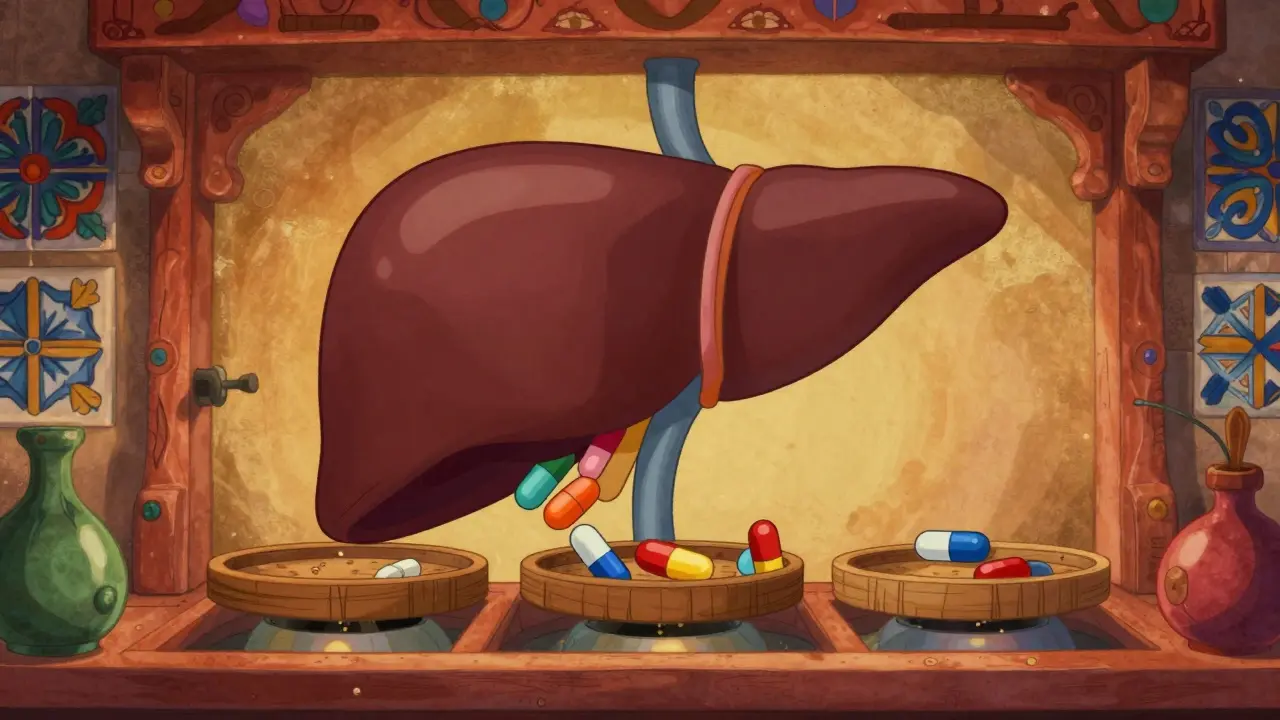
Ritonavir acts as a "brake" on your liver's filtration system (CYP3A4 enzyme). Observe how this affects drug processing:
2. Drug Interaction Checklist
3. Safety Protocol Checklist
Mark off your safety steps to ensure safe treatment:
- I have given my full medication list (OTC + Rx) to all providers.
- I monitor my liver enzymes regularly.
- I inform surgeons/anesthesiologists before procedures.
- I avoid grapefruit products (CYP3A4 inhibitors).
The Double-Edged Sword of Pharmacokinetic Boosting
There is a clever trick doctors used to rely on when treating HIV back in the day. They would take a potent medicine called Lopinavir and pair it with a tiny bit of another drug known as Ritonavir. This isn't just random mixing; it's a specific strategy called pharmacokinetic boosting. The idea was simple: give you less frequent doses by stopping your liver from breaking down the first drug too quickly. But here is where things get complicated. While this combo keeps the virus suppressed effectively, it creates a massive ripple effect with other medications you might take.
Think of your liver as a busy filter station. Most medicines pass through here and get processed by enzymes so they can leave your body safely. The main worker in this factory is an enzyme called CYP3A4. When you introduce ritonavir into the system, it essentially hits the brakes on this worker. Suddenly, not only does lopinavir stay in your bloodstream longer, but any other drug that relies on that same pathway gets stuck there too. This leads to unpredictable levels of other critical medicines in your system.
| Feature | Ritonavir Boost | Cobicistat Boost |
|---|---|---|
| Primary Target | CYP3A4 | CYP3A4 |
| Induction Properties | Strong Inducer (Others) | Minimal Induction |
| Interaction Profile | Broad/Complex | Narrower/Safer |
| Clinical Availability | Widely available globally | Limited regions |
How the Boost Actually Works
You might wonder why we don't just take more lopinavir instead of using a booster. The answer lies in how your body handles chemicals. Without help, lopinavir undergoes extensive oxidative metabolism almost exclusively via hepatic CYP3A4 isozymes. If you skip the booster, your liver clears it out in about seven hours. That means you have to take pills multiple times a day just to keep viral load in check. Ritonavir changes that timeline entirely.
When administered at a subtherapeutic dose, usually 100 milligrams alongside 400 milligrams of lopinavir, it acts as a mechanism-based inactivator. Imagine a sponge absorbing water until it cannot hold any more; ritonavir saturates the enzyme until it stops working efficiently. This drops lopinavir's metabolic clearance by nearly 85 percent. The result is a stable concentration of the antiviral drug that stays high enough to stop the virus without needing constant dosing schedules. However, this 'stopping' action affects anything else using that same path.
The Interaction Danger Zone
This is where the 'widespread CYP3A4 interactions' part comes in. Because ritonavir is such a powerful inhibitor, the list of drugs that clash with it is long and often surprising. We aren't just talking about minor hiccups here; we are looking at dangerous spikes or drops in drug effectiveness. The Liverpool HIV Interactions database tracks over 1,200 potential conflicts with this combination alone.
Consider blood thinners like warfarin. Ritonavir doesn't inhibit the enzyme responsible for clearing warfarin; instead, it induces CYP2C9, which breaks warfarin down faster. Your INR levels could drop dangerously low, putting you at risk of clots. Conversely, think about painkillers used during surgery. Fentanyl exposure can increase by 300 percent when combined with ritonavir. For a patient having an operation, that could mean respiratory depression requiring intensive care monitoring. These aren't theoretical risks; they are documented outcomes seen in anesthesia departments regularly.

Safety Concerns and Hepatic Load
Another major issue is liver health. Since your liver is doing extra work processing these concentrated levels of medication, hepatotoxicity becomes a real concern. Clinical reports from the early 2000s noted serious multiorgan hypersensitivity cases when these drugs were taken without proper monitoring. If you have pre-existing liver conditions, like cirrhosis or hepatitis, the dosage needs careful adjustment based on Child-Pugh classifications. In severe cases, doctors might skip this regimen entirely because the metabolic burden is simply too high.
Changing Landscapes in HIV Care
By 2026, the landscape has shifted significantly. While Lopinavir/Ritonavir remains vital in many parts of the world due to its low cost (around $68 per person annually compared to hundreds for newer agents), high-income nations have moved on. Doctors prefer integrase inhibitors or newer protease inhibitors boosted with cobicistat. Why? Because cobicistat targets fewer enzymes. It boosts the drug levels you want without messing up the clearance of unrelated medications like statins or antibiotics.
We saw this preference shift after the RECOVERY study in 2020. When researchers tested lopinavir/ritonavir against standard care for severe infections, it didn't show better survival rates. Yet, the legacy remains. Millions of people still rely on this combination because it is affordable and manufactured reliably even in resource-limited settings. It ensures global equity, even if it carries higher interaction risks.

Navigating the Risks as a Patient
If you are currently prescribed this combination, understanding the rules of engagement is your best defense. You should never add a new prescription without telling your doctor you are taking a boosted protease inhibitor. Common supplements can trigger reactions too. St John's Wort, for instance, induces the very enzyme ritonavir is trying to suppress, rendering your HIV medication useless. Always carry a full list of your meds, including over-the-counter pain relievers or sleep aids.
Monitoring is non-negotiable. Regular blood tests check for liver enzymes and viral load. If you feel unusually tired or bruised easily, those are red flags worth reporting immediately. In emergency situations, hospital staff need to know about the ritonavir boost to avoid administering contraindicated anesthetics or sedatives that could lead to overdose.
Frequently Asked Questions
Can I take statins while on Lopinavir/Ritonavir?
You generally need to avoid high-intensity statins that rely on CYP3A4 clearance. Some types like pravastatin might be safe, but others can spike to toxic levels causing muscle damage. Always ask for a lipid profile review before starting cholesterol meds.
Does alcohol affect how this medication works?
Alcohol adds stress to the liver, potentially worsening toxicity risks. While small amounts may not change drug levels drastically, heavy drinking combined with the already high load of boosted therapy increases the chance of liver injury significantly.
Is this medication effective against viruses other than HIV?
Yes, the same boosting principle is used in COVID treatments like Paxlovid. Ritonavir helps keep nirmatrelvir in the system longer. However, efficacy depends heavily on timing and viral type.
What happens if I miss a dose?
Skipping doses reduces the blocking effect on CYP3A4, causing lopinavir levels to drop below the therapeutic window. This can lead to resistance developing rapidly. Try to maintain strict timing, ideally twice daily every 12 hours.
Are there safer alternatives available today?
Integrase inhibitors like dolutegravir do not require boosting and have fewer drug interactions. They are now the preferred first-line treatment in most guidelines, though availability depends on local funding and stock.
Ultimately, the decision to stay on this regimen or switch involves weighing the proven stability of older drugs against the convenience of newer ones. Safety always comes first, and that means being hyper-aware of what enters your system alongside your HIV therapy.
Comments (14)
Molly O'Donnell
The liver really takes a beating with this stuff.
Russel Sarong
This situation is absolutely shocking!!! The way our bodies process these chemicals is dangerously unpredictable!! Nobody talks enough about the real dangers here!! We need to stop ignoring the side effects immediately!!!!
Cullen Zelenka
I understand the worry but honestly there are benefits too. It keeps the virus suppressed which is huge for quality of life. People get scared easily when they hear about enzymes.
Callie Bartley
Everyone just follows orders without asking if it is actually worth the risk. They should really question the necessity of older drugs.
Arun Kumar
Access matters greatly in different parts of the world. What works here might not work there due to supply chains. We must respect those choices globally.
James DeZego
The mechanism based inhibition is fascinating scientifically. 🧬 It blocks the pathway so thoroughly that clearance drops massively. 👉👈 Just amazing how pharmacology does this.
Jenny Gardner
That is precisely why we track interactions.!!!! You cannot ignore the enzyme kinetics.!! Every drug has a profile that requires careful monitoring.!! It is imperative for safety.
Julian Soro
Let us focus on managing the risks together. Your health team is there to help you navigate this safely. Stay positive and informed.
Cara Duncan
So glad this info is shared openly 🙂 Knowledge saves lives. Please share your experience if you take these meds 💪❤️
Christopher Beeson
Feel good culture hides the toxic reality of these interactions. You simply cannot trust everything written in clinical guidelines blindly. The systemic failure is palpable here.
Rod Farren
We are observing subtherapeutic dosing creating mechanism based inactivation of hepatic isozymes. This significantly reduces metabolic clearance rates. Bioavailability changes lead to elevated plasma concentrations of concomitant agents.
Eleanor Black
It is truly remarkable how much the medical field relies on these mechanisms.
We see the impact on global health access in developing nations.
The cost barrier remains a significant factor for patient survival rates.
Safety profiles dictate why some newer options are preferred locally.
However, the legacy drugs still serve a critical population base effectively.
Interaction risks require vigilance from both doctors and patients alike.
Monitoring protocols are essential to prevent severe adverse events from occurring.
The liver metabolism pathways are incredibly sensitive to external compounds.
Any addition to the medication regimen could destabilize the therapeutic window quickly.
Communication between specialists is vital for managing complex comorbidities.
Patients often feel overwhelmed by the sheer volume of safety warnings involved.
Education empowers individuals to advocate for their own safety standards.
Research continues to find better alternatives with fewer side effects observed.
Ultimately, the goal remains viral suppression without compromising overall health.
We must balance affordability against the potential for serious physiological harm.
Sharon Munger
Just watch out for supplements too. Keep list updated.
Owen Barnes
The doctor shud explain thia better to us. Its confusing wihen u dont kno the techinal terms. Better to listen close tho.