
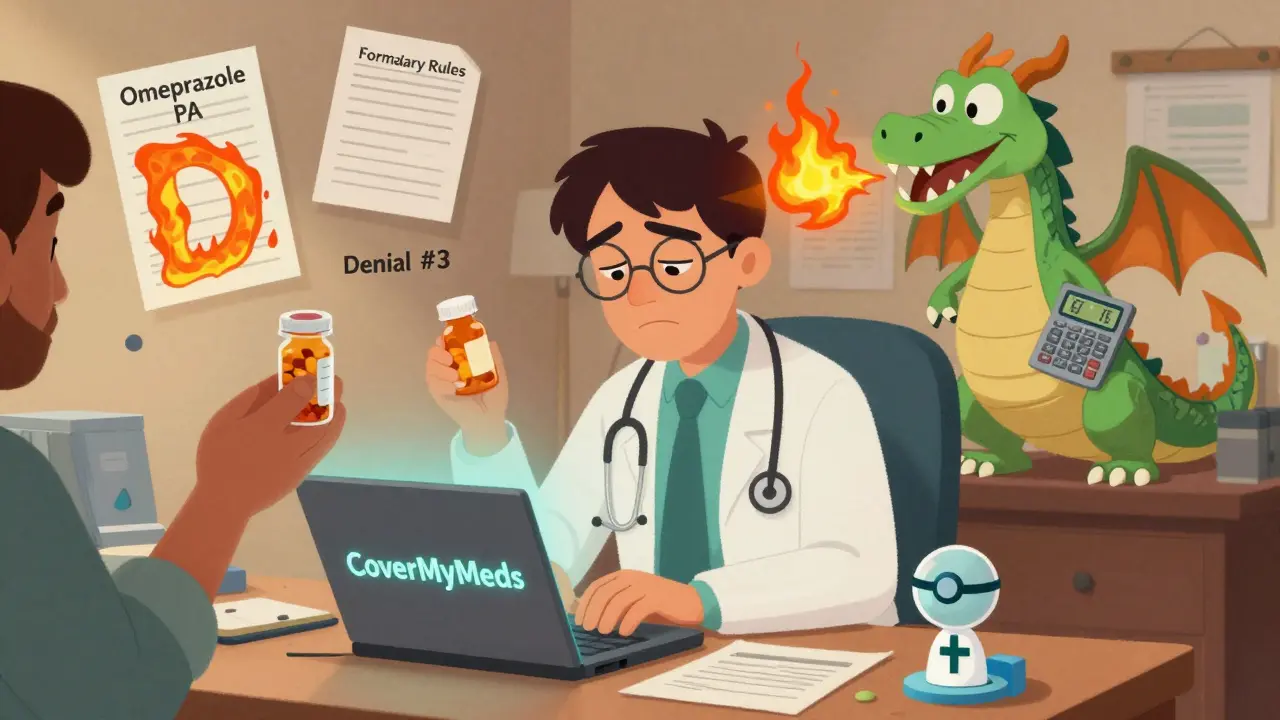
Getting a generic medication approved isn’t as simple as writing a prescription anymore. For providers, it’s become a daily hurdle-part paperwork, part negotiation, and part detective work. You’ve got a patient who needs omeprazole because their acid reflux isn’t responding to lifestyle changes. The generic is cheaper, effective, and widely available. But the insurance won’t cover it unless you jump through hoops. Why? And how do you actually get it done?
Why Generics Need Prior Authorization at All
You’d think generics, being cheaper and just as safe as brand-name drugs, would get automatic approval. But that’s not how it works. Insurance companies and pharmacy benefit managers (PBMs) use prior authorization to control how medications are used, even when cheaper options exist. For generics, it’s rarely about safety-it’s about cost management and formulary rules.Most of the time, prior authorization for generics kicks in when:
- There are multiple generic versions, and the plan only wants to pay for one
- The patient is asking for more than the allowed quantity (like a 90-day supply when the plan only covers 30)
- The drug is being used longer than the standard duration (like proton pump inhibitors beyond 8 weeks)
- The generic is being prescribed for an off-label use
According to the Academy of Managed Care Pharmacy, 28% of all prior authorization requests involve generic drugs. That’s not because they’re risky-it’s because insurers are trying to steer patients toward the cheapest option in their formulary, even if the patient’s doctor has a better reason to choose another.
The Step-by-Step Process: What Providers Actually Do
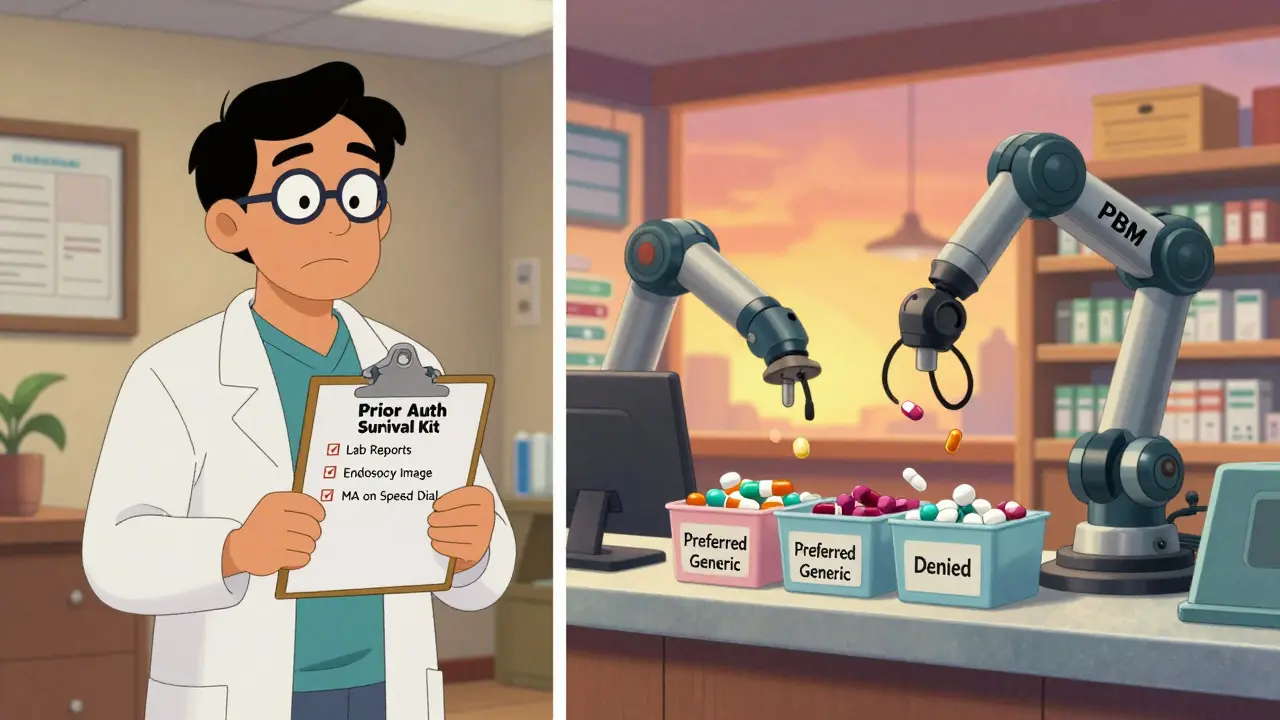
There’s no single way to get approval-it changes depending on the insurer. But here’s what most providers follow:- Check the formulary. Every plan has a list of preferred generics. If the one you prescribed isn’t on it, you’ll need to justify why.
- Gather documentation. You can’t just say, “My patient needs this.” You need proof: clinic notes, lab results, previous failed attempts with other generics, or even endoscopy reports if it’s for Barrett’s esophagus.
- Submit electronically. Over 78% of commercial insurers now require electronic submission through platforms like CoverMyMeds or Surescripts. Fax is fading fast. Phone requests? Those are rare now.
- Wait-and follow up. If the request is complete, 41% of generic prior authorizations get auto-approved. But if something’s missing, you’ll get a denial letter. That’s when you start calling, emailing, or resubmitting with more details.
Medicaid has strict timelines: urgent requests must be decided in 24 hours. Standard ones? 14 days. Commercial insurers? Usually 5 to 10 business days. But if they ask for more info? That clock resets.
What Makes Approval Faster-or Slower
Generics generally get approved faster than brand-name drugs. Why? Because they’re cheaper and more common. But speed depends on two things: documentation and payer rules.Providers who use standardized templates for common scenarios-like documenting a patient’s reaction to a specific generic-see approval times drop by 32%. Why? Because the payer’s system recognizes the pattern. No guesswork. No back-and-forth.
On the flip side, denials happen most often because:
- 42% of requests lack required documentation
- 38% don’t clearly show medical necessity
- 20% fail to prove the patient tried the preferred generic first
One doctor on Sermo shared a frustrating case: a patient had GI issues with metformin and needed sitagliptin. The insurer denied it because they required proof of three failed diabetes drugs-even though ADA guidelines say metformin intolerance is enough. That’s not clinical judgment. That’s bureaucracy.
How Different Payers Compare
Not all insurance is the same. Here’s how prior authorization requirements stack up:| Insurance Type | Requires PA for Generics? | Average Approval Time | Common Reason for Denial |
|---|---|---|---|
| Medicaid | 67% | 2-14 days | Missing clinical notes |
| Medicare Part D | 89% | 3-7 days | Not trying preferred generic |
| Commercial Plans | 93% | 5-10 days | Lack of documentation |
Medicare Part D and commercial insurers are the toughest. They often require step therapy: try the cheapest generic first, even if the patient already had a bad reaction to it. Medicaid is more flexible, but still requires paperwork. And if you’re in a state with a Preferred Drug List? You’re playing by their rules.
What’s Changing in 2026
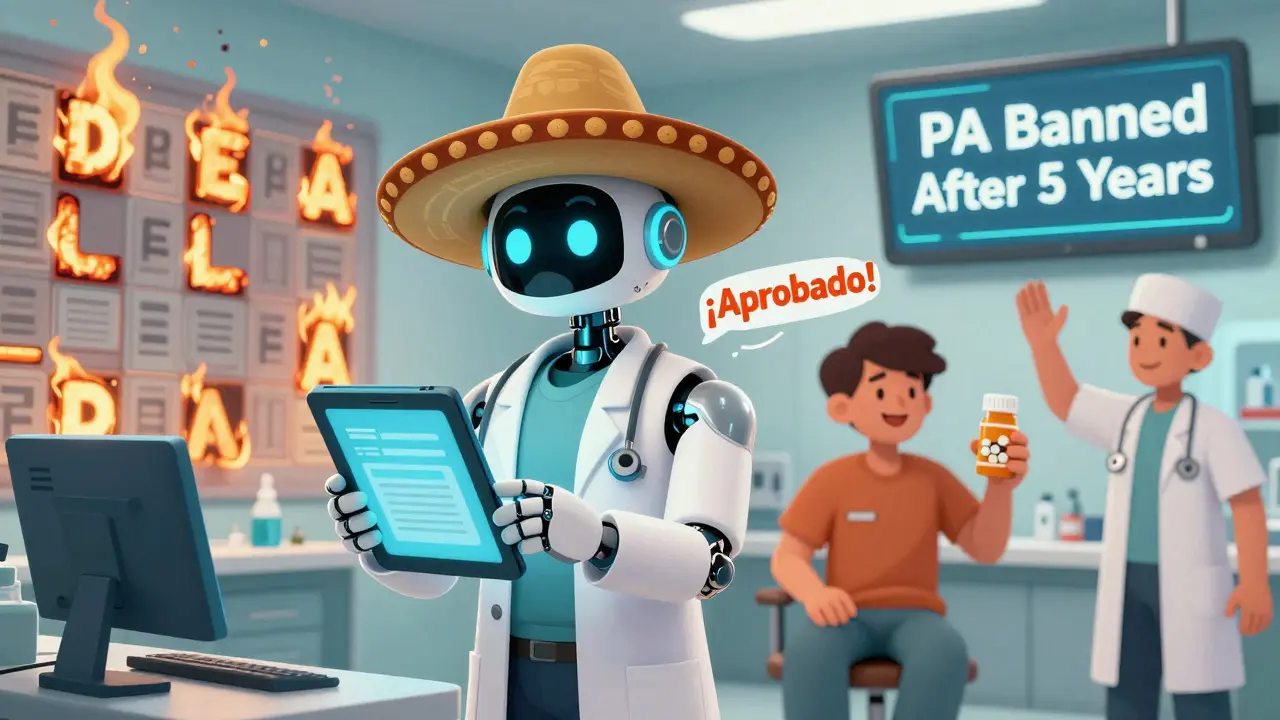
The system isn’t frozen. It’s evolving. Here’s what’s new:- AI approvals are coming. By 2026, McKinsey predicts 75% of generic prior authorizations will be handled by AI systems that auto-review claims. That could cut approval time to under 24 hours.
- Electronic systems are now mandatory. Since July 2024, Medicaid managed care plans must use standardized electronic transactions. No more faxing.
- Auto-approve pathways are expanding. Express Scripts and other PBMs have increased auto-approvals for generics by 40% in the last year-especially when quantity limits aren’t exceeded.
- Legislation is brewing. The AMA is pushing state laws to ban prior authorization for generics that have been on the market for over five years and have multiple manufacturers. If passed, this would cut thousands of unnecessary requests.
But here’s the catch: the Congressional Budget Office warns that without reform, provider administrative costs could jump by $1.2 billion by 2026. That’s not just time lost-it’s money lost.
What Works for Providers
If you’re a provider drowning in prior authorization requests, here’s what actually helps:- Create templates. Have pre-written notes for common scenarios: “Patient had anaphylaxis to Brand X generic,” “Endoscopy confirmed Barrett’s esophagus,” etc.
- Train a medical assistant. 78% of routine prior auth requests are handled by MA’s under supervision. Let them manage the system while you focus on patients.
- Use electronic portals. CoverMyMeds and Surescripts reduce errors and speed up responses. Don’t rely on fax.
- Build relationships. Call the payer’s provider services line. Get the name of the rep who handles your clinic. A human connection cuts through the noise.
- Track denials. If a certain insurer denies the same drug three times for the same reason, escalate it. Write a letter. Ask for a peer review.
One clinic in Ohio reduced approval times by 40% just by assigning one staff member to manage prior auths full-time. They didn’t hire a new person-they moved an existing MA to the role. That’s the kind of low-cost fix that makes a real difference.
The Real Cost: Time, Stress, and Patient Care
It’s easy to think of prior authorization as just an administrative task. But it’s not. Physicians spend 16.1 hours a week on it. That’s more than a full workday every month. And 78% say that time could be spent with patients.Patients suffer too. 83% of pharmacists report patients who can’t afford to pay out-of-pocket for a generic while waiting for approval. Some skip doses. Some stop taking it altogether. That’s not cost-saving-that’s risk.
And then there’s the emotional toll. Doctors feel powerless. They know what’s right for the patient. But the system forces them to justify it over and over.
Dr. Lorece Shaw from Capital Rx says it best: “PA criteria are objective and based on national guidelines.” But the problem isn’t the guidelines-it’s the inconsistency. One insurer says “try two generics first.” Another says “try one.” One accepts a lab report. Another demands a signed form. That’s not clinical care. That’s chaos.
What’s Next?
The good news? Change is coming. AI, automation, and legislation are slowly making the system smarter. The bad news? It’s still broken today.If you’re a provider, focus on what you can control: documentation, electronic submission, and building internal systems. Don’t wait for policy to fix this. Build your own workaround.
And if you’re a patient? Ask your provider: “Is this generic going to need prior authorization? Can we start the process today?” Sometimes, just knowing ahead of time makes all the difference.
Comments (11)
Cory L
Man, I swear prior auth is the modern-day version of medieval serfdom. You work your ass off, know exactly what the patient needs, and then some bean counter in a cubicle in Nebraska says 'no' because your patient didn't try three generics first. I've had patients cry in my office because they couldn't afford the out-of-pocket cost while waiting for approval. This isn't healthcare-it's a bureaucratic obstacle course with a stethoscope.
And don't even get me started on the fax machines. I'm not 70. I don't have a fax machine. But somehow, my clinic still has one. And it's always jammed. I'd rather wrestle a raccoon than deal with CoverMyMeds again.
Bhaskar Anand
India has no such nonsense. If doctor says medicine, patient gets medicine. No forms. No waiting. No bureaucracy. In USA, you need permission to breathe oxygen. This is why America is collapsing under its own weight. You have 100000 forms for 100000 reasons. No common sense. No logic. Only money. And greed. And profit. And nothing else. This is not medicine. This is corporate slavery.
William James
It's wild to think that we're still in a system where a doctor's clinical judgment is secondary to an algorithm written by someone who's never met a patient.
I get that cost control matters-but not at the cost of human dignity. I've seen patients skip doses, delay care, or just give up because the system made it too hard. And honestly? It breaks my heart.
One of my MA's now handles all prior auths. She's got a spreadsheet that's basically a mini-war room. We've cut our denial rate by half. Not because we're magic-we just stopped treating it like an afterthought.
There's hope. It's slow. It's messy. But change is possible. We just have to stop pretending this is about health-and start admitting it's about profit.
David McKie
This is the exact reason I stopped trusting the American medical-industrial complex. It's not broken-it's *designed* this way. Every delay, every denial, every faxed form is a deliberate tactic to funnel money into the pockets of PBMs and insurers.
They don't care if you die waiting for omeprazole. They care if you pay $120 out-of-pocket instead of $5. That's the math. That's the business model.
And now they're pushing AI? Great. Let a machine with zero empathy decide if a 72-year-old with Barrett's esophagus gets the drug that works. Brilliant. Just brilliant.
This isn't healthcare. It's a Ponzi scheme with a white coat.
Southern Indiana Paleontology Institute
Why do we even have generics if we still make doctors jump through hoops? It's dumb. Plain dumb. You got a pill that works, costs less, and isn't some fancy brand with a TV ad? Just give it to 'em.
I'm from Indiana. We don't need 17 forms to give someone a pill. My cousin had acid reflux. Got the generic. Done. No drama. No waiting. No fax. Just medicine.
Someone needs to burn down the PBMs. Like, with fire. I'm not joking.
Anil bhardwaj
I work in a clinic in Delhi. We have no prior auth. If a patient needs medicine, we give it. No forms. No waiting. No corporate overlords. Sometimes we run out of stock. Sometimes we have to substitute. But we don't ask for permission. We just do what's right.
Maybe the US system is too big to fix. Maybe it's too entangled with money. But I can't help thinking-why does it have to be this hard? It shouldn't be.
lela izzani
One thing I've learned: the more standardized your documentation, the less time you spend fighting. I created a template for every common scenario-failed trial, lab confirmation, allergy history. Now my MA just fills in the blanks. It’s like filling out a form instead of writing an essay.
And honestly? The biggest win isn’t speed-it’s peace of mind. I used to lose sleep over denials. Now I just hand it off. I still check in, but I’m not drowning anymore.
Also-call the rep. Get their name. Send them a thank-you email after approval. Small things build relationships. And relationships? They cut through red tape.
Joanna Reyes
It’s not just the time spent-it’s the cognitive load. Every time you have to justify a generic, you’re not just doing paperwork-you’re re-advocating for a patient you already treated. You’re re-convincing someone who doesn’t understand physiology, pharmacology, or human suffering. You’re reliving the same conversation over and over, just with different names on the chart.
And then there’s the guilt. You know the patient is suffering because they can’t afford the drug while waiting. You know they’re skipping doses. You know they’re scared. And you’re powerless. That’s not burnout. That’s moral injury.
When AI takes over, I hope it remembers that behind every prescription is a person who didn’t ask for this. That’s the part no algorithm can measure. And it’s the part we can’t afford to lose.
Nerina Devi
I’ve been a pharmacist for 22 years. I’ve seen patients cry because they couldn’t afford the cash price for a $5 generic while waiting for approval. I’ve seen them walk out without filling the script. I’ve seen them come back two weeks later with worse symptoms.
And you know what? The system doesn’t care. It doesn’t track outcomes. It doesn’t track suffering. It tracks cost per claim.
But I care. And I still call the payer every time. I still argue. I still send the extra lab report. Because someone has to. And if not me, who?
Dinesh Dawn
My brother is a doctor in Texas. He told me he spends more time on paperwork than on actual patients. I asked him if he ever just gives the drug anyway. He laughed and said, 'I have. Twice. Both times, the patient got better. Neither one got caught.'
That’s the real story. Not the policy. Not the AI. Not the forms. It’s the quiet rebellion. The doctors who break the rules to do the right thing. We should celebrate them, not punish them.
Vanessa Drummond
I’m a nurse practitioner. I’ve been doing this for 15 years. And I’m done. Done with the fax machines. Done with the denial letters. Done with the patients who cry because they can’t afford their meds.
I’m leaving clinical practice. Not because I’m quitting medicine. But because I can’t keep watching people suffer because some algorithm decided a 75-year-old woman shouldn’t get the one generic that didn’t make her nauseous.
I’m going to work on policy. Because if we don’t fix this, we’re not just wasting time-we’re killing people. Slowly. Quietly. And it’s all legal.