

Why Your Bedtime Routine Might Be Failing You
You toss and turn. The clock ticks past midnight, yet your brain refuses to shut down. It feels like you've tried everything-counting sheep, drinking chamomile tea, even trying those expensive weighted blankets. But the morning alarm still sounds like a torture device because you barely got six hours of restless rest. This cycle isn't just frustrating; it drains your day before it starts. While many blame stress or work, the real culprit is often a lack of Sleep Hygiene a comprehensive set of evidence-based behavioral and environmental practices designed to optimize sleep quality and duration.
Sleep hygiene isn't about having perfect cleanliness standards. It's not merely about a fresh pillowcase every night. It refers to a structured collection of habits that signal to your body that it is safe to power down. Research shows that sticking to these behaviors can reduce insomnia severity by 30-40%. If you're skipping the most critical parts of this process, you might be sabotaging your own recovery efforts. Let's look at what actually works based on clinical data.
The Science Behind the Habits
To understand why these changes matter, we need to look at how your internal clock functions. Humans operate on a biological rhythm known as the Circadian Rhythm. Think of it as a built-in metronome inside your brain that keeps time even when there is no external light. When this rhythm is disrupted, your body doesn't produce melatonin at the right times, leaving you awake when you should be asleep.
Cognitive Behavioral Therapy for Insomnia (CBT-I) a psychological treatment designed to help individuals develop healthy sleep habits and thought patterns. In fact, studies indicate that sleep hygiene components make up 45-60% of the effectiveness of full CBT-I programs. While therapy helps rewire negative thoughts, hygiene is the foundation. Without a stable base of good habits, even advanced techniques struggle to take root.
One study by Pegado, Alvarez, and Roberto confirmed in 2023 that behavior-change theory-integrated interventions show statistical significance among young adults. However, not all tips found online are backed by science. Dr. Daniel J. Buysse noted in 2020 that 40% of commonly prescribed behaviors showed no significant association with outcomes in controlled studies. This distinction matters because relying on myths wastes your energy.
Consistency Over Perfection
If you could pick one factor to change, it should be your timing. Consistency anchors your circadian rhythm. Going to bed and waking up within a 30-minute window daily trains your brain to expect sleep at a specific hour.
The National Sleep Foundation recommends aiming for 7-9 hours of sleep for most adults. To hit this target, you need to fix your wake time first. Many people try to force themselves to sleep earlier on Sunday to "catch up," which creates social jetlag. Instead, stick to a fixed wake-up time, even on weekends. Data from the r/sleep community shows users who stuck to a 6:30 AM wake time reduced their time to fall asleep from 90 minutes to 25 minutes in just three weeks.
- Set a hard wake-up time. Do not snooze. Alarm goes off, you get up.
- Avoid napping longer than 20 minutes. Daytime sleep steals sleep pressure needed for nighttime.
- Wake up at the same time year-round. Even during daylight saving shifts, adjust gradually.
Optimizing Your Sleep Sanctuary
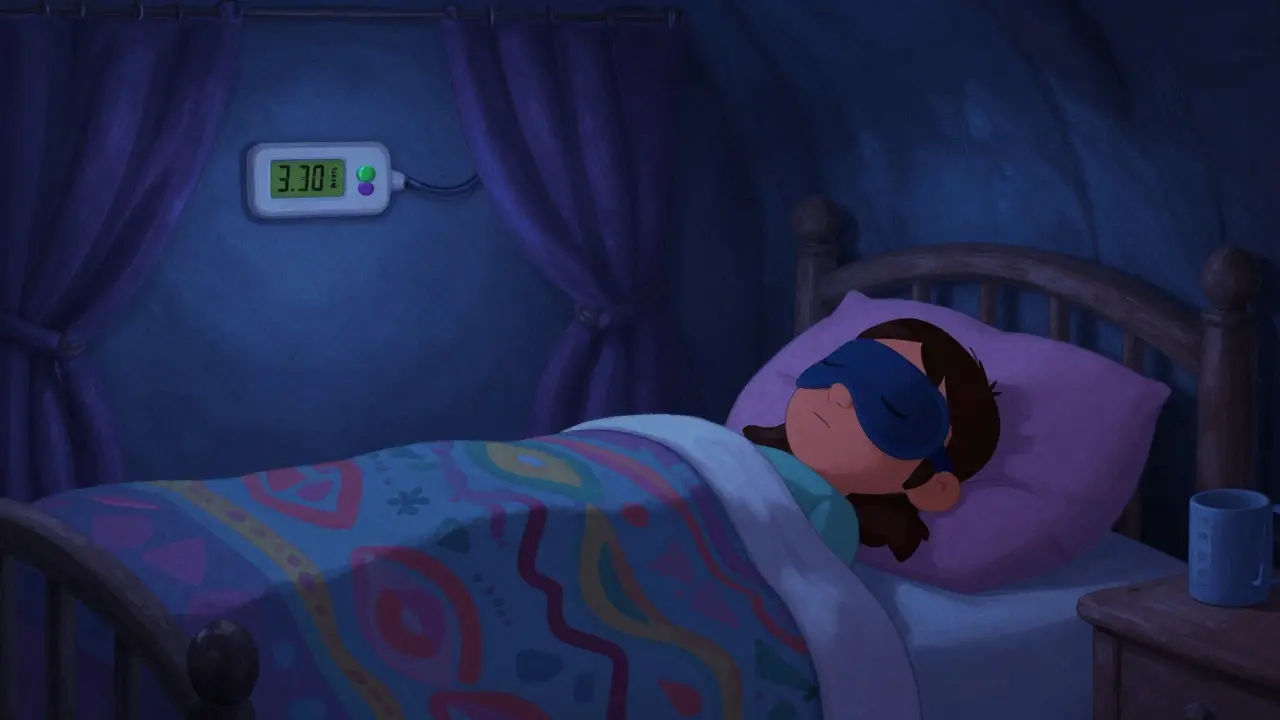
Your bedroom needs to function as a cave. In prehistoric times, our ancestors slept in dark, cool environments to stay safe. Modern bedrooms are often too bright and too warm, confusing our primitive brains. Temperature control is a massive factor often overlooked.
Research specifies maintaining a bedroom temperature between 60-67°F (15.6-19.4°C). If it's too hot, your core body temperature stays high, preventing the physiological drop needed to initiate deep sleep stages. Light exposure also plays a role. During sleep, your environment should be below 5 lux. That means blacking out windows completely or using a thick eye mask.
Some older advice suggests total silence, but modern research emphasizes stability. White noise machines can be effective by masking sudden sounds that would otherwise trigger a startle reflex. However, don't obsess over minor noises if they don't wake you fully. The goal is uninterrupted sleep blocks, not absolute zero decibels.
| Metric | Ideal Range | Impact |
|---|---|---|
| Temperature | 60-67°F (15.6-19.4°C) | Lowers core body temp to aid onset |
| Light Level | <5 Lux (during sleep) | Promotes melatonin production |
| Noise | <30 dB (ideal) | Prevents micro-arousals |
Diet and Stimulant Timing
What you consume matters more than when you eat dinner, specifically regarding stimulants. Caffeine has a half-life of roughly 5 to 6 hours. If you drink a coffee at 4 PM, you still have half that caffeine active in your system by 10 PM. For many sensitive individuals, the recommendation is to stop consuming caffeine 8 hours before bedtime. For a standard 11 PM sleeper, that means cutting off coffee by 3 PM.
Alcohol complicates this further. It may help you fall asleep faster due to its sedative effect, but it ruins sleep quality by fragmenting REM cycles later in the night. A 2022 meta-analysis highlighted that alcohol consumption significantly reduces rapid-eye movement sleep, which is crucial for memory consolidation and emotional regulation.
Hydration is tricky. Drinking fluids too close to bedtime causes nocturia (waking up to urinate). Limit fluid intake 2 hours before sleep. Also, heavy meals within 3 hours of bedtime keep your digestive system working overtime, elevating your core temperature slightly and keeping you alert.
The Mental Blockdown
Physical preparation gets you ready, but mental preparation keeps you there. Perseverative cognition is a fancy term for "overthinking." Many people lie in bed, mentally replaying arguments or planning tomorrow's emails. This spikes cortisol and adrenaline.
Dr. Rachel Salas, Associate Professor of Neurology, states that sleep hygiene is necessary but insufficient for treating insomnia without addressing these mental loops. The solution isn't to force your brain to stop thinking; it's to give the worries a designated parking spot.
- Worry Journaling: 20 minutes before bed, write down everything on your mind. Tell your brain, "I've written this, I'll deal with it tomorrow."
- The 4-7-8 Technique: Breathe in for 4 seconds, hold for 7, exhale for 8. This physiologically forces relaxation.
- Paradoxical Intention: If you are anxious about falling asleep, try staying awake. Paradoxically, this removes the performance anxiety that keeps you up.

The Blue Light Debate
You've heard the drill: screens are bad. The 2024 Sleep Foundation revision acknowledges something nuanced, however. Blue light filtering glasses reduce sleep onset latency by only 4-7 minutes for most adults. While screens aren't the ultimate enemy, consistent scheduling is far more impactful. Still, avoiding high-lumen screens for 60 minutes prior to bed is advisable, particularly as bright phone screens suppress melatonin more aggressively than softer tablet screens.
This isn't about never touching your phone again. It's about reducing visual stimulation intensity. Reading a physical book or listening to a low-stakes podcast is better than doomscrolling through news feeds, which triggers dopamine responses incompatible with sleep.
Common Mistakes That Derail Progress
Even with good intentions, many fail to see results. Why? Because they try to implement everything at once. The PMC study (PMC11452418) assessed 35 behaviors, finding that 17 of them showed no significant association with sleep quality. Adding useless rules creates unnecessary pressure.
Another issue is the paradoxical effect reported by 29% of users in the Sleep Hygiene Index validation study. Focusing too intensely on getting perfect sleep can induce anxiety about not sleeping perfectly. This is counterproductive. Treat these steps as guidelines, not rigid laws. If you miss a night, get back to the schedule the next day rather than stressing about the disruption.
Getting Started
Establishing baseline sleep patterns takes 7-10 days. Don't expect overnight miracles. Measurable improvement typically occurs after 14-21 days of consistent practice. Start by tracking your sleep diary for a week. Note your bedtime, wake time, and subjective feelings of grogginess.
Habit stacking increases success rates. Pair new behaviors with existing routines. For example, brush your teeth immediately followed by dimming lights. This links the action cues together. Apps like Sleep Cycle or ShutEye can track progress, though manual tracking is often sufficient.
Is sleep hygiene enough to cure insomnia?
For mild disturbances, yes. However, the American Academy of Sleep Medicine gives sleep hygiene alone a 'weak recommendation' for chronic insomnia (PSQI > 8). Clinical insomnia often requires Cognitive Behavioral Therapy (CBT-I) alongside hygiene practices to address underlying cognitive distortions.
Does exercise before bed ruin sleep?
Not necessarily. While traditional advice says avoid exercise within 3 hours of bed, a 2023 University of Tsukuba study found that exercise improved sleep quality for 68% of participants even when done later in the day. It depends on the intensity; light stretching is generally fine, whereas high-intensity interval training (HIIT) might spike body temperature too much.
How long does it take to see improvements?
Most users notice tangible changes after 2-4 weeks. Initial adjustments might feel awkward, especially with fixed wake times, but consistency builds the habit strength required for sustainable results.
Can I nap during the day?
Limit daytime napping. The strongest predictors of sleep quality include limited daytime napping. If you must nap, keep it under 20 minutes and before 3 PM to preserve sleep pressure for the night.
Should I stay in bed if I can't sleep?
If you aren't falling asleep within 20 minutes, it is often beneficial to leave the bedroom. Go to another room with dim light and read until you feel sleepy. Staying in bed while frustrated conditions your brain to associate the bed with wakefulness.
Does the type of mattress matter?
Yes, comfort impacts sleep latency. While the specific type (memory foam vs. innerspring) varies by preference, ensuring your mattress supports your spine alignment reduces tossing and turning caused by discomfort.
Are blackout curtains necessary?
They are highly recommended. Light exposure below 5 lux is the target. Even small gaps in curtains from streetlights can disrupt your melatonin cycle during sensitive sleep phases.
Can diet affect my sleep depth?
Absolutely. Heavy carbs close to bedtime can lead to blood sugar fluctuations that wake you up. Alcohol decreases REM sleep quality. Aim for lighter dinners at least 3 hours before bed.
Sleep hygiene works, but it demands patience. You are essentially retraining a biological clock that has been out of sync for years. Small, consistent wins compound over time. By focusing on the proven elements like schedule stability, light exposure, and cognitive management, you create a framework for better health. Stick with the plan through the initial two-week adjustment phase, and you will likely find that sleep comes easier, deeper, and more consistently.
Comments (15)
Cameron Redic
Most advice like this ignores individual differences in circadian rhythm completely.
Victor Ortiz
The data presented here is cherry picked from older studies that lacked proper control groups regarding light exposure specifically.
Amber Armstrong
I hear you on the struggle with falling asleep because it feels like your brain just won't switch off even when your body is exhausted.
It really sucks to lie there staring at the ceiling while the clock moves forward tick by tick.
We all want that restful state where we can just drift away naturally without any effort required at all.
Trying to force sleep often leads to more anxiety about not sleeping which makes it harder to fall asleep.
You mentioned the consistency part which I think is the hardest part to maintain when weekends come around.
I remember trying to catch up on Sunday nights and waking up Monday morning feeling worse than if I had stayed awake.
It took me forever to figure out that keeping a set wake time was actually better than trying to adjust bed time.
The darkness factor is also crucial especially with city lights leaking through the curtains all night long.
Blocking out those small bits of light really helps signal the body to produce melatonin properly without interference.
I wish people understood how much temperature affects the ability to get into deep sleep stages effectively.
A cool room feels like a cave where your ancestors would have been safe enough to shut down systems.
These behavioral changes aren't magic fixes but they are the foundation for getting real restorative rest eventually.
It feels like you are fighting against your own biology sometimes.
Small adjustments take time to show results but they compound nicely over weeks.
Patience is key in this process because our bodies adapt slowly to new routines.
Just keep pushing forward even when it feels like nothing is happening yet.
Vikash Ranjan
Studies consistently fail to replicate these findings in diverse populations outside of western clinical settings completely.
RONALD FOWLER
thanks for sharing this stuff its really helpful for the routine part
Biraju Shah
You cannot dismiss established science simply because it does not fit your worldview immediately.
William Rhodes
Imagine waking up refreshed every single day without setting multiple alarms to force yourself out of bed.
That kind of freedom comes from respecting the biological needs that evolved over millions of years of human history.
Modern life has disrupted these rhythms with artificial lighting and endless screens that never turn off.
Reclaiming the dark hours requires us to surrender our desire to control every moment of the day productively.
Letting go of the schedule obsession allows the natural urge to sleep to guide us back to health.
It is liberating to find a routine that supports rest rather than forcing rest as a task to complete.
Consistency creates a rhythm that becomes automatic and effortless once you trust the process deeply enough.
Your body knows exactly what it needs if you simply remove the barriers preventing access to sleep.
Removing distractions from the bedroom environment signals safety to the primal brain parts responsible for survival instincts.
When the mind perceives the environment as secure it releases the tension held during the active phases of the day.
This release is what allows deep physical repair and memory consolidation to happen undisturbed throughout the night.
Every hour of quality sleep pays dividends in mental clarity and emotional stability for the following twenty four hours.
Small wins accumulate into massive lifestyle improvements over a period of just a few short weeks.
Do not lose hope if the first few nights feel difficult because adjustment periods are normal biological responses.
Trust that your system wants to heal itself given the right conditions and guidance from within.
The journey to better sleep is truly a journey toward reclaiming your personal vitality and energy reserves again.
Persistence is the only ingredient truly required to see these lasting benefits manifest in your daily life.
Carolyn Kask
Sure everyone else failed until you decided to read a blog post summarizing common sense tips nobody follows anyway.
Katie Riston
The concept of sleep sanctuary speaks to the deeper human need for a place where vulnerability is allowed without judgment or threat.
We seek refuge in the darkness not just for chemical processes but for psychological safety from the demands of the world.
Our ancestors found peace in the unknown because they trusted the tribe and the shelter to hold them safe.
Modern bedrooms are often extensions of our chaotic workspaces filled with devices demanding attention constantly.
True restoration happens when we disconnect from the noise of the external world and reconnect with our internal states instead.
Rituals matter immensely in signaling the transition from doing mode to being mode within our conscious experience.
Lighting temperature and silence serve as anchors that pull us gently back toward stillness and calmness.
When we honor these ancient signals we acknowledge our connection to nature despite living in concrete cities.
It is a spiritual practice to clear the air of toxins and clutter from the sleeping space physically.
Mental clutter also requires attention before we lay our heads down on pillows made for dreaming.
Meditative thoughts can replace worry loops if we practice directing our focus inward intentionally.
By curating the environment we essentially curate the mind that resides within that space nightly.
The intersection of physiology and philosophy suggests that we live holistically through our habits.
Sleep hygiene is less about hygiene and more about honoring the cycle of life and death that repeats every day.
This understanding transforms the act of resting from a chore into a sacred duty owed to oneself.
Perhaps we should view the night not as lost time but as essential preparation for another day of existence.
Ultimately the goal is harmony between our actions and our deepest biological imperatives.
Brian Yap
Good luck with it mate, cold room definitely helps though the AC gets cranky :)
Ruth Wambui
Pharmaceutical companies profit from insomnia so this advice about natural hygiene threatens their revenue streams significantly.
Michael Kinkoph
While the aforementioned metrics regarding temperature; indeed, they represent; a pivotal; variable in the; equation of slumber.
Jonathan Alexander
My insomniac episodes leave me feeling broken beyond repair but at least this philosophy offers some hope amidst the despair.
Marwood Construction
The structural integrity of the sleep environment correlates strongly with reported productivity metrics in industrial sectors.
Adryan Brown
I appreciate the detailed breakdown of environmental factors affecting sleep latency times.