
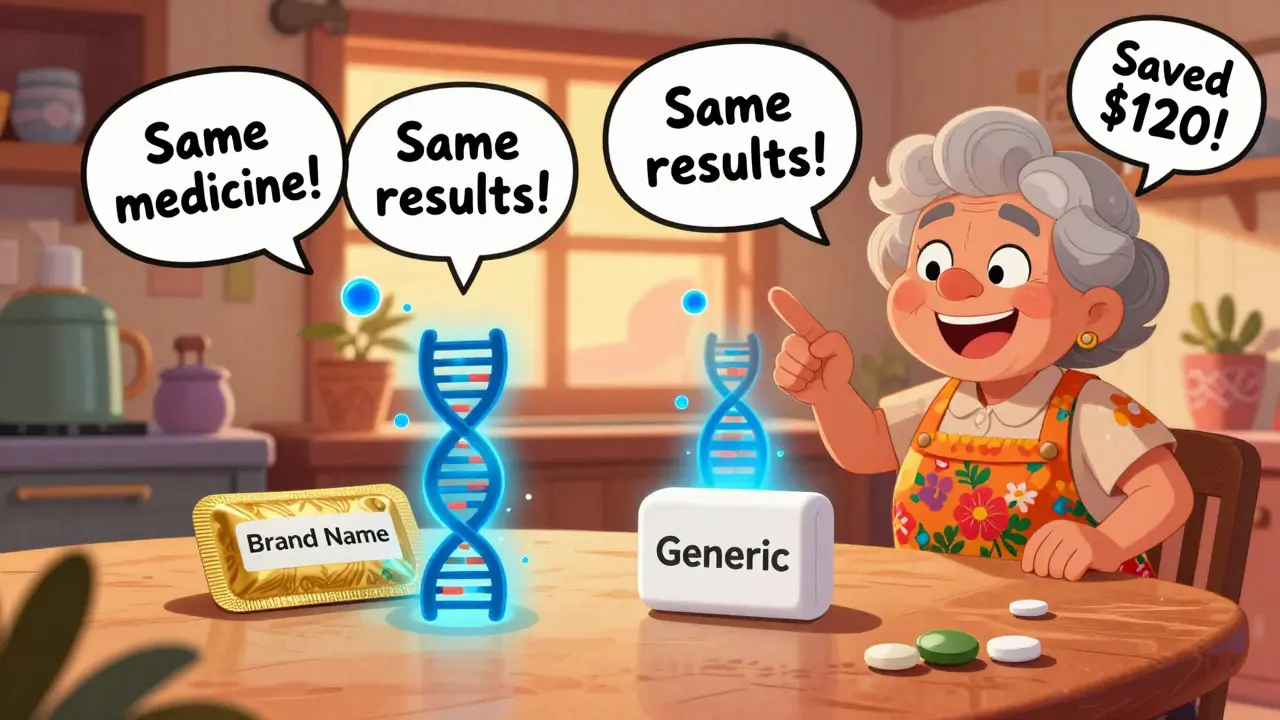
Most people don’t know how their generic medications work - not because they’re not smart, but because no one ever explained it to them in a way that stuck. Pharmacies hand out pills with tiny print on the label. Doctors say, "Take one daily." And that’s it. No visuals. No stories. No real understanding. Meanwhile, patients are scrolling Instagram, TikTok, and YouTube every day. What if those platforms could teach them how generics work - safely, clearly, and without jargon?
Why Patient Education on Social Media Matters
Generic drugs save the U.S. healthcare system over $300 billion a year. In Australia, they make up 87% of all prescriptions filled. But here’s the problem: 58% of patients still believe generics are weaker or less safe than brand names, according to a 2025 survey by the Australian Pharmaceutical Federation. That’s not because of bad science. It’s because of bad communication.
Traditional brochures? Forgotten. Clinic posters? Ignored. But a 60-second TikTok video showing a side-by-side comparison of a brand-name pill and its generic version - same active ingredient, same FDA and TGA approval, same results -? That gets shared. That gets saved. That changes minds.
Patients aren’t looking for lectures. They’re looking for proof. And social media gives them access to real people - other patients, pharmacists, nurses - who can show them that truth.
Which Platforms Actually Work for Patient Education
Not every platform is built for this. You can’t just post the same thing everywhere and call it a strategy.
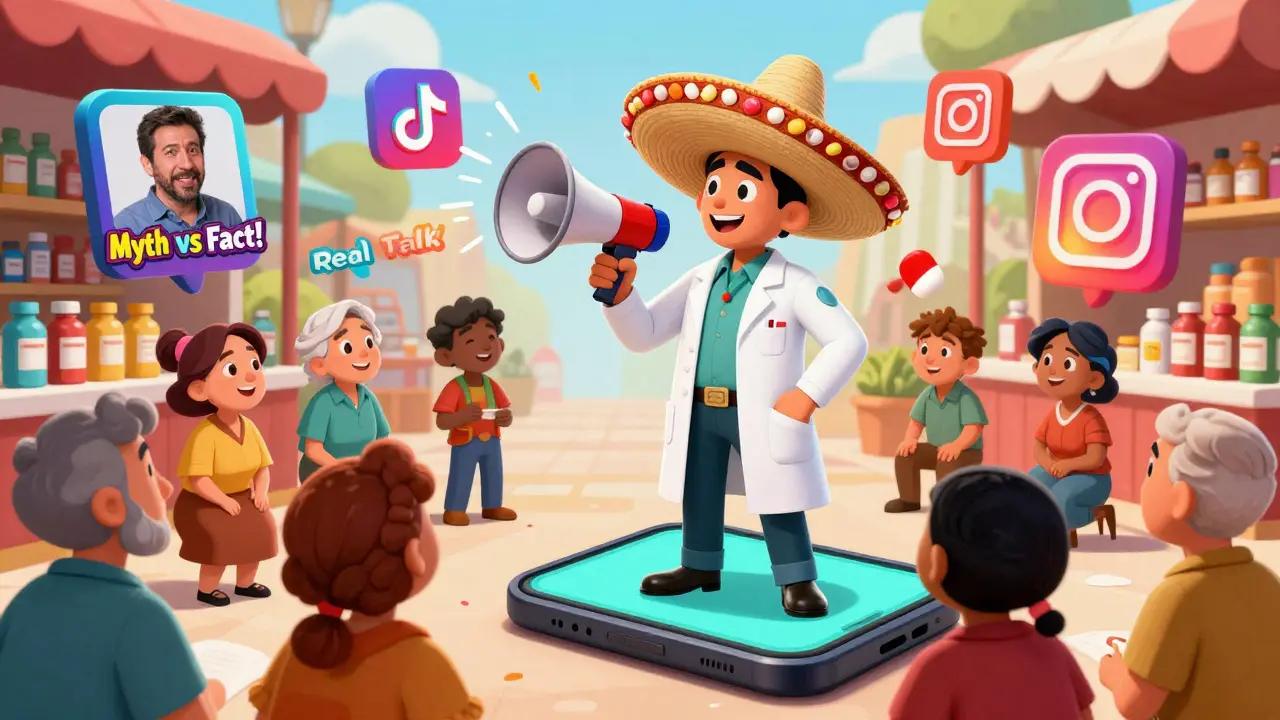
- TikTok is the most powerful tool for reaching younger adults and middle-aged patients. Short videos under 90 seconds with clear captions and text overlays drive 4.2x higher completion rates than longer formats. A 2025 study found that videos explaining "What makes a generic drug the same?" had over 2.1 million views in Australia alone.
- Instagram Reels and Stories are perfect for visual learners. Pharmacists posting carousel posts comparing pill shapes, colors, and inactive ingredients (with disclaimers) saw 37% higher engagement than static images. The new Broadcast Channels feature lets clinics send weekly updates to thousands of followers without cluttering feeds.
- YouTube still leads for in-depth content. A 5-minute video titled "Why Your Generic Blood Pressure Med Works Just as Well" gets 15.7 minutes of watch time on average - longer than most entertainment videos. Educational channels now use end screens to link to free downloadable PDFs on generic drug safety.
- Facebook Groups are where older patients and caregivers go. A group called "Generic Meds: Real Talk, No Fluff" has over 42,000 members in Australia. People ask questions like, "My doctor switched me - why does this one make me dizzy?" and get answers from pharmacists and other patients within hours.
- LinkedIn isn’t just for professionals. Hospital systems and pharmacy chains use it to publish peer-reviewed summaries and link to trusted sources. It builds credibility with doctors and nurses who then recommend these resources to patients.
One clinic in Perth started posting daily 30-second Reels showing a different generic drug each week - explaining its use, how it compares to the brand, and what side effects to watch for. In six months, their patient call volume about medication confusion dropped by 41%.
What Real Patient Education Looks Like on Social Media
It’s not fancy graphics or celebrity endorsements. It’s honest, simple, and human.
Here’s what works:
- Before and after: A patient says, "I was scared to switch from the brand. Then I saw this video - now I save $120 a month and feel the same."
- Side-by-side breakdowns: Two pills on a table. One labeled "Brand Name," one "Generic." Text overlay: "Same active ingredient. Same FDA/TGA approval. Different filler. Same result."
- Myth vs. Fact: "Myth: Generics take longer to work. Fact: They reach the same blood levels in the same time."
- Pharmacist Q&A: A 2-minute video of a real pharmacist answering questions from comments. No script. Just answers.
One of the most powerful posts came from a 72-year-old woman in Adelaide. She filmed herself opening her pill bottle, reading the label, and saying, "I used to think this was cheap medicine. Now I know it’s smart medicine. And it’s saved me $1,800 this year."
That post got 89,000 views. Not because it was polished. Because it was real.
How to Avoid Common Mistakes
Not every social media effort helps. Some make things worse.
- Don’t just repost drug company ads. Patients can smell marketing. If it looks like an ad, they scroll past.
- Don’t ignore misinformation. A post saying "Generics cause kidney damage" can spread faster than a fact. Have a plan: respond quickly with a link to TGA or WHO data. Pin a comment with trusted sources.
- Don’t overcomplicate. No one needs to know the chemical formula of a generic drug. They need to know: "Will this work? Is it safe? Will I feel different?"
- Don’t post once and forget. Successful programs post 3-5 times a week. Consistency builds trust.
One hospital in Brisbane tried posting a single Instagram carousel about generics and called it a campaign. Engagement? 12 likes. Then they started a weekly "Generic Medication Monday" series - same format, different drug, real staff on camera. Engagement jumped to 1,200 likes and 200 comments within two months.
Who Should Run This?
You don’t need a marketing team. You need someone who cares.
Many successful programs are run by:
- Pharmacists with a knack for talking plainly
- Nurses who answer patient questions daily
- Patients who’ve been through the confusion and want to help others
Some clinics train volunteers - retirees, students, or patients - to help film and post. One program in Perth trains 12 patients each year to become "Medication Ambassadors." They post, answer comments, and even host live Q&As. Staff only moderate. The result? 63% more engagement than when only professionals posted.
Measuring Success - Beyond Likes
It’s not about viral videos. It’s about behavior change.
Track these real outcomes:
- Reduction in pharmacy calls asking "Is this the same?"
- Increase in generic prescription fills
- More patients bringing up generics during doctor visits
- Positive comments like, "I switched because of your video. Thank you."
One community pharmacy in Fremantle started using UTM links in their bio to track how many people clicked through to their free guide on generics. Within three months, 1,400 people downloaded it. That’s 1,400 people who now understand their meds better.
The Future Is Interactive
By 2027, social media won’t just be a place to watch videos. It’ll be a place to learn.
Platforms like Disco and 360 Learning are now being tested in Australian pharmacies. Imagine:
- A patient clicks a link in an Instagram post and enters a 5-minute interactive lesson on generics
- They answer quiz questions
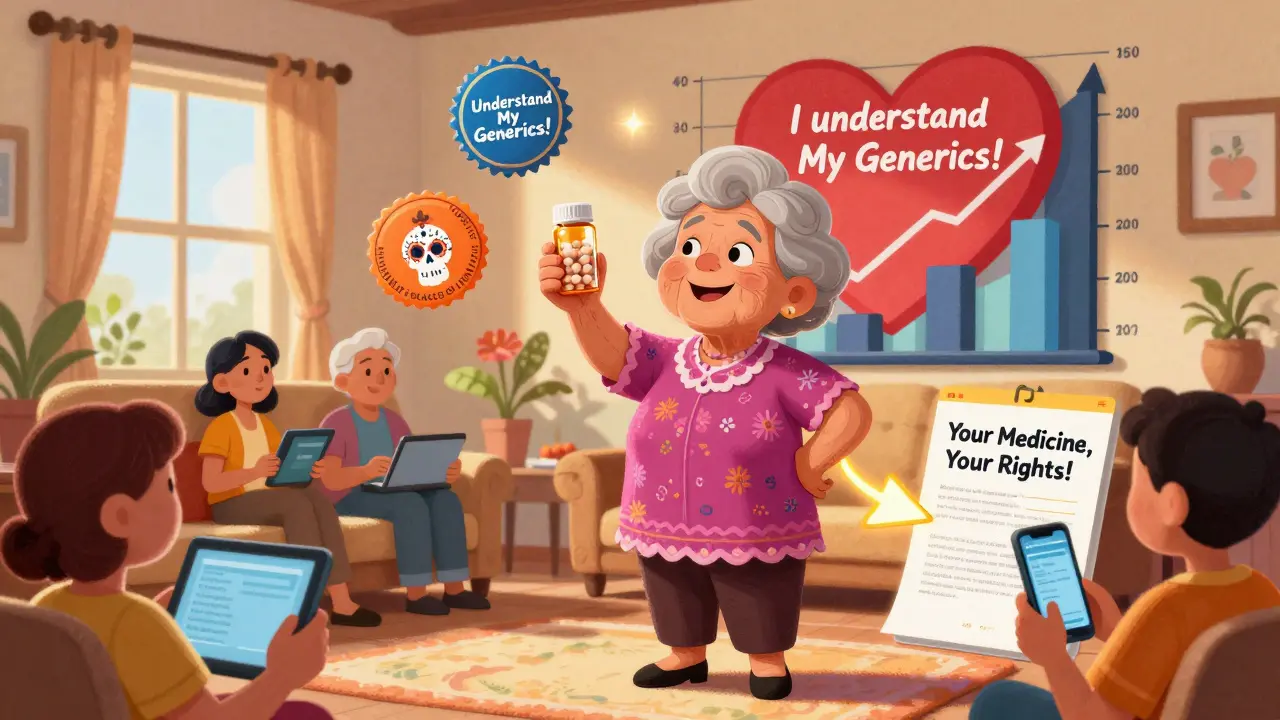
- They get a badge: "I Understand My Generics"
- They can share it with family
Early results show 97% completion rates. Patients who finish the lesson are 52% less likely to stop taking their meds due to confusion.
Start Small. Stay Honest.
You don’t need a big budget. You don’t need fancy equipment. You just need to start talking - the way patients actually talk.
Take your phone. Film yourself answering one question: "Why is my generic pill a different color?" Post it. Wait for comments. Reply. Do it again next week.
That’s how trust builds. Not with ads. Not with brochures. With real conversations on the platforms people already use.
Generics aren’t second-rate. They’re smart choices. And social media is the easiest way to make sure patients know it.
Are generic medications really as effective as brand names?
Yes. By law, generic drugs must contain the same active ingredient, strength, dosage form, and route of administration as the brand-name version. They’re tested to prove they work the same way in the body. In Australia, the Therapeutic Goods Administration (TGA) requires generics to be bioequivalent - meaning they deliver the same amount of medicine into your bloodstream at the same rate. The only differences are in inactive ingredients like color or filler, which don’t affect how the drug works.
Why do some people feel different on generics?
Sometimes, it’s not the medicine - it’s the expectation. If you’ve been on a brand-name drug for years and suddenly switch, your brain may notice the change in pill shape or color and assume something’s wrong. In rare cases, people react to inactive ingredients, like dyes or fillers, which can cause mild side effects. But if you’re feeling significantly worse - like new dizziness, nausea, or mood changes - talk to your doctor or pharmacist. It’s not common, but it can happen. Most people feel exactly the same.
Can I trust information about generics on TikTok or Instagram?
Not all of it. Some videos are accurate. Others spread myths. Look for accounts run by licensed pharmacists, hospitals, or government health agencies like the TGA or Australian Medicines Handbook. Check if they cite sources. Avoid videos that say "This one drug is dangerous" without naming the drug or providing evidence. If a post looks too emotional or uses words like "secret" or "they don’t want you to know," it’s likely misleading. When in doubt, ask your pharmacist.
Why don’t doctors talk more about generics?
Many do - but time is tight. A 10-minute appointment doesn’t leave room to explain drug manufacturing. Also, some doctors assume patients already know the facts. But most don’t. That’s why social media fills the gap. It gives patients a chance to learn at their own pace, on their own time. Doctors who partner with clinics using social media education report fewer follow-up questions and more confident patients.
Is it safe to switch between different generic brands?
Yes. All generics sold in Australia must meet the same strict standards. Switching between different generic brands - even from different manufacturers - is safe and common. The TGA monitors this closely. You might notice a slight difference in how the pill looks, but not in how it works. If you’ve had a stable response to a specific generic, you can ask your pharmacist to keep filling the same one - but it’s not medically necessary.
How can I find reliable social media accounts for generic drug info?
Look for verified profiles from trusted sources: the Therapeutic Goods Administration (TGA), the Australian Medicines Handbook, your local hospital’s health page, or registered pharmacy chains like Chemist Warehouse or TerryWhite Chemmart. On Instagram and TikTok, search for hashtags like #GenericMedicinesAU or #TGAApproved. Avoid accounts that sell products, push supplements, or claim generics are "fake." Real health info doesn’t ask for your credit card.
Next steps: Pick one platform you already use. Find one common question patients ask about generics. Film a 60-second answer. Post it. Then do it again next week. That’s how you start changing how people understand their medicine.
Comments (13)
Beth Templeton
Generics work. Stop overthinking it.
Leonard Shit
lol i used to think generics were "cheap knockoffs" until my doc switched me to one for blood pressure. same pill, half the price, no difference in how i feel. now i just laugh at people who freak out over pill color. also my cat probably knows more about pharmacology than some of these "brand loyalists" 🐱💊
Joann Absi
THIS IS WHY AMERICA IS DYING 💔😭 People are too lazy to read a damn pamphlet but will binge 17 TikToks about "how your thyroid is being poisoned by Big Pharma"… Meanwhile, the guy who made that 30-second reel in Perth? He’s a hero. The rest of us? We’re just scrolling past truth like it’s a sponsored post. #GenericMedicinesAreNotACrime
Jeane Hendrix
Interesting framework-especially the bioequivalence metrics and platform-specific engagement patterns. The 4.2x completion rate on TikTok aligns with recent cognitive load theory in health literacy, where microlearning formats reduce schema overload. Also, the use of UTM tracking for behavioral attribution is a solid operational KPI. I’d love to see a follow-up on how non-English-speaking populations engage with these assets-especially in communities with low health literacy.
Rachel Wermager
Let’s be clear: bioequivalence isn’t a suggestion-it’s a regulatory mandate. The 80–125% AUC and Cmax range isn’t arbitrary. If a generic fails to meet this, it doesn’t hit the market. Period. The placebo effect of pill aesthetics? That’s not a flaw in the drug-it’s a flaw in the patient’s conditioning. We need to stop anthropomorphizing inactive ingredients.
Tom Swinton
Guys… I just want to say… this is so important… I work in a clinic and every single day someone comes in terrified because their new pill is blue instead of green… and they think they’ve been given the wrong medicine… and it breaks my heart… because they’re not dumb… they’ve just never been shown the truth in a way they can see it… and now… with these little videos… people are finally understanding… I’ve seen it… I’ve watched patients go from "I’m not taking that" to "I’m saving $120 a month and I feel great"… and that’s not marketing… that’s humanity… please keep doing this… we need more of this…
Brian Anaz
Why are we letting a bunch of pharmacists on TikTok teach people medicine? Who let them get a microphone? Doctors should be in charge. Not some guy in a lab coat holding a pill bottle. This is dangerous. You don’t let influencers explain insulin. You don’t let nurses run your surgery. Why are we letting this happen? It’s a slippery slope.
Venkataramanan Viswanathan
India produces over 60% of the world’s generic drugs. We do not cut corners. We do not compromise. The quality control systems in place are stringent, often exceeding Western standards. The perception gap exists not because of the product, but because of marketing narratives created by multinational corporations. Let us not confuse commercial propaganda with scientific reality.
Vinayak Naik
Bro, I switched my dad from brand-name statin to generic after watching a 45-sec reel. He was like "this thing tastes like chalk and looks like a baby’s toy" but kept taking it. Six months later? BP down, wallet fat, no side effects. Now he films his own "Generic of the Week" with his dentures and a cereal box as a backdrop. We’ve got 12K followers. He says he’s the OG Medication Grandpa. Honestly? He’s the real MVP.
Kiran Plaha
What if someone doesn’t have a smartphone? Or can’t read English? Or is 80 and scared of technology? This is great for some, but what about the people left behind? We can’t just assume everyone’s on TikTok.
Matt Beck
Think about it… we live in a world where people will watch a 10-hour YouTube video on how to fold a fitted sheet… but won’t watch 60 seconds to learn why their blood pressure med isn’t "fake"… that’s not ignorance… that’s existential avoidance… we’d rather believe in conspiracies than admit we were never taught how to care for ourselves… and now we’re outsourcing our health literacy to influencers… which is… honestly… beautiful and terrifying at the same time 🤯
Kelly Beck
You guys… I just want to say… this is so beautiful… I’m a nurse and I’ve seen so many people cry because they thought they were being cheated… and then they watch one of these videos and just… breathe… for the first time in years… they feel seen… they feel safe… and that’s not just education… that’s healing… I’ve started making my own Reels… I’m not fancy… I just talk to the camera like I’m talking to my mom… and guess what? People are replying… "I didn’t know I could do this"… and I just want to hug every single one of them… keep going… you’re changing lives… one pill at a time 💙
Molly McLane
My cousin in Ohio just switched her whole family to generics after watching a 30-second video from a pharmacist in Adelaide. She sent me a screenshot of her pharmacy receipt-$18 for a month’s supply instead of $140. She wrote: "I used to feel guilty for taking the cheap one. Now I feel smart." That’s the whole point, isn’t it? It’s not about the pill. It’s about dignity.