
Benadryl and Alcohol: Risks, Side Effects, and What You Need to Know
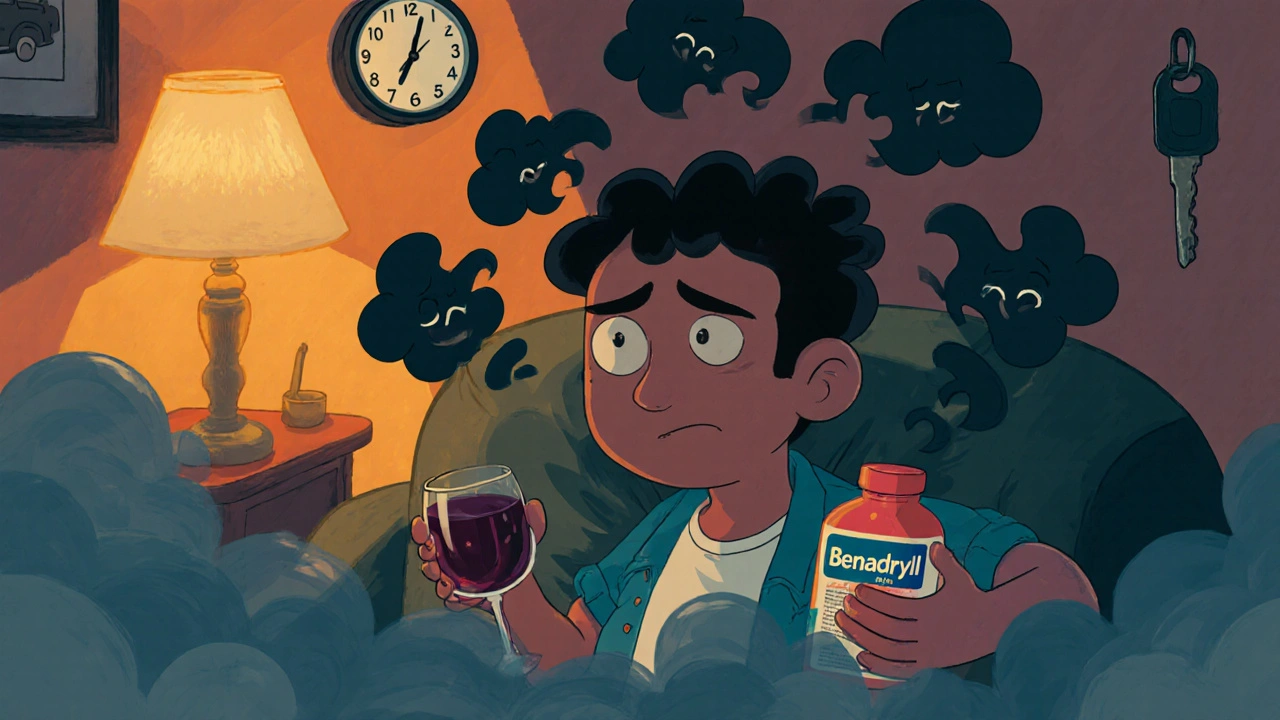
When you take Benadryl, an over-the-counter antihistamine containing diphenhydramine, used for allergies, colds, and sleep. Also known as diphenhydramine, it slows down your central nervous system to reduce itching, sneezing, and runny nose—but it also makes you drowsy. Now add alcohol, a central nervous system depressant that affects judgment, coordination, and breathing, and you’re doubling down on sedation. This isn’t just "feeling sleepy." It’s a recipe for dangerous side effects that can land you in the hospital.
Doctors don’t warn you about this combo because it’s rare—it’s because it’s common. People take Benadryl for sleep, then have a beer. Or they drink to relax after a long day and grab a Benadryl tablet for their allergies. But when these two hit your liver together, they don’t just add up—they multiply. Your breathing slows. Your balance vanishes. Your reaction time drops by 50% or more. Studies show that mixing diphenhydramine and alcohol increases the risk of falls, car crashes, and accidental overdoses, especially in people over 65. Even one drink with one tablet can be enough to cause confusion, blurred vision, or extreme dizziness. And if you’re on other meds—like painkillers, anxiety pills, or blood pressure drugs—the risk spikes even higher.
It’s not just about feeling tired. The real danger is respiratory depression, a condition where breathing becomes dangerously slow or stops. This isn’t theoretical. Emergency rooms see cases every year where people passed out after mixing these two, and some didn’t wake up. Older adults, people with sleep apnea, or anyone with liver problems are at highest risk. Your body can’t process both substances fast enough, and they build up. That’s why the FDA and CDC both list this combo as a high-risk interaction.
You might think, "I’ve done it before and nothing happened." But that’s luck, not safety. One night it’s fine. The next, your body is tired, dehydrated, or you took a higher dose. There’s no safe threshold when these two meet. And if you’re using Benadryl for sleep regularly, you’re already putting stress on your system. Alcohol doesn’t help—it makes sleep worse, disrupts REM cycles, and leaves you groggy the next day.
So what do you do instead? If you need help sleeping, talk to your doctor about safer options. For allergies, try non-drowsy antihistamines like loratadine or cetirizine. If you drink, keep Benadryl out of reach. And if you’ve already mixed them and feel off—dizzy, confused, or struggling to breathe—get help immediately. No shame. No waiting. This isn’t something to tough out.
Below, you’ll find real advice from people who’ve been there—how to spot the warning signs, what to replace Benadryl with, and how to avoid this trap altogether. These aren’t theoretical tips. They’re from patients, pharmacists, and doctors who’ve seen the damage this combo causes. Read them. Save them. Share them.
Antihistamines and Alcohol: Why Mixing Them Increases Drowsiness Dangerously
Mixing antihistamines and alcohol can cause extreme drowsiness, impaired coordination, and dangerous accidents. Learn why even 'non-drowsy' options aren't safe with alcohol and what to use instead.
read more