
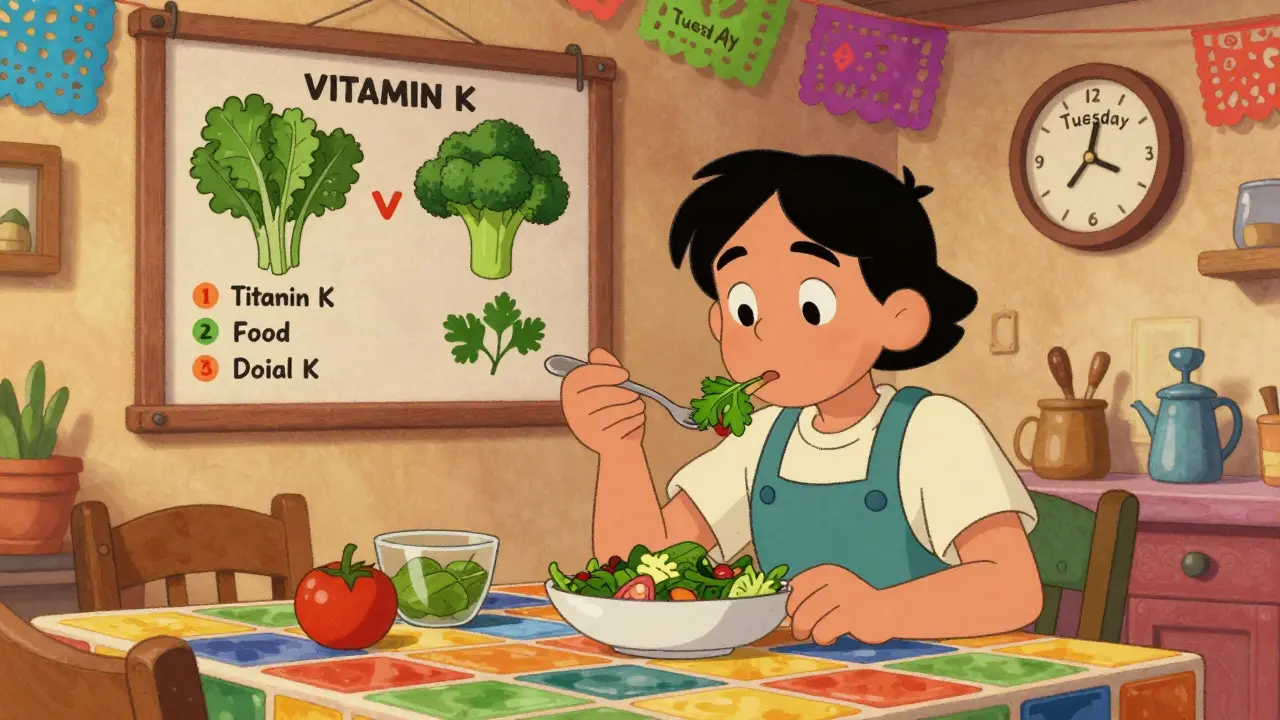
Vitamin K Intake Tracker for Warfarin Patients
Track Your Vitamin K Intake
Consistent vitamin K intake is crucial for maintaining stable INR levels while on warfarin. Enter your daily food consumption to see how it affects your vitamin K intake.
Your Daily Intake
Consistency Assessment
Keep track of your vitamin K intake to maintain stable INR levels. Consistency is more important than exact amounts.
Important Information
Consistency Matters: Eating the same amount of vitamin K-rich foods daily is more important than the exact amount. Sudden changes in vitamin K intake can cause INR fluctuations.
What to Avoid: Never consume cranberry juice, grapefruit juice, or supplements like fish oil, garlic, or ginkgo biloba while on warfarin.
When to Call Your Doctor: If you experience bleeding that won't stop, black stools, severe headaches, or unexplained bruising.
When you’re on warfarin, what you eat isn’t just about calories or taste-it can mean the difference between a blood clot and a dangerous bleed. Warfarin works by blocking vitamin K, a nutrient your body needs to make blood clotting proteins. If your vitamin K intake swings up and down, your INR (a measure of how long your blood takes to clot) will bounce around too. That’s not just inconvenient-it’s risky. The goal isn’t to cut out green veggies. It’s to keep them steady.
Why Vitamin K Matters So Much
Warfarin doesn’t thin your blood like water. It slows down the clotting process by interfering with vitamin K. When you eat a big plate of kale one day and skip greens the next, your body suddenly has too much or too little vitamin K. That throws off your INR. A study in Blood Advances found that inconsistent vitamin K intake can reduce warfarin’s effect by 30-50%. That’s enough to make your INR drop below 2.0, putting you at risk for a stroke or clot. On the flip side, a sudden spike in vitamin K can push your INR above 4.0, raising your chance of internal bleeding.
The American College of Chest Physicians says most people on warfarin should aim for an INR between 2.0 and 3.0. For those with mechanical heart valves, it’s 2.5 to 3.5. Staying in that range means fewer hospital visits and less risk. And the key? Consistency. Not restriction.
The Complete Food List: High, Medium, and Low Vitamin K
Not all foods affect warfarin the same way. Here’s a clear breakdown based on vitamin K content per 100 grams:
Very High Vitamin K (Over 500 mcg per 100g)
- Kale: 817 mcg
- Collard greens: 623 mcg
- Parsley: 616 mcg
- Seaweed (nori, wakame): 599 mcg
- Spinach (cooked): 483 mcg
- Swiss chard: 450 mcg
- Turnip greens: 421 mcg
One cup of cooked spinach has nearly 900 mcg of vitamin K. That’s more than your entire daily need. Eating this regularly without warning can crash your INR. But if you eat it every day, your body adjusts. The problem isn’t the spinach-it’s the skipped days.
High Vitamin K (100-500 mcg per 100g)
- Broccoli (raw): 102 mcg
- Brussels sprouts: 177 mcg
- Green tea: 106 mcg
- Asparagus (cooked): 70 mcg
- Cabbage (cooked): 60 mcg
- Beet greens: 492 mcg
- Mustard greens: 417 mcg
These are fine-just don’t go from eating them daily to never touching them. A single serving of Brussels sprouts can shift your INR by 0.3-0.7 units if your intake isn’t stable.
Medium Vitamin K (25-100 mcg per 100g)
- Lettuce (raw): 30 mcg
- Green beans: 28 mcg
- Avocado: 21 mcg
- Cucumber: 16 mcg
- Tomatoes: 7 mcg
- Carrots: 13 mcg
These foods are low-risk. You can enjoy them freely. But even here, big changes matter. Going from one avocado a day to three might nudge your INR down slightly.
Low Vitamin K (Under 25 mcg per 100g)
- Apples, bananas, oranges
- White rice, pasta, bread
- Chicken, beef, fish
- Eggs, dairy (milk, cheese, yogurt)
- Most fruits and grains
These are your safe zone. No need to track them. Focus on keeping your high-vitamin K foods steady, not eliminating them.
Other Foods and Drinks That Interfere with Warfarin
Vitamin K isn’t the only thing that messes with warfarin. Some drinks and supplements can make your blood too thin-or not thin enough.
Cranberry Juice
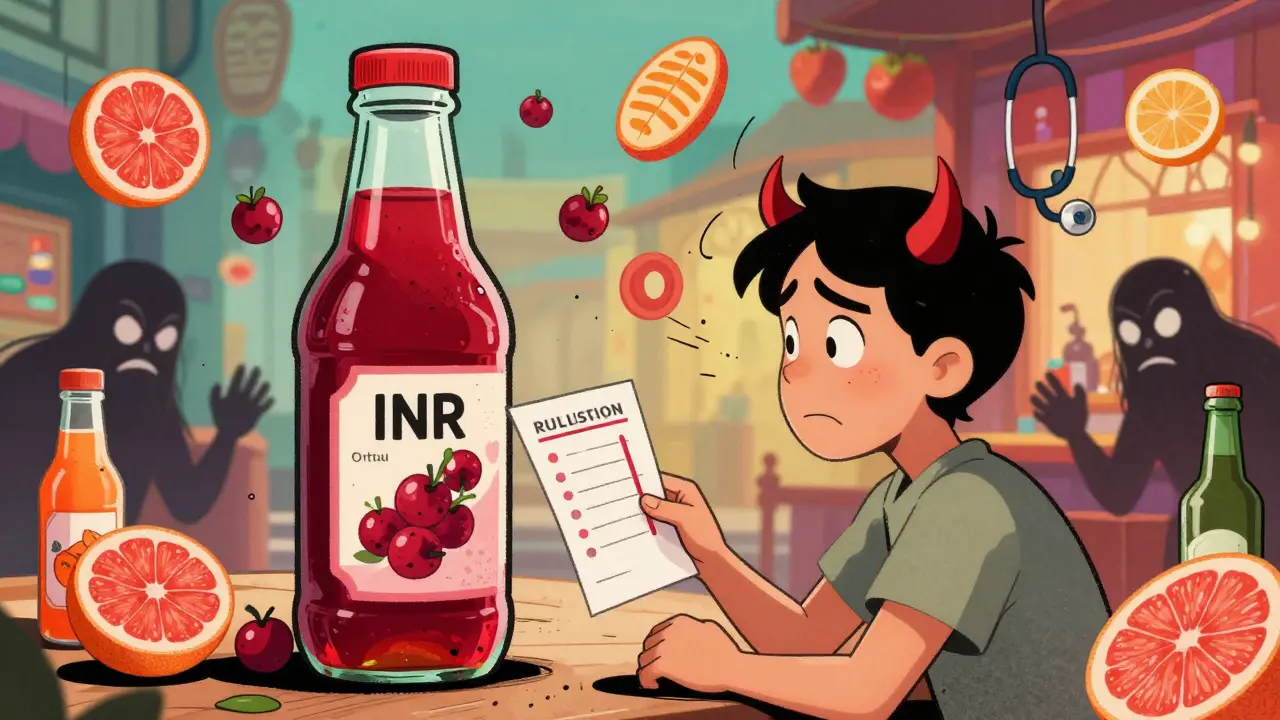
Cranberry juice doesn’t have vitamin K. But it blocks the liver enzyme CYP2C9, which breaks down warfarin. That means more warfarin stays in your system. One user on Reddit saw their INR jump from 2.4 to 4.1 after drinking 8 ounces daily for a week. That’s a bleeding risk. Avoid it entirely.
Grapefruit Juice
Grapefruit inhibits CYP3A4, another enzyme involved in warfarin metabolism. A clinical study found it increases bleeding risk by 30%. Even one glass a day can push your INR higher. Skip it. Same goes for Seville oranges and pomelos.
Alcohol
Drinking more than two drinks a day lowers warfarin’s effect by 15-20%. Why? Alcohol messes with liver function and vitamin K absorption. If you drink, stick to no more than two standard drinks on no more than three days a week. And never binge drink.
Supplements to Avoid
- Fish oil (omega-3): Increases bleeding risk by 25%. Even 1,000 mg daily can be dangerous.
- Garlic supplements: Can raise INR by 0.8-1.2 units. Fresh garlic in cooking is fine. Pills? Not so much.
- Ginkgo biloba: Linked to spontaneous bleeding in case reports. Avoid completely.
- Coenzyme Q10: May reduce warfarin’s effect-studies are mixed, but better safe than sorry.
- Vitamin E (high doses): Over 400 IU/day can thin blood further.
Always check with your anticoagulation clinic before starting any supplement-even “natural” ones.
Real Stories: What Works
One user, u/StableINR on Reddit, kept their INR in range for 18 months by eating exactly one cup of spinach salad every day. No more, no less. They didn’t avoid spinach-they mastered it.
Another, u/WarfarinWarrior, saw their INR spike after drinking cranberry juice for a week. They stopped. Their INR dropped back to normal in three days.
According to the American Thrombosis Association, 76% of people who kept a food journal stayed in their target INR range 70% of the time. Those who didn’t track? Only 48%.
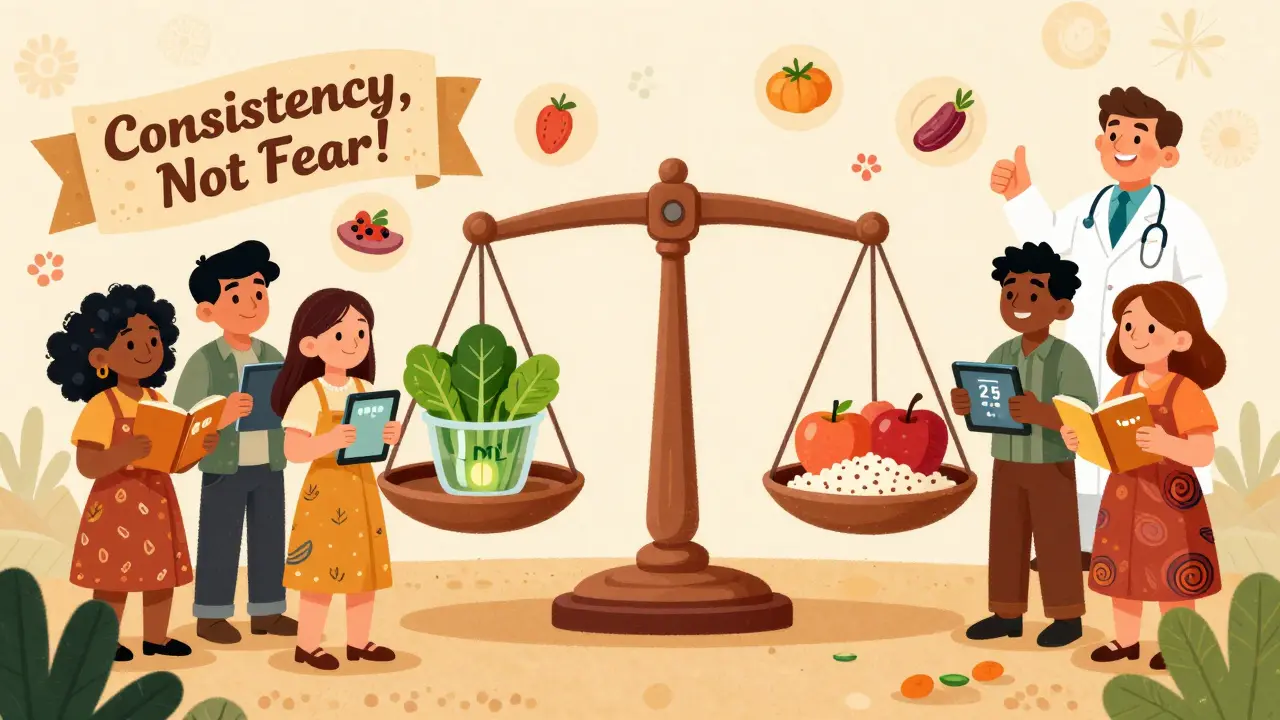
Consistency beats perfection. You don’t need to be a dietitian. You just need to be predictable.
How to Build a Warfarin-Friendly Routine
Here’s how to make this easier:
- Find your baseline. Before starting warfarin, note what you normally eat. If you ate spinach three times a week, keep doing that. Don’t switch to lettuce unless you plan to stick with it.
- Track your intake. Use MyFitnessPal or a food diary. Turn on vitamin K tracking. Log every meal. Even small changes matter.
- Plan meals ahead. If you eat kale on Monday, eat it on Thursday. Don’t swap it out for broccoli unless you’re ready to adjust your dose.
- Avoid juice. Cranberry, grapefruit, pomegranate-none of them. Stick to water, tea, or coffee.
- Limit alcohol. Two drinks max, twice a week. No bingeing.
- Don’t start supplements. If you want fish oil or garlic pills, talk to your doctor first. Most times, the answer is no.
- Know the warning signs. Bleeding that won’t stop after 5 minutes, black stools, severe headaches, unexplained bruising-call your doctor immediately.
What About Newer Blood Thinners?
DOACs like apixaban and rivaroxaban don’t need vitamin K monitoring. They’re easier to manage. But warfarin still has its place. For people with mechanical heart valves, it’s the gold standard. 85% of those patients still use it. It’s also cheaper, and in some countries, the only option.
If you’re on warfarin, you’re not stuck with a hard life. You just need a simple, repeatable routine. Your body doesn’t care about organic or kale smoothies. It cares about consistency.
When to Call Your Doctor
Don’t wait for your next INR test if something feels off. Call immediately if you have:
- Bleeding from a cut that lasts more than 5 minutes
- Black, tarry, or bloody stools
- Severe headache, dizziness, or confusion
- Unexplained bruising or swelling
- Vomiting blood or coughing up blood
These aren’t rare. The CDC reports that 18% of warfarin-related ER visits are due to uncontrolled bleeding. Early action saves lives.
Final Thought: It’s Not About Fear, It’s About Control
Warfarin isn’t a prison sentence. It’s a tool. And like any tool, it works best when you understand how to use it. You don’t need to give up your favorite foods. You just need to eat them the same way every week. One cup of spinach every Tuesday and Thursday? Perfect. One week you eat it, the next you don’t? That’s the problem.
Stick to your routine. Track your meals. Avoid risky drinks and supplements. And trust your doctor’s guidance. With consistency, you don’t just survive on warfarin-you thrive.
Can I eat spinach if I’m on warfarin?
Yes, but only if you eat it consistently. Eating spinach every day keeps your vitamin K levels steady, which helps your INR stay in range. The danger comes from switching between high and low vitamin K days. One cup of cooked spinach daily is fine-just don’t skip it for a week and then eat three cups.
Does cranberry juice really affect warfarin?
Yes, and it’s not a myth. Cranberry juice blocks the enzyme that breaks down warfarin, causing it to build up in your blood. This can raise your INR by 1.0 to 2.0 units, increasing bleeding risk. Even small amounts daily can be dangerous. Avoid it completely.
Is grapefruit juice safe with warfarin?
No. Grapefruit juice inhibits liver enzymes that metabolize warfarin, leading to higher drug levels in your blood. Studies show it increases bleeding risk by 30%. Avoid grapefruit, Seville oranges, and pomelos entirely while on warfarin.
How much vitamin K should I eat daily?
Men should aim for about 120 mcg per day, women 90 mcg. But the key isn’t hitting those numbers exactly-it’s staying close to your own baseline. If you normally get 100 mcg from food, keep it around that. A variation of 10-15% is safe. Sudden spikes or drops are what cause INR swings.
Can I take garlic supplements with warfarin?
No. Garlic supplements can raise your INR by 0.8 to 1.2 units, increasing bleeding risk. Fresh garlic in cooking is generally fine in small amounts, but pills, extracts, or concentrated forms are not safe. Always check with your anticoagulation clinic before taking any supplement.
What’s the best way to track my diet on warfarin?
Use a food tracking app like MyFitnessPal with vitamin K tracking enabled. Log every meal, even snacks. Studies show patients who track their intake have 22% fewer INR tests outside the target range. If you prefer paper, keep a simple journal: write down what you ate each day, especially leafy greens and supplements.
Should I avoid all green vegetables on warfarin?
No. That’s a common mistake. Avoiding green vegetables entirely can cause your vitamin K levels to drop too low, making warfarin too strong and increasing bleeding risk. The goal is consistency-not elimination. Eat your greens regularly, but don’t change your intake suddenly.
How long does it take for food to affect my INR?
Changes in vitamin K intake can affect your INR in as little as 3-5 days. That’s why sudden meals-like a big plate of kale at a holiday dinner-can throw off your numbers. Don’t wait for your next blood test to notice a problem. If you eat something unusual, monitor for signs of bleeding and tell your doctor.
Comments (13)
Nadia Watson
Just wanted to say this post saved my life. I was eating kale smoothies every morning and my INR was all over the place. After reading this, I switched to one cup of spinach every Tuesday and Thursday-no more panic visits to the clinic. Consistency really is everything.
Shane McGriff
Let’s be real-most people think warfarin means no greens. That’s why so many end up in the ER. This isn’t about restriction, it’s about rhythm. Eat your spinach like you brush your teeth: same time, same amount, no exceptions. Your liver will thank you.
Paul Barnes
Typo in the broccoli section: 'raw' listed as 102 mcg but USDA data says 108. Minor, but when you're managing INR, precision matters.
pragya mishra
Why are you not mentioning turmeric? It’s a natural blood thinner and I’ve seen patients bleed out after taking it with warfarin. This list is incomplete.
Andrew McLarren
Thank you for the thorough breakdown. The distinction between dietary consistency and outright avoidance is critical, and far too often overlooked by both patients and providers. This is the kind of clarity that empowers.
christian Espinola
Who wrote this? Big Pharma’s PR team? They want you to eat spinach so you keep taking warfarin instead of switching to the 'expensive' DOACs. Vitamin K isn’t the problem-it’s the profit margin.
Naomi Keyes
Actually, you missed a critical point: vitamin K2 (MK-7) from natto or fermented foods can have a more potent effect than K1 from greens-and it’s not tracked in most apps. Also, your 'low vitamin K' list includes cheese-some aged cheeses like gouda can be surprisingly high. This is dangerously oversimplified.
sujit paul
There is a deeper truth here: warfarin is not a medical treatment-it is a test of discipline. In ancient Ayurveda, balance was not achieved through restriction, but through ritual. Eating the same greens at the same hour each day? That is not dieting. That is spiritual practice.
Jacob Cathro
Bro this post is wild. I thought I was just supposed to avoid ‘red stuff’ like cranberry juice. Turns out my daily kale salad was the real villain. My INR went from 3.8 to 2.2 after I cut it out for a week… then I went back to eating it daily and now I’m stable. Wild how your body just… adapts. Mind blown.
Andy Thompson
USA only? What about the rest of the world? I’m from Ohio and I eat kale every day, but my cousin in India eats curry with spinach 3x a week and his INR’s perfect. This whole thing feels like a Western medical myth. Also, I drink grapefruit juice and I’m fine. #FakeNews
Art Gar
If you’re going to advocate for consistency, you must also acknowledge that many patients lack the socioeconomic stability to maintain a predictable diet. Food insecurity is not a lifestyle choice. This advice, while technically correct, is elitist in practice.
Edith Brederode
This is so helpful!! 🙌 I’ve been on warfarin for 5 years and this is the first time I’ve felt like someone actually gets it. I started logging my meals with MyFitnessPal and now I’m in range 90% of the time. Thank you for the clarity! 💚
Jackson Doughart
Thank you for writing this with such care. I’ve spent years watching patients panic over kale, only to later realize they’d stopped eating it for two weeks and then binged on a holiday buffet. The fear isn’t the food-it’s the unpredictability. You’ve turned a source of anxiety into a manageable rhythm. That’s not just medical advice. That’s dignity.