
Digestive Health: Essential Medications, Risks, and Practical Care
When we talk about digestive health, the system that breaks down food, absorbs nutrients, and eliminates waste. Also known as gut health, it affects everything from energy levels to immune function and even mood. It’s not just about stomach aches or bloating — it’s the foundation of how your body uses what you eat. And surprisingly, many common medications can quietly mess with it.
Take antibiotics, drugs that kill harmful bacteria but also wipe out the good ones in your gut. They’re lifesavers for infections, but they’re also the top reason people get yeast infections after treatment. That’s why posts here cover how to prevent and treat those infections with probiotics and simple lifestyle shifts. Then there’s medication side effects, unintended impacts on the digestive system from drugs meant for other conditions. Gabapentinoids, blood pressure pills, and even antihistamines can cause nausea, constipation, or diarrhea — and many people don’t realize it’s the medicine, not their diet.
Storage matters too. If you keep your pills in the bathroom, moisture is slowly destroying them. That’s why one guide explains how film coatings and desiccants protect capsules in humid climates. Another shows how lab monitoring helps catch liver or kidney stress early — organs that process most digestive system drugs. And when you’re on long-term meds like bisphosphonates for bones or immunosuppressants for autoimmune issues, your gut is often the first to show trouble.
You’ll find real advice here: how to avoid mixing alcohol with antihistamines that slow digestion, why generic drugs work just as well for gut conditions, and what to do when your overactive bladder meds stop working. There’s no fluff — just clear, practical steps to protect your digestive system while managing other health needs.
Whether you’re dealing with post-antibiotic yeast infections, wondering why your stomach feels off after starting a new pill, or just trying to store your meds right, this collection gives you the facts you need — without the hype. What you’ll find below are no-nonsense guides written for people who want to understand their body, not just follow instructions.
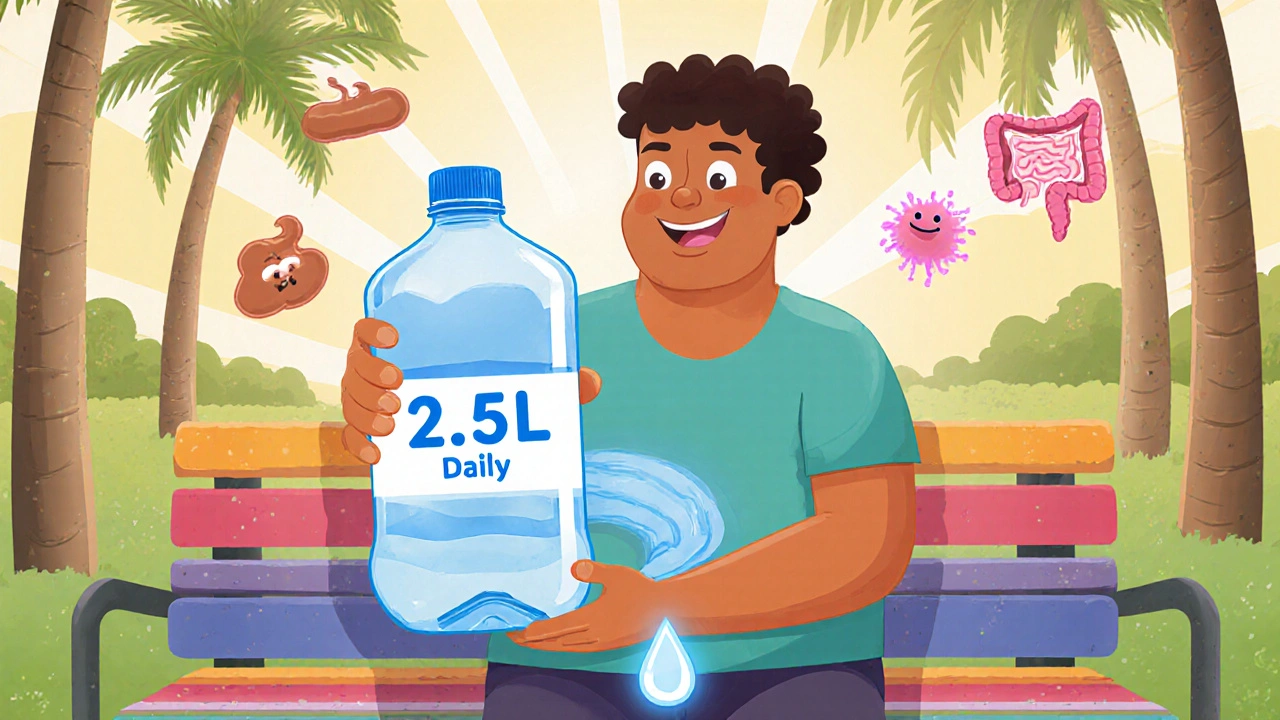
How Hydration Helps Manage Proctitis Symptoms
Drinking enough water helps reduce proctitis symptoms by softening stool, preventing dehydration, and protecting the rectal lining. Learn how much to drink, what to avoid, and why hydration is key to managing bowel inflammation.
read more