
Fluid Intake: Why It Matters for Medications and Health
When you think about fluid intake, the total amount of liquids you consume daily, including water, beverages, and moisture from food. Also known as hydration, it's not just about avoiding dehydration—it directly impacts how your body processes medications, manages kidney function, and maintains electrolyte balance, the critical levels of sodium, potassium, and other minerals that control nerve and muscle function. Skip this, and even perfectly prescribed drugs can become less effective—or even dangerous.
Many people don’t realize that kidney health, how well your kidneys filter waste and regulate fluid levels depends heavily on consistent fluid intake. If you’re on blood pressure meds like ACE inhibitors or diuretics, too little fluid can spike your potassium or cause dizziness. Too much? It can overload your system, especially if you have heart or kidney disease. That’s why doctors often give specific fluid guidelines—not just "drink eight glasses," but tailored advice based on your meds and condition. For example, someone taking lithium needs steady hydration to avoid toxicity, while someone on a diuretic might need to balance intake to prevent low blood pressure. Fluid intake isn’t one-size-fits-all, and ignoring it can turn a safe drug into a risk.
It also affects how your body absorbs and clears out meds. If you’re dehydrated, your stomach empties slower, which can delay how fast a pill kicks in. If you’re overhydrated, some drugs get diluted too much, reducing their effect. This is why moisture-sensitive pills—like those mentioned in our guide on moisture damage pills—need dry storage, but your body needs the right amount of liquid to process them. Even something as simple as taking gabapentin or antibiotics with enough water can prevent kidney stress or reduce the chance of yeast infections. And if you’re on long-term meds like bisphosphonates for bone health, drinking a full glass of water right after swallowing the pill isn’t a suggestion—it’s a safety rule to protect your esophagus.
Fluid intake isn’t just about water. Coffee, tea, soda, and even foods like soup or melons count. But not all fluids are equal—alcohol and sugary drinks can mess with your electrolytes and make side effects from antihistamines or blood pressure meds worse. That’s why mixing alcohol with antihistamines is such a bad idea, as shown in our post on antihistamines and alcohol. Your body doesn’t just need liquid—it needs the right kind, at the right time, in the right amount.
What you’ll find below are real, practical posts that connect fluid intake to everyday medication use. From how hydration affects kidney stones and lithium levels, to why drinking enough water matters when you’re on antibiotics or blood pressure pills, these articles cut through the noise. No fluff. Just what you need to know to stay safe, avoid side effects, and make your meds work better.
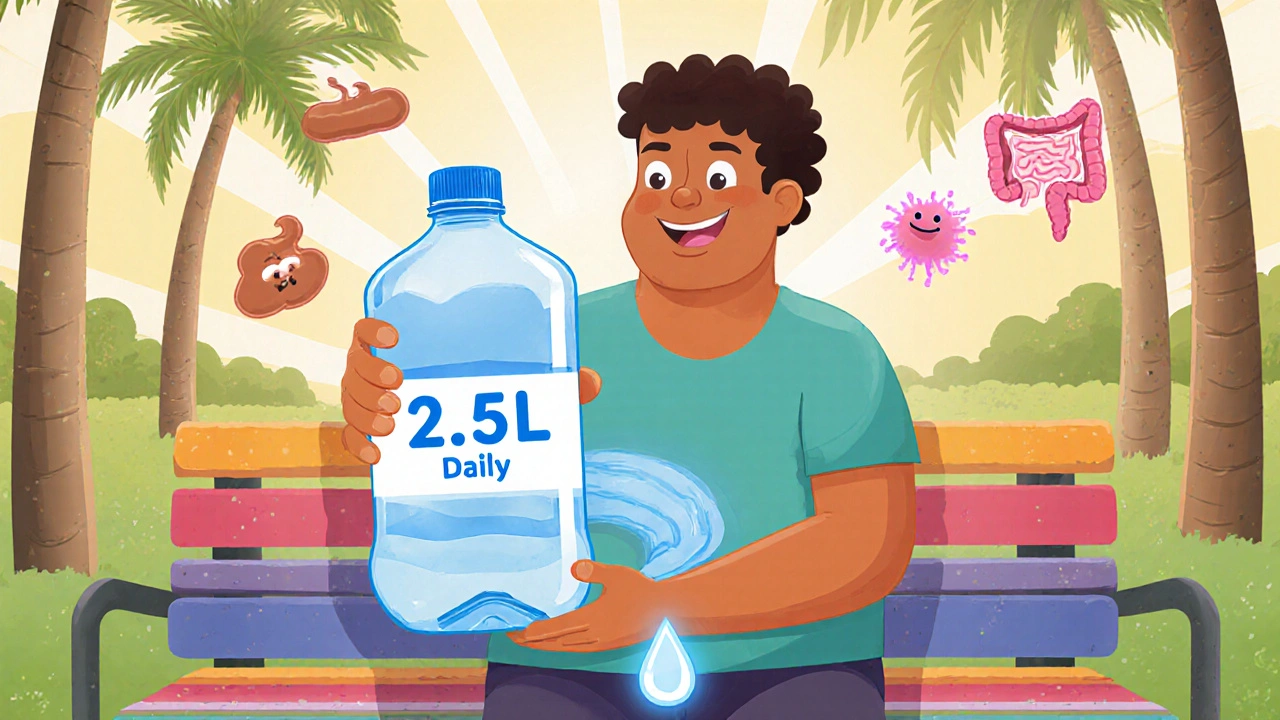
How Hydration Helps Manage Proctitis Symptoms
Drinking enough water helps reduce proctitis symptoms by softening stool, preventing dehydration, and protecting the rectal lining. Learn how much to drink, what to avoid, and why hydration is key to managing bowel inflammation.
read more