
Hydration and Medication: Why Water Matters for Your Pills and Health
When you take a pill, hydration, the level of fluid in your body that supports cellular function and drug transport. Also known as fluid balance, it's not just about avoiding dizziness or dry skin—it directly controls how well your medications are absorbed, processed, and cleared from your system. If you’re dehydrated, your kidneys can’t filter drugs properly. That means side effects stick around longer, or worse, your meds don’t work at all. A simple glass of water before swallowing a pill isn’t just good advice—it’s part of the treatment.
Drug absorption, the process by which medications enter your bloodstream from the digestive tract depends heavily on how much water is in your gut. Without enough fluid, pills can sit in your stomach too long, break down unevenly, or even get stuck—leading to irritation or reduced effectiveness. This is especially true for iron supplements, antibiotics like doxycycline, and bisphosphonates like ibandronate sodium, which need water to move safely through your system. On the flip side, dehydration side effects, symptoms like confusion, low blood pressure, or kidney strain that worsen with medication use can turn minor side effects into emergencies. For example, people on blood pressure meds or diuretics are at higher risk because their drugs already pull fluid out of the body. Skip water, and you’re not just skipping a habit—you’re skipping safety.
Hydration also protects your pills. Moisture ruins capsules and tablets, which is why desiccants come in those little packets in your medicine bottle. But if you’re sweating, living in a humid place like Perth, or forgetting to close your pill container, humidity gets in. That’s when pills start to break down, lose strength, or even grow mold. Keeping your meds dry isn’t just about storage—it’s about making sure what you take today is still what the doctor prescribed yesterday. And if you’re on long-term meds for glaucoma, heart conditions, or mental health, tiny changes in how your body handles the drug can make a big difference in how you feel.
Every post in this collection ties back to hydration in one way or another. Whether it’s preventing yeast infections after antibiotics, avoiding drowsiness with antihistamines, managing kidney stones, or storing pills safely in humid climates—water is the silent partner in your treatment plan. You won’t find it listed in the drug label, but if you ignore it, your meds won’t work as they should. Below, you’ll find real guides on how to use your meds safely, avoid dangerous interactions, and keep your body in the best shape to respond to treatment. Because sometimes, the simplest thing—drinking enough water—is the most powerful one.
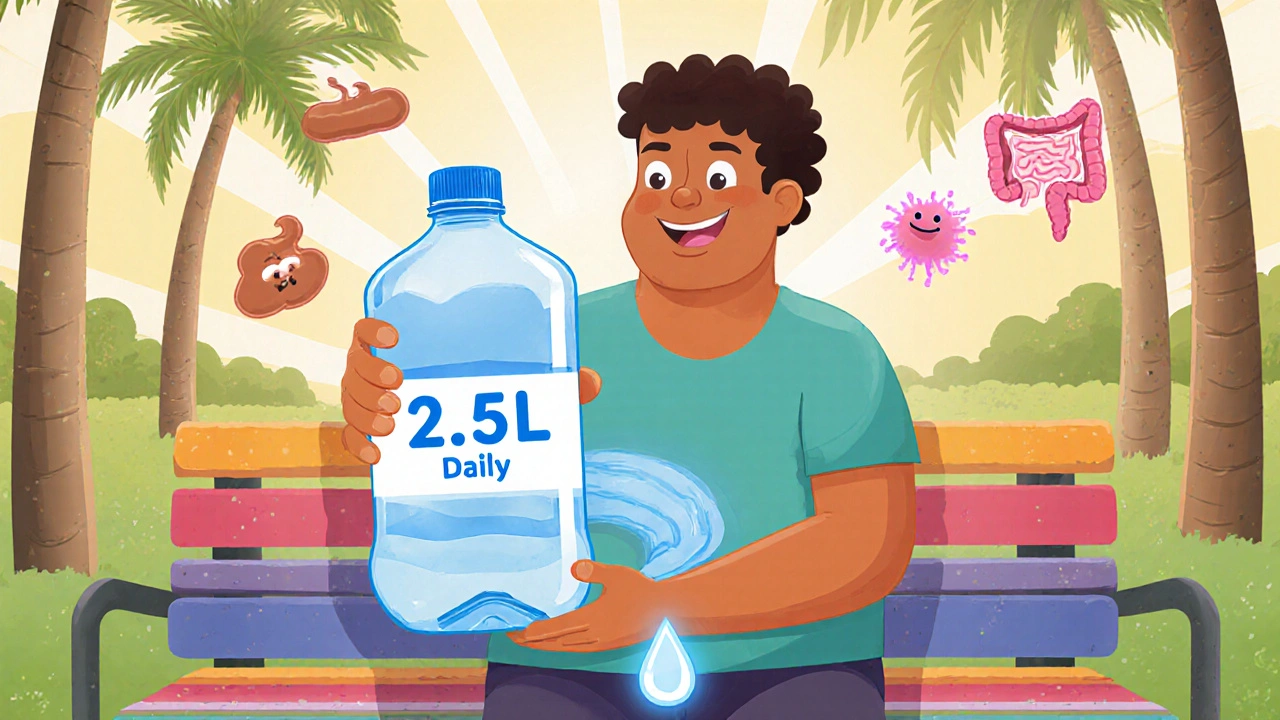
How Hydration Helps Manage Proctitis Symptoms
Drinking enough water helps reduce proctitis symptoms by softening stool, preventing dehydration, and protecting the rectal lining. Learn how much to drink, what to avoid, and why hydration is key to managing bowel inflammation.
read more