
JC virus: What it is, how it affects health, and what you need to know
When your immune system is strong, the JC virus, a common polyomavirus that infects up to 80% of adults without causing symptoms. Also known as John Cunningham virus, it usually stays quiet in your kidneys, bone marrow, or brain. But if your immunity drops—because of cancer treatment, organ transplants, or certain autoimmune drugs—it can wake up and attack your white matter. That’s when things get serious.
The biggest danger from the JC virus is progressive multifocal leukoencephalopathy, a rare but often fatal brain disease caused by the virus destroying the protective coating around nerve cells. It doesn’t show up in routine blood tests. Symptoms creep in slowly: blurred vision, weakness on one side of the body, trouble speaking, or losing coordination. These signs are easy to miss—until they’re not. People on long-term natalizumab, a biologic used for multiple sclerosis and Crohn’s disease are monitored closely because this drug increases the risk. But it’s not just natalizumab. Other immunosuppressants like rituximab, used for lymphoma and rheumatoid arthritis, and even long-term steroid use can trigger the same problem. The virus doesn’t care about your age—it cares about your immune status.
There’s no vaccine for the JC virus, and no cure for PML once it develops. But catching it early can change the outcome. Doctors use MRI scans and spinal fluid tests to detect it before symptoms get bad. If you’re on a high-risk medication, you get regular blood tests to check for JC virus antibodies. If your levels rise, your doctor might switch your treatment before damage starts. It’s not about fear—it’s about awareness. You don’t need to stop your meds unless your risk goes up. But you do need to know the signs, track your health, and speak up if something feels off.
The posts below cover real-world situations where immune suppression meets hidden threats: how biologic injections can increase infection risks, why lab monitoring calendars save lives, and what happens when medications like gabapentinoids or opioids interact with your body’s defenses. You’ll find practical advice on spotting trouble early, managing side effects, and staying safe while treating chronic conditions. This isn’t theoretical. These are the stories of people who noticed something wrong—and acted before it was too late.
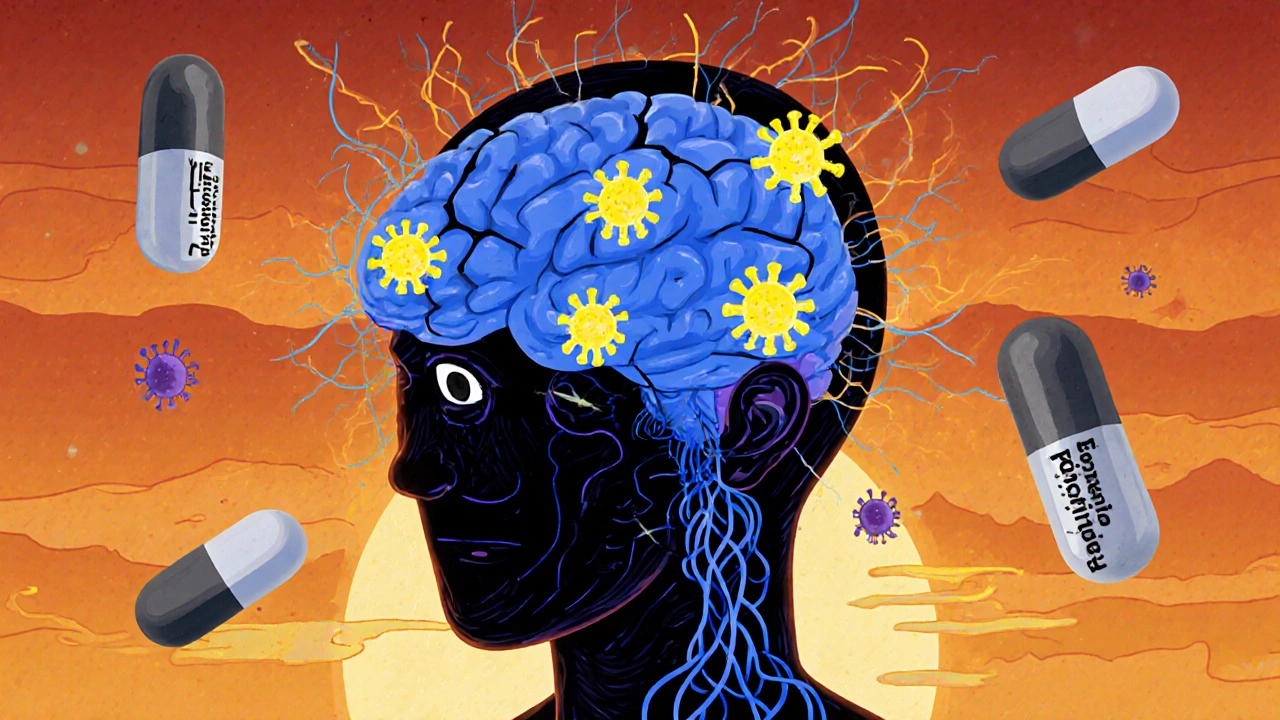
Progressive Multifocal Leukoencephalopathy Risk from Immunosuppressants: What You Need to Know
PML is a rare but deadly brain infection triggered by immunosuppressants like natalizumab. Learn who’s at risk, how it’s detected, and what steps can save your life.
read more