
Kidney Disease: Causes, Treatments, and Medications That Help
When your kidney disease, a condition where the kidneys lose their ability to filter waste and excess fluid from the blood. Also known as chronic kidney disease, it quietly damages your body over time, often without clear symptoms until it’s serious. Your kidneys work nonstop—filtering about 120 to 150 quarts of blood each day to produce 1 to 2 quarts of urine. When they fail, toxins build up, fluid swells your legs and lungs, and your blood pressure spikes. It’s not just about urinating less; it’s about your whole system struggling to stay balanced.
Kidney disease doesn’t happen out of nowhere. It’s most often linked to high blood pressure, a condition that strains the tiny filters inside the kidneys and diabetes, which overloads the kidneys with sugar they can’t process. But it’s also worsened by long-term use of certain painkillers, dehydration, or even untreated infections. Many people don’t realize their kidneys are failing until they need dialysis, a life-sustaining treatment that mechanically cleans the blood when kidneys can’t. That’s why catching early signs—like swelling, fatigue, or changes in urine—is critical.
The good news? Slowing kidney damage is possible. Medications like ACE inhibitors and ARBs—commonly used for blood pressure—do double duty by protecting kidney filters and lowering protein loss in urine. Even statins, often taken for cholesterol, help reduce inflammation that harms kidneys. And when diet and meds aren’t enough, managing fluid intake, cutting back on salt, and avoiding NSAIDs become essential. You’re not just treating a symptom; you’re protecting your body’s internal filtration system.
What you’ll find below are real, practical guides on how medications interact with kidney health, what to watch for when you’re on long-term treatments, and how to avoid common mistakes that make kidney disease worse. From how blood pressure pills affect kidney function to why some pain relievers are dangerous, these posts give you the facts you need to make smarter choices—without the jargon.
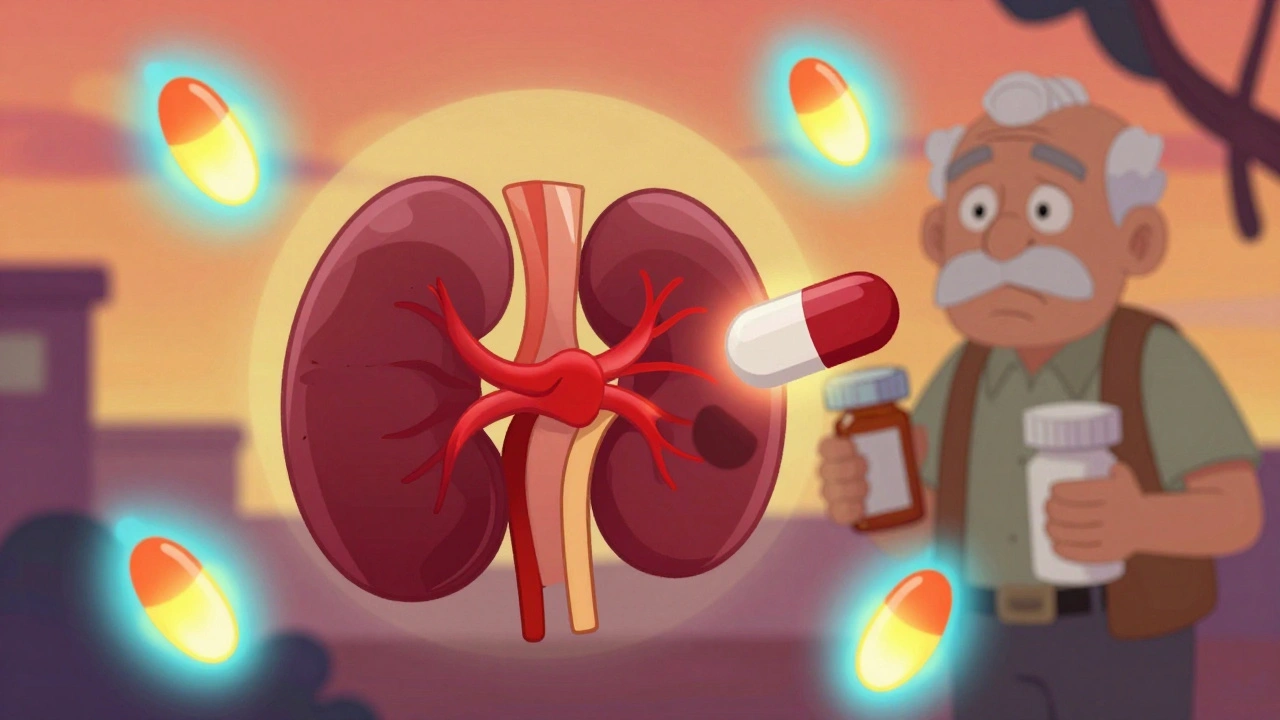
NSAIDs and Kidney Disease: How to Prevent Acute Kidney Injury
NSAIDs like ibuprofen and naproxen can cause acute kidney injury, especially in people with kidney disease or other risk factors. Learn how to recognize the danger, avoid deadly drug combinations, and choose safer pain relief options.
read more