
Reduce TZD Swelling: How to Manage Fluid Retention from Diabetes Medications
When you take a TZD, a class of oral diabetes drugs that improve insulin sensitivity by activating PPAR-gamma receptors in fat and muscle cells. Also known as thiazolidinediones, these medications help control blood sugar—but they often cause fluid retention, a buildup of excess water in the body’s tissues, especially in the legs, ankles, and feet. This isn’t just a nuisance; it can lead to noticeable swelling, weight gain, and in severe cases, worsen heart failure. If you’re on pioglitazone or rosiglitazone and your socks feel tighter, your ankles look puffy, or you’ve gained a few pounds without changing your diet, this is likely why.
Fluid retention from TZDs happens because these drugs affect how your kidneys handle sodium and water. They make your body hold onto more of both, which increases blood volume. That extra pressure pushes fluid out of your blood vessels and into surrounding tissues. It’s not an allergic reaction or a sign your body is rejecting the drug—it’s a direct, predictable side effect. People with existing heart problems, kidney issues, or older adults are at higher risk. You don’t need to stop your medication right away, but you do need to manage it. Simple steps like reducing salt intake, elevating your legs, wearing compression socks, and monitoring your weight daily can help. If swelling gets worse or you feel short of breath, talk to your doctor—your dose might need adjusting, or you might need a diuretic. Some patients find switching to another class of diabetes meds, like SGLT2 inhibitors, helps reduce swelling while still controlling blood sugar.
What you’ll find in the posts below are real, practical guides on managing medication side effects that matter. From how NSAIDs can hurt your kidneys to why mixing gabapentin with opioids is risky, these articles focus on the side effects and interactions that actually impact daily life. You’ll see how to handle GI problems from mycophenolate, prevent yeast infections after antibiotics, and avoid dangerous drug combos. None of this is theoretical. These are the problems people face when they take meds long-term—and the solutions that work in real life. If you’re dealing with swelling from a TZD, you’re not alone. And you don’t have to just live with it.
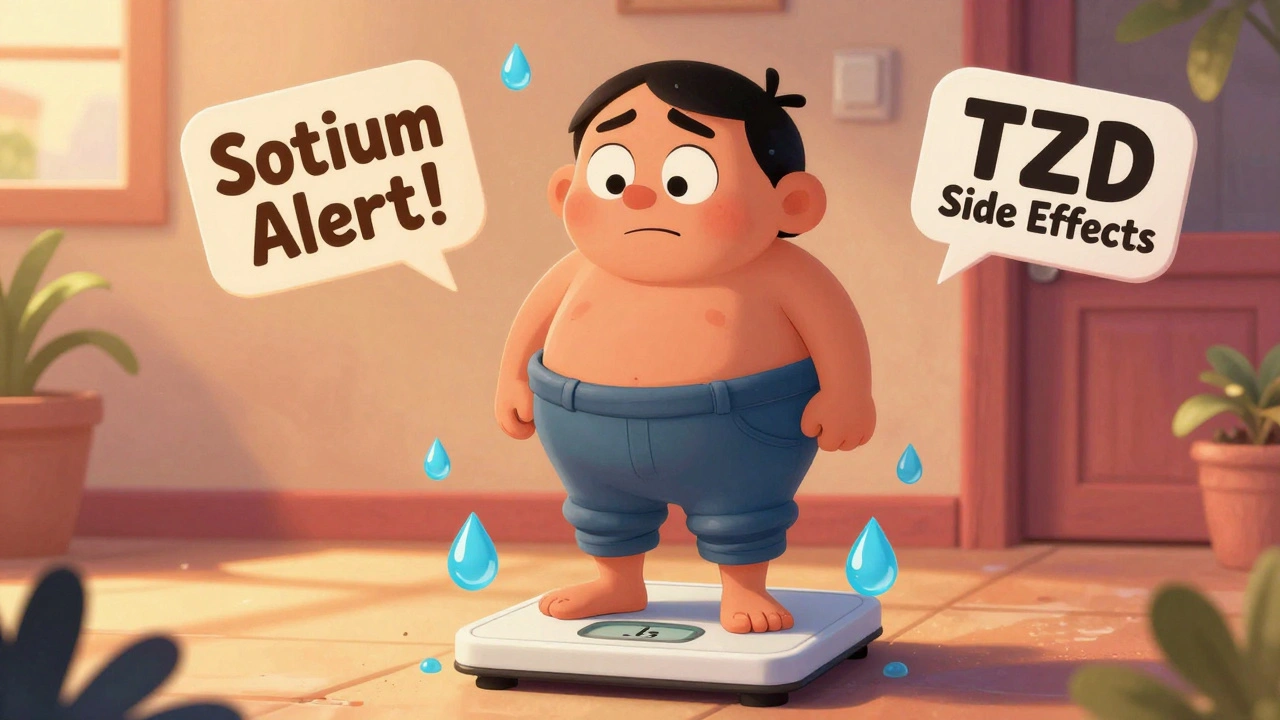
TZD Weight Gain and Edema: How to Manage These Common Side Effects
TZDs like pioglitazone help control blood sugar but often cause weight gain and swelling. Learn how to reduce these side effects with dose adjustments, SGLT2 inhibitors, low-sodium diets, and daily weight tracking.
read more