
Self-Injection Training: Learn How to Safely Give Yourself Medication
When you need to give yourself a shot, self-injection training, the process of learning how to safely administer medication through a needle under your skin. Also known as subcutaneous injection training, it’s not just about sticking a needle in—you’re learning to control pain, avoid infection, and stick to your treatment plan for life. Many people start out scared. Maybe you’re new to insulin, biologics for autoimmune conditions, or hormone therapy. It’s normal to feel nervous. But with the right guidance, it becomes routine—like brushing your teeth.
Good injection technique, the specific method used to deliver medication under the skin with minimal discomfort and maximum effectiveness means choosing the right spot, pinching the skin correctly, and using the right angle. It’s not one-size-fits-all. Diabetics inject in the belly. People on lupus meds might use the thigh. Those on osteoporosis drugs often use the upper arm. Getting this wrong can mean pain, bruising, or even failed treatment. That’s why training isn’t optional—it’s essential.
You also need to know about syringe safety, the practices that prevent needlestick injuries, contamination, and improper disposal. Reusing needles? Big mistake. Throwing them in the trash? Dangerous. Not cleaning the skin first? Risky. These aren’t just rules—they’re lifesavers. One study found that people who got proper training were 70% less likely to develop infections at injection sites. And that’s not even counting the confidence boost.
Some people think they can just watch a YouTube video and be done. But real training includes hands-on practice with a nurse or pharmacist. They check your grip, your angle, your breathing. They help you pick the right needle length. They answer the questions you didn’t even know to ask—like what to do if you see blood, or how to tell if the medicine is cloudy when it shouldn’t be.
And it’s not just about the needle. It’s about the whole system. Storing your meds right. Keeping a log. Knowing when to call your doctor if something feels off. These are all part of self-injection training. The posts below cover real-life situations: how to avoid moisture damage to your vials, how to track side effects with a calendar, how to handle missed doses, and even how to travel with injectables without ruining them. You’ll find tips for insulin users, people on biologics, and those managing chronic conditions with daily shots.
Whether you’ve been doing this for months or just got your first prescription, there’s something here for you. No fluff. No jargon. Just clear, practical advice from people who’ve been there. You’ve got this—and now you’ve got the tools to prove it.
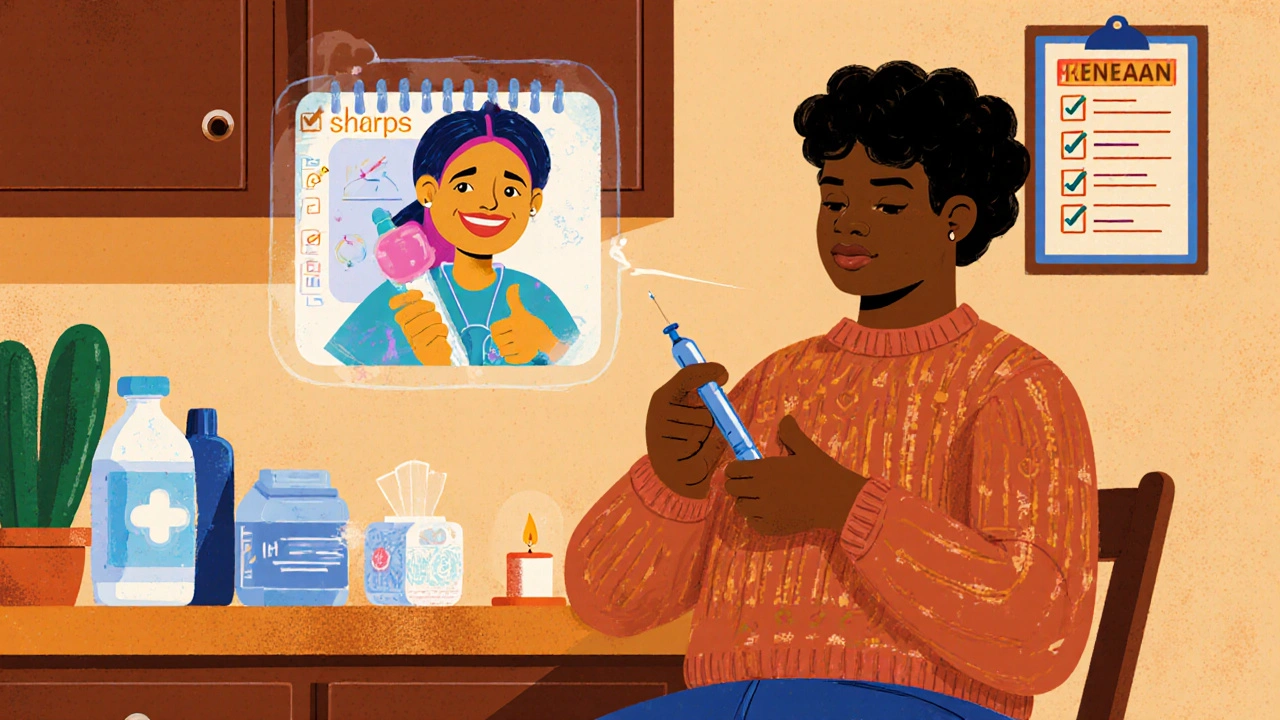
Biologic Therapies: How to Inject Safely and Avoid Infections
Learn how to safely inject biologic therapies at home, avoid common mistakes, and reduce infection risks with proper technique, training, and hygiene practices.
read more