
Zyrtec and Alcohol: What You Need to Know Before You Drink
When you take Zyrtec, a common antihistamine used to treat allergies like hay fever and hives, also known as cetirizine, you’re counting on it to stop sneezing, itching, and runny nose without knocking you out. But if you’re also drinking alcohol, you might be adding a hidden risk. Zyrtec and alcohol don’t just mix poorly—they can amplify each other’s effects in ways that surprise people. The FDA and multiple clinical studies show that combining even a single drink with Zyrtec can increase drowsiness, slow reaction times, and impair coordination—enough to make driving or operating machinery dangerous.
Why does this happen? Zyrtec works by blocking histamine in your brain and body. Alcohol does something similar: it slows down your central nervous system. When you put them together, your brain gets hit from two sides. You’re not just sleepy—you’re foggy. Your reflexes lag. Your balance wobbles. This isn’t theoretical. A 2021 study in the Journal of Clinical Pharmacy and Therapeutics found that people who took Zyrtec and had one beer showed the same level of impairment as someone with a blood alcohol level of 0.05%. That’s close to the legal limit in many places. And if you’re older, taking other meds like sleep aids or painkillers, or have liver issues, the risk jumps even higher. It’s not just about feeling tired—it’s about safety.
Some people think, "I had Zyrtec and a glass of wine last night and felt fine," but that doesn’t mean it’s safe. Tolerance varies. One night it’s fine, the next it’s not. Your body changes. Your liver gets busy. Your meds shift. And if you’re using Zyrtec daily for allergies, that constant low-level sedation builds up. Add alcohol on top, and you’re stacking the odds. The real danger isn’t the hangover—it’s the car crash, the fall, the mistake you make because your brain didn’t get the signal to slow down.
You don’t have to give up alcohol forever. But if you’re on Zyrtec, treat it like a warning sign. Skip the drink on days you’re feeling extra tired. If you do drink, wait at least 6 hours after your last dose. And never mix it with other sedating meds—like Benadryl, sleep pills, or muscle relaxers. The list of what you should avoid is short, but the consequences of ignoring it are long-lasting.
Below, you’ll find real-world advice from people who’ve been there—how to spot the early signs of trouble, what to do if you’ve already mixed them, and how to manage your allergies without putting yourself at risk. These aren’t guesses. They’re based on patient reports, clinical data, and hard lessons learned.
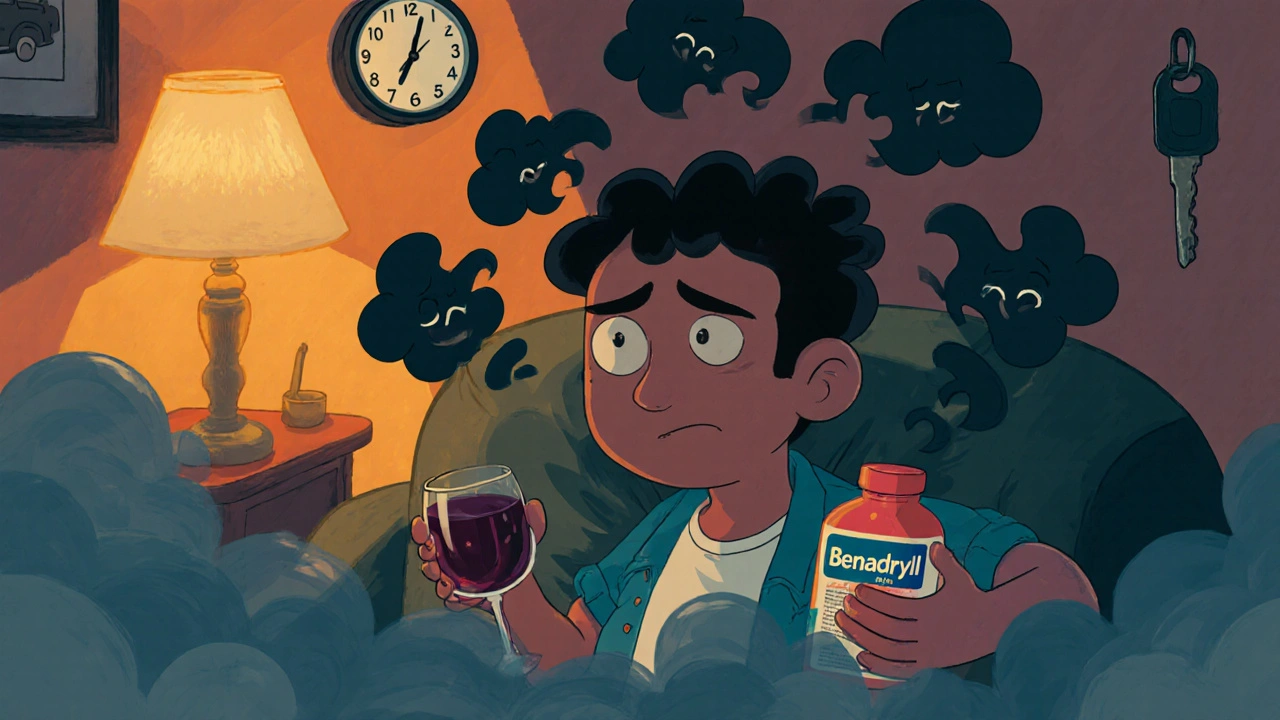
Antihistamines and Alcohol: Why Mixing Them Increases Drowsiness Dangerously
Mixing antihistamines and alcohol can cause extreme drowsiness, impaired coordination, and dangerous accidents. Learn why even 'non-drowsy' options aren't safe with alcohol and what to use instead.
read more