
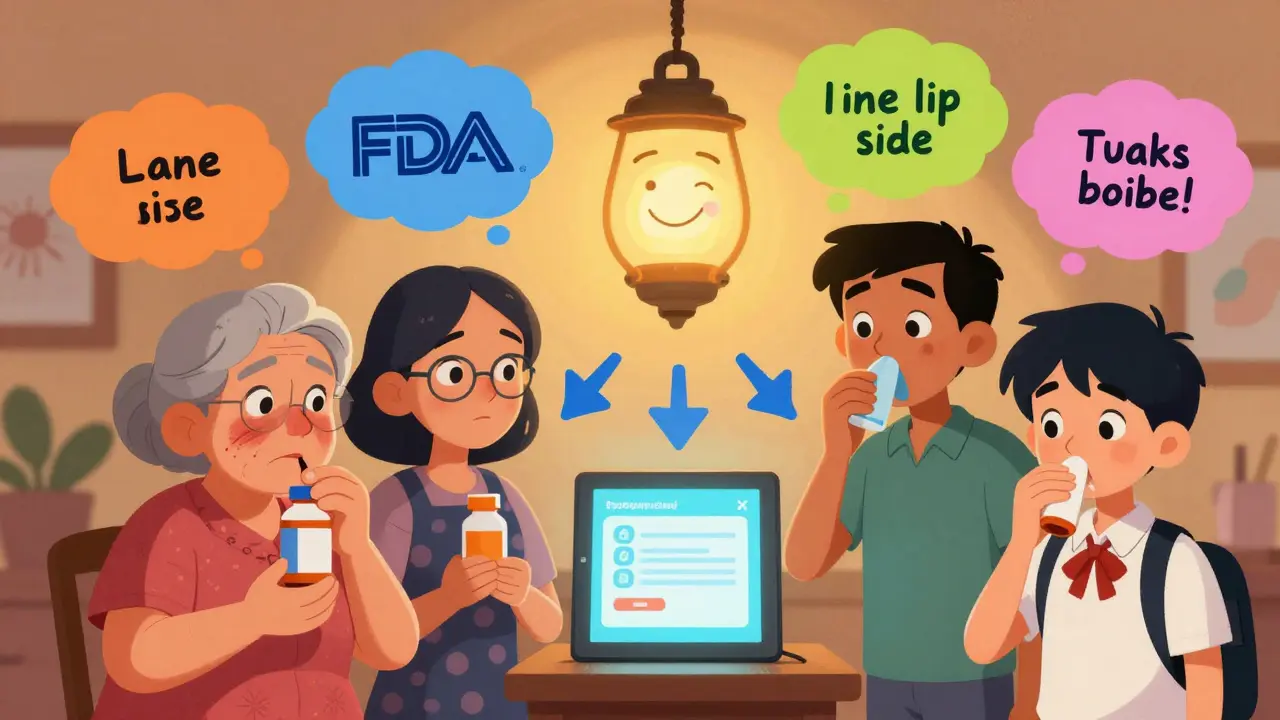
Serious Adverse Event Checker
This tool helps you determine if your symptoms qualify as a serious adverse event according to FDA criteria. If yes, you should report to FDA MedWatch.
The FDA defines a serious adverse event as one that:
- Caused death
- Put someone in the hospital
- Resulted in lasting disability
- Threatened life
- Caused birth defects
You took a new medication. Maybe it was a prescription, maybe it was an over-the-counter pain reliever. A few days later, you felt something off - a rash, dizziness, trouble breathing, or something even stranger. You wonder: Is this normal? And if it’s not, who do you tell?
The answer is simple: FDA MedWatch is the official system used by the U.S. Food and Drug Administration to collect reports about dangerous side effects, product failures, and unexpected reactions from medicines, medical devices, and even cosmetics. It’s not just for doctors. You - as a patient, caregiver, or consumer - can and should report when something feels wrong. Your report could be the one that leads to a safety warning, a label change, or even a product recall.
What Exactly Is MedWatch?
MedWatch, short for The FDA Safety Information and Adverse Event Reporting Program, is the backbone of how the FDA tracks problems after a drug or device hits the market. Clinical trials test products on thousands of people. But real-world use involves millions - with different ages, health conditions, and combinations of medications. That’s where MedWatch comes in.
The FDA gets about 1.2 million reports every year. About 80% come from doctors, nurses, pharmacists, and manufacturers. The other 20% come from you - the public. And while that number seems low, every report matters. A single report from a patient about a rare reaction might be the first clue that a drug is causing heart rhythm problems in a specific group. Without that input, the FDA might never know.
MedWatch doesn’t just cover pills. It includes:
- Prescription and over-the-counter drugs
- Biologics like blood transfusions and gene therapies
- Medical devices - from glucose monitors to pacemakers
- Combination products like prefilled syringes
- CBD products and other hemp-derived items
- Cosmetics like hair dyes and moisturizers
It does NOT cover vaccines (those go to VAERS), animal drugs, or tobacco. Those have separate systems. But for nearly everything else you take, swallow, inject, or wear - MedWatch is the place to report.
Who Should Report? And When?
You don’t need to be a medical expert to report. If you or someone you care for had a serious reaction, you should file a report. The FDA defines a serious adverse event as one that:
- Caused death
- Put someone in the hospital
- Resulted in lasting disability
- Threatened life
- Caused birth defects
Even if you’re not sure - report it anyway. The FDA doesn’t expect you to diagnose. They just need the facts: what you took, when, and what happened.
Healthcare providers report too - and they’re required to. Manufacturers must report deaths or serious injuries within 30 days. Hospitals and clinics must report device failures. But if you’re a patient, your report is voluntary. And that’s the problem: experts estimate only 1% to 10% of serious reactions are ever reported. That means 90% to 99% go unseen. Your report fills that gap.
How to Report: Two Simple Paths
There are two main forms, depending on who you are.
For Healthcare Professionals: Form FDA 3500
If you’re a doctor, nurse, pharmacist, or other medical worker, use Form FDA 3500. This form asks for:
- Your name, contact info, and profession
- The patient’s age and gender
- The product name (brand and generic)
- When the reaction happened
- What symptoms occurred
- Any treatments given
- Whether you reported it to the manufacturer
Most professionals complete it in 10 to 15 minutes. The online portal is straightforward. You can file online at fda.gov/medwatch, or download a PDF and mail or fax it. The FDA sends an acknowledgment letter - a small but meaningful confirmation that your report was received.
For Patients and Consumers: Form FDA 3500B
If you’re a patient or family member, use the simpler Form FDA 3500B. It’s designed for people without medical training. But here’s the catch: it still uses medical terms like “event abated,” “dose frequency,” and “medical pathway.” A 2019 FDA study found that 62% of consumers needed help understanding at least three terms on the form.
Don’t let that stop you. If you’re unsure:
- Take the form to your doctor. They can help fill it out using your medical records.
- Call the FDA at 1-800-FDA-1088. A representative can guide you through the process over the phone.
- Ask a pharmacist. They’re trained to recognize adverse reactions.
You don’t need permission from your doctor to report. They’re not required to file a report for you. But they can help you give the FDA the details that matter most.
What Happens After You Report?
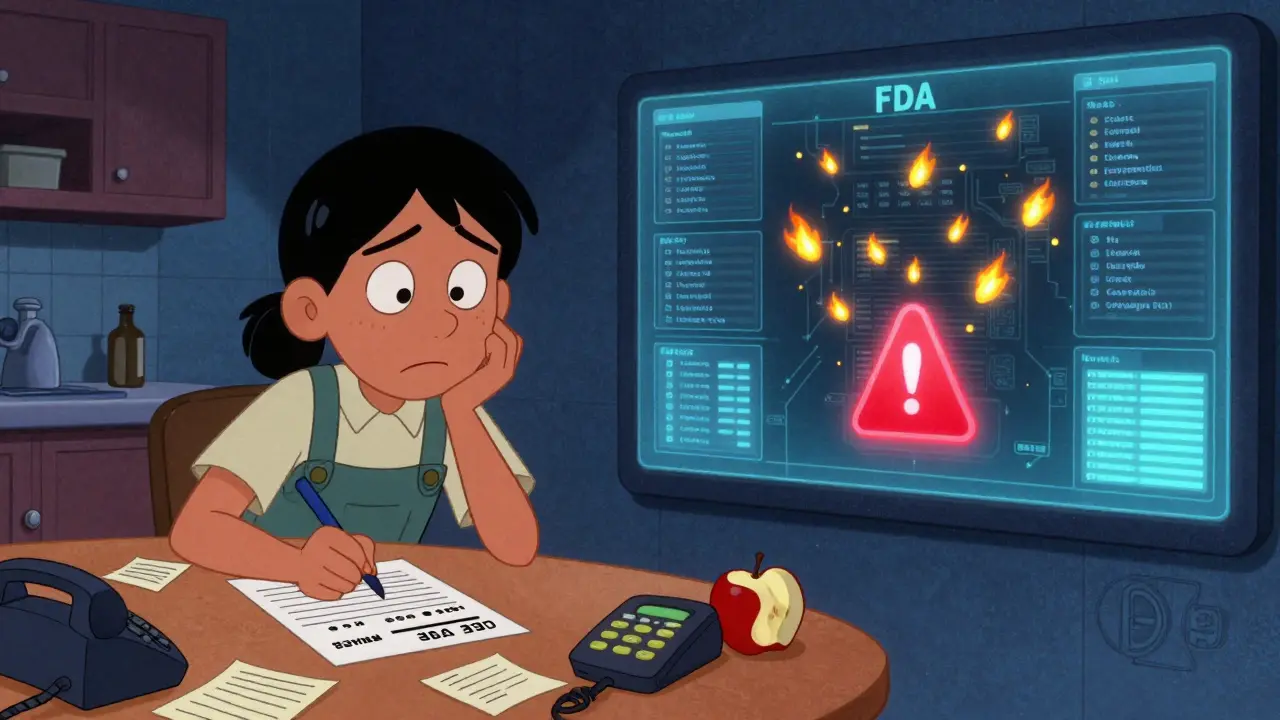
Once you submit your report, it goes into a national database. The FDA reviews thousands of reports each week. They look for patterns - the same reaction happening with the same drug, across many people. When a pattern emerges, they investigate.
That’s how the FDA learned that certain antibiotics could cause dangerous heart rhythms. How they found out that a popular painkiller increased stroke risk in older adults. How they discovered that a skin cream was causing severe burns in some users.
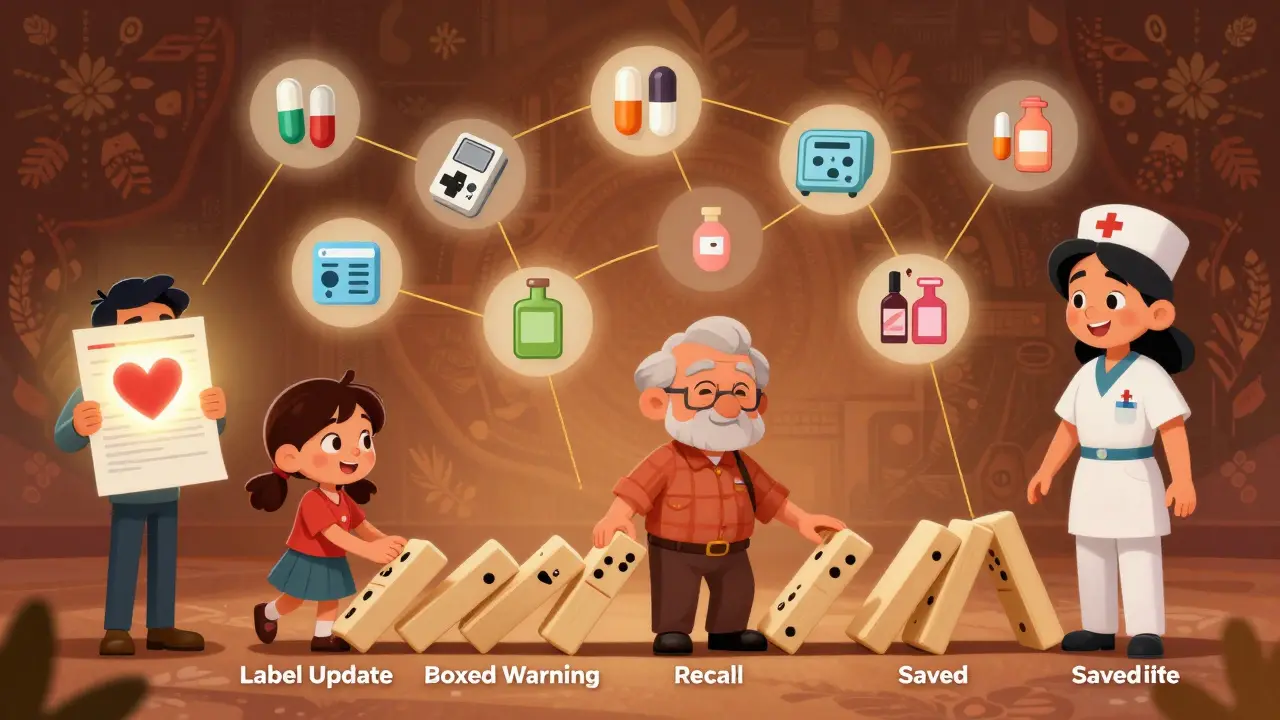
These findings lead to:
- Updated drug labels with new warnings
- Boxed warnings - the strongest type FDA can issue
- Recalls or removals from the market
- Changes in how a device is used
Your report doesn’t just help you. It helps everyone who uses that product next.
Common Problems and How to Avoid Them
Many reports get delayed or rejected because they’re incomplete. Here’s what most people miss:
- Not naming the product clearly. Use both brand and generic names. Don’t say “the blue pill.” Say “Lipitor 20 mg.”
- Leaving out dates. When did you start the product? When did the reaction start? When did it end?
- Not describing symptoms in detail. “I felt weird” isn’t enough. Say: “I had chest tightness and tingling in my left arm for 20 minutes after taking the pill.”
- Forgetting to mention other medications. Did you take aspirin, ibuprofen, or a supplement? Interactions matter.
If you’re unsure, write down what happened before you start the form. Keep it simple. Use your own words. The FDA doesn’t need jargon - they need facts.
What’s New in MedWatch?
The FDA didn’t just leave MedWatch as it was. In 2021, they launched a redesigned online portal. It’s faster, mobile-friendly, and easier to use. You can now:
- Submit reports from your phone
- Get email alerts for drug recalls
- View updated drug labels going back to 2002
- Sign up for RSS feeds to track safety updates
The FDA is also working on AI tools that help consumers fill out forms more accurately - like suggesting the right terms based on your description. In the future, they hope to connect MedWatch directly to electronic health records so doctors can report with one click.
But the biggest challenge remains: underreporting. Even with improvements, most reactions still go unreported. That’s why your voice matters.
Why Your Report Makes a Difference
Dr. Janet Woodcock, former head of FDA’s drug division, said it best: “MedWatch reports are essential for identifying safety signals that may not have been evident during clinical trials.”
Think about it. Clinical trials last a few years. They test a drug on a few thousand people. Real life? Millions of people, over decades. Some reactions only show up after years of use. Some happen only in people with a rare gene. Some only appear when combined with another drug.
You might think: “My case is too small.” But one report can spark a chain reaction. A single patient’s report led to a change in how a common diabetes drug is used. Another report revealed a link between a heart medication and kidney failure in older adults. These discoveries save lives.
You don’t need to be a scientist. You don’t need to understand medical terms. You just need to notice something wrong - and speak up.
Quick Checklist: Ready to Report?
Before you file, gather this info:
- Product name (brand and generic)
- Manufacturer name (if on the packaging)
- Date you started taking/using it
- Date the reaction started
- What symptoms you experienced
- How long they lasted
- Any treatment you received
- Other medications or supplements you take
- Your age and gender
Go to: fda.gov/medwatch
Choose your form. Fill it out. Submit. It takes less than 20 minutes. And it might save someone’s life.
Can I report a side effect even if I’m not sure it’s related to the medication?
Yes. You don’t need to be certain. The FDA’s job is to figure out if there’s a connection. If you suspect a product caused a reaction - even if you’re unsure - report it. The FDA looks at patterns across thousands of reports to find real links. Your report could be the first clue.
Do I need to tell my doctor before reporting?
No, you don’t need permission. Your doctor is not required to report for you. But they can help. If you’re unsure what happened or how to describe it, take the form to your doctor. They can use your medical records to give the FDA accurate details. Still, you can report on your own - and you should.
What if I report and nothing happens?
That doesn’t mean your report didn’t matter. The FDA receives over a million reports each year. A single report rarely causes immediate action. But when dozens of people report the same reaction, the FDA investigates. Your report adds to the evidence. It’s part of a larger picture. Even if no public warning follows, your report helps improve future drug safety.
Can I report a reaction from a product I bought online?
Yes. Whether you bought it from a pharmacy, Amazon, or a website overseas, if it’s an FDA-regulated product - like a drug, device, or cosmetic - you can and should report it. The FDA tracks where products come from. If a product is unsafe, they can take action against the seller or manufacturer.
Is there a deadline for reporting?
There’s no official deadline for patients reporting voluntarily. But the sooner you report, the better. Early reports help the FDA spot trends faster. For manufacturers and hospitals, there are strict deadlines - usually 10 to 30 days - but for you, there’s no rush. Still, don’t wait years. The details fade. Report while it’s fresh.
What if I made a mistake on my report?
You can submit a follow-up report. If you forgot something, got a test result later, or realized you misremembered a date, just file again. Mark it as a “follow-up” report. The FDA understands that memories change. They welcome updates. The goal is accuracy - not perfection on the first try.
Comments (15)
Rob Turner
I reported my rash after that new antibiotic last year. Took me 12 minutes on my phone. FDA sent me a thank-you email. Didn't think it mattered. Turns out, 3 other people had the same reaction. Now there's a black box warning. You never know which report is the one that saves someone.
PS: Don't overthink it. Just write what happened. They don't need Shakespeare.
christian jon
This is a joke, right? The FDA? The same agency that approved OxyContin? Who greenlit Zantac? Who let melatonin be sold as a 'dietary supplement' with zero oversight? You think your little report is going to change anything? The system is BROKEN. They're just collecting data to bury it in a 10,000-page report that no one reads.
Meanwhile, Big Pharma is laughing all the way to the bank. Report? Sure. But don't expect justice. Expect bureaucracy.
Autumn Frankart
I'm not dumb. I know what they want us to believe. But here's the truth: MedWatch is a trap. It's a PR stunt. They want you to think you're doing something, while they quietly let dangerous drugs stay on the market. Why? Because the FDA is owned by the same lobbyists who fund Congress. You report? They log it. Then they do nothing. It's all smoke and mirrors.
And don't get me started on how they ignore reports from non-English speakers. They don't even translate the forms. That's not oversight. That's systemic racism.
Pat Mun
I used to think reporting side effects was pointless until my mom had a reaction to her blood pressure med. She didn't know what to do. I found the form, called the FDA hotline, and they walked us through it. Took 17 minutes. We were scared. But after we submitted, the pharmacist called us back two weeks later and said, 'You're not alone. We've seen 4 others.'
It felt good. Not because we 'won' - but because we helped. You don't have to be a doctor. You just have to care. And if you're reading this? You already do.
Skilken Awe
Let me guess - you think 'filling out a form' is activism? Congrats, you're a good little consumer. You followed the script. The FDA doesn't need your 'report.' They need lawsuits. They need class actions. They need media exposure. A form is a Band-Aid on a hemorrhage.
And don't even get me started on how they use 'consumer reports' to say 'see? We're responsive!' while quietly approving new drugs with the same side effects. You're not helping. You're being manipulated.
andres az
I read the whole thing. Too much jargon. Too many bullet points. Too many words. I didn't need 15 paragraphs to know I can report a side effect. Just go to fda.gov/medwatch. Click. Fill. Submit. Done.
Why is everything always so bloated? It's like they're trying to scare people away. Maybe that's the point.
Alyssa Williams
I reported my son's reaction to his ADHD med last year. I was terrified. I didn't know if it was real or if I was overreacting. But I did it anyway.
Two months later, the FDA updated the label. It now says 'risk of severe anxiety in adolescents.' My son's doctor said, 'We wouldn't have known that without your report.'
You think it's small? It's not. You're the eyes on the ground. Don't underestimate your voice.
Jack Havard
I don't report. Why? Because I've seen what happens. People report. Nothing changes. Drugs stay on the market. Companies get fined $5 million - which they write off as a marketing cost.
And the FDA? They just update their website with a footnote. No press release. No warning. No call to action. Just a tiny change in a PDF no one reads.
I'd rather not waste my time feeding the machine.
Gloria Ricky
I just reported my daughter's reaction to a kids' cough syrup. She got hives. I didn't know the brand name, so I wrote 'the blue bottle with the bear on it.' They still understood.
I called the FDA. The lady was nice. She said, 'Thank you for being brave.'
It felt good. Like I did something right. You don't need to be perfect. You just need to care enough to try.
Stacie Willhite
I used to think I was alone until I read other people's stories. I had a reaction to a supplement I bought on Amazon. I was scared. I didn't know who to tell. Then I found MedWatch.
Submitting it didn't fix me. But it helped me feel less alone. And now I tell everyone I know: If something feels off - report it. You're not just protecting yourself. You're protecting the next person.
Jason Pascoe
I'm from Australia. We have our own system - ADRAC. But I still report to MedWatch if it's a US-manufactured drug. Why? Because safety doesn't stop at borders.
I've reported two things. One led to a label change. The other? Nothing yet. But I'll report again. Because if even one life is saved? It's worth it.
Annie Joyce
I'm a pharmacist. I see patients who don't report because they think 'it's not that bad.' But guess what? 'Not that bad' is how epidemics start.
I always give out the MedWatch card with the prescription. I say: 'If you feel weird for more than 48 hours - call. Don't wait. Don't Google it. Just call.'
It's not about blame. It's about awareness. And yeah - sometimes it leads to something huge. I've seen it.
Suzette Smith
I'm not saying don't report... I'm just saying don't trust it. I reported my husband's reaction to a statin. Two years later, the FDA added a footnote. Meanwhile, the drug is still on the market.
So I'm reporting again. But now I'm also posting on social media. And tagging the FDA. And calling my senator.
Forms are a start. But they're not the end.
Sophia Nelson
I'm not going to report. Why? Because I know what happens to people who do. They get labeled 'difficult patients.' Their doctors stop taking them seriously. Insurance companies flag them.
And the FDA? They don't even respond. I've seen it. I've been there.
So I'll just stop taking the meds. That's safer than reporting.
Steve DESTIVELLE
The fundamental issue here is not the form. It is not the interface. It is not even the bureaucracy. The issue is epistemological. We live in a society that has outsourced truth to institutions that are structurally incapable of perceiving it.
MedWatch is not a tool for truth. It is a ritual of compliance. A symbolic act that pacifies the populace while the real mechanisms of power - patent monopolies, lobbying, regulatory capture - remain untouched.
You report. They log. The machine hums. And the cycle continues.
True change requires dismantling. Not submitting a PDF.