
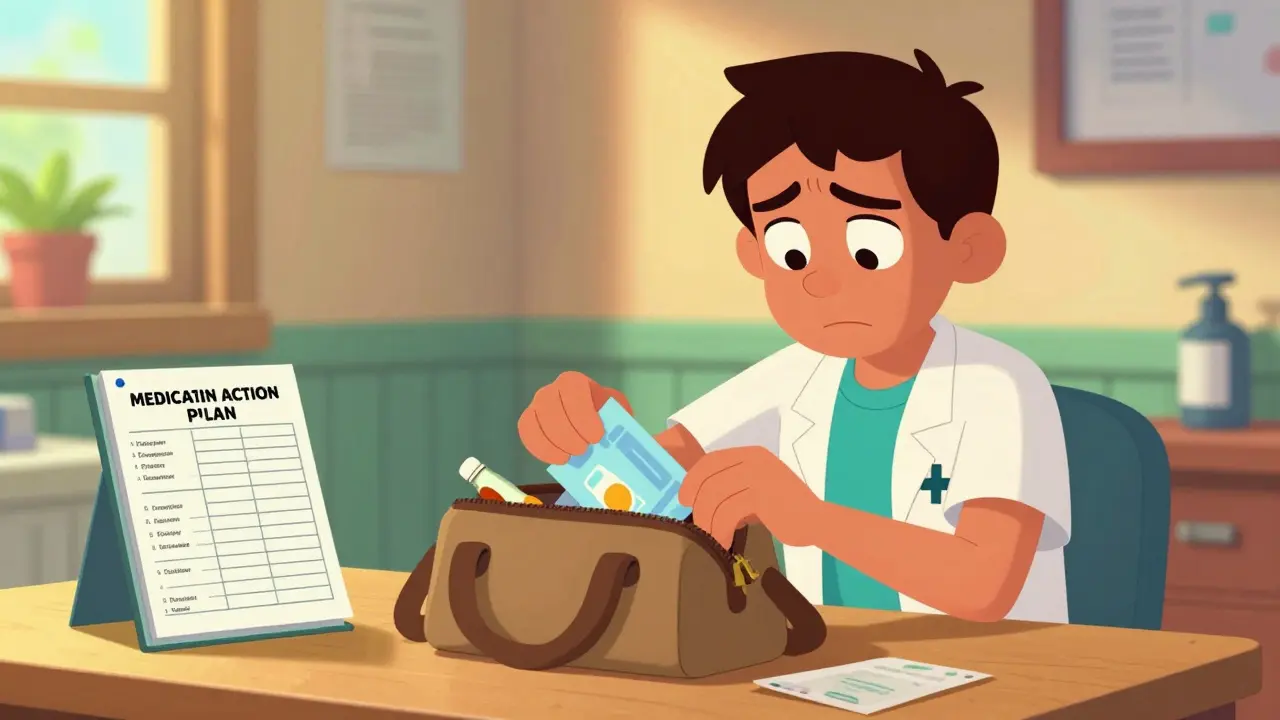
Key Takeaways for Your Next Visit
- Always bring your MAP and actual medication bottles to every single appointment.
- Use the "What I need to do" section for specific, measurable instructions.
- Update the plan in real-time during the visit, including exact stop dates for discontinued drugs.
- Share copies of your updated plan with family members and all treating providers.
- Prepare questions in advance using the dedicated section of the template.
What Exactly is a Medication Action Plan?
A Medication Action Plan is a structured tool used in Medication Therapy Management (MTM) to coordinate care. Unlike a simple list of drugs, a MAP is a functional guide. It doesn't just say what you take, but how you're doing with it and what happens next. In the U.S., the Centers for Medicare & Medicaid Services (CMS) has standardized these as part of the Comprehensive Medication Review process to ensure nothing falls through the cracks.
Think of it as a contract between you and your provider. It usually includes a "What we talked about" section to capture the conversation and "What I need to do" boxes for your homework. Some versions, like those used in Germany under the E-Health law, are even more rigid, requiring full dosing regimens and medical indications for every single item, whether it's a prescription or an over-the-counter supplement.
Preparing Your Template Before the Appointment
The work starts before you even leave the house. If you show up with a blank or outdated form, you've lost half the benefit. Start by auditing your current list. If you stopped taking a medication, don't just erase it; cross it out and note the date and the reason why. This prevents a common error where a doctor might accidentally restart a drug that caused you a severe side effect months ago.
Beyond the paper, gather your physical medication containers. Research shows that bringing the actual bottles improves accuracy by over 37% compared to relying on memory. It's easy to confuse "Lisinopril" with "Losartan" when you're nervous in a waiting room, but the bottle doesn't lie. If you're using a digital version, print it out. Interestingly, about 68% of people over 65 still prefer paper, and in a fast-paced clinic, a physical sheet of paper is often easier for a doctor to scribble notes on than a tablet screen.
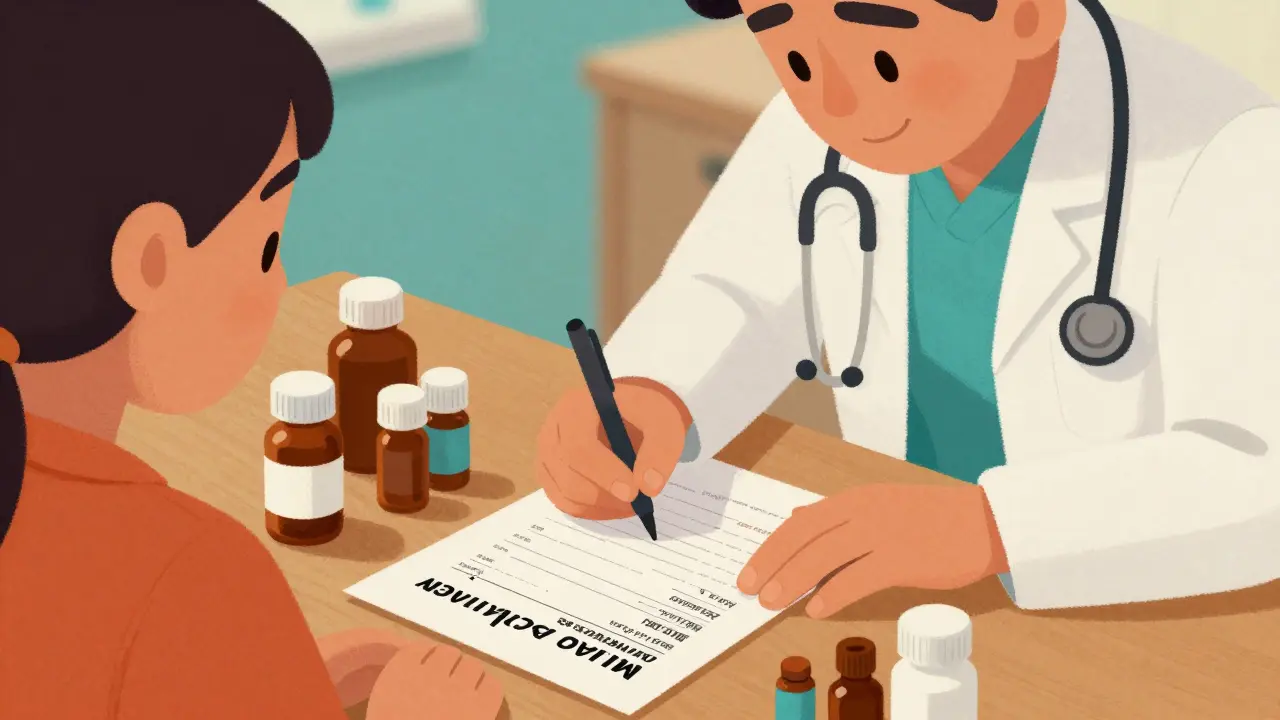
How to Use the MAP During the Visit
Once you're in the room, don't wait for the doctor to ask about your meds. Hand them the MAP immediately. A good visit should start with 5 to 7 minutes dedicated solely to reviewing this document. This is the moment for Medication Reconciliation-the process of making sure the list in the computer matches what you're actually taking at home.
When the provider gives you instructions, push for specifics. Instead of letting them write "Take as directed," ask them to document a concrete action in the "What I need to do" section. For example, "Take metformin 500mg with breakfast and dinner starting tomorrow" is far more effective than a vague suggestion. In fact, plans with specific, measurable actions see 34% higher adherence rates.
| Feature | Vague Instruction (Avoid) | Effective Action (Use) |
|---|---|---|
| Clarity | "Take as directed" | "Take 1 tablet by mouth daily at 8 AM" |
| Timing | "Take with food" | "Take 30 minutes after breakfast" |
| Condition | "Use for rash" | "Apply to red areas every 6 hours; max 4x daily" |
| Discontinuation | "Stop this med" | "Stop taking Drug X on April 15, 2026" |
Don't forget the "What I did and when I did it" section. If you've been missing doses or struggling with side effects, be honest here. Pharmacists often spend a few minutes specifically analyzing this part of the plan to see if the medication is actually working or if the delivery method needs to change.
Closing the Loop After the Visit
The visit isn't over when you walk out the door. The MAP is a "living document," meaning it evolves. Your first priority is to ensure both you and the prescriber have signed the updated plan. This isn't just bureaucracy; it's a confirmation that you both agree on the current therapy.
Next, distribute the information. Give a copy of the updated MAP to your primary caregiver, a spouse, or an adult child. If you end up in the emergency room, having this document ready can be a lifesaver. Studies show that patients who share their MAP across different providers see nearly 23% fewer duplicate therapies. When your cardiologist knows exactly what your primary doctor changed on Tuesday, you avoid the dangerous overlap of similar drugs.

Common Pitfalls and How to Avoid Them
Even with a template, things can go wrong. One of the biggest mistakes is failing to record the exact date a medication was stopped. This is a leading cause of reconciliation errors in clinics. Always insist on a specific date, not just "last month."
Another hurdle is health literacy. If the template uses medical jargon you don't understand, ask the provider to explain it in plain English before you leave. If you struggle with reading the fine print, some pharmacists now offer laminated, wallet-sized versions of the MAP that focus only on the 80% of information that is most critical for emergencies.
Finally, be wary of the "template trap." While these forms are great, they shouldn't replace the conversation. If a doctor spends the whole visit staring at the form and never looks at you, remind them that the MAP is there to support the conversation, not replace it.
What happens if I lose my Medication Action Plan?
If you lose your plan, contact your pharmacy or primary care provider immediately to request a copy of your most recent Comprehensive Medication Review. To prevent this in the future, keep a digital scan or photo of the document on your phone and give a physical copy to a trusted family member.
Do I need to bring every single bottle to the doctor?
Yes. Bringing all containers-including vitamins, supplements, and over-the-counter meds-is highly recommended. It allows the provider to verify the exact dosage and brand, which is significantly more accurate than relying on a written list or memory.
Who is responsible for updating the MAP?
It is a collaborative effort. The patient should track adherence and note new symptoms or questions, while the healthcare provider is responsible for documenting clinical changes, new prescriptions, and official discontinuation dates during the visit.
Can I use a Medication Action Plan for a child or elderly parent?
Absolutely. In these cases, the guardian or caregiver acts as the primary user. Ensure the "What I need to do" section is extremely detailed, as it may be used by multiple caregivers (e.g., different family members or nursing staff) to ensure consistent dosing.
Is a Medication Action Plan the same as a medication list?
No. A medication list is a static inventory of what you take. A Medication Action Plan is a strategic document that includes goals of therapy, specific action steps, adherence tracking, and a follow-up plan for resolving medication-related problems.
Next Steps for Different Users
For Patients: Start your next visit by placing your MAP on the exam table before the doctor enters. Use the "Questions I want to ask" section to list at least three concerns about side effects or costs so you don't forget them in the moment.
For Caregivers: Maintain a "master folder" with the most recent MAP and the previous version. This allows you to see exactly when a change was made and why, which is invaluable if the patient experiences a new reaction to a drug.
For Pharmacy Users: Ask your pharmacist if they provide an MTM-certified template. Spend 15-20 minutes during your first consultation learning how to fill out the tracking sections to maximize the plan's utility during your doctor's visits.