
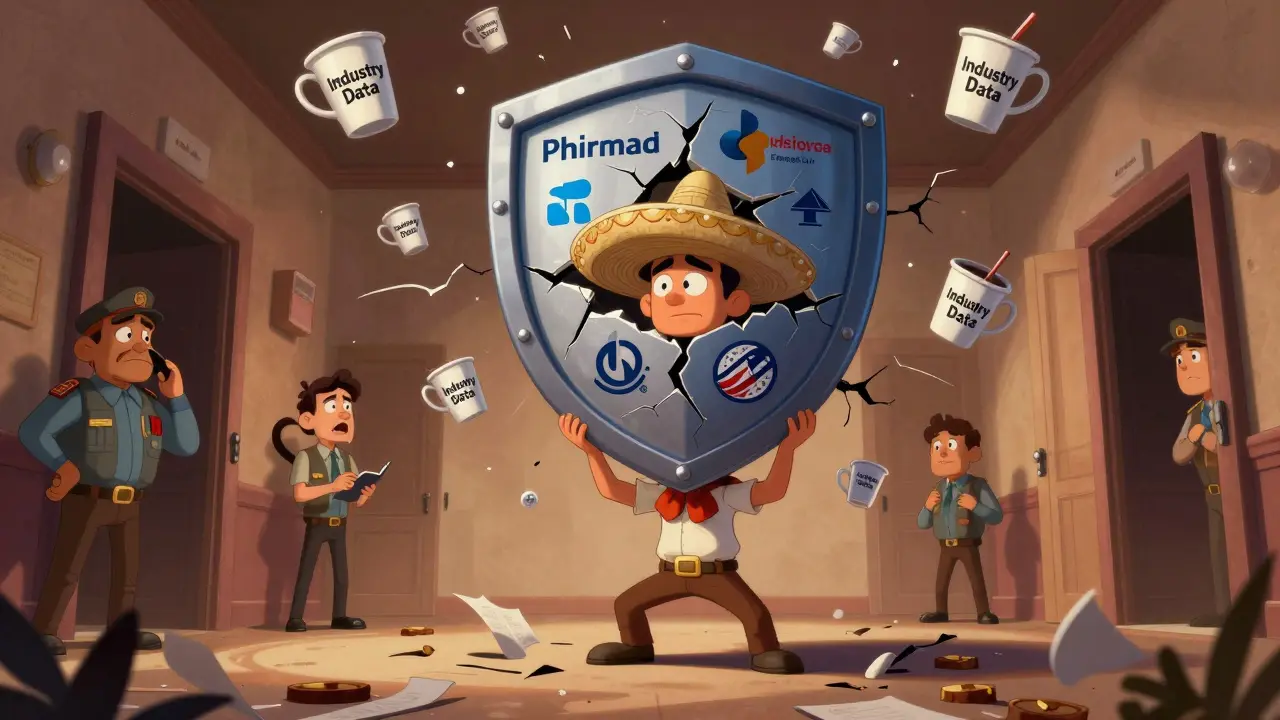
Imagine a agency created to protect you from dangerous drugs, unsafe power lines, or rigged financial markets - but instead, it works for the companies it’s supposed to be watching. That’s not a conspiracy theory. That’s regulatory capture.
It happens when the people meant to oversee an industry end up thinking, acting, and deciding like members of that industry. Not because they’re corrupt - though sometimes they are - but because over time, the lines blur. Regulators start sharing coffee with the same people they’re supposed to police. They rely on industry data because they don’t have the staff or expertise to verify it themselves. They worry about losing funding or jobs if they crack down too hard. And when they leave government, they get hired by the very companies they once regulated.
This isn’t rare. It’s systemic. In the U.S., 53% of senior Defense Department officials moved into defense industry roles within a year of leaving government between 2008 and 2018. The Securities and Exchange Commission (SEC) had revolving door ties with 87% of the biggest Wall Street firms before the 2008 financial crash. The FAA let Boeing employees do 96% of the safety reviews on the 737 MAX - the same plane that crashed twice, killing 346 people. And yet, regulators still say they’re doing their job.
How Regulatory Capture Works - Not Just Corruption, But Comfort
Most people think of regulatory capture as bribery or kickbacks. But the real danger is quieter. It’s called cultural capture.
Regulators spend years working with engineers, lawyers, and executives from the industries they regulate. They attend the same conferences. They read the same reports. They start to believe the industry’s arguments - that stricter rules will hurt innovation, that small violations aren’t worth chasing, that their expertise is the only thing that matters. Over time, they stop seeing themselves as public servants. They start seeing themselves as guardians of the system - and the system is the industry.
Take the UK’s energy regulator, OFGEM. Between 2015 and 2020, it approved $24 billion in customer bill hikes to fund grid upgrades. Meanwhile, energy companies kept profit margins at 11.2%, well above the 6.8% limit. Regulators didn’t push back. Why? Because they believed the companies’ claims about infrastructure costs - even though independent analysts showed those costs were inflated.
Then there’s materialist capture: money, jobs, and power. The revolving door is the clearest example. Former regulators become lobbyists. Former lobbyists become regulators. The U.S. Federal Trade Commission found that 92% of former SEC commissioners took jobs with regulated firms within 18 months of leaving office. These people aren’t traitors - they’re just following a well-worn career path. But the result? Rules get softened, inspections get delayed, penalties get reduced.
The Sugar Case: When a Few Win and Everyone Else Pays
One of the most telling examples of regulatory capture is the U.S. sugar industry.
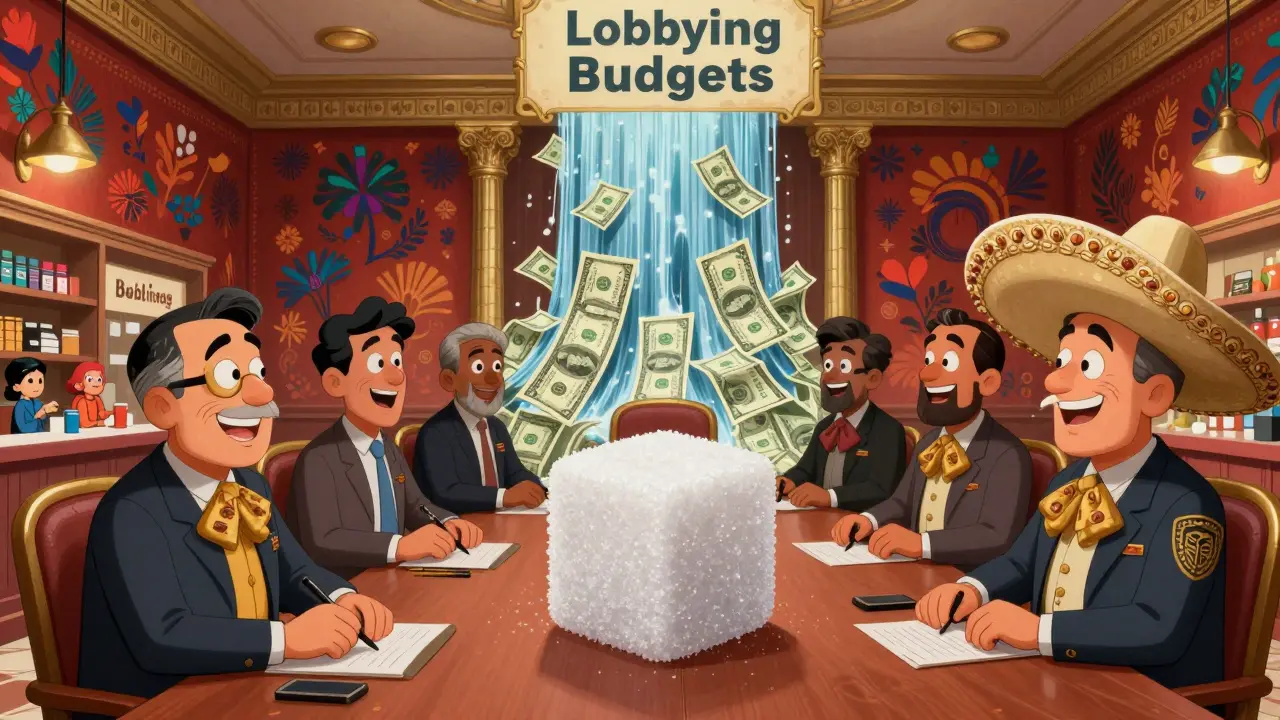
The government imposes tariffs and import quotas to protect domestic sugar producers - just 4,318 companies. These rules keep sugar prices in the U.S. three times higher than the global market. That means every American household pays about $33 extra per year. Multiply that by 130 million households? That’s $3.9 billion a year - paid by consumers, mostly low- and middle-income families.
Meanwhile, those 4,318 sugar producers pocket $1.2 billion in extra profits. That’s a massive return on a tiny investment in lobbying. The sugar industry spends millions each year to keep these rules in place. But who’s going to organize 130 million households to protest a $33 bill? No one. The cost is too small for each person to care. The benefit is huge for the few.
This is textbook regulatory capture: concentrated gains, dispersed costs. The industry has the motivation and resources to fight. The public has neither the awareness nor the energy to push back.
Why It’s Getting Worse - And Faster
Regulatory capture isn’t just old-school lobbying. It’s now digital, algorithmic, and hyper-efficient.
In 2023, a MIT study found that AI-powered lobbying tools generated 17,000 personalized regulatory comments per hour during a telecom rulemaking. These weren’t bots. They were AI-generated letters, each tailored to look like a real person’s opinion - signed with fake names, addresses, and even emotional stories. Regulators couldn’t tell the difference. The industry flooded the system with manufactured public support.
And it’s not just the U.S. The OECD estimates regulatory capture costs member countries 0.8% of GDP every year - that’s billions lost to inefficiency, higher prices, and unsafe products. In financial services, 67% of countries show high levels of capture. In energy, it’s 58%. In pharmaceuticals, 52%.
Even transparency tools are failing. The EU’s Transparency Register, meant to track lobbyists, has only 32% compliance from major corporations. Cooling-off periods - the rule that bans ex-regulators from joining regulated firms for a year - are ignored in 41% of cases in the U.S. and rarely enforced.
Who’s Fighting Back - And What’s Working
It’s not all doom. Some places are pushing back.
New Zealand changed its regulatory process in 2016. Instead of letting industry groups dominate advisory panels, they mandated equal representation from consumers, environmental groups, and small businesses. The result? Industry-preferred rules dropped from 68% to 31% in six years.
Canada’s ‘Regulatory Integrity Training’ taught regulators to question industry claims, limit meetings, and consult independent experts. After the program, industry meetings dropped by 27%, and public stakeholder input rose by 43%.
France’s ‘Convention Citoyenne pour le Climat’ brought together 150 randomly selected citizens to advise climate policy. Their recommendations cut energy industry influence by over half. Why? Because these weren’t lobbyists. They were ordinary people with no stake in the system.
The U.S. Federal Trade Commission launched its own ‘Regulatory Capture Initiative’ in March 2023. It now requires full disclosure of all industry contacts and created a $23 million Office of Regulatory Integrity to monitor for bias.

What You Can Do - Because You’re Not Powerless
You might think regulatory capture is too big, too bureaucratic, too distant to matter to you. But it’s not.
Every time you pay too much for medicine because the FDA approved a drug with weak evidence - that’s capture.
Every time your power bill spikes because regulators trusted an energy company’s inflated cost estimates - that’s capture.
Every time you hear about a safety recall that took years to happen - that’s capture.
Here’s what you can do:
- Support independent watchdog groups like Public Citizen, Consumer Reports, or OpenSecrets. They track lobbying and push for transparency.
- Attend public hearings. Most people don’t. Your voice matters more than you think.
- Ask your representatives: ‘What’s being done to stop the revolving door?’ Demand public records of who met with regulators and when.
- Use social media. Twitter and Reddit are full of whistleblowers and affected citizens. Share their stories. Make it visible.
Regulatory capture thrives in silence. It dies when people pay attention.
It’s Not About Trusting Regulators - It’s About Designing Systems That Can’t Be Corrupted
People often say, ‘We need better regulators.’ But that’s not the real fix. You can’t rely on ethics alone. You need systems that make capture harder.
That means:
- Mandatory, long cooling-off periods - not one year, but five.
- Independent research units inside agencies, funded by public money, not industry.
- Public access to all regulatory data - not just summaries, but raw analysis.
- Stakeholder panels with real diversity: consumers, workers, environmental groups - not just CEOs and lawyers.
- Whistleblower protections that actually work - no more buried complaints or forced NDAs.
The goal isn’t to eliminate industry input. It’s to balance it. Regulation isn’t supposed to be a negotiation between the government and the powerful. It’s supposed to be a shield for the public. When that shield becomes a mirror - reflecting the industry’s interests - we all lose.
What exactly is regulatory capture?
Regulatory capture happens when a government agency meant to protect the public ends up serving the interests of the industry it’s supposed to regulate. This isn’t always due to bribery. It often happens through subtle means - like regulators adopting the industry’s viewpoint over time, relying on industry-provided data, or moving between industry and government jobs. The result? Rules get weaker, enforcement slows down, and the public pays the price.
Is regulatory capture the same as corruption?
Not always. Corruption involves illegal acts like bribery or kickbacks. Regulatory capture is often legal - but still harmful. It’s about influence, not illegal payments. A regulator might not take money, but if they start thinking like a CEO, delay inspections, or ignore violations because they don’t want to ‘hurt innovation,’ that’s capture. It’s the slow erosion of public trust through normal processes.
How do I know if my government agency is captured?
Look for patterns: Are enforcement actions rare or delayed? Do the same people keep showing up at meetings - always from industry, never from consumer groups? Are rules always aligned with industry profit goals? Check if former regulators now work for the companies they once oversaw. If the agency’s public statements sound like industry press releases, that’s a red flag. Transparency reports and lobbying disclosures can help you track this.
Why hasn’t this been fixed yet?
Because the people who benefit from capture have the money and power to stop reform. Lobbying spending by industries is 17 times higher per capita than by consumer groups. Politicians rely on campaign donations. Regulators fear losing funding or jobs. And the public? Most people don’t even know it’s happening - or think the cost to them is too small to matter. But when you add up millions of small costs, it becomes a massive hidden tax.
Can technology make regulatory capture worse?
Absolutely. AI now lets companies generate tens of thousands of fake public comments during rulemaking - each one tailored to look like a real person’s opinion. Regulators can’t tell them apart. Crypto firms spent $128 million on U.S. lobbying in 2022, trying to shape rules they understand better than regulators do. Technology doesn’t cause capture - but it gives industries new, powerful tools to exploit it.
Comments (9)
Doreen Pachificus
The sugar industry example is chilling. $33 a year per household adds up to billions, and no one notices because it’s invisible. That’s the genius of it.
Jason Stafford
This isn’t regulatory capture. This is a coordinated, multi-decade coup by corporate elites using the state as their private enforcement arm. The FAA, SEC, FDA - they’re not broken. They were designed this way. You think the 737 MAX crashes were accidents? No. They were cost-saving milestones. Wake up.
jigisha Patel
While the phenomenon of regulatory capture is well-documented, the author’s reliance on anecdotal U.S.-centric case studies undermines the generalizability of the argument. For instance, OECD data suggests that countries with stronger judicial independence and civil service protections - such as Denmark and New Zealand - exhibit significantly lower levels of capture. The solution is not merely structural reform, but institutional resilience through meritocratic recruitment and tenure protections for regulators. Without this, even transparency initiatives are performative.
Justin Lowans
I appreciate how this post breaks down the mechanics of capture - not just the corruption, but the quiet normalization of industry logic. It’s not about bad people; it’s about systems that reward conformity over courage. The Canadian training program and New Zealand’s stakeholder mandates prove change is possible. We need more of these models, scaled and funded. It’s not hopeless - just under-resourced.
Michael Rudge
Oh, so now we’re supposed to believe that regulators are just ‘comfortable’ with the industries they regulate? How quaint. Let me guess - the FDA just really likes Big Pharma’s PowerPoint presentations? The truth is, 90% of these regulators are either on the payroll or terrified of being blacklisted. You don’t need a bribe when your entire career is a revolving door with a velvet rope and a golden handshake.
Cassie Tynan
They call it ‘regulatory capture’ like it’s some mysterious force of nature. Nah. It’s capitalism with the gloves off. The public is the last customer they’re willing to serve - everyone else gets VIP treatment. And the worst part? We let them. We scroll past the hearings, ignore the lobbying disclosures, and blame the ‘system’ while our own apathy funds the whole machine. Wake up. You’re not a bystander. You’re the cash register.
Rory Corrigan
It’s not about who’s in charge. It’s about what’s being measured. If your metric is ‘industry growth’ or ‘regulatory efficiency,’ you’ll always favor the powerful. But if you measure ‘public harm prevented’ or ‘equity of access’ - the system flips. We’ve been measuring the wrong things for 50 years. The fix isn’t more laws. It’s a new compass.
Stephen Craig
Revolving door = institutional decay. Five-year cooling-off periods. No exceptions. End of story.
Ethan Purser
They’re not just captured - they’re seduced. Regulators don’t wake up one day and decide to betray the public. They wake up and realize their colleagues at Goldman or Boeing throw better parties. They start thinking, ‘Maybe these guys aren’t so bad.’ And then one day, they’re wearing the same suit, same smile, same excuses. It’s not corruption. It’s a slow spiritual surrender. And we’re all paying for their comfort.