
FDA Manufacturing Compliance: What It Means for Your Medications
When you take a pill, injection, or cream, FDA manufacturing compliance, the set of rules the U.S. Food and Drug Administration enforces to ensure drugs are made safely and consistently. Also known as Good Manufacturing Practices, it's not just paperwork—it's the reason your medicine doesn't contain contaminants, wrong doses, or inactive ingredients. Every bottle of generic Plavix, every vial of latanoprost, every pack of hydrocortisone cream you buy has passed through this system. Without it, there’s no way to know if what you’re taking will work—or if it might hurt you.
FDA manufacturing compliance isn’t just about checking boxes. It requires factories to control every step: where raw materials come from, how equipment is cleaned, how workers are trained, and how each batch is tested before release. This is why drugs like clozapine or lithium need strict lab monitoring calendars, scheduled blood tests to track how your body reacts to potent medications. If the manufacturing process isn’t flawless, even the best-designed drug can become dangerous. That’s why the FDA can shut down plants overnight if they find violations—like unclean equipment, fake records, or unapproved changes to formulas. And when shortages hit, as with critical antibiotics or insulin, the FDA still won’t lower these standards. Instead, they extend expiration dates on verified stock, ensuring you get safe medicine even when supply is tight.
It also explains why generic drugs are just as safe as brand names. The same GMP standards, the global benchmark for pharmaceutical production apply to both. A generic version of Seroquel or Paxil must meet the exact same purity, strength, and performance rules as the original. That’s why doctors push generics—they’re not cheaper because they’re lower quality. They’re cheaper because the patent expired, not because the rules did.
What you won’t see on the label? The inspections. The audits. The thousands of hours spent documenting every step. But you feel the result: consistent effects, predictable side effects, and confidence that your medication won’t suddenly change because of a bad batch. If you’ve ever worried about moisture ruining your pills, or why your lab tests are timed so precisely, it all ties back to this system. The FDA doesn’t just approve drugs—they make sure they’re made right, every single time.
Below, you’ll find real stories and practical guides that show how these rules affect your daily life—from how mail-order pharmacies handle your 90-day supply to why your biologic injection needs sterile conditions. These aren’t abstract policies. They’re the invisible guardrails keeping you safe.
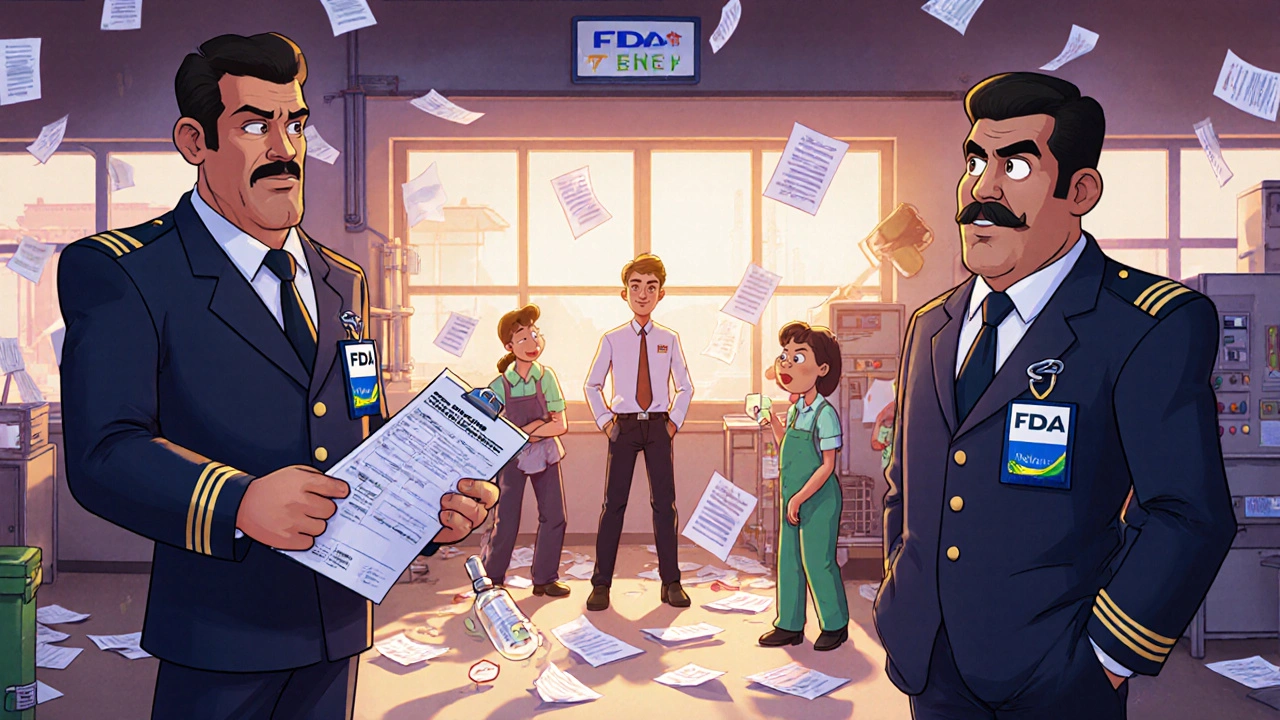
Unannounced FDA Inspections: Why Surprise Visits Are Critical for Drug and Food Safety
Unannounced FDA inspections ensure real-world compliance in drug and food manufacturing. Since May 2025, surprise visits now apply to foreign facilities too, closing a dangerous loophole. Learn how they work-and how to be ready without warning.
read more