
TZD Fluid Retention: What It Is, Why It Happens, and How to Manage It
When you take a TZD, a class of oral diabetes medications that improve insulin sensitivity. Also known as thiazolidinediones, they help lower blood sugar by making your body’s cells more responsive to insulin. But for many people, this benefit comes with a hidden cost: fluid retention, a buildup of extra fluid in tissues that causes swelling, especially in the legs and ankles. It’s not just inconvenient—it can be dangerous, especially if you already have heart problems.
TZDs like pioglitazone and rosiglitazone, two main drugs in this class work by activating PPAR-gamma receptors, which help control fat and glucose metabolism. But this same mechanism also causes your kidneys to hold onto more sodium and water. The result? Swelling, weight gain, and in severe cases, worsening heart failure, a condition where the heart can’t pump blood effectively. Studies show up to 1 in 5 people on TZDs develop noticeable fluid retention, and about 1 in 10 may need hospital treatment for it.
Some people don’t even notice the swelling at first. It creeps in slowly—your shoes feel tighter, your socks leave marks, your ankles puff up after standing all day. But if you’re over 65, have kidney disease, or already have heart issues, this isn’t just a minor annoyance. It can push your heart into failure faster than you expect. That’s why doctors avoid TZDs in people with moderate to severe heart failure, and why they check for weight gain and swelling during every visit.
There are ways to manage it. Cutting back on salt helps. Monitoring your weight daily catches problems early. Some patients benefit from a low-dose diuretic, but that’s not always safe or enough. The real solution? Knowing when to switch. If fluid retention is getting worse, your doctor might move you to a different type of diabetes medication—like SGLT2 inhibitors—that actually help reduce fluid buildup instead of causing it.
What you’ll find in the posts below are real, practical insights from people who’ve dealt with this side effect, and the science behind why it happens. You’ll see how other medications—like NSAIDs or blood pressure pills—can make it worse, and how to spot the warning signs before it turns into an emergency. No fluff. No guesswork. Just what you need to know to stay safe while managing your diabetes.
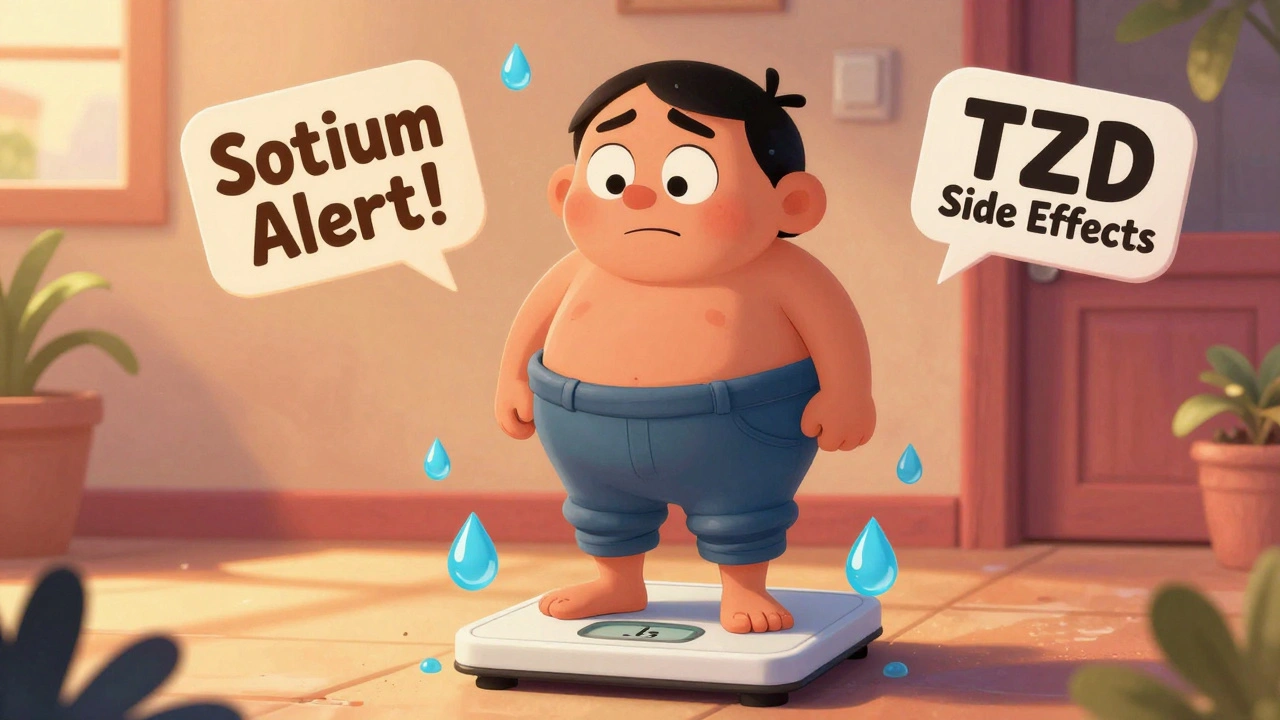
TZD Weight Gain and Edema: How to Manage These Common Side Effects
TZDs like pioglitazone help control blood sugar but often cause weight gain and swelling. Learn how to reduce these side effects with dose adjustments, SGLT2 inhibitors, low-sodium diets, and daily weight tracking.
read more