
Edema from Diabetes Meds: What You Need to Know
When you take edema from diabetes meds, a swelling caused by certain drugs used to manage type 2 diabetes. Also known as fluid retention, it often shows up as puffy ankles, tight shoes, or sudden weight gain—especially if you’re on thiazolidinediones, a class of insulin-sensitizing drugs like pioglitazone and rosiglitazone.
It’s not just about the pill you swallow. blood pressure meds, especially calcium channel blockers like amlodipine, are another common culprit. These drugs help lower blood pressure by relaxing blood vessels—but that same effect lets fluid leak into surrounding tissues. If you’re taking both a diabetes drug and a blood pressure pill, the swelling isn’t random. It’s a known interaction. The FDA doesn’t warn about it loudly, but doctors see it often. Patients report swollen feet after starting a new med, then feel confused when told it’s "just water weight." It’s not just water. It’s a sign your body’s fluid balance is off.
Not everyone gets it. But if you’re over 65, have heart issues, or already have kidney problems from long-term diabetes, your risk goes up. That’s why lab monitoring calendars and regular check-ins matter. You don’t need to stop your meds. You need to understand the trade-off. Thiazolidinediones lower A1C well, but they can cause heart failure in some. Amlodipine keeps your pressure down, but might make your ankles swell. The goal isn’t to avoid all side effects—it’s to spot them early and adjust before they become serious.
Some people try diuretics to fix the swelling, but that can backfire. If your kidneys are already stressed from diabetes, pushing out more fluid might make things worse. Others switch meds—like going from pioglitazone to metformin or GLP-1 agonists—which often helps. But that’s something to do with your doctor, not on your own. You’re not alone in this. Many patients feel guilty thinking they caused the swelling, but it’s the drug, not you.
What you’ll find below are real posts from people who’ve dealt with this. Some explain how they spotted the swelling before it got bad. Others share how they switched meds without losing blood sugar control. There’s advice on tracking weight daily, knowing when to call your doctor, and what tests to ask for. You won’t find fluff. Just clear, practical info from people who’ve been there—and the science behind why it happens.
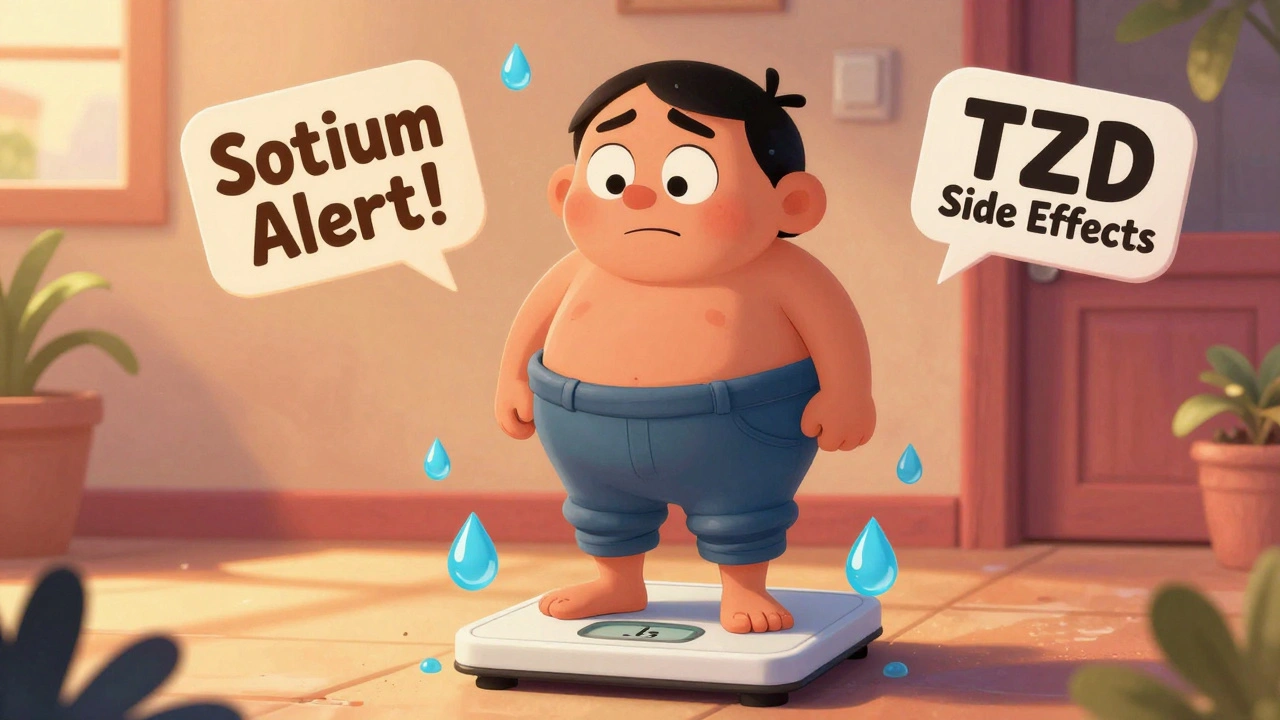
TZD Weight Gain and Edema: How to Manage These Common Side Effects
TZDs like pioglitazone help control blood sugar but often cause weight gain and swelling. Learn how to reduce these side effects with dose adjustments, SGLT2 inhibitors, low-sodium diets, and daily weight tracking.
read more