
Pioglitazone Weight Gain: Why It Happens and What You Can Do
When you take pioglitazone, a thiazolidinedione medication used to improve insulin sensitivity in type 2 diabetes. It's known for helping lower blood sugar by making your body respond better to insulin. But for many people, that benefit comes with an unwanted side effect: weight gain, a common and often frustrating outcome of pioglitazone therapy. This isn’t just about a few extra pounds—it’s fluid retention, fat redistribution, and increased appetite working together. Studies show people on pioglitazone can gain 2 to 4 kilograms (4 to 9 pounds) in the first few months, and sometimes more over time. It’s not laziness or poor diet—it’s the drug changing how your body stores energy.
Insulin resistance, the core problem pioglitazone targets is what makes this weight gain so tricky. The drug works by activating PPAR-gamma receptors, which tell fat cells to take in more glucose and store it as fat. That’s good for lowering blood sugar, but bad for your waistline. It also causes your kidneys to hold onto sodium and water, leading to swelling in the ankles or legs. And because it makes you feel less hungry at first (then sometimes more later), your eating habits can shift without you realizing it. This isn’t unique to pioglitazone—it’s part of how this class of drugs functions. But unlike some other diabetes meds that cause weight loss, pioglitazone’s effect on fat storage is direct and measurable.
If you’re on pioglitazone and seeing the scale creep up, you’re not alone. Many patients stop the medication because of this, thinking it’s a dealbreaker. But quitting isn’t always the answer. The real question is: can you manage the weight gain without losing the blood sugar control? The answer is yes—by combining it with dietary changes, focused on reducing refined carbs and added sugars, adding daily movement—even short walks—and tracking fluid retention. Your doctor might also suggest switching to a different drug, but that’s not always necessary. Sometimes, pairing pioglitazone with metformin helps balance things out. The key is knowing what’s happening inside your body, not just reacting to the number on the scale.
Below, you’ll find real-world insights from patients and clinicians on how to handle this side effect without giving up your treatment. You’ll see what works, what doesn’t, and how to talk to your doctor about alternatives if needed. This isn’t about blaming the drug—it’s about understanding it, working with it, and taking back control.
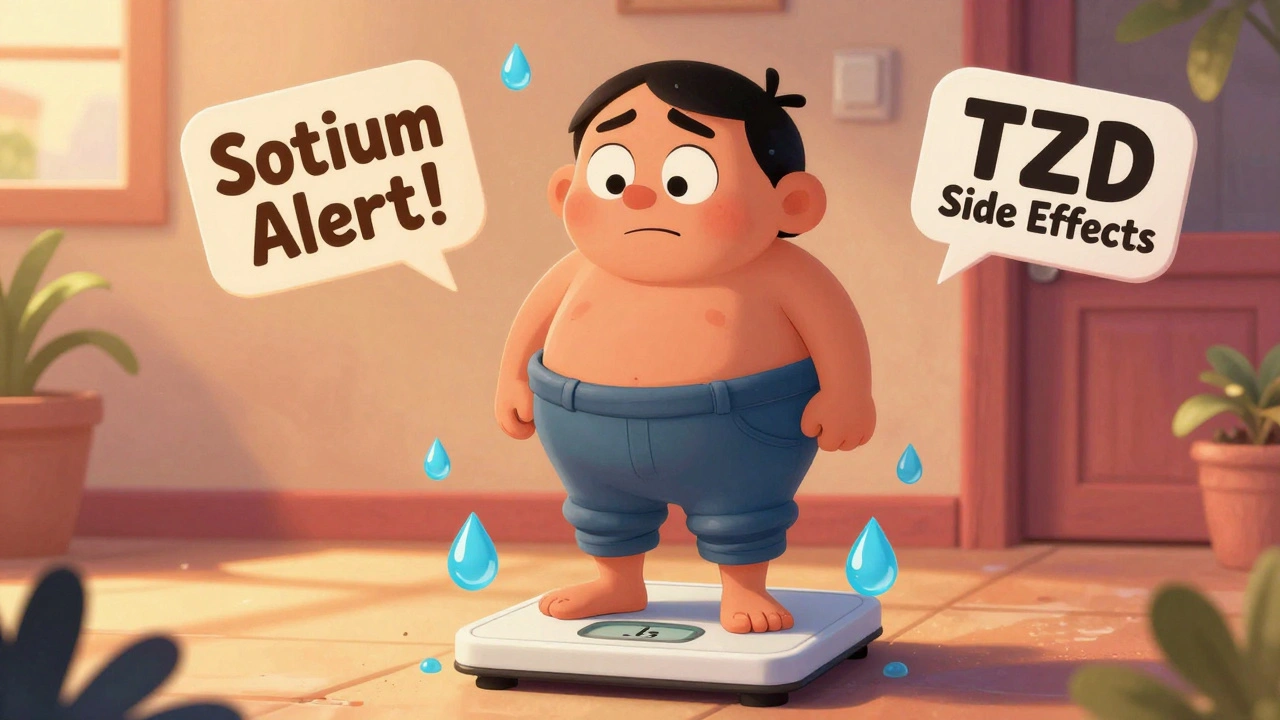
TZD Weight Gain and Edema: How to Manage These Common Side Effects
TZDs like pioglitazone help control blood sugar but often cause weight gain and swelling. Learn how to reduce these side effects with dose adjustments, SGLT2 inhibitors, low-sodium diets, and daily weight tracking.
read more