
TZD Side Effects: What You Need to Know About Rosiglitazone and Pioglitazone Risks
When doctors prescribe TZDs, thiazolidinediones are oral diabetes medications that improve insulin sensitivity in fat and muscle tissue. Also known as glitazones, they were once a go-to for type 2 diabetes—but their use has dropped sharply because of serious side effects. The two main ones still in use are rosiglitazone and a drug that improves insulin action but carries a higher risk of heart problems, and pioglitazone, a similar drug with slightly better heart safety but still linked to fluid buildup and bone loss.
TZDs don’t just lower blood sugar—they change how your body handles fluids and fat. One in five people on these drugs gains weight, mostly from water retention. That’s not just a cosmetic issue. Fluid buildup can lead to swelling in the legs, shortness of breath, and even heart failure, especially in older adults or those with existing heart conditions. The FDA added black box warnings for this reason. Bone fractures are another hidden risk, especially in women over 65. Studies show hip, hand, and foot fractures happen more often in TZD users than in people on other diabetes meds. And while rosiglitazone was pulled from many markets due to heart attack concerns, pioglitazone still carries a small but real risk of bladder cancer, though the link is debated.
These drugs aren’t first-line anymore. Metformin, SGLT2 inhibitors, and GLP-1 agonists have taken over because they’re safer and often help with weight loss or heart protection. But if you’re still on a TZD, it’s not because your doctor doesn’t know the risks—it’s because your body responds better to it than anything else. That’s why monitoring matters. Watch for sudden weight gain, puffiness in your ankles, or feeling winded climbing stairs. Get regular kidney and heart checks. Don’t ignore bone pain or unexplained bruising. The goal isn’t to scare you off a medication that works—but to make sure you’re aware of what to watch for and when to speak up.
Below are real patient experiences, clinical insights, and regulatory updates that help you understand why TZDs are used less today—and what to do if you’re still taking one. You’ll find practical advice on spotting early signs of trouble, how to talk to your doctor about alternatives, and what tests you should ask for to stay safe.
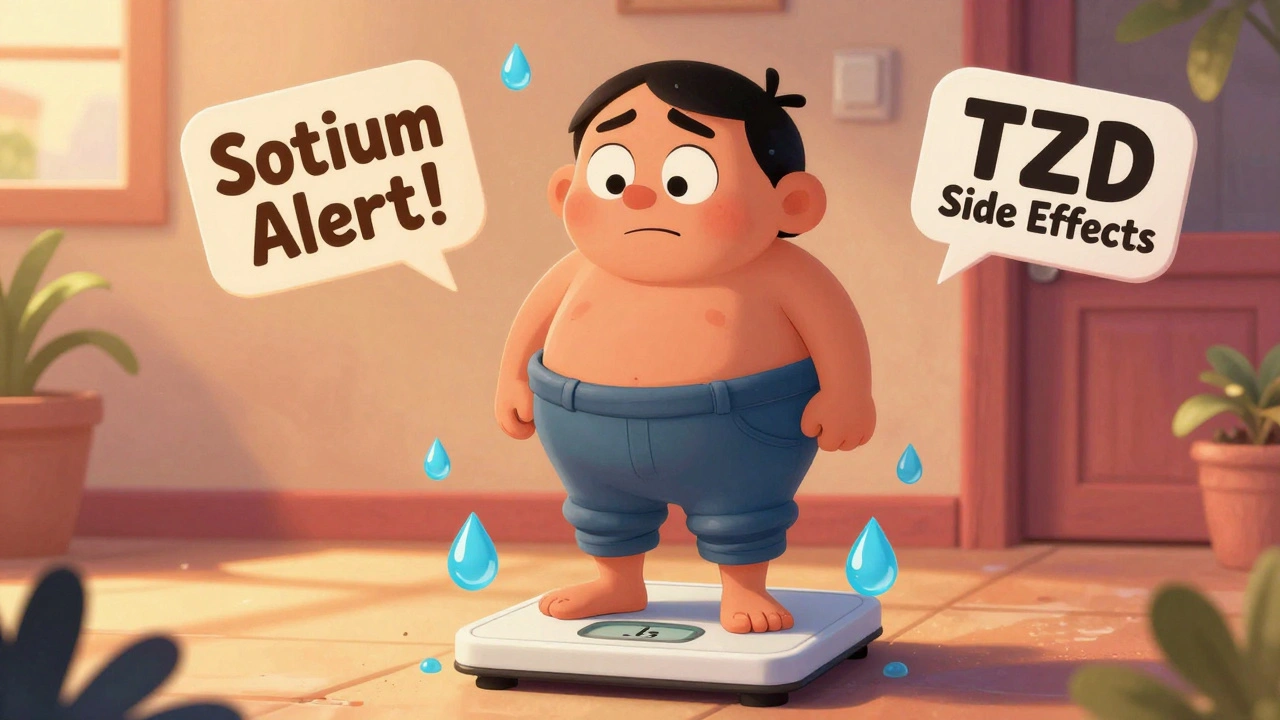
TZD Weight Gain and Edema: How to Manage These Common Side Effects
TZDs like pioglitazone help control blood sugar but often cause weight gain and swelling. Learn how to reduce these side effects with dose adjustments, SGLT2 inhibitors, low-sodium diets, and daily weight tracking.
read more